
I’m thrilled to share this comprehensive guide to Camping in Yosemite National Park, crafted in partnership with Lorissa’s Kitchen. As their designated Travel Expert for the year, I’m excited to bring you insights from my recent adventures. Please note, I was compensated for my time in creating this guide, and more exciting content is on the way!
Your Ultimate Guide to Camping in Yosemite National Park
Embarking on an adventure to Yosemite National Park is an experience that stays with you long after you’ve left its majestic peaks and tranquil valleys. While my travel adventures often take me to diverse locations, a return to the wilderness, especially somewhere as iconic as Yosemite, always feels like coming home. This guide takes you through the heart of what it means to camp in one of America’s most beloved national parks, offering insights gained from personal experience and a deep appreciation for the great outdoors.
Yosemite is more than just a destination; it’s a state of mind – one filled with breathtaking landscapes, the freshest air, and an unparalleled sense of freedom. Our recent camping trip there perfectly echoed the spirit of past cross-country road trips: good company, delicious food cooked over an open fire, and the joy of being completely off the grid. This, truly, is my happy place.
Rediscovering Yosemite: A Tale of Two Trips
My recent visit wasn’t my first to Yosemite. My partner, C, and I first explored this stunning park with friends in September 2015. Both trips were equally awe-inspiring, yet they offered vastly different perspectives on Yosemite’s ever-changing beauty.
Our 2015 adventure, at the tail end of a prolonged drought in California, presented a drier landscape where many waterfalls had dwindled to mere trickles. While still beautiful, the park wasn’t as vibrant and lush as it can be. Fast forward to our latest trip, and the scene had completely transformed. Persistent spring rains had painted the valley in a vibrant palette of greens, and every waterfall thundered down the granite cliffs with spectacular force.
However, the abundance of rain brought its own set of challenges. Heavy snowfall in the high-elevation meadows meant some popular routes and viewpoints, like Glacier Point and Tuolumne Meadows, were inaccessible. This unexpected turn of events, however, led us to discover some of Yosemite’s quieter, less-traveled corners – hidden gems that are often overlooked in favor of the more iconic sights. It was a powerful reminder of the importance of flexibility and embracing the unexpected when exploring nature.
This time, our travel crew was also different and equally special. Joining C and me were Dale and her boyfriend Dave, friends from my summer camp days in New Hampshire, who were on their own cross-country road trip. The camaraderie, shared stories around the campfire, and collective wonder at Yosemite’s grandeur made for an unforgettable group dynamic.
Unlike our previous stay in a cabin at Half Dome Village, this trip was all about pitching a tent and experiencing the raw beauty of camping. This guide is therefore specifically tailored for those looking to immerse themselves in the full camping experience at Yosemite. Combined with my previous Yosemite guide, you’ll have a comprehensive picture of what this magnificent national park has to offer.
Experience Yosemite Visually: Watch Our Travel Diary!
Get a deeper feel for our adventure by watching my Yosemite Travel Diary. We captured live audio to truly convey the experience, and I’m incredibly proud to share the final result. Don’t miss this visual journey through the park!
Planning Your Camping Adventure in Yosemite
Booking Your Campsite: The Golden Rule
The single most crucial piece of advice for camping in Yosemite is this: BOOK IN ADVANCE! And when I say in advance, I mean at least six months, if not more. Campsites, especially those within the iconic Yosemite Valley, fill up incredibly quickly, often within minutes of the booking window opening. If you have specific dates in mind, mark your calendar and be ready to reserve your spot as soon as reservations become available on the official NPS website. Flexibility with your travel dates can sometimes increase your chances, but early booking remains paramount.
Choosing Your Yosemite Campsite: Valley vs. Beyond
Yosemite National Park boasts 13 distinct campgrounds, each offering a unique experience. While the allure of staying directly in Yosemite Valley is undeniable due to its proximity to major attractions, exploring options outside the valley can often provide a quieter, equally rewarding experience. Here’s a breakdown of some notable campgrounds:
Campgrounds in Yosemite Valley: Immersive Experiences
- Upper, Lower, and North Pines Campgrounds: Located directly on the valley floor, these sites offer unparalleled access to Yosemite’s most famous landmarks, including Yosemite Falls, Half Dome, and El Capitan. They are incredibly popular for a reason, placing you right in the heart of the action. Expect basic amenities and a lively atmosphere.
- Camp 4 (Sunnyside Campground): Steeped in history, Camp 4 is legendary among rock climbers and has a vibrant, communal feel. It operates on a first-come, first-served basis for a portion of its sites during peak season, making it a challenging but rewarding option for spontaneous adventurers. Be prepared for a bustling, social environment.
- Housekeeping Camp: For those seeking a bridge between traditional camping and cabin stays, Housekeeping Camp is an excellent choice. We enjoyed our stay here previously. It’s often described as “glamping,” offering open-air units with privacy screens, a canvas roof, and a concrete floor. While cots and sheets are provided, many campers opt for sleeping bags. The best part? You can still have a campfire, providing that quintessential camping ambiance. It’s a fantastic middle-ground if you’re not quite ready for a full tent setup.
Campgrounds Outside Yosemite Valley: Serenity and Space
- Hodgdon Meadow Campground: This is where we camped during our most recent trip, and we thoroughly enjoyed it. Located near the Big Oak Flat Entrance, it’s about a 40-minute drive to Yosemite Valley, offering a quieter escape from the valley’s crowds. It’s ideal for car camping and provides a serene base for exploring the park. A little tip: aim for a site on the outer circle for more privacy and a bit of distance from the bathroom facilities!
- Wawona Campground: Situated in the southern part of the park, Wawona is open year-round, much like Hodgdon Meadow and the Pines campgrounds. It’s a convenient option if you’re traveling from Central or Southern California and offers access to the Mariposa Grove of Giant Sequoias (when open) and the historic Wawona Hotel.
- Tuolumne Meadows Campground: This high-elevation campground is a personal favorite and one we’re eager to experience properly. It’s typically open only during a limited summer season, with opening and closing dates heavily dependent on snowmelt. During our last trip, the road to Tuolumne Meadows was closed, but when we visited in September 2015, the area was simply spectacular. It offers a different, more alpine Yosemite experience with stunning meadows, clear rivers, and breathtaking views, perfect for high-country hiking and stargazing.
Top Things to Do and See in Yosemite National Park
Yosemite offers an endless array of activities, from challenging backcountry hikes to leisurely strolls amidst ancient giant sequoias. While popular spots like Glacier Point and Tuolumne Meadows were closed during our recent, rain-soaked spring visit, we discovered that Yosemite’s beauty extends far beyond its most famous viewpoints. The key is embracing flexibility and being open to exploring unexpected corners of the park.
Exploring Yosemite’s Iconic Landscapes and Hidden Gems
- Valley Loop Trail: Even the drive into Yosemite Valley is an adventure, with towering granite walls greeting you at every turn. We spent a few hours walking sections of the Valley Loop Trail, which offers relatively flat paths winding through the valley floor. This trail provides incredible, ever-changing perspectives of Half Dome, El Capitan, and the numerous waterfalls that cascade down, especially vibrant after rainfall. It’s an excellent way to soak in the valley’s grandeur without strenuous elevation gains.
- Tuolumne Grove of Giant Sequoias: While the more famous Mariposa Grove was closed during our visit, the Tuolumne Grove proved to be an equally mesmerizing alternative. It was my first time seeing Giant Sequoias, and I was absolutely awestruck by their sheer size and ancient majesty. Walking among these colossal trees, some thousands of years old, offers a profound sense of wonder and perspective. The hike down to the grove is about a mile, with a gentle incline back up, making it accessible for most visitors.
- Yosemite Falls Trail to Columbia Rock: We stumbled upon this trail on our last day and absolutely loved it. While the full 7.2-mile round trip to the top of Yosemite Falls is a challenging endeavor, the 2-mile round trip hike to Columbia Rock offers a fantastic reward for a more manageable effort. The strenuous ascent is well worth it, providing incredible panoramic views of Yosemite Valley, Half Dome, and a unique vantage point of Glacier Point. It’s a fantastic way to earn those spectacular vistas.
Beyond Our Trip: Other Must-See Yosemite Attractions
Even with weather-related closures, Yosemite offers a wealth of other experiences:
- Glacier Point: Renowned for its unparalleled panoramic views of Yosemite Valley, Half Dome, Yosemite Falls, and the High Sierra. When open, it’s a must-visit for sunrise or sunset.
- Half Dome: An iconic granite monolith, the climb to its summit is one of the most famous (and challenging) hikes in the park, requiring a permit obtained via lottery.
- Mist Trail: Famous for its close-up views of Vernal Fall and Nevada Fall, this trail can be quite wet but offers incredible photo opportunities and a refreshing spray on warmer days.
- Bridalveil Fall: One of the first waterfalls you see upon entering Yosemite Valley, it offers an easy, short walk to its base.
Yosemite Camping Cuisine: Eating Well in the Wilderness
While exploring Yosemite is about physical activity, it’s equally about refueling and enjoying delicious meals, especially when camping. Due to the rainy weather during our trip, our outdoor explorations were somewhat curtailed, which meant more time to gather around the campfire and indulge in some truly satisfying eats. Camping definitely requires some thoughtful meal planning and preparation, but it doesn’t mean sacrificing flavor or variety.
Elevating Your Campfire Cooking
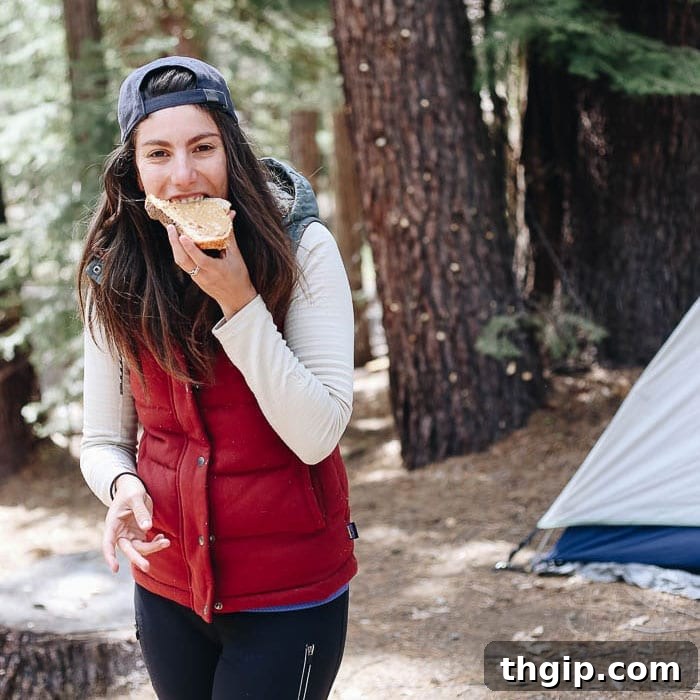
As much as I appreciate the simplicity of a peanut butter sandwich, I was determined to elevate our camping culinary experience. Since we were car camping, we had the luxury of bringing more supplies, which allowed for a diverse menu. Before our trip, I meticulously planned our meals and did a full grocery haul at Trader Joe’s, stocking up on ingredients for wholesome, easy-to-prepare dishes.
A constant companion on our trip, and a fantastic protein boost after our active days, was Lorissa’s Kitchen jerky. It’s incredibly portable, undeniably delicious, and provided the sustained energy we needed. We actually had to ration ourselves to ensure it lasted beyond the first day – the Korean BBQ flavor, in particular, is a phenomenal treat!
For anyone planning a car camping trip, I highly recommend consulting my Car Camping Packing List. It was an invaluable resource for this trip, ensuring we had all the essentials for comfortable and well-fed adventuring.
Essential Bear Safety: Protecting Yourself and Wildlife
Yosemite is home to black bears, making bear safety an absolute priority. No matter which campground you choose, you are required to store all food, scented items (like toiletries), and trash in provided bear lockers. These metal boxes are designed to be bear-proof and are located at every campsite. Using them correctly is not just about protecting your food; it’s vital for the bears’ safety, preventing them from associating humans with food and potentially leading to dangerous encounters. Never leave food unattended or store it in your tent or car.
Dining Options Beyond the Campsite
Even when camping, it’s nice to have a backup plan, especially if the weather turns or you simply crave a different kind of meal. Yosemite offers a few dining establishments:
- Half Dome Village (formerly Curry Village): This bustling hub, where we stayed on our previous trip, offers several casual dining options. You’ll find a cafeteria with a decent selection of hot meals, a popular pizza deck perfect for families, and a grill. It’s a great spot for a quick, convenient meal.
- The Majestic Yosemite Hotel (formerly The Ahwahnee): For a more upscale dining experience, the historic Majestic Yosemite Hotel provides elegant dining in a grand setting. It’s ideal for a special occasion or when you want to escape the elements in style. Reservations are highly recommended.
- Rush Creek Lodge: Located just outside the park’s western entrance, Rush Creek Lodge offers a fantastic restaurant. We enjoyed a wonderful dinner there when heavy rain made cooking over our campfire impossible. The food was excellent, and the lodge provides a warm, inviting environment if you’re looking for a taste of civilization and a hearty meal outside the park boundaries.
See Our Camping Menu in Action!
If you’re eager to see exactly what was on our menu during our Yosemite camping trip, keep an eye out for my upcoming “What I Eat In A Day” video, launching this Sunday! I’ll be sharing all our delicious Yosemite eats, along with more behind-the-scenes footage from our adventure.
Embrace the Yosemite Adventure!
If Yosemite National Park isn’t already on your travel bucket list, it absolutely should be. It remains one of our favorite places in the entire world, a testament to nature’s enduring power and beauty. Camping in Yosemite offers an unparalleled opportunity to connect with this magnificent environment on a deeper level, waking up to the sound of waterfalls, hiking amidst towering trees, and sharing stories under a blanket of stars.
We’re already dreaming of our next visit, hoping to return in the fall to explore the high-country meadows before the winter snows set in. Whether you visit in the lush spring, vibrant summer, colorful fall, or tranquil winter, Yosemite promises an unforgettable adventure. Plan your trip, pack your bags, and get ready to create lasting memories in this extraordinary national treasure. Stay tuned for more travel insights and adventures!