
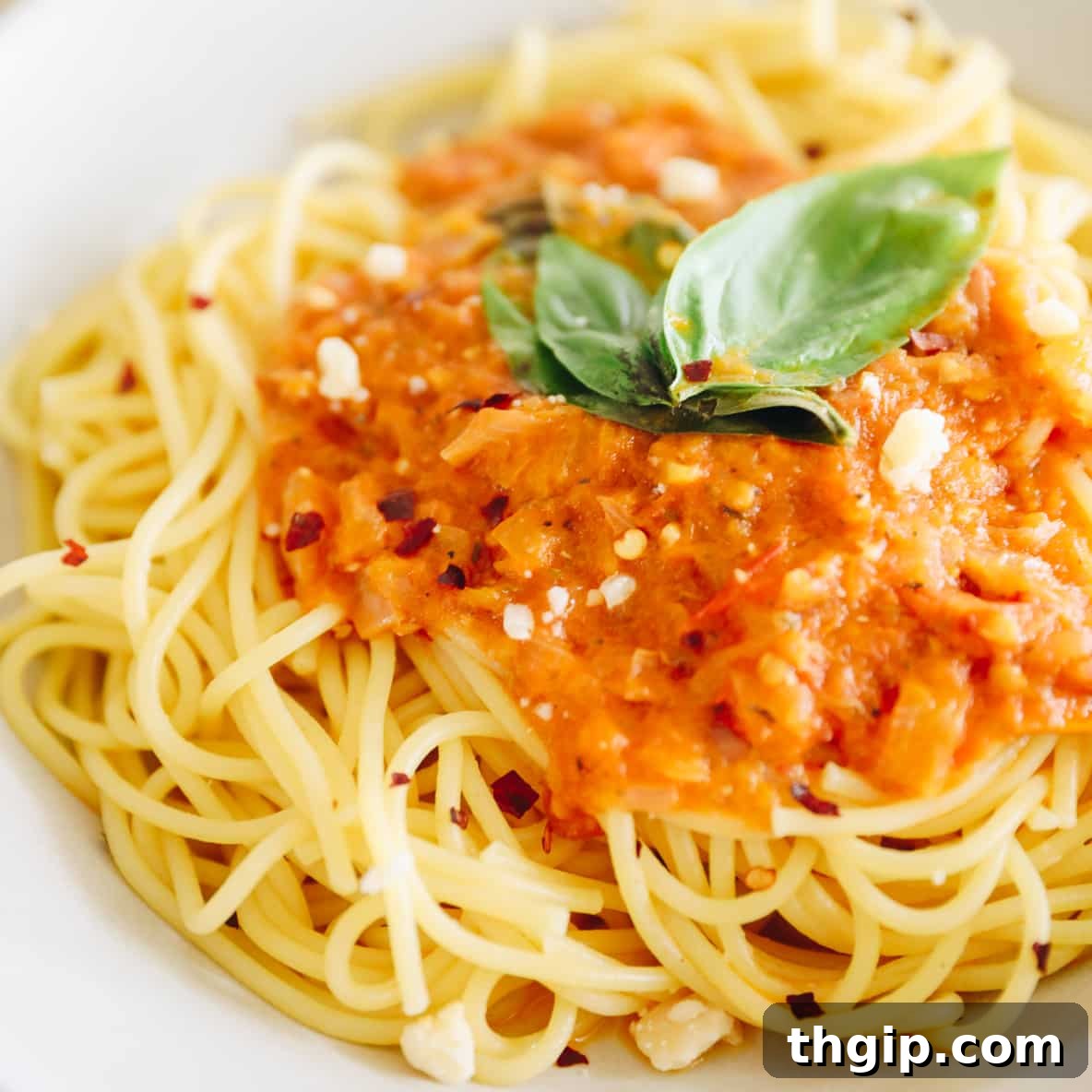
Experience the rich, vibrant flavors of Italy with this incredible homemade Arrabbiata sauce recipe. Forget the jarred versions and discover how easy it is to create a truly authentic, spicy tomato sauce from scratch using fresh, ripe tomatoes and a kick of red pepper flakes. This isn’t just a meal; it’s a celebration of simple, wholesome ingredients transformed into something extraordinary.
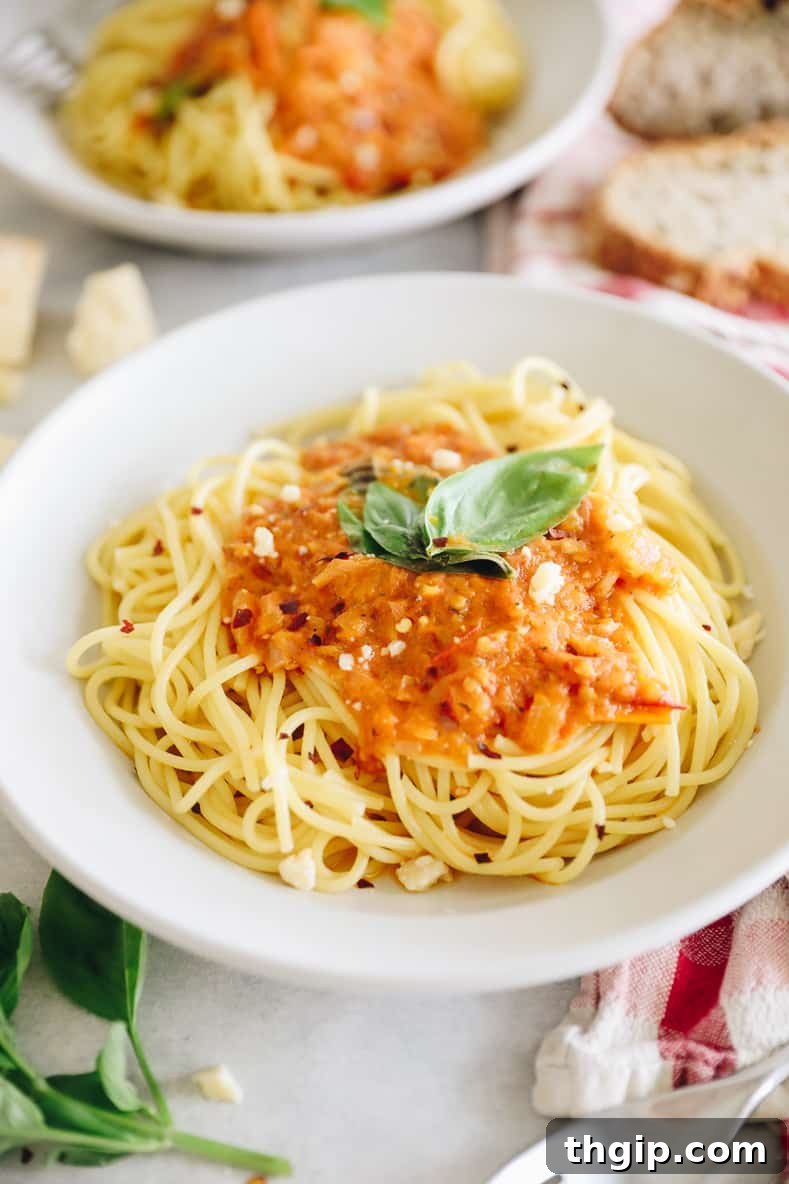
Crafting the Ultimate Homemade Arrabbiata Sauce
Welcome back to a culinary adventure that proves delicious, home-cooked meals don’t have to be complicated. If you’ve ever felt daunted by the idea of making a classic Italian pasta sauce from scratch, this Arrabbiata recipe is here to change your mind. It’s surprisingly straightforward, yielding a deeply flavorful, spicy tomato sauce in under 30 minutes – a stark contrast to bland, store-bought alternatives. Once you taste the difference that fresh ingredients and a little love make, you’ll find it hard to return to pre-made jars!
Whether your garden is overflowing with sun-ripened tomatoes, or you’re simply looking to elevate your weeknight dinner game, this recipe is your perfect companion. This versatile sauce isn’t just for pasta; it shines brightly as a pizza base, a vibrant addition to casseroles, or even as a spicy dip. It’s an excellent way to utilize fresh produce, especially during peak season, bringing a burst of Italian sunshine to your table.
Arrabbiata vs. Marinara Sauce: The Spicy Truth
While both Arrabbiata and Marinara are celebrated tomato-based sauces in Italian cuisine, a key distinction sets them apart: heat! The word “Arrabbiata” itself is Italian for “angry,” a playful nod to the sauce’s characteristic spiciness. This fiery kick typically comes from red chili flakes or finely chopped fresh red chili peppers, infusing the sauce with a delightful warmth that excites the palate.
Marinara, on the other hand, is generally a milder, sweeter tomato sauce, often featuring herbs like basil and oregano, but without the prominent heat profile of Arrabbiata. Understanding this difference allows you to choose the perfect sauce to complement your dish, depending on your craving for spice. This recipe embraces the “angry” tradition with a generous helping of red pepper flakes, but the heat level is entirely customizable to your preference.
Essential Arrabbiata Sauce Ingredients
The beauty of authentic Italian cooking lies in its simplicity and reliance on high-quality, fresh ingredients. Here’s what you’ll need to create this tantalizing Arrabbiata sauce:
- Yellow Onion: A foundational ingredient that provides a subtle sweetness and aromatic base. A classic yellow onion works perfectly, or a sweet yellow onion for a slightly milder flavor profile.
- Garlic Cloves: Don’t hold back on the garlic! Freshly minced garlic is absolutely crucial for the robust flavor of this sauce. Avoid pre-minced jarred varieties, as they often lack the pungent, fresh taste that defines a great Italian sauce.
- Large Vine Tomatoes: The heart and soul of any tomato sauce. While San Marzano tomatoes are traditionally revered for their balance of sweetness and acidity, feel free to use ripe, juicy vine tomatoes straight from your garden or farmer’s market. Aim for tomatoes that are firm, heavy for their size, and boast a vibrant red color. Roughly 2 pounds of diced tomatoes will create a rich, thick sauce.
- Extra Virgin Olive Oil: A good quality extra virgin olive oil is indispensable. It’s not just a cooking fat; it’s a flavor enhancer, carrying the aromas of the garlic and onion and enriching the entire sauce.
- Italian Seasoning: This blend of dried herbs adds a classic Mediterranean depth. It typically includes oregano, basil, thyme, and rosemary. If you don’t have a pre-made blend, you can easily create your own with these individual dried herbs.
- Red Pepper Flakes: The undisputed star of the show, delivering the signature “angry” kick. Adjust the quantity to suit your desired level of heat – a little for a gentle warmth, or more for a fiery experience.
- Fresh Basil Leaves: Optional, but highly recommended for a bright, aromatic finish. Stirred in at the end, fresh basil adds a burst of freshness that complements the cooked tomatoes beautifully.
- Salt and Black Pepper: Essential for seasoning and bringing out the full spectrum of flavors in the sauce. Always taste and adjust to your preference.
Fresh vs. Canned: Can You Use Canned Tomatoes?
While the unparalleled taste of fresh, ripe summer tomatoes truly shines in this recipe, it’s completely understandable that they might not always be available. If you find yourself in a pinch or making this sauce out of season, canned tomatoes are a perfectly acceptable substitute and can still yield a delicious result.
For this recipe, you can easily swap the fresh tomatoes for one 14-ounce can of good quality diced tomatoes. When selecting canned tomatoes, look for brands that offer “peeled whole tomatoes” or “crushed tomatoes” with minimal added ingredients. Whole peeled tomatoes, when crushed by hand, often provide a fresher taste than pre-diced varieties, which can sometimes be firmer due to calcium chloride added to maintain shape. Remember that canned tomatoes are often saltier than fresh, so adjust your seasoning accordingly.
How to Make Arrabbiata Sauce: A Step-by-Step Guide
Creating this flavorful sauce is a simple and rewarding process. Follow these easy steps to bring the taste of Italy into your kitchen:
STEP 1: SAUTÉ AROMATICS AND BEGIN SIMMERING
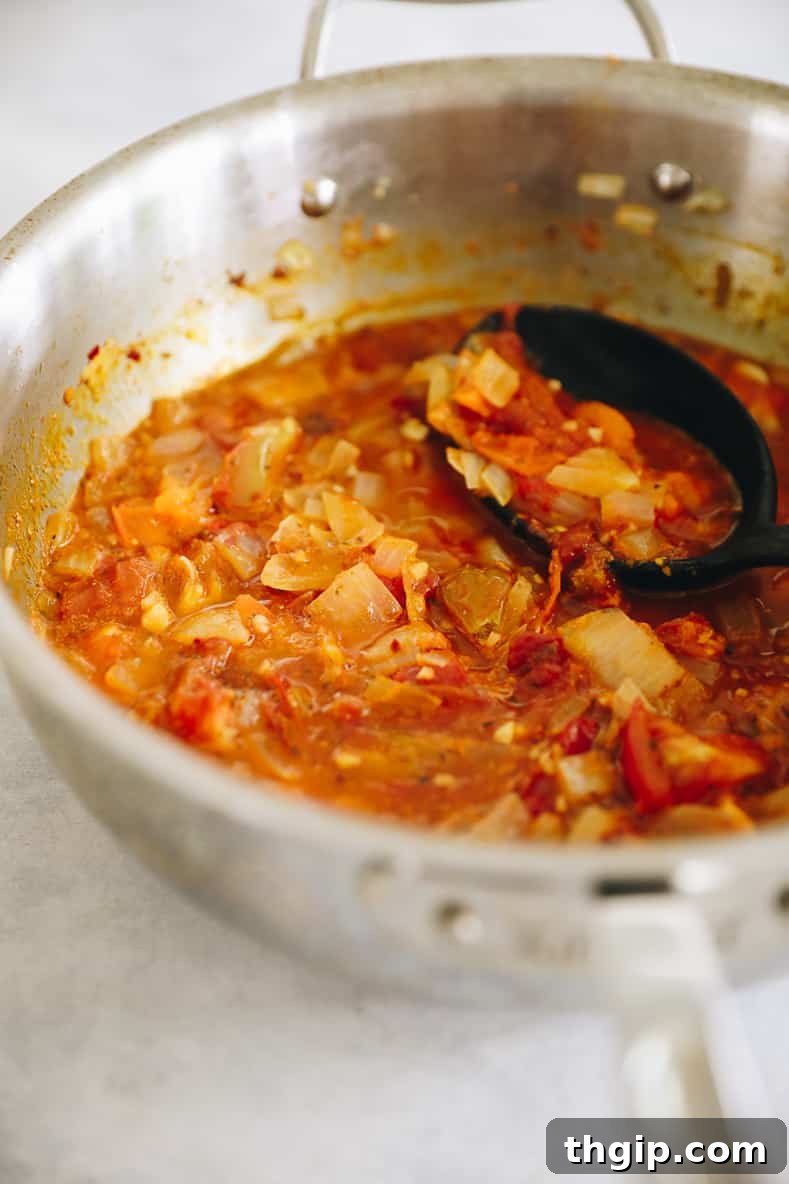
Start by adding your high-quality extra virgin olive oil to a large, heavy-bottomed saucepan or Dutch oven over medium heat. Once the oil is shimmering, add the diced yellow onions. Cook the onions gently for about 5 minutes, stirring occasionally, until they soften and become translucent. This allows their natural sweetness to develop, forming a crucial flavor base for the sauce. Next, add the freshly minced garlic and cook for another 1-2 minutes, stirring constantly to prevent it from burning. The garlic should be fragrant but not browned, as burnt garlic can impart a bitter taste. Immediately add your diced fresh tomatoes (or canned diced tomatoes if using) to the pan. Increase the temperature to medium-high and bring the mixture to a gentle boil. Once bubbling, stir in the red pepper flakes, Italian seasoning, and a generous pinch of salt and black pepper. Reduce the heat to medium-low and let the sauce simmer, uncovered, for at least 20 minutes. This allows the flavors to meld and deepen beautifully.
STEP 2: ACHIEVE YOUR PERFECT CONSISTENCY
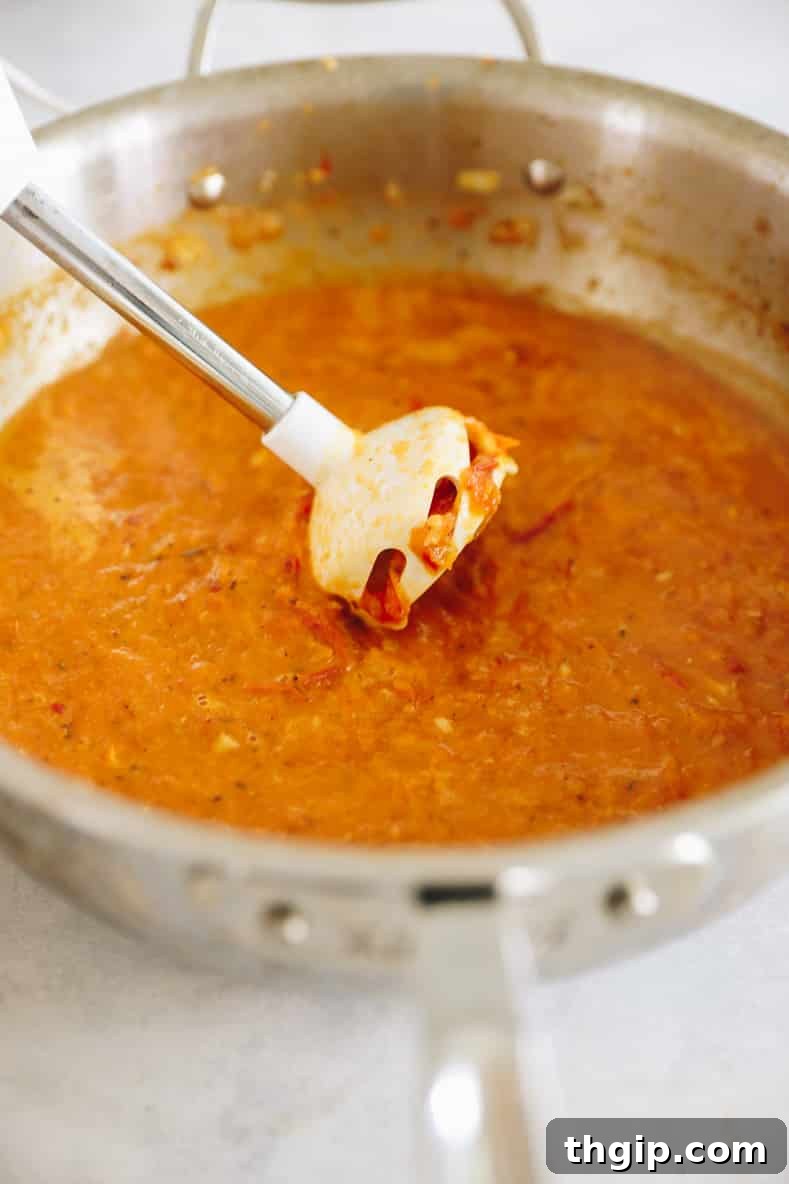
After the initial simmering, the sauce will have started to thicken and the tomatoes will have broken down. Continue to simmer the sauce, uncovered, until it reaches your preferred consistency. For a chunky, rustic sauce, simply stir and lightly mash any larger tomato pieces with the back of a spoon. If you prefer a smoother, more refined sauce, carefully use an immersion blender directly in the pot to blend it to your desired silkiness. Alternatively, you can transfer portions of the sauce to a regular blender (be cautious with hot liquids and blend in batches) and then return it to the pot.
STEP 3: FINISH AND SERVE
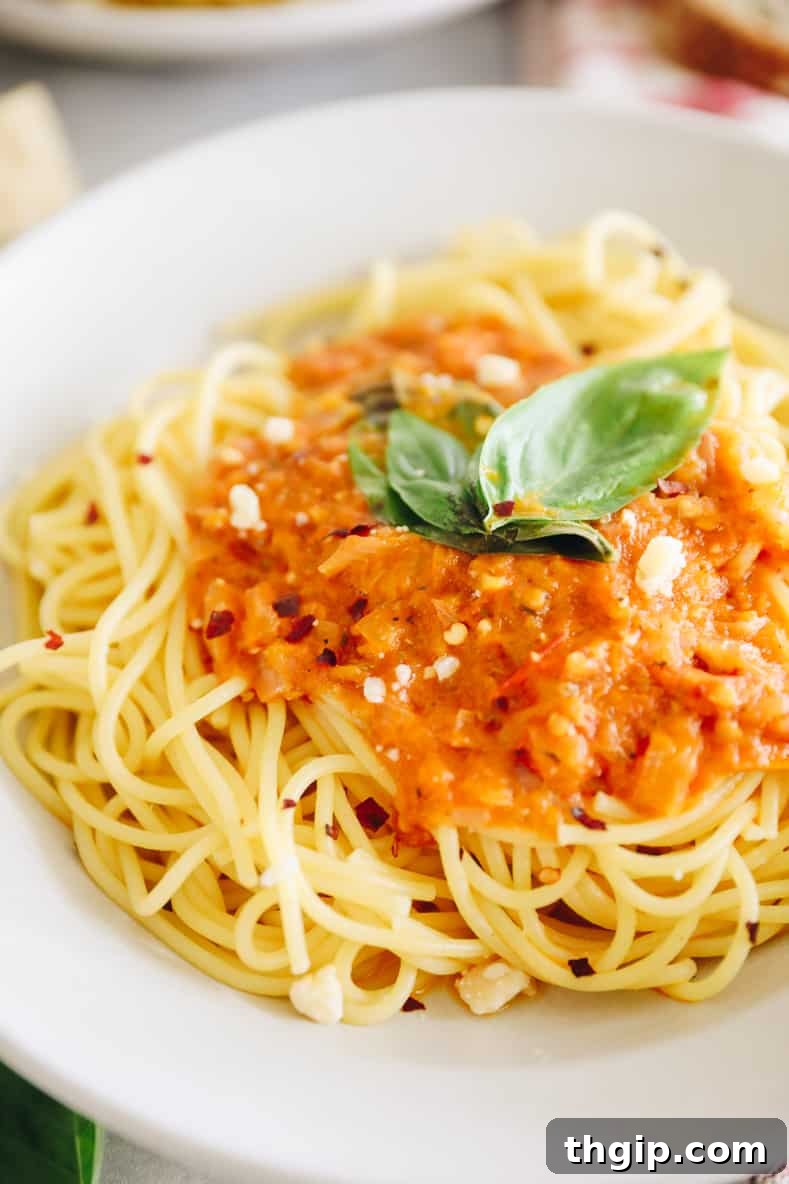
Once the sauce has reached its ideal consistency and flavor, give it one final taste and adjust the salt and pepper if necessary. Stir in the fresh basil leaves just before serving, allowing their vibrant aroma to infuse the hot sauce. Now, your homemade Arrabbiata sauce is ready to be generously spooned over your favorite pasta, spread on a pizza crust, or used in any of the delicious ways suggested below. Garnish with a sprinkle of fresh Parmesan cheese and an extra basil leaf for an irresistible presentation.
Tips for the Best Arrabbiata Sauce
- Quality Ingredients Matter: Since this recipe uses minimal ingredients, the quality of each component is paramount. Use the freshest tomatoes you can find, good extra virgin olive oil, and fresh garlic.
- Don’t Rush the Aromatics: Sautéing the onions until translucent and cooking the garlic until fragrant (but not browned) lays a strong flavor foundation. Patience here pays off.
- Control the Heat: Start with 1 teaspoon of red pepper flakes and taste. If you like more heat, add another 1/2 teaspoon and simmer for a few more minutes to allow the flavors to develop. You can always add more, but you can’t take it away!
- Simmer for Depth: The 20-minute simmer allows all the flavors to meld and the tomatoes to break down, creating a richer, more complex sauce. For an even deeper flavor, you can let it simmer for up to an hour, stirring occasionally, adding a splash of water or vegetable broth if it becomes too thick.
- Adjust Consistency: If you prefer a thicker sauce, continue simmering longer. For a thinner sauce, you can add a little pasta water or vegetable broth.
Creative Ways to Enjoy Arrabbiata Sauce
This fiery and flavorful sauce is incredibly versatile. Beyond its traditional pairing with pasta, here are several delicious ideas to incorporate Arrabbiata into your meals:
- Classic Pasta Perfection: The most popular use! Arrabbiata sauce is traditionally enjoyed with penne pasta, but it pairs beautifully with any noodle shape – spaghetti, rigatoni, fusilli, or farfalle. Enhance your meal by adding a lean protein like grilled chicken, sautéed shrimp, or even crumbled Italian sausage. A generous sprinkle of freshly grated Parmesan or Pecorino Romano cheese is the perfect finishing touch for a satisfying and spicy dinner.
- Zesty Pizza Base: Take your homemade pizza night to the next level by swapping out your standard marinara for Arrabbiata sauce. Its vibrant flavor and spicy kick will transform your ‘za into a more exciting and sophisticated dish. Top with your favorite cheeses and toppings for a truly unique pizza experience.
- Hearty Casseroles: This robust tomato sauce is a fantastic addition to any casserole that calls for a tomato-based sauce. Imagine the depth of flavor it would bring to a classic lasagna, a baked ziti, or a vegetable gratin. It would be particularly delicious in an eggplant parmesan casserole, adding an extra layer of warmth and spice.
- Versatile Sauce or Dip: Don’t limit yourself to main courses. Drizzle this dynamic sauce over a grain bowl with roasted vegetables and your protein of choice for a wholesome and flavorful lunch. It also makes an excellent dipping sauce for crusty bread, fresh vegetables, or even grilled halloumi cheese. Get creative and dream up new ways to enjoy its spicy charm!
Storing Your Homemade Arrabbiata Sauce
One of the many advantages of making your own sauce is the ability to prepare it in advance and store it for future meals. This Arrabbiata sauce stores exceptionally well, making it perfect for meal prep.
Once the sauce has completely cooled to room temperature, transfer it to an airtight container. It will keep beautifully in the refrigerator for up to 5 days. This makes it a fantastic option for prepping healthy, delicious meals throughout the week without extra cooking time.
For longer storage, this spicy Arrabbiata sauce freezes wonderfully. Simply pour the cooled sauce into freezer-safe containers or heavy-duty freezer bags (leaving a little headspace for expansion). It can be frozen for up to 3 months. When you’re ready to enjoy it, simply transfer the frozen sauce to the refrigerator to thaw overnight, then gently reheat it on the stovetop over medium-low heat until warmed through. This convenience ensures you always have a gourmet, homemade meal just minutes away.
More Delicious Pasta Recipes to Explore
- Kale Pesto Pasta
- Tofu Bolognese Sauce
- Sun Dried Tomato Pesto Sauce
- Roasted Red Pepper Sauce
- Hidden Veggie Pasta Sauce
Homemade Arrabbiata Sauce

5 Stars
No reviews yet.
Making arrabbiata sauce is easier than you think! Ditch the store-bought jar and whip up this homemade arrabbiata sauce recipe instead.
This vibrant and spicy Italian tomato sauce is incredibly simple to prepare, yet delivers an explosion of authentic flavor that will impress even the most discerning palates. Made with fresh vine tomatoes, aromatic garlic and onion, and a generous kick of red pepper flakes, it’s a healthier and more delicious alternative to store-bought options. Perfect for pasta, pizza, or any dish needing a robust, fiery tomato base, this recipe is a must-try for home cooks looking to elevate their everyday meals.
- Author: Davida Lederle
- Prep Time: 5 minutes
- Cook Time: 30 minutes
- Total Time: 35 minutes
- Yield: 4 servings
- Category: Dinner
- Method: Cook
- Cuisine: Italian
- Diet: Vegan
Ingredients
- 1/4 cup extra-virgin olive oil
- 1 large yellow onion, diced
- 4 garlic cloves, minced
- 5 large vine tomatoes, diced (roughly 2 lbs)
- 1 tsp red pepper flakes (less if you don’t want it so hot)
- 1 tbsp Italian seasoning
- 1/4 cup fresh basil leaves
- 3/4 tsp salt, or more to taste
- Freshly ground black pepper, to taste
Instructions
- Add olive oil and diced onions to a large saucepan and cook on medium heat for 5 minutes or until onions are translucent.
- Add in minced garlic and cook for 1-2 more minutes, until fragrant. Be careful not to burn the garlic.
- Add the diced tomatoes to the pan and increase the temperature to medium-high until the mixture starts to boil.
- Stir in the red pepper flakes, Italian seasoning, and salt and pepper.
- Once boiling, reduce heat to medium-low and let the sauce simmer, uncovered, for 20 minutes, allowing flavors to meld.
- Stir in the fresh basil leaves, gently incorporating them into the warm sauce.
- Continue simmering until your preferred consistency is reached. For a smoother sauce, use an immersion blender to blend directly in the pot.
- Serve generously over your favorite pasta, as a pizza base, or in other creative dishes.