
My Yoga Journey: A Path to Holistic Well-being and Self-Discovery
Yoga, for me, transcends mere physical exercise; it has woven itself into the fabric of my life, becoming one of my most profound and empowering relationships. Beyond the cherished bonds with my family, the consistent presence of yoga has anchored me through every chapter of my life. It has been a steadfast companion during the turbulent years of high school, a calming antidote to the intense pressures of college, a crucial tool in navigating the challenges of an eating disorder, and an essential guide in my journey toward recovery and the rediscovery of a truly balanced and mindful lifestyle. This ancient practice has not only sculpted my body but has profoundly shaped my spirit and mental resilience, offering a sanctuary amidst life’s ever-changing tides.
The yoga mat has borne witness to an entire spectrum of human emotion. It has absorbed my tears, been drenched in my sweat, echoed my frustrated cries, and resonated with my joyful laughter. Every single emotion imaginable, from despair to euphoria, has found an outlet on that sacred space. More than just a piece of equipment, my mat has been a steadfast friend, a silent confidante to my deepest thoughts, and a profound spiritual healer. In the simplest yet most impactful terms, yoga has unequivocally transformed my life, guiding me towards a deeper understanding of myself and the world around me.
But to truly appreciate this profound connection, let’s rewind to the very beginning, to the genesis of my personal yoga story…
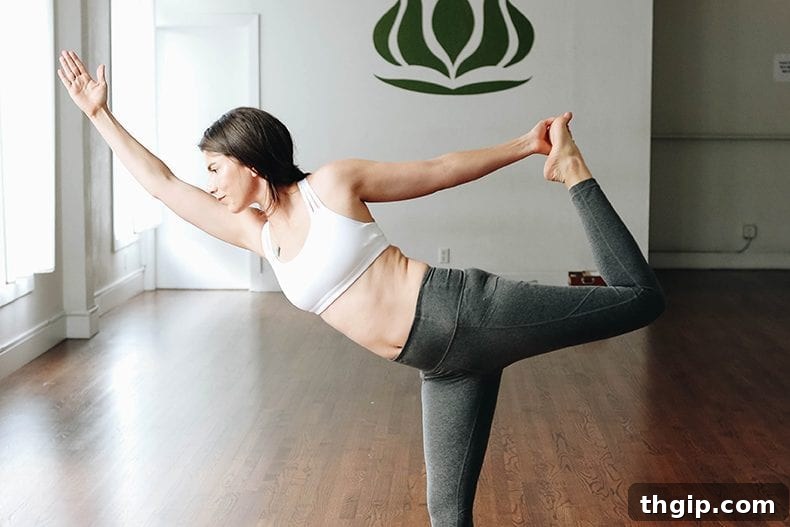
Pictured: Stash Pocket Salutation Tights | Fully Focused Bra
The Early Years: Discovering Hatha Yoga in High School
My first introduction to yoga unfolded during my sophomore year of high school. Eager to explore new activities after acquiring a gym membership, I browsed the class schedule with an open mind. Being someone who never quite fit the mold of a “conventional” athlete – I wasn’t drawn to team sports or intense competition – I found myself naturally gravitating towards yoga. What immediately captivated me was its emphasis on flexibility, a natural gift I was fortunate to possess, and its core principle of balance, both physical and mental. I walked into that first class, a complete novice, but with a quiet determination. My instructor, Cindy, who would become my very first yoga mentor, casually tossed out terms like “Warrior One” and “Down Dog.” I discreetly mimicked the movements of those around me, feigning familiarity, doing my best to “wing it” through each pose.
The entire class was a blur of new movements and unfamiliar Sanskrit terms until the very end, when we settled into Savasana, the final resting pose. Lying on my back, I experienced a sensation unlike anything I had ever felt in a fitness class before. It was a profound sense of peace, an overwhelming euphoria that permeated every cell of my body. In that moment of complete stillness, I was utterly, irrevocably hooked. The decision was made: yoga was for me.
From that day forward, every Saturday morning became dedicated to Cindy’s class. This consistent practice marked the humble beginnings of what would evolve into a deeply significant, and at times, tumultuous relationship with yoga. During these formative years, my exposure was primarily to Hatha Yoga, a style known for its deliberate, slower pace. Hatha emphasizes holding poses for an extended duration, allowing practitioners to delve deeper into alignment, build strength, and cultivate a heightened sense of body awareness, rather than quickly flowing from one posture to the next. This foundational experience laid the groundwork for my journey, though I wouldn’t fully understand the depth of its teachings until much later.
College Challenges: Embracing Vinyasa Flow and the Pursuit of Intensity
Upon entering college, my yoga practice underwent a significant shift. Joining the university gym, I felt a surge of confidence, perhaps even a touch of overconfidence, given my 2.5 years of Hatha experience. I boldly signed up for a 16-week Vinyasa Flow class, meeting twice a week. I anticipated a seamless transition, but I was in for a rude awakening. Vinyasa, with its dynamic, flowing sequences synchronized with breath, was a completely different beast. After just the first week, my arms were so sore I could barely lift them. I had never executed so many Sun Salutations in a single hour, and my muscles screamed in protest. However, my young body, resilient and eager, adapted remarkably quickly. Before long, the fast-paced, challenging rhythm of Vinyasa Yoga became my preferred style, perfectly aligning with my energetic college lifestyle.
I continued with Vinyasa throughout my college years, drawn to its intensity and the physical demands it placed on my body. During this period, my perception of yoga was largely confined to the realm of physical exercise. Like many, I viewed it primarily as a means to achieve fitness goals, to push boundaries, and to “get a good workout.” My mantra was “faster, harder, stronger.” The objective was to push my body to its absolute limits, striving for the most advanced and intense version of every pose. The very idea of a “restorative yoga class” puzzled me. Why would anyone opt for a practice that didn’t make you sweat, that didn’t leave you feeling utterly exhausted yet invigorated? Wasn’t the purpose of yoga to challenge, to push, to burn?
This narrow perspective, focused solely on physical prowess and intensity, was deeply ingrained. But as life often demonstrates, profound shifts often emerge from unexpected places. My understanding of yoga, and indeed of my own body, was about to undergo a dramatic and necessary transformation.
A Profound Shift: Injury, Healing, and Intuitive Movement
A few years post-college, a pivotal moment occurred when I sustained a significant knee injury while running on a treadmill, an injury that subsequently impacted my leg and back. This incident coincided with the peak of my intense exercise habits, where yoga, even a demanding 90-minute Vinyasa flow in a heated room, was considered an “active rest day.” The injury served as a harsh, yet invaluable, lesson. It’s a humbling experience to realize that your body, no matter how much you push it, is not superhuman. The pain and physical limitations forced me to confront my unsustainable approach to fitness and my deep-seated desire to constantly push myself, often at the expense of my well-being. This was not just a physical wound; it was a wake-up call to re-evaluate my relationship with movement and self-care.
During my physical therapy sessions, my therapist, observing my struggles and my high-stress levels, suggested something revolutionary: incorporating yoga to aid in my body’s healing and to mitigate both physical and mental stress. My initial reaction was dismissive; I tried to explain that my body was too broken, too vulnerable for yoga. But she gently countered, reminding me that yoga is far from a monolithic, extreme practice. She opened my eyes to the vast spectrum of yoga, specifically recommending gentle Hatha or restorative classes. Her guidance was to focus on increasing mobility and promoting healing without placing undue strain on my injured body, an approach that was entirely new to me.
This recommendation led me to a transformative discovery: the world of online yoga. Unable to attend studio classes due to my injuries, I began to roll out my mat at home. This shift proved to be a profound turning point. Without an instructor physically present, I was compelled to listen intently to my own body. If a pose was inaccessible or caused discomfort, I learned to modify it, to take a variation, or to simply rest. I consciously slowed down, paying meticulous attention to every sensation, every breath. This intentional listening fostered a deep connection to the spiritual and introspective side of yoga, a dimension I had previously overlooked. It was through this gentle, self-guided practice that I truly began to soothe not just my physical body, but my soul, fostering a sense of peace and acceptance that had been missing.
My Evolving Practice: Embracing Self-Compassion and Intuitive Living
Fast forward to the present day, and yoga remains an unwavering constant, an indispensable anchor in my life. While it might sound cliché, there’s an undeniable sense of safety and belonging I feel the moment I step onto my mat. This practice became my gateway into the intuitive living movement, a philosophy centered on listening to one’s inner wisdom. Rolling out my mat became an act of permission, allowing me to truly tune into my body’s needs and signals. This cultivated awareness didn’t stay confined to my yoga practice; it seamlessly integrated into my daily life, encouraging me to listen to my body and intuition even when I wasn’t doing yoga.
I discovered the profound meaning of being in tune with my authentic feelings, rather than suppressing them deep within my mind and heart. This newfound awareness fostered a powerful sense of self-compassion. I learned to forgive myself for my physical limitations and accepted that not every moment is the right time or place to push boundaries, even for things I *can* do. Sometimes, the most challenging and ultimately rewarding practice is simply to slow down, to quiet the external noise, and to truly listen to the subtle cues of my body and spirit. This shift from external performance to internal wisdom has been the greatest gift of my yoga journey.
My current practice is a beautiful blend of flexibility and intuition. While I still enjoy attending occasional studio classes to absorb the collective energy of the room and connect with a community, I more frequently practice at home or find solace outdoors. Sometimes, my flow is guided by a YouTube video or a podcast, offering new perspectives and sequences. Other times, I simply put on my curated yoga playlist and allow my body to move intuitively, without external instruction. My practice varies greatly based on how I feel on any given day: sometimes it’s a dynamic, energetic Vinyasa, and other times it’s a deeply calming and restorative session. This flexibility allows my practice to truly serve my evolving needs.
With each moment I step onto the mat, I’m gently reminded of the vast distance I’ve traveled—from the tentative beginner in Cindy’s class to the intuitive practitioner I am today. I may still struggle with a handstand or the full extension of my legs in Boat Pose, but these external achievements pale in comparison to the invaluable ability I’ve cultivated: the profound capacity to listen to my body. This fundamental skill was entirely absent when I first stepped into that high school gym in 2005. My yoga story is far from over; it has many more chapters to unfold, and like life itself, it will undoubtedly take countless twists and turns as I continue to explore its ever-evolving place in my future. I eagerly anticipate what insights and growth the next chapter will bring.
Finding the Right Gear: Comfort and Functionality on the Mat
Beyond the philosophical and physical aspects of yoga, there’s a practical side that significantly impacts the quality of one’s practice: appropriate attire. One of my biggest pet peeves when it comes to yoga clothing is apparel that looks aesthetically pleasing but completely fails in terms of functionality. There’s nothing quite as distracting during a mindful practice as constantly worrying about a wardrobe malfunction, especially when transitioning into poses like Downward-Facing Dog – a scenario I’m sure many of you can relate to! The wrong gear can pull you out of your focus, diminishing the very benefits you seek from yoga.
This is why I’m incredibly enthusiastic about my collaboration with Athleta for this post. Their clothing consistently hits the sweet spot between style and supreme comfort. I’ve been a loyal customer of Athleta for years, drawn to their commitment to quality and performance. A particular favorite of mine is their Powervita fabric line, which offers an unparalleled blend of softness and support. This innovative fabric allows me to move freely and intuitively in any way my body desires, ensuring everything stays comfortably in place, without pinching or riding up. But the versatility of Athleta’s wear extends beyond the yoga studio; their pieces seamlessly transition into other aspects of my life where comfort and ease of movement are paramount, whether I’m running errands, lounging at home, or meeting friends for coffee. I genuinely cannot recommend Athleta’s workout wear enough, not just for yoga, but for any activity that requires comfort, durability, and style.
Disclaimer: This post is sponsored by Athleta. All opinions expressed are 100% my own. Thank you for supporting the brands that help make THM possible!
What’s Your Yoga Story? Discovering Your Movement of Choice
Every individual’s journey with movement is unique and deeply personal. I’ve shared how yoga became my steadfast companion, shaping my understanding of self-care, resilience, and intuitive living. Now, I invite you to reflect on your own path:
What’s your yoga story, or perhaps, your broader journey with physical movement and well-being? What activities have profoundly impacted your life, fostering growth and self-discovery? We’d love to hear your insights in the comments below!