
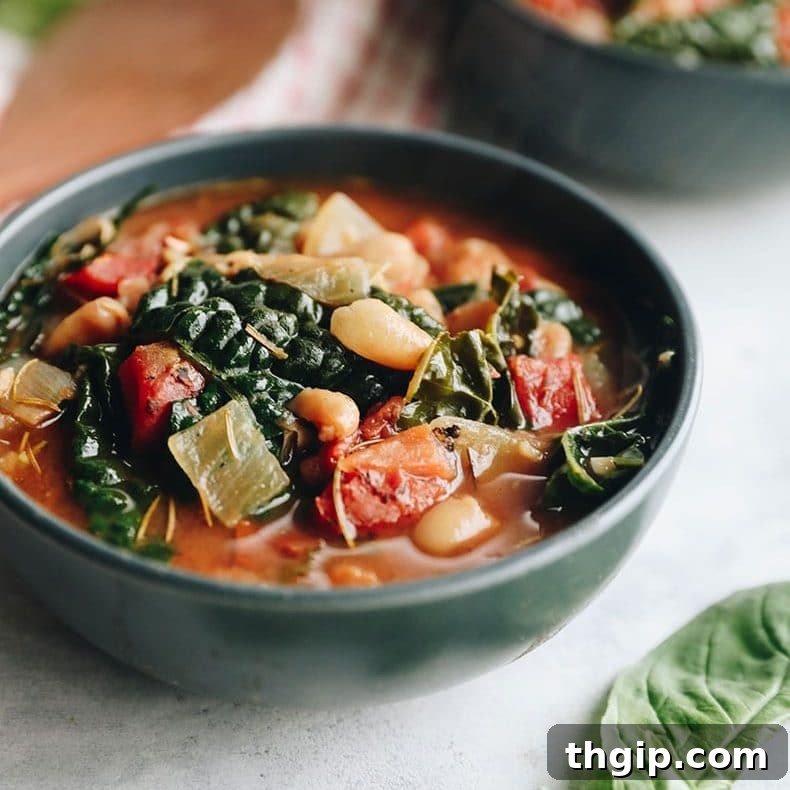
Welcome to a culinary journey that brings the warmth and robust flavors of Italy right into your kitchen! There’s something truly magical about a simmering pot of soup, especially as the crisp air of fall gives way to winter’s embrace. It’s more than just a meal; it’s an experience – a moment of comfort, nourishment, and pure joy. This Tuscan White Bean Soup is an exquisite example, offering a delightful twist on the classic Italian Ribollita. It’s a testament to simple, wholesome ingredients coming together to create a dish that’s both hearty and incredibly satisfying.
For those who cherish the convenience of healthy, home-cooked meals, this one-pot wonder is a game-changer. Imagine cooking once and having delicious leftovers ready for days! Not only does this save precious time, but soups like this Tuscan White Bean variety often taste even better the next day, as the flavors have more time to meld and deepen. This recipe has been a staple in our household for years, evolving from a simple blog post in 2013 into a timeless favorite. While I now often make it by heart, relying on intuition and the forgiving nature of soup, it was high time for an aesthetic update. So, here we are: the same beloved recipe, now with updated visuals to inspire your cooking adventures. Get ready to fall in love with this naturally gluten-free and vegan masterpiece!
What is Tuscan White Bean Soup (Ribollita)? Unveiling a Tuscan Classic
Tuscan White Bean Soup, often referred to as Ribollita, is more than just a soup; it’s a culinary tradition steeped in history and the philosophy of “cucina povera” – peasant cooking that makes the most of available ingredients to create something truly extraordinary. Originating from the picturesque region of Tuscany in Italy, Ribollita literally translates to “reboiled,” reflecting its humble beginnings as a way to revive leftover vegetable and bread soup. Traditionally, it’s a thick, hearty vegetable soup with stale bread added to it, creating a rustic, satisfying texture that’s truly unique. My interpretation embraces these traditional roots while simplifying the process, making it accessible for modern kitchens without sacrificing any of its authentic charm or incredible flavor.
The beauty of this soup lies in its ability to transform simple, wholesome ingredients into a rich, complex, and incredibly comforting dish. Each component plays a vital role, contributing to the soup’s depth, nutritional value, and vibrant character. Here’s a closer look at the star ingredients that make this Tuscan White Bean Soup truly exceptional:
- Flavorful Vegetables: This soup is a celebration of garden-fresh goodness. My version prominently features aromatic yellow onion and an abundance of garlic cloves, which form the foundational flavor base. Nutrient-dense kale adds a beautiful color and a slight bitterness that perfectly balances the other ingredients, while diced tomatoes (both canned and fresh, if preferred) provide a sweet and tangy burst. The flexibility of Ribollita means you can absolutely get creative here! Incorporating other classic soup vegetables like carrots and celery not only adds additional layers of flavor but also boosts the nutritional profile and ensures no vegetable goes to waste. Think about seasonal variations to truly personalize your bowl.
- Aromatic Herbs & Spices: The soul of Italian cooking often lies in its fresh herbs, and this soup is no exception. Fresh rosemary and basil are indispensable, infusing the broth with their distinctive, fragrant notes. Rosemary offers a piney, earthy aroma, while basil brings a sweet, peppery freshness. While dried herbs can be used in a pinch, opting for fresh truly elevates the soup to the next level. A generous seasoning of salt and pepper ensures every spoonful is perfectly balanced.
- Wholesome White Beans: The heartiness of this soup comes from white beans, specifically cannellini or Northern white beans. These creamy, tender legumes are packed with plant-based protein and fiber, making the soup incredibly filling and nutritious. Whether you choose the convenience of canned beans (always remember to rinse and drain them!) or prefer to cook your own dried beans from scratch, they contribute a wonderful texture and a mild, earthy flavor that absorbs all the deliciousness of the broth.
- Rich Vegetable Stock: The liquid base is crucial, and a high-quality vegetable stock forms the backbone of the soup’s flavor. While any good stock will work, I highly recommend using a low-sodium variety. This gives you complete control over the saltiness of the finished dish, allowing you to season to your personal preference without risking an overly salty outcome. The stock marries all the individual flavors, creating a cohesive and deeply satisfying broth.
- Bright Red Wine Vinegar: This might seem like a small addition, but a hint of acidity from red wine vinegar is a culinary secret weapon. It acts as a brightener, cutting through the richness and elevating all the other flavors. Just a touch at the end can awaken the palate and add a vibrant zest, making the entire dish more dynamic and memorable.
- Essential Olive Oil: A cornerstone of Mediterranean cuisine, olive oil is used to sauté the initial aromatics. Its fruity, peppery notes not only add flavor but also provide healthy monounsaturated fats. For those seeking alternatives, avocado oil can be a suitable substitute, offering a neutral flavor and high smoke point.
Together, these ingredients create a symphony of flavors and textures, making each spoonful of this Tuscan White Bean Soup a journey through the heart of Italian comfort food. It’s a meal that nourishes both body and soul, leaving you feeling warm, satisfied, and utterly content.
Crafting Your Tuscan White Bean Soup: A Step-by-Step Guide
Creating this flavorful Tuscan White Bean Soup is a simple and rewarding experience. The beauty of a one-pot meal lies in its straightforward approach, allowing even novice cooks to achieve a delicious result. Follow these steps to bring this Italian classic to life in your kitchen:
STEP 1: Build the Flavor Foundation. Begin by heating a generous swirl of olive oil in a large stock or soup pot over medium heat. The size of your pot is important here, as you’ll be adding many ingredients. Once the oil shimmers, add the diced yellow onions. Sauté them gently for about 5 minutes, stirring occasionally, until they become translucent and fragrant, softening beautifully. Next, stir in the minced garlic cloves. Cook for another 1-2 minutes until the garlic is fragrant, being careful not to let it brown, as burnt garlic can turn bitter. Finally, add the chopped fresh rosemary. Allow it to cook for about 2 minutes more, letting its aromatic oils release and infuse the entire pot with its warm, earthy scent. This initial sautéing step is crucial for developing a deep, rich flavor base for your soup.
STEP 2: Introduce the Liquids and Simmer. Now it’s time to bring the soup to life. Pour in the canned diced tomatoes (undrained, to capture all their juices) and, if you’re using them, the fresh chopped tomatoes for an extra layer of bright tomato flavor. Add the vegetable broth, then season with salt and pepper to taste. Give everything a good stir to combine and bring the mixture to a rolling boil over medium-high heat. Once boiling, reduce the heat to low, allowing the soup to settle into a gentle simmer. At this point, add the rinsed and drained white beans. Cover the pot partially and let the soup simmer for at least 30 minutes. This simmering time is essential; it allows all the flavors to meld beautifully, the vegetables to soften further, and the broth to develop depth and character.
STEP 3: Finish with Freshness. In the final few minutes of cooking, stir in the red wine vinegar. This touch of acidity is key to brightening the soup and enhancing all the other flavors. Next, add the chopped kale and fresh basil. Stir until the kale wilts down and turns a vibrant green, which usually takes only a few minutes. The fresh basil adds a burst of aromatic freshness right at the end, preserving its delicate flavor and color. Taste and adjust seasonings one last time, adding more salt, pepper, or even a splash more vinegar if needed.
Your Tuscan White Bean Soup is now ready to be enjoyed! This simple process yields a rich, flavorful, and incredibly satisfying meal that speaks to the heart of Italian cooking.
Serving Suggestions & Creative Adjustments for Your Tuscan White Bean Soup
This Tuscan White Bean Soup is wonderfully hearty and satisfying on its own, making it a perfect stand-alone meal. However, if you’re hosting a dinner party, looking to elevate your weeknight dinner, or simply craving more, there are numerous delicious ways to serve and adapt it. These suggestions allow you to customize the soup to your taste, dietary preferences, or occasion.
Traditional Pairings and Hearty Sides
- Tuscan Bread: The Essential Companion: Traditionally, this soup is served with crusty Tuscan bread, and I wholeheartedly recommend it! A rustic, dense bread with a good crust is perfect for dipping into the flavorful broth, soaking up every last drop of goodness. You can toast the bread lightly or serve it fresh – either way, it’s a delightful accompaniment that truly completes the Tuscan experience. Look for artisan loaves or sourdough for the best texture and flavor.
- A Fresh Side Salad: For a lighter, fresher contrast, pair your soup with a vibrant side salad. A simple mixed green salad with a light vinaigrette works beautifully, or you could opt for something with more character like a Panzanella salad. Panzanella, an Italian bread salad, with ripe tomatoes, cucumbers, and basil, would complement the soup’s flavors wonderfully.
Enhancing Protein Content
While the white beans provide a substantial amount of plant-based protein, you might want to boost the protein content, especially if you’re serving it to meat-eaters or for a post-workout meal. Here are some fantastic options:
- Grilled Chicken or Chicken Sausage: For a lean protein boost, serve slices of perfectly grilled chicken breast alongside or even directly in the soup. Precooked Italian chicken sausage, sliced and lightly browned, adds a savory, spiced dimension that pairs incredibly well with the soup’s flavors. It’s a quick and easy way to satisfy those who prefer meat with their meal.
- Bacon or Pancetta: For a richer, more indulgent flavor, crisp up some diced bacon or pancetta. Drain off most of the fat, then stir the crispy bits into the soup or sprinkle them on top as a garnish. The smoky, salty crunch adds an irresistible layer of flavor and texture, though it will move the soup away from being strictly vegan.
- Eggs: For a surprisingly delicious and easy protein boost, poach or fry an egg and place it on top of each serving. The runny yolk will add richness to the broth.
Making it More Traditional: The Ribollita Way
As mentioned, traditional Ribollita often incorporates stale bread directly into the soup, making it incredibly thick and stew-like. While I personally enjoy my bread on the side for dipping, you can easily embrace this authentic method:
- Adding Bread Chunks: To make it a more traditional Ribollita, right at the end of the cooking process, add a handful of slightly stale bread cubes to the pot. Stir them in and allow them to soak up the broth for a few minutes until they soften but still retain some texture. This creates a wonderfully rustic and filling consistency. You can even toast the bread cubes lightly before adding them for extra flavor and to prevent them from becoming too mushy too quickly.
Garnishes and Flavor Boosters
- Extra Virgin Olive Oil: A drizzle of high-quality extra virgin olive oil over each serving just before serving adds a luxurious finish and enhances the overall Tuscan essence.
- Freshly Grated Cheese: If you’re not strictly vegan, a sprinkle of freshly grated Parmesan or Pecorino Romano cheese adds a salty, umami depth that is simply divine.
- Red Pepper Flakes: For those who appreciate a bit of heat, a pinch of red pepper flakes offers a subtle warmth and zing.
- More Fresh Herbs: A final flourish of fresh basil or rosemary leaves as a garnish elevates the presentation and reinforces the aromatic profile.
Experiment with these suggestions to find your favorite way to enjoy this versatile and delicious Tuscan White Bean Soup!
Preserving Flavor: Freezing and Reheating Tuscan White Bean Soup
One of the many wonderful aspects of this Tuscan White Bean Soup recipe is how well it freezes, making it perfect for meal prepping, batch cooking, or simply ensuring you always have a comforting, homemade meal on hand. This recipe yields a generous batch, so freezing is an excellent way to extend its shelf life and enjoy its deliciousness whenever the craving strikes.
Freezing Instructions:
- Cool Completely: Before freezing, it is absolutely crucial to allow the soup to cool down completely to room temperature. Freezing hot soup can lower the temperature of your freezer, potentially affecting other frozen foods, and can also lead to an undesirable texture when reheated.
- Portioning: Divide the cooled soup into individual or family-sized portions. This makes thawing and reheating much more convenient, as you only need to take out what you need.
- Choose the Right Containers: Opt for airtight, freezer-safe containers or heavy-duty freezer bags. If using containers, leave about an inch of headspace at the top, as the liquid will expand slightly during freezing. If using freezer bags, lay them flat after filling and sealing (removing as much air as possible) to save space and facilitate quicker thawing.
- Label and Date: Always label your containers or bags with the name of the soup and the date it was frozen. This helps you keep track of your freezer inventory and ensures you consume it within its optimal freshness period. Properly stored, Tuscan White Bean Soup can last in the freezer for up to 3-4 months.
Defrosting and Reheating Instructions:
When you’re ready to enjoy your frozen soup, you have a few convenient options for defrosting and reheating:
- Overnight in the Refrigerator: The safest and most recommended method is to transfer the frozen soup from the freezer to the refrigerator the night before you plan to eat it. This allows it to defrost gradually and thoroughly.
- Quick Thaw and Reheat on Stovetop: If you’re short on time, you can carefully remove the frozen soup from its container (you might need to run the container under warm water briefly to loosen it) and place it directly into a pot on the stove over low heat. Stir occasionally as it thaws, then increase the heat to medium-low and continue to warm through fully, stirring frequently to prevent sticking.
- Microwave (for individual portions): For single servings, you can transfer the defrosted soup (or even a frozen block, if your microwave container allows) into a microwave-safe bowl. Heat on a medium setting, stirring every couple of minutes, until the soup is piping hot throughout.
Reheating Tip: After defrosting and reheating, the soup might appear a bit thicker than when it was freshly made. Feel free to add a splash of vegetable broth or water to achieve your desired consistency. Always taste and adjust the seasonings (salt, pepper, or a tiny bit more red wine vinegar) after reheating, as flavors can sometimes mellow in the freezer.
With these simple freezing and reheating tips, you can enjoy the hearty goodness of your Tuscan White Bean Soup any day of the week, ensuring a healthy and delicious meal is always just a few steps away.
Nutritional Powerhouse: The Health Benefits of Tuscan White Bean Soup
Beyond its incredible flavor and comforting appeal, this Tuscan White Bean Soup is a true nutritional powerhouse. Crafted with wholesome, plant-based ingredients, it offers a wealth of health benefits, making it an excellent choice for a balanced and nourishing diet. Here’s why this soup is so good for you:
- Rich in Fiber: White beans and kale are superstars when it comes to dietary fiber. Fiber is essential for digestive health, helping to regulate blood sugar levels, promote satiety, and support a healthy gut microbiome. A high-fiber diet can also contribute to weight management and reduce the risk of chronic diseases.
- Excellent Source of Plant-Based Protein: White beans are an outstanding source of lean, plant-based protein, crucial for muscle repair, growth, and overall bodily function. For those following a vegan or vegetarian diet, this soup provides a substantial protein boost without relying on animal products.
- Abundant in Vitamins and Minerals: The array of vegetables in this soup delivers a powerful punch of essential vitamins and minerals. Kale, a true superfood, is brimming with Vitamins A, C, and K, as well as calcium and iron. Tomatoes provide potent antioxidants like lycopene, while garlic and onions offer immune-boosting compounds.
- Heart-Healthy Ingredients: The combination of beans, vegetables, and olive oil makes this soup incredibly heart-friendly. Olive oil provides healthy monounsaturated fats, known for their cardiovascular benefits. The high fiber content also helps manage cholesterol levels, while the low saturated fat profile supports a healthy heart.
- Naturally Gluten-Free and Vegan: This recipe is inherently free from gluten and animal products, making it suitable for a wide range of dietary needs and preferences. It’s a delicious way to enjoy a wholesome meal without compromising on flavor or nutritional value.
- Antioxidant-Rich: From the vibrant kale and tomatoes to the pungent garlic and fresh herbs, the ingredients in this soup are packed with antioxidants. These compounds help combat oxidative stress in the body, protecting cells from damage and contributing to overall health and well-being.
By enjoying a bowl of Tuscan White Bean Soup, you’re not just savoring a delicious meal; you’re fueling your body with vital nutrients that support good health from the inside out.
Tips for the Perfect Tuscan White Bean Soup
Achieving a truly exceptional Tuscan White Bean Soup is all about paying attention to a few key details. While the recipe is forgiving, these tips will help you elevate your soup from good to extraordinary:
- Quality Ingredients Matter: Start with the freshest, highest-quality ingredients you can find. Fresh, aromatic garlic and onions make a significant difference, as do vibrant kale and ripe tomatoes. High-quality vegetable stock will also lay a better flavor foundation than an inferior one.
- Don’t Rush the Sautéing: The initial step of sautéing the onions, garlic, and rosemary is crucial. Take your time to allow the onions to soften and become translucent, and the garlic and rosemary to release their fragrant oils. This builds the fundamental flavor base of your soup.
- Fresh Herbs are Best: While dried herbs can be used, fresh rosemary and basil impart a much brighter, more vibrant flavor. If possible, always opt for fresh, adding them towards the end of cooking to preserve their delicate qualities.
- Taste and Adjust Seasoning: This is perhaps the most important tip for any soup. Taste the soup throughout the cooking process, and especially before serving. Adjust salt and pepper as needed. The flavors will deepen and change as it simmers, so a final adjustment is key to perfect balance.
- Embrace Acidity: The red wine vinegar at the end is not optional; it’s a flavor enhancer. It provides a crucial acidic lift that brightens all the other flavors and prevents the soup from tasting flat. If you don’t have red wine vinegar, a squeeze of fresh lemon juice can work as a substitute.
- Don’t Overcook the Kale: Kale should be added towards the end of the cooking process, just long enough to wilt and turn vibrant green. Overcooking it can make it lose its bright color and some of its nutritional value.
- Consider Soaking Dried Beans: If you have the time, cooking dried cannellini or Great Northern beans from scratch will yield a creamier texture and a richer flavor compared to canned beans. Just remember to soak them overnight and cook them separately before adding them to the soup.
By keeping these tips in mind, you’ll consistently create a Tuscan White Bean Soup that is rich in flavor, perfectly textured, and wonderfully comforting – a dish that truly celebrates the simplicity and elegance of Italian cuisine.
More Delicious Soup Recipes to Explore:
- Detox Vegetable Soup
- Roasted Acorn Squash Soup
- Vegetarian Pho Recipe
- Root Vegetable Dal
Print Recipe
Tuscan White Bean Soup [Ribollita]

5 Stars 4 Stars 3 Stars 2 Stars 1 Star
5 from 1 review
This filling Tuscan White Bean Soup is packed with vegetables and flavor for a fun twist on a classic Italian Ribolitta recipe. It’s gluten-free and vegan and made in one-pot for easy prep and clean-up.
- Author: Davida Lederle
- Prep Time: 10 minutes
- Cook Time: 35 minutes
- Total Time: 45 minutes
- Yield: 6 bowls 1x
- Category: Soup
- Method: Cook
- Cuisine: Italian
- Diet: Vegan
Ingredients
Scale
- 1–2 tbsp olive oil
- 1 large yellow onion, diced
- 6 garlic cloves, minced
- 4 tbsp fresh rosemary, chopped (or 2 tbsp dried)
- 1 28 oz can of diced tomatoes
- optional: 3 fresh tomatoes, chopped*
- 2 cans of cannellini (white) beans, rinsed and drained
- 4 cups vegetable stock
- salt and pepper, to taste
- 2 tbsp red wine vinegar
- 1 bunch of basil, chopped
- 4 stocks of lacinato (tuscan) kale, stemmed and chopped
Instructions
- Heat olive oil over medium heat in a large stock or soup pot. Add onions and garlic and sauté for 5 mins or until onions are translucent.
- Add rosemary and cook for another 2 mins.
- Add in canned diced tomatoes, fresh tomatoes (if using), vegetable stock and salt and pepper and bring to a boil.
- Once boiling put heat on low and add beans. Let simmer for 30 mins.
- Add in vinegar, kale and basil.
- Serve immediately or store in fridge or freezer.
*I like the added tomato flavor from fresh tomatoes but this is entirely optional. Just omit if canned tomatoes are all you have.