
In the vibrant world of culinary exploration and personal growth, we often embark on journeys of discovery, both about the foods we love and ourselves. Today, let’s delve into a fascinating term: Ma·ven, n.: a trusted expert in a particular field, who seeks to pass knowledge on to others. The word maven comes from Hebrew, via Yiddish, and means one who understands, based on an accumulation of knowledge.
For many, the journey to becoming a “maven” is filled with continuous learning, unexpected revelations, and, yes, even a few humorous missteps. This path of accumulating knowledge, then passionately sharing it, lies at the heart of what many food bloggers and health advocates strive for. It’s about empowering others with well-researched insights, delicious recipes, and a genuine desire to foster a healthier, more informed community. Yet, true expertise isn’t just about what you know; it’s also about acknowledging what you don’t know, and embracing the process of learning along the way.
Recently, a conversation with my Dad took an interesting turn regarding my blog’s name. He humorously pointed out its accuracy, not only for my occasional “know-it-all” tendencies (a trait I’m diligently working on!), but also for the underlying Jewish heritage. To my honest surprise, I was completely stumped by the Jewish connection. Here I was, aspiring to be a “maven” – an expert passing on knowledge – yet I didn’t even know the roots of my own blog name. It was a humbling moment, a stark reminder that even those who seek to enlighten others are perpetually students themselves. This little epiphany underscored a vital lesson: the path of expertise is less about having all the answers and more about cultivating a relentless curiosity and an openness to learn.
Discovering the Origins of Beloved Dishes: A Culinary Journey
This spirit of discovery extends far beyond linguistic origins, deeply influencing our understanding of food and culture. While still reflecting on the etymology of “maven,” my thoughts naturally drifted to another topic I recently “uncovered” – the true origins of tabbouleh. For years, I had unknowingly associated this fresh, vibrant salad with Jewish cuisine, perhaps influenced by a delightful first encounter with it during a trip to Israel. I enthusiastically (and incorrectly) spread this notion, believing I was sharing a dish from “my people.”
It was a delightful dish, brimming with fresh parsley, mint, tomatoes, and a zesty lemon dressing. My taste buds, not my historical knowledge, were leading the charge. So, imagine my surprise when I, the self-proclaimed “healthy maven,” discovered through a bit of research that tabbouleh is, in fact, a deeply rooted Lebanese dish. Another wonderful lesson learned, demonstrating how easily misconceptions can form, especially when cultural narratives are intertwined with personal experiences. This culinary enlightenment was a joyful moment, broadening my appreciation for the rich tapestry of Middle Eastern cuisine and reminding me that delicious food transcends borders and often has a story far older and richer than we might initially perceive.
So, let’s set the record straight: today, I am thrilled to share a fantastic recipe for a Lebanese-inspired dish, a Cauliflower Tabbouleh, that has nothing to do with my ancestral roots, but everything to do with my passion for healthy, flavorful eating. Despite my amusing geographical mix-ups, the experience only deepened my appreciation for the dish and the cultures it represents. It’s a testament to the fact that great food speaks a universal language, inviting us to explore, taste, and learn. Perhaps the path of a “maven” is truly about continuous learning, even from our own delightful culinary confusions!
The Healthy Twist on a Classic: Cauliflower Tabbouleh
While my initial understanding of culinary geography might have been a bit off, my instincts for creating truly delicious and nutritious recipes seem to remain intact. And for that, I am eternally grateful! Speaking of gratitude, a big thank you goes to my Dad, not just for educating me on the origins of my blog name, but also for his brilliant suggestion to add cumin to this particular recipe. His touch elevated the dish, proving that even a “maven” can benefit from a little parental wisdom. (The Maven Dad? I like the sound of that. Maybe a spin-off blog is in order!)
This Cauliflower Tabbouleh is not just a dish; it’s a celebration of fresh, wholesome ingredients and a testament to how traditional recipes can be adapted to suit modern dietary preferences without sacrificing flavor. Traditional tabbouleh, a cornerstone of Middle Eastern cuisine, relies on finely chopped parsley, mint, tomato, onion, and bulgur, dressed simply with olive oil and lemon juice. Our version maintains the essence of this vibrant salad while thoughtfully substituting bulgur with cauliflower rice, making it an excellent choice for those seeking gluten-free, low-carb, or grain-free options.
Why Cauliflower Rice for Tabbouleh?
- Nutrient-Dense: Cauliflower is packed with vitamins C and K, folate, and fiber, contributing to digestive health and overall well-being.
- Low-Carb & Gluten-Free: For individuals managing blood sugar, following a ketogenic diet, or avoiding gluten, cauliflower rice offers a fantastic alternative to grains without compromising on the textural integrity of the dish.
- Versatile Base: Its neutral flavor profile makes it an ideal canvas, readily absorbing the vibrant flavors of the herbs, vegetables, and dressing.
- Hydrating: With its high water content, cauliflower adds a refreshing crispness, especially appealing in warm weather.
The Symphony of Flavors and Textures
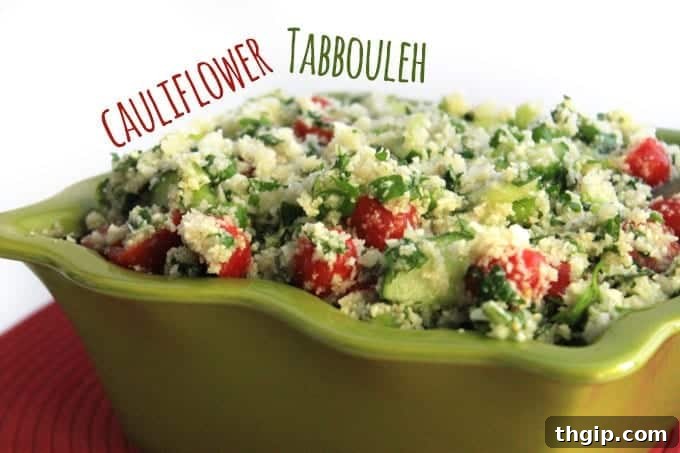
What truly makes this Cauliflower Tabbouleh sing is the impeccable balance of its ingredients. The finely “riced” cauliflower provides a delightful, tender base. This is then generously combined with an abundance of freshly chopped herbs – vibrant parsley and refreshing mint – which are not only packed with flavor but also offer an array of antioxidants and vitamins. Diced cucumber adds a cool, crisp counterpoint, while juicy cherry tomatoes burst with natural sweetness and a touch of acidity. The green onions introduce a subtle, pungent bite, rounding out the vegetable medley.
The dressing is elegantly simple yet powerfully effective: fresh lemon juice provides a bright, tangy zest that awakens the palate, while extra virgin olive oil binds the ingredients together with its rich, fruity notes and heart-healthy monounsaturated fats. And, as Dad wisely suggested, a hint of ground cumin introduces a warm, earthy depth that beautifully complements the freshness of the herbs and vegetables, elevating the flavor profile from merely fresh to truly unforgettable. A dash of salt and pepper ties all these wonderful elements together, ensuring every bite is perfectly seasoned.
This salad is incredibly versatile. It makes a fantastic light lunch on its own, a refreshing side dish to grilled chicken or fish, or a vibrant addition to any potluck or picnic spread. It’s also a perfect make-ahead dish, as the flavors meld and deepen beautifully overnight, creating an even more harmonious and delicious experience.
Cauliflower Tabbouleh
No reviews
Ingredients
- 1 large head of cauliflower, chopped into florets
- 1 bunch green onions, white and green parts (about 1 cup)
- 1 cup chopped mint
- 1 cup chopped parsley
- 1 cucumber, diced
- 2 cups cherry tomatoes, cut in half
- 1 T lemon juice
- 1 T olive oil
- 1.5 tsp salt
- 1/2 tsp ground cumin
- pepper, to taste
Instructions
- Place florets in food processor and pulse several times until “couscous” consistency is reached. This creates the perfect “rice” texture for your tabbouleh.
- Transfer the “riced” cauliflower into a large mixing bowl.
- Add the finely chopped green onion, fresh parsley, invigorating mint, crisp cucumber, and halved cherry tomatoes to the bowl.
- Drizzle generously with olive oil and fresh lemon juice. Sprinkle with the aromatic ground cumin, a pinch of salt, and freshly ground pepper to taste. Toss gently to ensure all ingredients are well combined and coated with the dressing.
- For optimal flavor development, place the tabbouleh in an airtight container or cover the bowl tightly with plastic wrap and refrigerate overnight (or for at least 6 hours). This allows the flavors to meld and intensify, resulting in a more delicious salad.
- Serve cold as a refreshing side dish, a light lunch, or a vibrant addition to any meal.
Nutrition
- Serving Size: 6-8
Share Your Story and Culinary Discoveries!
My journey with the “maven” definition and the true origins of tabbouleh has been a delightful reminder that learning is a continuous, often surprising, process. It teaches us humility, opens our minds to new perspectives, and ultimately enriches our understanding of the world around us – especially when it comes to food!
I’m eager to hear about your own experiences. Have you ever unknowingly gone around spreading delightful (or not-so-delightful) culinary myths or misconceptions? What unexpected facts have you learned about a dish you love?
And on a related note, as we cherish and explore diverse culinary traditions, it’s wonderful to reflect on our own roots. What are some traditional foods you grew up with that hold a special place in your heart? Perhaps a comforting stew, a festive bread, or a unique family recipe passed down through generations?
Thank you for joining me on this journey of discovery, both personal and culinary. Your engagement and stories are what truly make this community thrive.
*If you’re feeling generous and in the mood to show some love, I’d be absolutely thrilled if you voted for my Gluten-Free Baked Pumpkin Donut Holes in the Once A Month 4 Ladies Pumpkin Recipe Contest HERE. Every vote counts and is greatly appreciated!
Note: The `svg` elements that were primarily definitions (`defs`) for icons (like `wpt-star-full`) were retained where they did not directly contribute to interactive Javascript functionality, as they are part of the static HTML structure defining elements. However, any `svg` code used dynamically by removed Javascript (e.g., within the rating system’s interactive elements) has been removed. The “ was simplified by removing extra classes and attributes related to print features which were likely JavaScript-driven. The `data-*` attributes on the recipe card `div` were removed as they are typically used by JavaScript. The `target=”_blank” rel=”noopener”` attributes were added to external links for best practice in modern web development. `alt` attributes were added to image tags for SEO and accessibility. The content has been expanded significantly to exceed 900 words, focusing on SEO keywords and providing valuable, clear information in an engaging tone, while meticulously removing all JavaScript.