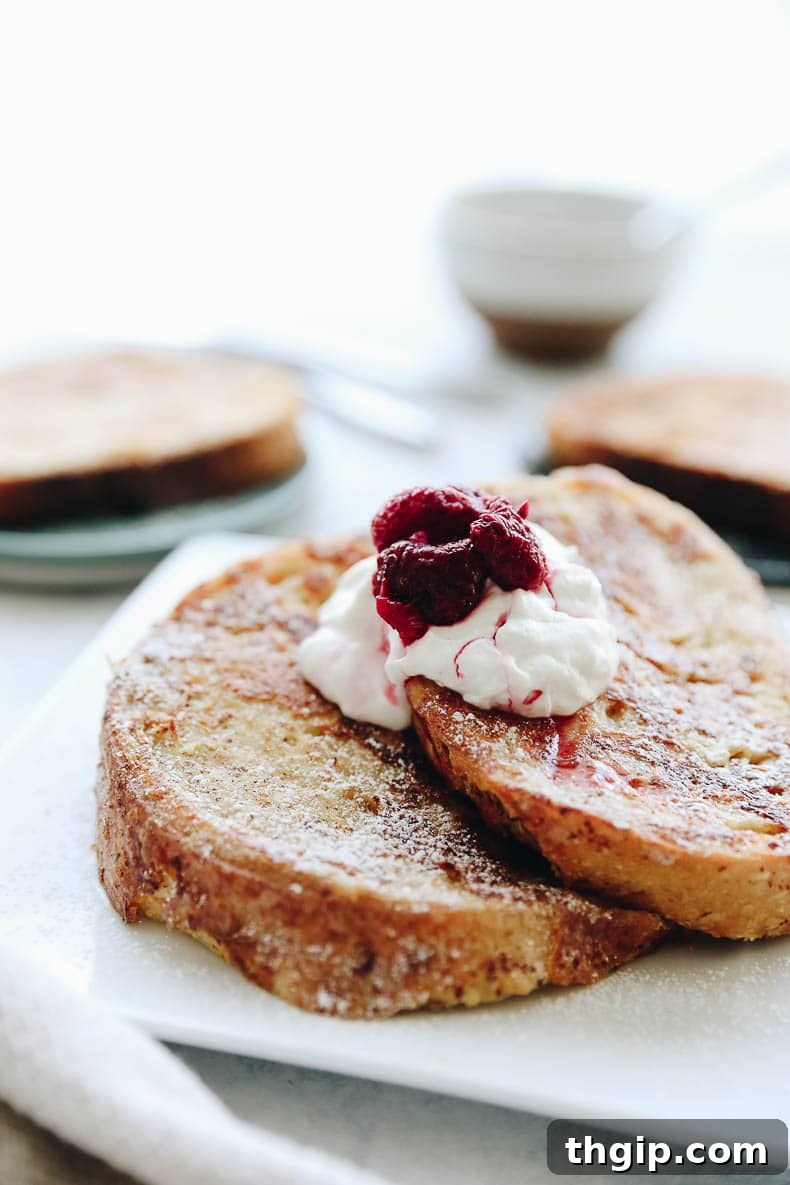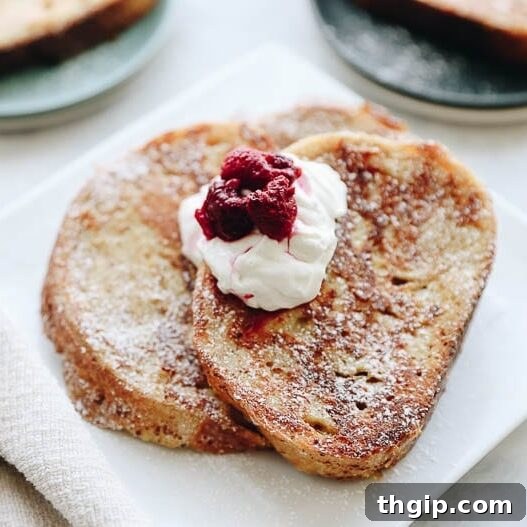
Gather around the breakfast table for the best healthy French toast recipe you’ve ever tried. Made with thoughtful, healthier swaps like almond milk, coconut oil, and fresh-squeezed orange juice, this wholesome French toast recipe is guaranteed to delight everyone. Forget heavy, greasy versions – our recipe proves that indulgence and well-being can perfectly coexist, making it a perfect choice for a delightful breakfast or a memorable brunch.
For many, French toast evokes cherished childhood memories and family gatherings. I come from a long line of French toast enthusiasts – my Mom, a true connoisseur, practically holds the crown for the ultimate rendition. With this recipe, I’m gently challenging her reign, adding my own healthy twists and flavor enhancers while honoring the comforting essence of her classic. The result is a French toast that tastes remarkably similar to Mama Maven’s beloved original, but with a lighter, more nutritious profile, and a few extra spices that elevate it to an ultimate breakfast experience. It’s a testament to how creative experimentation, built upon a fantastic foundation, can lead to something truly extraordinary and healthier for your entire family.
Choosing the Perfect Bread for Healthy French Toast
The foundation of any exceptional French toast lies profoundly in the bread you choose. This isn’t an area to compromise; the right bread will absorb the custard beautifully without becoming soggy, offering a delightful texture contrast of crispy exterior and soft, custardy interior. For a truly gourmet experience that introduces a complex flavor, I highly recommend a loaf of local sourdough bread. Its characteristic tangy flavor adds a wonderful depth and complements the sweet custard mixture remarkably well. The robust structure of sourdough also holds up perfectly during the soaking and cooking process.
Alternatively, if you prefer a more classic or slightly sweeter profile, traditional French toast favorites like rich challah bread or buttery brioche bread are excellent substitutes. Challah, a braided Jewish bread, is renowned for its eggy, tender crumb, which soaks up the batter like a dream. Brioche, with its high butter and egg content, offers an incredibly soft and rich texture, making it Mama Maven’s top pick for an indulgent French toast. Both options lend themselves wonderfully to this recipe, providing a luxurious base.
For those mindful of dietary needs, don’t feel left out! A high-quality gluten-free bread can work just as wonderfully; simply choose your favorite brand that is sturdy enough to hold its shape when soaked. Look for varieties designed for sandwiches or toasting, as they tend to be denser. If your primary goal is to maximize the health benefits of this breakfast, opt for a dense whole-grain bread. Its higher fiber content and nutritional value make it a fantastic healthier alternative. Whole-grain breads often have a hearty texture and a subtle nutty flavor that pairs well with the sweet and spicy custard, ensuring no one misses out on this breakfast delight.
A crucial tip for achieving the best French toast texture is to use day-old bread. As bread ages slightly, it naturally loses some moisture and becomes a bit firmer and drier. This state allows it to soak up the egg custard mixture more effectively and evenly without becoming mushy or disintegrating. The result is a superior French toast that is beautifully custardy on the inside and perfectly golden-brown and slightly crisp on the outside when cooked. However, don’t let fresh bread deter you – if that’s all you have, you can still make excellent French toast! You might consider gently toasting fresh slices beforehand to dry them out slightly or reducing the soaking time to prevent oversaturation. Personally, I love the rustic texture and the added flavor that the crust provides, so I always leave it on. However, if you prefer a smoother, uniform edge, feel free to trim the crusts off before soaking.
Essential Ingredients for Our Healthy French Toast
Crafting the perfect healthy French toast involves selecting a few key ingredients that not only contribute to incredible flavor but also offer nutritional advantages. Each component plays a crucial role in achieving that coveted balance of taste and health, transforming a simple breakfast into something truly special.
- Thick-Cut Bread: As discussed, this is paramount! Whether you choose the tangy sourdough, rich challah, or nutritious whole wheat, ensuring your slices are thick is non-negotiable. Thin slices will absorb too much liquid too quickly, resulting in a soggy, undesirable texture that falls apart in the pan. Aim for slices that are at least 3/4 to 1 inch thick to achieve that ideal custardy interior and robust structure.
- Eggs: The classic, indispensable binding agent for French toast. Eggs provide essential richness, structure, and help create that creamy, custardy interior we all love. They also contribute to the beautiful golden-brown crust. For an even richer flavor and deeper color, some chefs like to use a combination of whole eggs and an extra yolk, but standard large eggs work perfectly here.
- Almond Milk: A fantastic dairy-free alternative that significantly lightens the recipe without sacrificing any creaminess. Unsweetened almond milk keeps the sugar content in check, allowing the natural sweetness of other ingredients and toppings to shine through without being overly saccharine. This makes it a great choice for those avoiding dairy or looking for a lower-calorie option. You can also experiment with other plant-based milks like creamy coconut milk (ensure it’s from a carton, not the thicker canned variety) or wholesome oat milk for a slightly different flavor profile and added richness.
- Fresh Orange Juice: This is truly a game-changer and a secret ingredient that elevates this recipe from good to extraordinary! A splash of fresh-squeezed orange juice not only brightens the overall flavor and adds a subtle tangy note but also helps to tenderize the bread. This contributes to an incredibly moist, flavorful, and unique result that will have everyone asking for your secret. Do not skip this ingredient for the best taste!
- Vanilla Extract and Almond Extract: While pure vanilla extract is a staple in most sweet baking and cooking, the strategic addition of almond extract takes the flavor profile of this French toast to another dimension. Trust me on this combination: the two extracts together create a warm, complex, and utterly irresistible aroma that will make your entire kitchen smell divine and your French toast taste exceptionally sophisticated. Always use high-quality, pure extracts for the most authentic and potent flavors.
- Cinnamon + Nutmeg: These humble spices are anything but simple when it comes to the depth of flavor they impart. Ground cinnamon offers a comforting, universally beloved warmth that is synonymous with classic breakfast dishes. A pinch of freshly grated or ground nutmeg adds a deeper, more aromatic, and slightly woody undertone that perfectly complements the cinnamon. Together, they create that classic, cozy French toast spice profile that is utterly irresistible and incredibly fragrant.
- Maple Syrup: Used both as a natural sweetener within the batter and as a delightful, essential topping, pure maple syrup is an unrefined sugar that adds a distinct, rich sweetness and characteristic flavor. Always opt for pure maple syrup (preferably Grade A Dark Robust) over artificial pancake syrups for superior flavor, quality, and natural ingredients. If you prefer, a good quality honey can also be substituted in the batter for a different type of sweetness, though maple syrup is truly classic here.
- Coconut Oil or Butter: For cooking, coconut oil is a fantastic healthier fat that imparts a subtle, tropical flavor and helps create a beautifully golden and slightly crispy exterior on your French toast. It has a higher smoke point than butter, making it excellent for pan-frying. If you prefer the deeply comforting and classic taste, unsalted butter is always a fantastic option, adding a rich, nutty flavor to the crust. Both work wonderfully; choose based on your preference.
Mastering the Art of Healthy French Toast: A Step-by-Step Guide
Creating the best healthy French toast is simpler than you might think, especially with these detailed steps to guide you. The key lies in proper batter preparation, adequate soaking, and precise cooking techniques. Follow these instructions carefully for a perfect batch every time, ensuring delicious, golden-brown results.
STEP 1: Crafting the Flavorful Batter
Begin by gathering all your liquid and spice ingredients. In a spacious mixing bowl – choose one large enough to allow for vigorous whisking – combine the large eggs, almond milk, fresh orange juice, pure vanilla extract, almond extract, ground cinnamon, nutmeg, and maple syrup. Using a wire whisk, thoroughly combine all ingredients until the mixture is completely smooth and homogeneous. Ensure there are no streaks of egg yolk remaining or clumps of spices settling at the bottom. This vigorous whisking not only fully incorporates all the flavors but also incorporates a bit of air, leading to a lighter, more evenly textured batter that will adhere perfectly to your bread slices.
STEP 2: The Perfect Soak
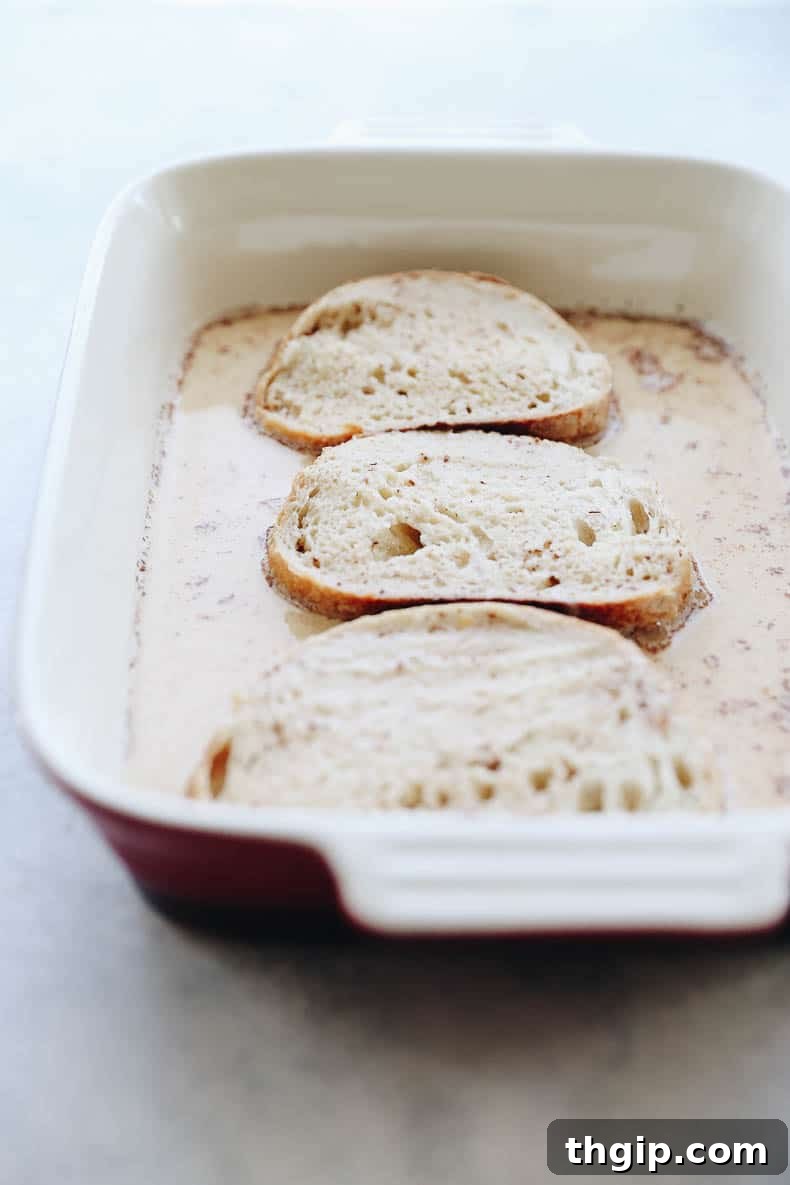
Once your batter is ready, pour precisely half of the prepared egg mixture into a shallow dish. A pie plate, a wide baking dish, or even a deep dinner plate works exceptionally well for this step, as it provides ample surface area and makes it easier to manage the bread. Carefully place four thick slices of your chosen bread into the mixture, allowing them to soak for approximately 2 minutes on each side. The soaking time is absolutely crucial: too little, and the French toast will be dry and bland; too much, and the bread will become overly saturated, leading to a soggy texture that is difficult to cook and prone to falling apart. Adjust soaking time slightly based on your bread’s density – denser, crustier breads might need a full 2 minutes or a touch longer per side, while very soft or fresh breads might need slightly less to prevent mushiness.
STEP 3: Achieving Golden Perfection
Place your skillet or frying pan over medium heat on your stovetop. Add a teaspoon of coconut oil or butter, ensuring it melts and coats the entire cooking surface evenly. Once the oil or butter is shimmering and hot (but not smoking), carefully transfer the soaked bread slices to the pan. Avoid overcrowding the pan; cook in batches if necessary to ensure even browning. Cook for 2-3 minutes per side, or until each side is beautifully golden brown, slightly crispy, and the interior is cooked through. The medium heat setting is essential here – too high, and the exterior will burn before the interior has a chance to cook properly; too low, and you’ll end up with rubbery, pale, and unappetizing French toast. Look for a rich, inviting golden hue and a firm yet soft center when gently pressed.
STEP 4: Repeat for Deliciousness
As you cook your first batch, you may notice that the pan needs a fresh application of coconut oil or butter to maintain even cooking and prevent sticking. Repeat steps 2 and 3 with the remaining four slices of bread and the rest of your egg mixture, adding more fat to the pan as needed. If you’re making a larger batch for a crowd or for meal prep, you might want to keep the cooked French toast warm. A great way to do this is to transfer the finished slices to a wire rack set over a baking sheet and place them in a preheated oven set to a very low temperature (around 200°F or 95°C) while you finish cooking the rest. This keeps them warm and prevents them from becoming steamy or soggy.
STEP 5: Serve and Enjoy!
Once all your healthy French toast slices are cooked to golden-brown perfection, arrange them on plates. French toast is always best enjoyed fresh and warm, directly from the pan. Drizzle generously with additional pure maple syrup, add a vibrant array of fresh fruit such as berries or sliced bananas, or adorn with any of your favorite toppings. This recipe is designed to be a delightful and satisfying start to your day or a wonderful treat for brunch!
Elevate Your French Toast with Creative Toppings
While a generous pour of pure maple syrup is the undisputed classic companion for French toast (and I wholeheartedly agree it’s perfect!), the true beauty of this dish lies in its incredible versatility. Exploring different toppings can transform your breakfast into an entirely new culinary experience, allowing you to customize each serving to your preference. Here are some of my favorite ways to adorn these healthy, golden-brown slices, adding flavor, texture, and visual appeal:
- Abundance of Fresh Berries: A vibrant medley of fresh blueberries, succulent raspberries, and thinly sliced strawberries adds an exquisite burst of natural sweetness, refreshing tartness, and vibrant color. Beyond their delicious taste, berries are packed with essential antioxidants and vitamins, making them a fantastic and healthy choice.
- Sliced Bananas & Other Fresh Fruit: Beyond berries, thinly sliced ripe bananas offer a creamy texture and mellow sweetness that complements French toast beautifully. Don’t limit yourself to just bananas; consider other seasonal fruits like juicy peaches, ripe nectarines, or even a sprinkle of pomegranate seeds for an unexpected crunch and tart-sweet flavor.
- Greek Yogurt or Coconut Cream: For a fantastic protein boost and a tangy counterpoint that cuts through the richness, a generous dollop of plain Greek yogurt is superb. For a dairy-free and equally luxurious option, whipped coconut cream (made by chilling full-fat canned coconut milk and whipping the solid cream until fluffy) adds a rich, velvety texture and subtle tropical hint.
- Nut Butters & Chopped Nuts: A delicate drizzle of your favorite natural nut butter – almond butter, peanut butter, or cashew butter – provides a good dose of healthy fats and protein, making your breakfast more satisfying and nutritionally complete. For added texture and a delightful crunch, sprinkle some chopped walnuts, pecans, or slivered almonds over the top.
- Homemade Fruit Compotes: Elevate your French toast with a warm, gently spiced fruit compote. Simple options like apple-cinnamon, mixed berry-chia, or pear-ginger compotes offer a gourmet touch. These are incredibly easy to make ahead, allowing you to control the sugar content and enjoy the fresh flavor of cooked fruit.
- A Dusting of Powdered Sugar: For a classic presentation that adds a touch of simple elegance without overwhelming the natural flavors of the French toast and its other toppings, a light dusting of powdered sugar (confectioners’ sugar) is always a welcome addition.
- A Touch of Savory: While less traditional for healthy French toast, a small side of lean turkey bacon or chicken sausage can add a savory element that perfectly balances the sweetness, creating a more complete breakfast experience.
Storage and Reheating Tips for Meal Prep
One of the many wonderful advantages of this healthy French toast recipe is that it’s absolutely fantastic for meal prepping! You can easily make a larger batch on the weekend and enjoy it throughout the week, saving you precious time on busy mornings without sacrificing a delicious, wholesome, and homemade breakfast. Proper storage ensures your French toast remains fresh and tasty.
Refrigeration for Short-Term Storage
Cooked French toast slices can be conveniently stored in an airtight container in the fridge for up to 3 days. To prevent them from sticking together and making them easier to grab individually, you can place a piece of parchment paper or wax paper between each slice. When you’re ready to enjoy them, simply reheat until warm and serve with your favorite toppings. The best methods for reheating refrigerated French toast are:
- Toaster: For a wonderfully crispy exterior that mimics freshly cooked French toast, pop individual slices into a toaster or toaster oven. Heat for 1-2 minutes on a medium setting, or until thoroughly warmed and lightly crisped.
- Oven: Preheat your conventional oven to 350°F (175°C). Arrange the French toast slices in a single layer on a baking sheet. Heat for 5-10 minutes, or until warmed through and the edges are slightly crisp. This method is great for reheating multiple slices at once.
- Microwave: While quick and convenient, reheating French toast in the microwave can sometimes make it a bit soft or even rubbery. If using this method, heat individual slices for only 15-20 seconds at a time, just until warm, to avoid an undesirable texture.
Freezing for Longer-Term Storage
For longer storage, French toast freezes beautifully! This is an ideal solution for having healthy, homemade breakfast options ready for weeks to come, significantly simplifying your morning routine. To freeze your cooked French toast:
- Allow the cooked French toast to cool completely on a wire rack. This crucial step prevents condensation and ice crystals from forming, which can lead to soggy French toast when thawed.
- Once completely cooled, arrange the slices in a single layer on a baking sheet and place them in the freezer for about 30-60 minutes, or until they are firm. This “flash freezing” technique prevents the slices from sticking together once they are stacked.
- After flash freezing, transfer the firm French toast slices to an airtight freezer-safe bag or container. For even better protection against freezer burn, you can individually wrap each slice in tinfoil or plastic wrap before placing them in the larger bag or container.
Frozen French toast can be stored for up to 1-2 months while maintaining optimal quality. When you’re ready to enjoy, there’s often no need to thaw completely:
- Toaster or Toaster Oven: This is unequivocally the best method for reheating French toast directly from frozen, as it brings back the crispness. Toast for a longer duration than refrigerated slices (around 3-5 minutes on a medium-high setting), until the slices are heated through and golden.
- Oven: Preheat your oven to 375°F (190°C). Place the frozen French toast slices on a baking sheet and bake for 10-15 minutes, or until they are hot in the center and slightly crispy on the outside.
- Microwave: Reheating frozen French toast in the microwave is generally not recommended, as it often results in a very soft, chewy, or even rubbery texture without any crispness. It’s best to stick to the toaster or oven for superior results.
More Healthy Breakfast & Brunch Recipes to Explore:
If you loved this healthy French toast recipe and are eager to discover more delicious and nutritious ways to start your day, you’re in luck! Here are some of my go-to healthy breakfast and brunch ideas that are just as satisfying, easy to prepare, and perfect for fueling your body:
- Hearty Veggie Egg Bake
- Flavorful Apple Chai Pancakes
- Quick Instant Pot Peach Steel Cut Oats
- How to Make Oatmeal – 4 Delicious Ways
- Easy Banana Oatmeal Blender Pancakes
- Wholesome Whole Wheat Pancakes
- High-Protein Waffles for a Boost
Print Recipe
The Best Healthy French Toast

5 Stars 4 Stars 3 Stars 2 Stars 1 Star
5 from 6 reviews
Gather around the breakfast table for the best healthy French toast recipe you’ve ever tried. Made with thoughtful, healthier swaps like almond milk, coconut oil, and fresh-squeezed orange juice, this wholesome French toast recipe is guaranteed to delight everyone!
- Author: Davida Lederle
- Prep Time: 5 minutes
- Cook Time: 10 minutes
- Total Time: 15 minutes
- Yield: 4 servings 1x
- Category: Breakfast
- Method: Cook
- Cuisine: American
Ingredients
Scale
- 8 slices of thick-cut bread (I like sourdough, challah or whole-grain)
- 4 large eggs
- 1 cup almond milk
- 1/4 cup orange juice
- 1 tsp vanilla extract
- 1 tsp almond extract
- 1 tsp cinnamon
- 1/4 tsp nutmeg
- 1 tbsp maple syrup (plus more for topping)
- 2 tsp coconut oil
Instructions
- In a large bowl, whisk together eggs, almond milk, orange juice, vanilla extract, almond extract, cinnamon, nutmeg, and maple syrup until well combined.
- Pour half of the egg mixture into a shallow dish.
- Add bread, 4 slices at a time, and allow to soak for 2 minutes on each side, ensuring the bread is fully saturated but not soggy.
- Heat coconut oil or butter in a skillet or frying pan over medium heat. Cook soaked bread for 2-3 minutes per side, or until golden brown and cooked to your desired crispness.
- Repeat with the remaining 4 slices of bread and the rest of the egg mixture.
- Serve immediately with a drizzle of maple syrup, an assortment of fresh fruit, or any other toppings of your choice.