
Welcome to a deeper conversation about wellness – a concept that has evolved dramatically over the last seven years, both in my personal journey and in the global consciousness. When I first launched The Healthy Maven at the age of 23, my understanding of health was relatively narrow, primarily revolving around diet and exercise. Mental health was often viewed as a separate, distinct domain, and terms like “adaptogens” were practically unheard of in mainstream discussions. Concepts such as light therapy, medicinal mushroom coffees, or the widespread use of CBD were far from conventional, and spirituality largely occupied a realm entirely separate from physical well-being. The vast, multifaceted “wellness industry” we recognize today simply didn’t exist in its current form.
While the fundamental idea of wellness – the pursuit of optimal health – is ancient, its recent explosion into public awareness is undeniably modern. Today, there’s a palpable shift: people are increasingly proactive about their health long before illness strikes. This preventive mindset, coupled with a significantly broader understanding of what constitutes a healthy individual, represents perhaps the most profound positive outcome of the evolving wellness landscape. We now embrace a holistic, comprehensive approach that recognizes the intricate interplay between physical, mental, emotional, and spiritual health, acknowledging that these dimensions are not isolated but deeply interconnected.
However, this expansion hasn’t been without its pitfalls. The pursuit of health has become increasingly commodified, transforming into a lucrative market where seemingly everyone offers the next “miracle product” promising eternal well-being. This constant barrage of new solutions can be incredibly overwhelming, overstimulating, and, for many, downright infuriating. It often fosters a sense of inadequacy, suggesting that our inherent state is “not well enough,” creating an endless chase for perfection.
In many ways, the modern wellness culture and its sprawling industry have supplanted the traditional diet industry. It’s built upon a similar foundation: the subtle insinuation that we are fundamentally flawed and require external interventions to achieve optimal health. This pervasive narrative makes it easy to understand the alarming rise of orthorexia – an obsessive preoccupation with healthy eating and the relentless pursuit of “cleanliness” in every aspect of life. The wellness space has, perhaps inadvertently, perpetuated a climate of fear, suggesting that danger lurks everywhere. To be fair, this distrust isn’t entirely unfounded; consumers have indeed been misled about various products and practices. We’ve learned that many beauty and skincare items contain harmful ingredients, that excessive antibacterial use might do more harm than good, and that, surprisingly, fat isn’t the enemy it was once portrayed to be. Such revelations naturally fuel skepticism towards conventional brands. Yet, the wellness industry itself has, at times, pushed this skepticism too far. True well-being doesn’t demand perfection – an impossible standard. Our relentless striving to “be more,” “feel more,” or “live longer” often paradoxically drives us further from genuine contentment and peace.
I openly acknowledge my own contribution to this evolving narrative. For many years, I, too, was caught in this cycle of striving. As a naturally curious individual, I love exploring and experimenting with new ideas and practices. However, being on this side of the coin – observing and participating in the wellness world – has taught me the crucial importance of discernment. While I advocate for choosing organic produce when feasible (primarily for environmental reasons, though personal health benefits are a plus) and opting for cleaner beauty and non-toxic products, I am not dogmatic. I don’t succumb to fear if these standards aren’t met. I’ll use conventional soap if that’s what’s available, I enjoy carbs with nearly every meal, and yes, I certainly indulged in McDonald’s on a few occasions in 2019 (those chicken nuggets, folks!). My choices are guided by my personal values and fit seamlessly into my lifestyle – never the other way around.
Embracing Authentic Wellness: A Guide for the New Era
As we navigate this new decade, I urge you to pause and genuinely assess your personal approach to wellness. Have you perhaps become a casualty of the pervasive idea that you are inherently “not well enough”? If your intention is to make this your healthiest, most fulfilling year yet, it’s time to shift your focus inwards. Ask yourself what you truly need, rather than what the latest trend dictates. Let’s delve into some critical questions that can help you re-evaluate your path to well-being.
5 Critical Questions to Evaluate Your Wellness Routine for Sustainable Health
1. Is Your Wellness Journey Based on External Gurus or Inner Wisdom?
This is a broad but fundamental question. Are your health decisions primarily influenced by an external figure – perhaps a social media influencer, a fitness instructor, or a celebrity? For instance, if “Sally the Spin Instructor” trains five times a week and follows a vegan diet, do you feel compelled to adopt the same regimen? Or if “Carol the CrossFitter” adheres to a paleo diet and lifts heavy weights three times a week, do you mirror her routine? It’s essential to differentiate between inspiration and blind imitation. Instead, are you truly listening to your own body? Are you attuned to how it responds after specific workouts, or how it feels after consuming certain foods? Your body is uniquely yours; it possesses its own distinct needs and responses. What yields positive results for someone else might be entirely unsuitable, or even detrimental, for you. Cultivating a deep connection with your body’s signals is paramount to developing a sustainable and truly personalized wellness routine.
2. How Many Supplements Are You Really Taking, and Why?
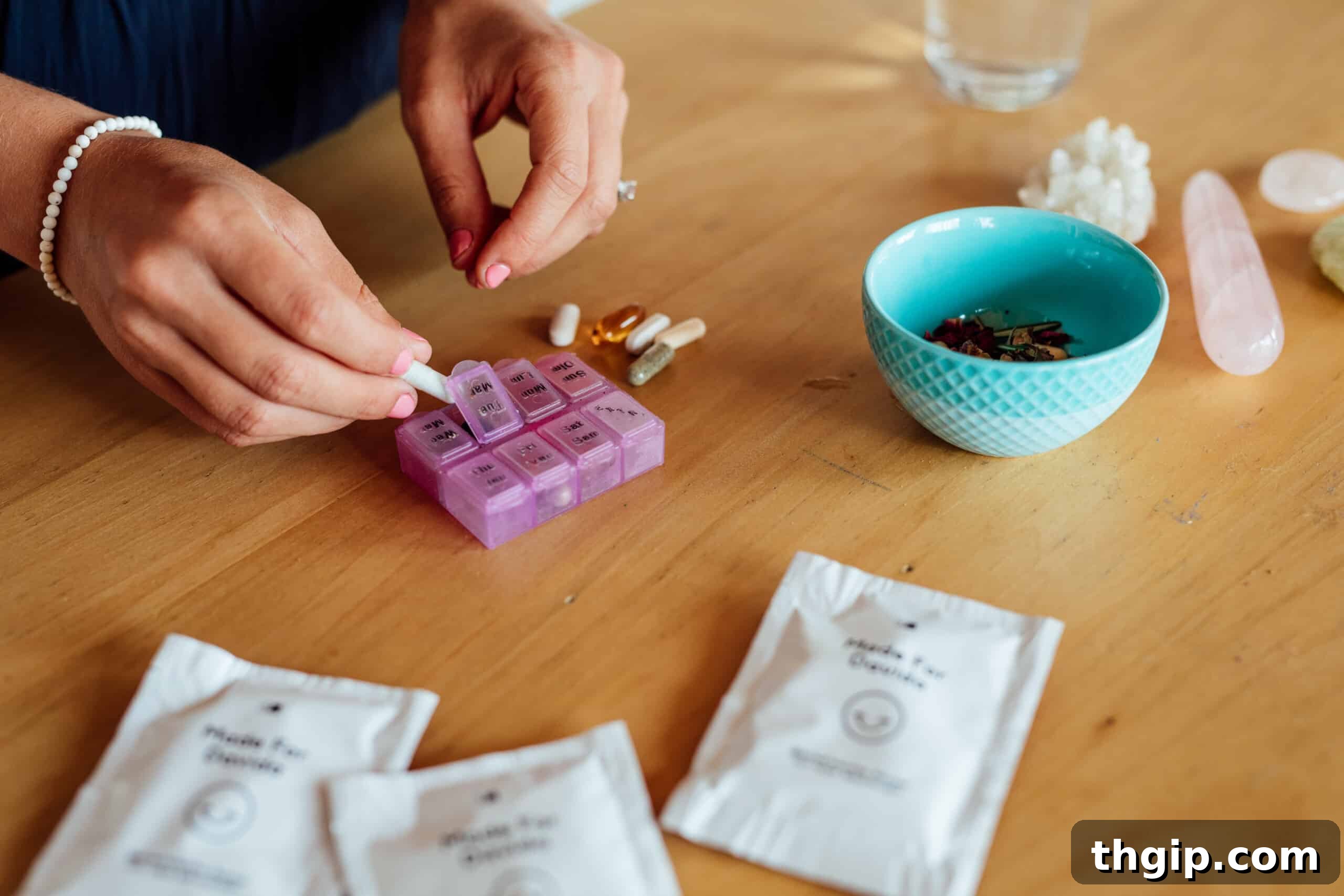
Take a moment to inventory your daily supplement intake. Are these supplements prescribed by a qualified medical professional, or are they, once again, modeled after the choices of your favorite Instagram personality? If a healthcare provider has specifically recommended certain supplements to address a particular imbalance or deficiency unique to your body, then by all means, adhere to their guidance. These are informed choices aimed at specific physiological support. However, if you find yourself consuming a myriad of supplements simply because “that’s what your friend does,” or because they’re trending, it’s time for some critical inquiry. Investigate the actual purpose and scientific backing of each supplement. Is it genuinely necessary for your individual body and health goals? While many supplements are safe and can be beneficial, taking ten or more vitamins daily warrants a deeper examination. Consider the potential interactions, the financial burden, and whether you might be overcomplicating a journey that could be simpler.
3. What’s Truly Going Into Your Smoothie, and Is a Smoothie Always Necessary?
Let’s demystify the humble smoothie. Did you know that a smoothie can be incredibly healthy and nutrient-dense with nothing more than simple, whole, real foods? It might sound wild in an era of “magic potions” and exotic mushroom powders, but it’s true! You don’t need every “superfood” additive in the wellness encyclopedia to create a beneficial breakfast or snack. The next time you prepare a smoothie or even overnight oats, challenge yourself to try it without incorporating all the “extras.” This isn’t to say these additions are inherently bad, but rather to question their necessity for fundamental health and, crucially, their impact on your bank account. Furthermore, let’s dispel a common fear: fruit is not going to kill you. It’s packed with essential vitamins, fiber, and natural sugars. If smoothies aren’t your preference, or if you’re seeking alternatives, there are countless other wholesome breakfast options. Why not enjoy a warm bowl of nourishing soup for breakfast? The key is simplicity, nutrient density, and personal enjoyment.
4. Whose Body Are You Trying to Achieve Through Your Workouts?
Reflect on your motivation for exercise. Are you engaging in physical activity because you genuinely love and appreciate your body, and because you find joy and fulfillment in the movement itself? Or are you, perhaps unconsciously, practicing yoga because “Sally” does yoga and possesses what you perceive as your “dream body”? Take a genuine pause and critically examine the underlying reasons for your chosen exercise routine. Do you actually enjoy the activity? Does it leave you feeling energized and empowered, or depleted and frustrated? Sustainable fitness is deeply rooted in intrinsic motivation and enjoyment. When your workouts align with self-love and genuine pleasure, rather than external ideals or comparisons, they become a source of strength and well-being, fostering a healthier relationship with your body and mind.
5. How Much Money Are You Truly Spending on Wellness?
Let’s get personal about finances. Did you know that fundamental wellness doesn’t necessarily need to cost a single penny? I wholeheartedly advocate for investing in crucial aspects of well-being, such as my weekly therapy appointments and yoga classes, which are integral to my mental and physical health. However, it’s equally important to recognize that a robust wellness routine doesn’t demand hundreds of dollars each month for the latest trendy supplements, expensive workout apparel, or elaborate self-care rituals. Consider the irony: if the financial strain of maintaining your “wellness” regimen is causing you stress, you are effectively undermining the very purpose of those adaptogenic, anti-inflammatory, or stress-reducing products you’re buying. True wellness often thrives on simplicity and accessibility. Prioritizing financial well-being is a core component of overall health; stress from debt or excessive spending can negate many other positive wellness efforts.
* * * * *
Beyond the Hype: Embracing Core Principles of Sustainable Well-being
I want to be unequivocally clear: I am not here to denounce all aspects of wellness. On the contrary, I am a genuine advocate for continuous learning and exploration within this space. It’s precisely why I hosted a podcast for three years, engaging in profound conversations with experts and mavens across diverse fields to understand their unique interpretations of wellness. Furthermore, I recognize that many individuals grapple with genuine chronic health challenges that demand significantly greater investment – both financially and in terms of time – than for others. It has been truly inspiring to witness the innovative ways people have found support and managed these complex conditions, often through personalized and collaborative care.
After seven years of actively blogging in the wellness space and three years dedicated to podcasting, my most profound and enduring takeaway can be distilled into a few fundamental truths. These principles, I believe, form the bedrock of true, sustainable well-being:
Firstly, practice kindness – both towards yourself and to every individual you encounter in your life. Self-compassion is not a luxury; it is a necessity for mental and emotional resilience. Secondly, embrace the basics: consistently nourish your body with vibrant vegetables. Stay adequately hydrated by drinking plenty of water throughout the day. Prioritize getting a full, restorative night’s sleep – it is foundational for physical and cognitive repair. And finally, move your body in ways that genuinely feel good to you, whatever that may look like. Find an activity that sparks joy and connection with your physical self, rather than one driven by obligation or aesthetic goals.
Beyond these essential practices, perhaps the most critical ingredient for a truly fulfilling life and robust health is gratitude. Instead of fixating on what you perceive to be lacking, consciously shift your focus to the myriad blessings and wonderful elements that enrich your life. Every single one of us possesses something to be profoundly grateful for. This practice of gratitude, cultivating an appreciation for the present and for what you have, is not merely a feel-good exercise; it is, in its essence, the most potent and accessible key to unlocking genuine and lasting health.
Like this post? Here are others you might enjoy:
- 7 Signs of Exercise Addiction
- Health is Wealth but Wealth Should Not Mean Health
- 5 Ways to Save Money on Wellness