
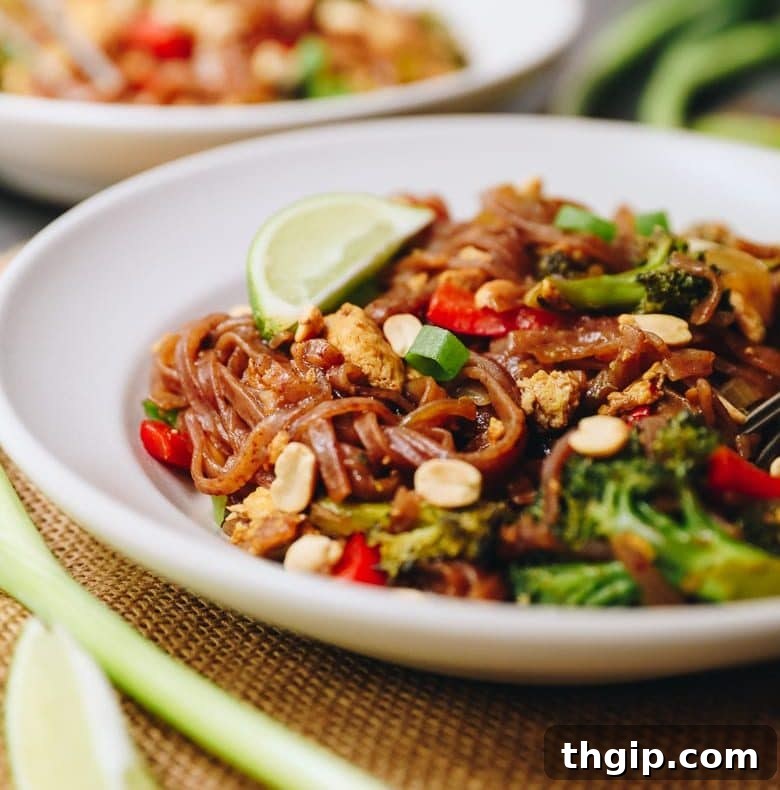
Experience the vibrant flavors of Thailand with a healthy, vegetarian twist in this incredibly easy Veggie Pad Thai recipe. Designed for busy weeknights, this dish comes together in just 20 minutes, offering a filling, flavorful, and nutrient-packed dinner option. Forget the takeout; this homemade vegetable Pad Thai delivers an authentic taste that will impress your family and friends, all while giving you a generous dose of fresh vegetables.
Table of Contents
- The Ultimate Veggie Pad Thai Experience!
- Essential Ingredients for Veggie Pad Thai:
- Understanding Tamarind Puree: The Secret to Authentic Flavor
- How To Customize Your Veggie Pad Thai:
- Is this Veggie Pad Thai Vegetarian or Vegan?
- Storage Instructions for Leftovers
- More Easy and Healthy Dinner Recipes:
- Veggie Pad Thai Recipe
The Ultimate Veggie Pad Thai Experience!
Crafting the perfect Pad Thai at home has been a culinary journey for me, one that has finally culminated in this spectacular vegetarian Pad Thai recipe. For years, I experimented with various ingredient combinations, aiming to capture that elusive, authentic flavor typically found in the best Thai restaurants. While my previous attempts, including a forgotten shrimp Pad Thai recipe from the blog archives, were good, they always felt like they were missing that special “something.” The sauce, in particular, lacked the depth and complexity that defines a truly great Pad Thai.
The turning point arrived when I discovered the magic of tamarind puree. This single ingredient transformed the dish, elevating it from a simple stir-fry to an irresistible symphony of sweet, sour, and savory notes. Now, a jar of tamarind puree is a permanent fixture in my pantry, allowing me to whip up this incredible veggie Pad Thai whenever the craving strikes. This recipe isn’t just “good”; it’s truly THE BEST. It’s incredibly quick, requiring only 20 minutes from start to finish, and remarkably versatile. You can easily adapt it to whatever fresh vegetables you have on hand, making it a fantastic solution for using up garden produce or fridge leftovers while still delivering an explosion of authentic Thai taste.
Essential Ingredients for Veggie Pad Thai:
At its heart, Pad Thai is a delightful rice noodle stir-fry, distinguished by its unique tamarind-based sauce. Here’s a detailed look at the components that make this vegetarian version shine:
- Rice Noodles: These are the foundation of any great Pad Thai, providing the essential chewy texture that soaks up all the flavorful sauce. While brown rice noodles are a fantastic healthy choice, any type of flat rice noodle will work beautifully. Look for them in the Asian aisle of your grocery store, sometimes specifically labeled as “Pad Thai Noodles.”
- Sesame Oil or Peanut Oil: These oils impart a distinctly Asian flavor profile and are perfect for high-heat stir-frying. If you don’t have them on hand, coconut oil or olive oil can be used as alternatives, though the flavor will be slightly different.
- Yellow Onion and Garlic: These aromatic vegetables form the fundamental flavor base of the dish, creating a fragrant start for your stir-fry. Always use fresh garlic for the best results!
- Fresh Vegetables: This is where you can truly get creative! I love using a colorful and varied mix such as crisp broccoli florets, vibrant bell peppers, tender broccolini, and crunchy bok choy. Aim for about 4 cups of your favorite vegetables to ensure a nutrient-rich and satisfying meal. Other great options include shredded carrots, snow peas, mushrooms, or cabbage.
- Large Eggs: Scrambled eggs add a wonderful boost of protein and a rich, savory depth to the Pad Thai. They are a classic inclusion in many Pad Thai recipes. If you’re aiming for a fully vegan dish, these can be easily omitted.
- Sweet Chili Sauce: This sauce adds a delightful balance of sweetness and a gentle kick of spice. Adjust the amount to your preference; use more if you desire an extra spicy Pad Thai.
- Soy Sauce: A cornerstone of Asian cooking, soy sauce provides a crucial umami flavor and saltiness. For a gluten-free version, tamari is an excellent substitute that delivers the same great taste.
- Fish Sauce: Traditionally, fish sauce is key to Pad Thai’s authentic savory profile. However, if you are making this dish strictly vegetarian or vegan, you can easily skip it or opt for a readily available vegan fish sauce alternative to maintain some of that savory depth.
- Tamarind Puree: This is perhaps the most critical ingredient for achieving that true, classic Pad Thai tang. It’s worth the effort to track down, as it imparts an irreplaceable sweet-sour complexity that defines the dish. We’ll discuss more about tamarind below!
- Fresh Lime: Fresh lime juice is integral to the sauce, providing a bright, zesty counterpoint to the other flavors. An extra squeeze of lime juice just before serving can truly enhance the final product.
- Coconut Palm Sugar: Or brown sugar works equally well. This adds a subtle sweetness to balance the tang of the lime and tamarind, creating a harmonious sauce.
Understanding Tamarind Puree: The Secret to Authentic Flavor
Upon reviewing the ingredient list, you might have noticed the somewhat exotic inclusion of tamarind puree. I cannot stress enough the importance of this ingredient; it is the non-negotiable secret to a truly authentic Pad Thai. Traditional Thai Pad Thai recipes invariably feature tamarind, either as a puree or paste. Unfortunately, many Americanized versions often substitute it with simpler, more readily available ingredients like ketchup, which, while passable, completely misses the unique and complex flavor profile that tamarind offers.
Tamarind is a tropical fruit with a distinctively sour, tangy, and subtly sweet taste. It provides a foundational layer of flavor that is simply irreplaceable. While it might require a little extra effort to find, trust me when I say that this vegetarian Pad Thai recipe is immeasurably better with tamarind puree. Its presence transforms the sauce, delivering that signature Thai restaurant quality right into your home kitchen.
You can typically find tamarind puree or paste at most Asian grocery stores. Many larger supermarkets and specialty stores like Whole Foods are also starting to stock it. For convenience, it’s also widely available to order online here. Sometimes, it comes in the form of a dense brick of tamarind paste rather than a smooth puree. If you end up with paste, don’t worry! Simply take about one tablespoon of the paste and mix it thoroughly with a 1/4 cup of hot water. Allow it to soften for a few minutes, then mash and stir until you have a smooth, pourable mixture. Use this in place of the two tablespoons of tamarind puree called for in this recipe. Tamarind products also boast a long shelf life, so a single purchase will allow you to make this delicious Pad Thai many times over. I promise, including this ingredient will make all the difference in achieving that deeply authentic taste!
How To Customize Your Veggie Pad Thai:
One of the best aspects of this vegetarian Pad Thai recipe is its incredible adaptability. The recipe calls for approximately 4 cups of vegetables, a quantity that I intentionally left flexible so you can truly make it your own based on what’s fresh, seasonal, or simply what you have in your refrigerator. It’s a perfect dish for minimizing food waste and experimenting with different flavor and texture combinations.
I’ve likely made this dish with nearly every vegetable imaginable, but if you’re seeking some inspiration, here are a few fantastic ideas to get you started. Remember to chop your vegetables into bite-sized pieces for even cooking and easy eating:
- Broccoli Florets: Add a hearty texture and vibrant green color.
- Shredded Carrot: Offers a touch of sweetness and beautiful color.
- Red Bell Peppers: Provides a sweet crunch and vivid hue.
- Broccolini: A slightly more delicate cousin to broccoli, with tender stalks.
- Bok Choy: Adds a mild, slightly peppery flavor and tender-crisp texture.
- Cauliflower Florets: A versatile vegetable that absorbs flavors beautifully.
- Bean Sprouts: For an authentic crunch; often added right at the end or as a garnish.
- Mushrooms: Sliced cremini or shiitake add an earthy, umami depth.
- Snow Peas or Snap Peas: For a sweet, crisp pop.
Adding Protein: While this is a veggie Pad Thai, it’s incredibly easy to boost its protein content if desired. I often add extra-firm tofu or chicken to make it a more substantial meal. Keep in mind that adding raw protein will increase the total cooking time slightly. For crispy tofu, press it thoroughly to remove excess water, then pan-fry until golden before adding to the stir-fry. Cooked chicken can be stir-fried or shredded leftovers can be added directly. Shrimp is another classic addition that cooks quickly and pairs wonderfully with the sauce.
Sauce Swaps: The core of this recipe lies in its balanced sauce, but you can make a few simple adjustments:
- Soy Sauce Alternatives: For a gluten-free version, use tamari. If you’re looking for a soy-free option, coconut aminos work well, offering a slightly sweeter and milder flavor.
- Sweeteners: Instead of coconut palm sugar, brown sugar is a perfect 1:1 substitute. Maple syrup or agave nectar can also be used in smaller quantities, adjusting to taste.
- Oils: While sesame and peanut oil offer the best flavor, coconut oil or olive oil are viable alternatives if that’s what you have.
Garnish Galore: The right garnishes can elevate your Pad Thai from great to extraordinary. Feel free to pile them on!
- Crushed Peanuts: Essential for that authentic Pad Thai crunch and nutty flavor.
- Green Onions: Provide a fresh, mild oniony bite.
- Fresh Cilantro: Adds a burst of herbal freshness.
- Extra Lime Juice/Lime Wedges: For an added zing and brightness.
- Red Pepper Flakes or Sriracha: If you crave an extra spicy kick.
Most importantly, allow yourself to get creative and have fun in the kitchen! Cooking should be an enjoyable and therapeutic experience, not a chore. Embracing customization makes it easier to fall in love with preparing healthy, delicious meals at home.
Is this Veggie Pad Thai Vegetarian or Vegan?
This recipe, as written, is primarily vegetarian, but it includes fish sauce, which technically makes it non-vegetarian due to the animal product. However, making it suitable for strict vegetarians is incredibly simple: you can completely skip the fish sauce or use a readily available vegan fish sauce alternative. The dish will still be delicious, although omitting traditional fish sauce might slightly alter the authentic depth of flavor. To make this Pad Thai recipe fully vegan, you would need to not only use vegan fish sauce (or omit it entirely) but also skip the eggs. While it might not precisely replicate the traditional taste profile without these ingredients, the tamarind-infused sauce and fresh vegetables ensure it remains a remarkably flavorful and satisfying plant-based meal.
Storage Instructions for Leftovers
This Veggie Pad Thai makes for fantastic leftovers! Store any remaining portions in an airtight container in the refrigerator for up to 3 days. To reheat, simply warm it on the stove top over medium heat until heated through, or use a microwave for a quicker option. A splash of water or vegetable broth can help rehydrate the noodles if they seem dry.
More Easy and Healthy Dinner Recipes:
- Chicken Pad See Ew
- Sesame Soba Noodles
- Baked Chimichurri Salmon
- Healthy Kimchi Fried Rice
- Za’atar Chicken Sheet Pan Dinner
- The Ultimate Buddha Bowl
Veggie Pad Thai
Indulge in the savory, sweet, and tangy flavors of this easy vegetarian Pad Thai. Ready in just 20 minutes, it’s packed with fresh veggies and an irresistible sauce, making it the perfect healthy and quick dinner solution.
- Author: Davida Lederle
- Prep Time: 5 minutes
- Cook Time: 15 minutes
- Total Time: 20 minutes
- Yield: 4 servings
- Category: Dinner
- Method: Cook
- Cuisine: Thai
- Diet: Vegetarian
Ingredients
For the sauce:
- 2 1/2 tbsp sweet chili sauce (use more if you like extra spicy)
- 3 tbsp soy sauce (or tamari for gluten-free)
- 2 tbsp fish sauce(omit if vegetarian/vegan and replace with 1 tbsp soy sauce or vegan fish sauce)
- 2 tbsp tamarind puree*
- juice of 1 lime
- 1 tbsp coconut palm sugar (or brown sugar)
- 1/4 cup water
For the noodles and stir-fry:
- 8 oz rice noodles
- 2 tbsp sesame oil or peanut oil (can use coconut oil or olive oil if you don’t have)
- 1 medium yellow onion, sliced
- 2 garlic cloves, minced
- 4 cups of mixed fresh veggies (e.g., broccoli, bell pepper, broccolini, bok choy, carrots, bean sprouts, etc.)
- 4 large eggs (omit for vegan)
Optional toppings: green onion, crushed peanuts, fresh cilantro, chili flakes or sriracha
Instructions
- Bring a medium pot of water to a boil and cook the rice noodles according to package instructions until tender. Drain the noodles and set them aside.
- While the noodles are cooking, whisk together all the sauce ingredients (sweet chili sauce, soy sauce, fish sauce/alternative, tamarind puree, lime juice, coconut palm sugar, and water) in a small bowl. Set this flavorful sauce aside.
- Heat the sesame oil (or your chosen oil) in a large pan or wok over medium-high heat. Add the sliced yellow onions and cook, stirring occasionally, until they become translucent and fragrant, typically 3-5 minutes. Then, add the minced garlic and your chosen mix of vegetables. Continue to cook for an additional 5 minutes, stirring frequently. If your vegetables are still a bit firm, you can place a lid on the pan for a few minutes to allow them to steam until they reach your desired tenderness.
- Once the vegetables are nearly cooked, push them to one side of the pan, creating an empty space. Crack the eggs directly into this cleared space in the pan. Quickly scramble the eggs and cook for about 2 minutes, or until they are fully cooked through.
- Combine the cooked scrambled eggs with the stir-fried vegetables, mixing them well. Add the drained rice noodles to the pan.
- Pour the prepared Pad Thai sauce over the noodles and vegetables. Toss everything together until the noodles and vegetables are thoroughly coated in the sauce. Cook over low heat for approximately 3 minutes, allowing the noodles to absorb most of the delicious sauce.
- Serve your homemade Veggie Pad Thai immediately, garnished with your favorite toppings like crushed peanuts, fresh cilantro, green onions, and a squeeze of fresh lime. Leftovers can be stored in an airtight container in the fridge for up to 2-3 days.
*Note: If you are using tamarind in a block of paste form instead of puree, use 1 tablespoon of the paste. Mix it into 1/4 cup of hot water and stir until dissolved to create a smooth, pourable substitute for the puree.