
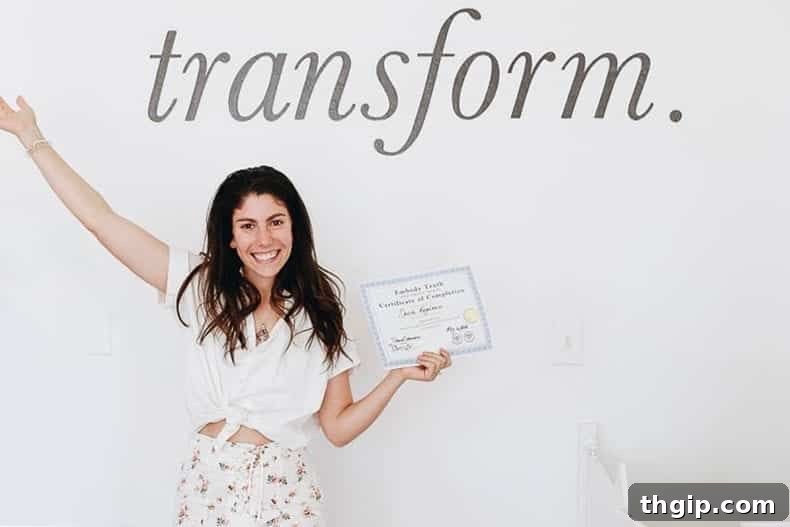
For many, yoga is more than just a physical exercise; it’s a profound journey of self-discovery and holistic well-being. My personal path with yoga began at the tender age of 15, marking 14 incredible years of practice. From that foundational class with my first teacher, Cindy, yoga has been an unwavering presence, a steadfast anchor for my physical and mental health through adolescence and into adulthood. It has seen me through countless moments, serving as the bedrock upon which I’ve built resilience and inner peace.
Yet, despite over a decade of dedication, I often feel as though my true yoga journey has only just commenced. This sentiment deepened significantly after embarking on a pivotal chapter: Yoga Teacher Training.
The idea of undertaking a Yoga Teacher Training (YTT) program had been gently simmering in my mind for several years. It wasn’t driven by an immediate ambition to become a full-time yoga professional, but rather by a deep, internal calling—an undeniable “itch” that I knew needed to be addressed. My primary motivation was to profoundly deepen my personal practice, to delve beyond the physical postures and explore the rich spiritual dimensions of yoga, and to grasp the fundamental principles that often remain untouched in typical studio classes, even for seasoned practitioners.
Despite this strong desire, the commitment to a 200-hour YTT course felt immense. This initial level of yoga teacher certification demands a significant time investment, and like many, I found myself constantly postponing, citing various reasons, with the formidable challenge of “time” at the forefront. Two hundred hours is indeed a substantial commitment, and it was all too easy to construct a wall of excuses. However, during a tranquil Savasana after a particularly blissful practice in late fall of 2017, a profound realization washed over me: the perfect moment would never simply arrive. There would always be demands, responsibilities, and an ever-growing to-do list. The key, I understood, was not to wait for space to appear, but to actively create it for something my heart truly yearned for.
That very day, as I left the yoga studio, a table laden with pamphlets for a 200-hour YTT program caught my eye. It felt like an undeniable sign, a synchronistic nudge from the universe. By that evening, driven by this newfound clarity and an urgent sense of purpose, my application was submitted. This seemingly impulsive decision was, in hindsight, a necessary one. I knew that if I hesitated, another year would pass, bringing with it a fresh set of reasons to delay. While I can now retrospectively conjure a thousand reasons why the timing might have been “terrible,” I can just as easily articulate a thousand reasons why it was, in fact, absolutely perfect. The truth is, there’s no universally “good” time to dedicate 200 hours of your life to such an intensive program; it’s a commitment that demands dedication and a readiness to embrace its challenges.
Having secured my spot, I eagerly anticipated the program’s commencement in early February. Frankly, I embarked on this journey with very few preconceived notions, especially since I had never met our lead teacher or attended any of her classes. My primary comfort lay in my familiarity and affection for The Pad Studios, my usual practice sanctuary, coupled with that persistent internal urge to scratch my “yoga itch.” Thus, I plunged headfirst into the unknown, trusting the process and the environment.
This deliberate lack of public commentary was also a conscious choice. While I briefly mentioned my teacher training on Instagram and my podcast, I intentionally refrained from extensively chronicling the experience, both leading up to and during the course. Without clear expectations, I felt a greater sense of freedom and authenticity. Moreover, I deeply valued the privacy of my fellow student teachers and, equally, my own. Yoga Teacher Training is an incredibly intimate and transformative experience, demanding a safe and supportive container. The bonds formed within our group were truly extraordinary, creating a tribe I became utterly obsessed with. But more on these wonderful women later.
The structure of my program involved seven intensive weekends spread over three months. Beyond the contact hours, there was a substantial workload of homework, requiring at least two in-studio practices per week, teacher shadowing, and various assignments. A crucial component was also the teaching practicum, which I will delve into shortly.
Over those three months, my understanding of yoga expanded exponentially, far beyond what I had imagined. More significantly, however, I garnered invaluable life lessons that transcended the mat. My earlier statement, “my yoga practice has only just begun,” truly encapsulates this realization. Yoga, I discovered, is infinitely more than the physical execution of asanas. It is a profound philosophy, a way of living that permeates every aspect of existence. Before this course, I had only scratched the surface. Now, I find myself integrating these ancient practices into my daily life: enhancing my relationships, navigating the complexities of wedding planning, guiding my business decisions, and influencing nearly every hour of my day. On the very first day, our teacher wisely shared that while we believed we had enrolled in yoga teacher training, we had, in fact, signed up for life training. I couldn’t agree more with her profound insight.
While I aim not to impose specific expectations on your potential yoga teacher training journey, I sincerely wish to share the wealth of knowledge and insights I gained. In true “Maven” style, my hope is that these reflections might inspire you to finally scratch your own “yoga itch,” perhaps prompting you to consider your own YTT. Alternatively, it might offer clarity if you discover it’s not the right path for you currently. Regardless, I believe the lessons I learned from my yoga teacher training can offer valuable guidance and perspective.
Choosing Your Ideal Yoga Teacher Training Program
The landscape of Yoga Teacher Training (YTT) programs is incredibly diverse, offering a multitude of approaches and styles. When selecting a program, personal preference plays a significant role. For me, the “vibe” of The Pad Studios and the convenient timeline were decisive factors. However, every individual’s journey and criteria will differ. While my method might not be universally recommended, if you already have a studio where you feel comfortable and connected, exploring their YTT offerings could be an excellent starting point. Beyond familiarity, delve into key considerations such as the program’s timeline (e.g., intensive weeks, weekend formats, or extended durations), its geographical location, the experience and reputation of the instructors, and the type of certification offered (e.g., Yoga Alliance RYT 200). If you prefer an accelerated experience, many institutions offer immersive, month-long intensives. For those seeking a deeper dive into self-retreat and cultural immersion, destination trainings in exotic locales are also a popular option. My personal intention word for 2018 was “rooted,” which meant I wanted to undertake my training locally in San Francisco, and taking an entire month off work wasn’t feasible. Therefore, it’s crucial to meticulously consider all these factors, attend informational sessions, and gather comprehensive details before making such a significant commitment.
Mastering Time Management: Prioritizing Your YTT Journey
The moment I made the commitment to the YTT program, I proactively blocked off all scheduled weekends in my calendar. This wasn’t merely a scheduling task; it was a powerful statement of priority. Yoga Teacher Training became a non-negotiable commitment. While this meant gracefully declining invitations to social events, postponing trips, and missing out on other special occasions, I understood that to truly see this journey through, I needed to adopt a “yoga-first” mindset. This same diligent approach extended to the two weekly in-studio practices required. I meticulously allocated and protected those hours in my calendar, ensuring they remained free from any other competing appointments or distractions. Effective time management and unwavering commitment are paramount to successfully navigating the demands of a 200-hour YTT, allowing you to fully immerse yourself in the transformative process.
Debunking the Myth: You Don’t Need to Be an Expert Yogi
One of my most significant anxieties entering YTT was the misconception that I needed to be an advanced practitioner. While I’m exploring inversions, the truth is, balancing upside down still presents a genuine challenge for me. It’s important to clarify that while having some prior yoga experience is beneficial, I wouldn’t recommend YTT if you’ve never stepped on a mat before, you absolutely do not need to be a “master yogi” to enroll. My program, like many others, hosted students across a wide spectrum of experience levels, from those with a few years of practice to others who had been practicing for decades. This diversity is incredibly enriching, offering perspectives on how personal practice evolves. Moreover, recognizing that some individuals possess greater natural flexibility or strength than others is crucial; these are simply variations, neither inherently good nor bad, and they do not dictate one’s potential as a yoga teacher or practitioner.
Beyond the Asanas: Understanding the Eight Limbs of Yoga
Without a doubt, this revelation was my most profound learning experience during the training. As I mentioned, my true “practice” of yoga began only after internalizing this fundamental concept. Many are surprised to learn that what we commonly perceive as “yoga”—the physical postures, or asanas—constitutes just one of the profound Eight Limbs of Yoga, as outlined in Patanjali’s Yoga Sutras. These eight limbs offer a comprehensive framework for ethical conduct, self-discipline, spiritual growth, and ultimate liberation. Exploring the full spectrum—including the Yamas (ethical guidelines like non-violence and truthfulness), the Niyamas (personal observances such as contentment and self-study), Pranayama (breath control techniques), Pratyahara (withdrawal of the senses), Dharana (concentration), Dhyana (meditation), and Samadhi (enlightenment)—was an absolute mind-blowing experience. This holistic perspective completely reshaped my understanding of yoga, transforming it from a physical activity into a profound philosophy for living. I am incredibly eager to share more in-depth insights into each of these limbs with you in future discussions!
Embrace the Unknown: The Power of Openness and Transformation
“Be Open” has essentially become my new life motto, largely due to the profound impact of my YTT experience. I genuinely believe that a significant reason I gained so much from the program was my deliberate choice to enter it without any fixed expectations. What I received in return far surpassed anything I could have anticipated. One of the recurring themes discussed among my fellow classmates during our final week was the remarkable openness everyone brought to the experience. It’s often easy to dismiss or “poo-poo” concepts that initially don’t resonate or align with one’s existing beliefs. However, the collective strength and beauty of our group lay in our unwavering willingness to remain open, even when confronting complex philosophies or challenging personal assumptions, across the vast breadth and depth of the curriculum. You are undoubtedly going to encounter teachings or ideas that don’t immediately capture your interest or with which you don’t instantly connect, and that is perfectly acceptable. I certainly faced moments of resistance to certain concepts. Yet, it is precisely within those points of resistance—those uncomfortable edges—that you often discover your greatest insights, resilience, and personal power. So, I urge you: try them anyway.
This article serves as a general guide for anyone contemplating or seeking to learn more about the transformative journey of yoga teacher training. Should you have more specific questions regarding the program I completed, Embody Truth with Dana Damara, please do not hesitate to reach out via email or message. I would be delighted to share further feedback and insights based on my personal experience.
To the extraordinary women who shared this profound experience with me: my gratitude is boundless and eternal. Each of you contributed immeasurably to making this journey what it was, and I truly could not have wished for a more supportive, inspiring, and beautiful group of women to accompany me into this next chapter. So much love for every single one of you!
Finally, you might wonder about my plans for this newly acquired certification. The answer, of course, is to begin teaching! While I won’t be holding regular studio classes in the immediate future, keep a keen eye out for an increase in yoga-focused posts and videos here on The Healthy Maven, as well as upcoming yoga events in San Francisco and beyond. If you haven’t yet, I highly recommend subscribing to my events list to stay fully informed about all future happenings, particularly any upcoming yoga-specific gatherings. I am incredibly excited to share this expanded knowledge and passion with all of you!