
I still vividly recall a particular college class on women’s reproductive health – an elective, mind you, chosen for its perceived ease – where I first encountered an alternative to traditional tampons and pads: the menstrual cup. My best friend and I exchanged glances, an unspoken agreement passing between us. There was absolutely no way we would ever consider a reusable menstrual product that required such intimate interaction. In that moment, anything related to a menstrual cup was swiftly relegated to the “for hippies only” category in my mind, and I promptly moved on with life, confident in my conventional choices.
Fast forward five years. I was 26 and deeply entrenched in a struggle with my hormones. My journey had seen me on the pill, off the pill, onto an IUD, and then off that too, leaving my body in a state of distress. I developed persistent cystic acne across my face, back, and chest, a completely new and unwelcome experience. For the first time, I began to truly understand my menstrual cycle and the intricate hormonal symphony that orchestrates it. It was a profound wake-up call, urging me to listen to my body more attentively.
This pivotal period initiated a deep dive into cycle tracking. I meticulously noted every subtle shift in my body throughout each phase, concurrently exploring holistic methods to support my reproductive health. My efforts ranged from seed cycling and incorporating specific herbs to meticulously adjusting my exercise routine to align with my cycle stage. It was during this quest for internal balance that a critical question arose: what exactly was in my seemingly innocuous box of Tampax?
The ingredients list, or rather, the concerning lack thereof, led me down a rabbit hole of research. What I uncovered was nothing short of shocking. Common menstrual products often contain:
Dioxins
Glyphosate
Malaoxon
Dichlofluanid
Mecarbam
…and other undisclosed chemicals.
As someone who meticulously scrutinizes what goes into and onto my body, it was frankly mind-boggling to discover that ingredients widely recognized as human carcinogens, which would never be permitted in our food, were routinely used in products designed for intimate and prolonged contact with menstruating women. This revelation ignited my search for a cleaner, safer tampon alternative. Thankfully, the market has since expanded to include excellent organic and natural tampon brands like LOLA. However, the more I learned about the broader environmental impact of tampons – even the “cleaner” versions – the more I realized their significant contribution to landfill waste. What began as a personal quest for a healthier product for my body quickly evolved into a mission to find a more sustainable menstrual solution for the planet.
It’s now been four transformative years since I made the switch to a menstrual cup, and I can honestly say I have never once looked back. This decision has not only brought peace of mind regarding my health but has also aligned my daily choices with my broader commitment to environmental stewardship. The journey from initial skepticism to enthusiastic advocacy for menstrual cups has been a deeply personal and incredibly rewarding one, proving that sometimes, the “hippie” option is simply the better, more enlightened path.
Why Embrace the Menstrual Cup? A Deep Dive into Health, Sustainability, and Convenience
The decision to switch to a menstrual cup is often driven by a combination of powerful factors, moving beyond mere convenience to encompass profound impacts on our personal health and the health of our planet. As I discovered through my own journey, the benefits are compelling and far-reaching, solidifying the menstrual cup as a superior choice for modern period care. Let’s explore the key reasons why countless individuals are making this empowering transition.
1. A Monumental Leap Towards Environmental Sustainability
Perhaps the most significant and urgent reason to switch to a menstrual cup is its undeniable environmental advantage. Traditional tampons and pads are notorious for their reliance on plastics – from applicators and wrappers to the synthetic fibers and waterproof backings within the products themselves. These materials are not only resource-intensive to produce but are also incredibly slow to degrade, often taking hundreds of years to break down in landfills, if ever completely. The sheer volume of waste generated by disposable menstrual products is staggering. Estimates suggest that a single menstruating individual can use between 5,000 and 15,000 pads and tampons in their lifetime. This translates to an immense, continuous stream of non-biodegradable waste accumulating in landfills, polluting our oceans, and contributing to microplastic contamination.
In stark contrast, a single menstrual cup offers a radically different future. Crafted typically from medical-grade silicone, a durable and inert material, one cup can effectively replace thousands of disposable products. With proper care, a menstrual cup can last anywhere from 3 to 10 years, drastically reducing the amount of waste generated by an individual. This longevity means a significant reduction in landfill burden, a diminished demand for raw materials, and a substantial decrease in the carbon footprint associated with manufacturing and transporting disposable items. Furthermore, when a menstrual cup eventually reaches the end of its life, many are recyclable depending on local facilities, offering a truly zero-waste byproduct. By choosing a menstrual cup, you’re not just managing your period; you’re actively participating in a global movement towards a more sustainable and less wasteful future, making a tangible difference with every cycle.
2. Prioritizing Your Health: A Cleaner Choice for Your Body
Beyond the environmental imperative, switching to a menstrual cup offers profound benefits for personal health, addressing concerns that often go unhighlighted in mainstream period product marketing. In many countries, including the United States, tampons and pads are classified as medical devices by regulatory bodies like the Food and Drug Administration (FDA). This classification, surprisingly, means that manufacturers are not always required to disclose a comprehensive list of ingredients on their packaging. Consequently, consumers are often left in the dark about the exact chemical composition of products used in one of the most absorbent and sensitive areas of their bodies.
As my personal journey revealed, this lack of transparency can hide a host of concerning substances, including dioxins, pesticides (like glyphosate), and various other chemicals and fragrances that can disrupt the delicate vaginal microbiome, trigger allergic reactions, or even pose long-term health risks. While the emergence of organic tampon and pad companies committed to ingredient transparency is a welcome development, the inherent design of a menstrual cup provides an even safer and simpler solution. Menstrual cups are typically made from a single, inert material – medical-grade silicone, TPE (thermoplastic elastomer), or natural rubber. These materials are non-absorbent, hypoallergenic, and free from the bleaching agents, fragrances, and plasticizers often found in disposable products. By collecting rather than absorbing menstrual fluid, menstrual cups help maintain the natural pH balance and bacterial flora of the vagina, reducing the risk of dryness, irritation, and potentially even conditions like Toxic Shock Syndrome (TSS), though TSS risk with cups is extremely low, it’s not entirely absent, so proper hygiene remains crucial. Choosing a single-source, body-safe material like that in a menstrual cup ensures you are making the cleanest and most transparent choice for your intimate health.
3. Unparalleled Convenience and Cost Savings: Redefining Period Management
Beyond the ethical and health-conscious reasons, the practical advantages of a menstrual cup contribute significantly to an enhanced period experience. One of the most celebrated features is its extended wear time. Menstrual cups can be safely worn for up to 12 hours, meaning you typically only need to empty and rinse it once or twice a day. This is a dramatic improvement over tampons, which often require changing every 4-8 hours, and pads, which might need even more frequent attention depending on flow. This extended wear offers unparalleled freedom and peace of mind, eliminating the constant worry about leaks, the need to carry spare products, or the frantic search for a restroom throughout your day or night.
Imagine long flights, intense workout sessions, busy workdays, or even just a full night’s sleep without interruption or concern. The menstrual cup truly shines in these scenarios. Furthermore, over its lifespan of several years, a menstrual cup represents significant financial savings. While the initial investment might be slightly higher than a single box of tampons, this one-time purchase quickly pays for itself, saving you hundreds, if not thousands, of dollars over the years that would otherwise be spent on disposable products. This combination of convenience and cost-effectiveness makes the menstrual cup not just an eco-friendly and healthy choice, but also a smart and liberating one, transforming the way you experience your period.
Demystifying the Menstrual Cup: How It Works and What to Expect
Understanding how a menstrual cup functions is key to overcoming any initial apprehension and embracing this innovative period solution. While various brands offer slight variations in design, the fundamental principle remains consistent. Menstrual cups are typically cone- or bell-shaped devices, usually made from soft, medical-grade silicone, TPE, or natural rubber. Unlike tampons, which are designed to absorb menstrual blood, the cup is inserted into the vagina where it sits comfortably, forming a gentle seal against the vaginal walls just below the cervix, effectively collecting the menstrual fluid rather than absorbing it.
To use, the cup is folded in a specific way (common folds include the C-fold, punch-down fold, or 7-fold) to make it compact for insertion. Once inserted, it should spring open, creating a suction seal that prevents leaks. Most cups feature a small stem at the base, designed to assist with removal. When it’s time to empty, typically after up to 12 hours, you gently pull the stem or pinch the base of the cup to release the seal, remove it, empty the collected blood into a toilet or sink, rinse the cup with water, and reinsert it. At home, it’s recommended to wash the cup with mild, unscented soap and water between uses. Every few months, or at the end of each cycle, many users sterilize their cup by boiling it in water for 5-10 minutes to ensure thorough cleanliness and longevity. This simple routine, once mastered, becomes a seamless and hygienic part of period care, offering reliable protection and comfort for years.
Finding Your Perfect Match: Navigating the World of Menstrual Cups
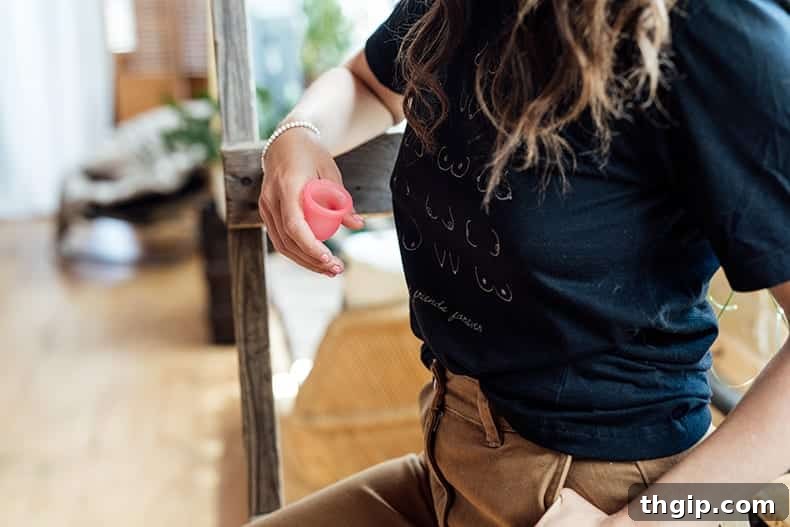
So, you’re convinced! The health, environmental, and convenience benefits have swayed you. *A subtle nod of approval to myself*. But now comes the next crucial step: choosing the right menstrual cup for you. And here’s where I’ll be completely transparent: I can’t definitively tell you *the* best brand for everyone, because “best” is subjective and highly personal. My own experience has involved two different brands: the Diva Cup and the Lena Cup. With both, I’ve had zero complaints. I initially gravitated towards the Diva Cup because it was the most widely discussed and recommended at the time. After approximately three years, when it was time for a replacement, I decided to try the Lena Cup (the one I’m holding in these pictures) after hearing positive reviews. Honestly, I’ve noticed no significant difference in performance or comfort between the two, experiencing consistent reliability with both.
However, the market for menstrual cups has blossomed, offering a vast array of choices. Beyond my personal experience, there are numerous other reputable brands worth exploring, each with its unique features, mission, and design philosophy:
- Saalt Cup: Known for its soft, comfortable design and a strong social mission.
- Lunette Cup: A popular choice with a slightly firmer feel, often recommended for active individuals.
- Dot Cup: Focuses on accessibility and giving back with every purchase.
- Dutchess Cup: Offers a cost-effective entry point into the world of menstrual cups.
- OrganiCup: Emphasizes organic, eco-certified materials and a minimalist design.
When selecting your ideal cup, consider factors beyond just brand names:
**1. Size:** This is paramount. Most brands offer at least two sizes: smaller for those under 30 who haven’t given birth vaginally, and larger for those over 30 or who have given birth vaginally. Factors like flow volume and cervix height also play a role.
**2. Firmness:** Cups range from very soft to quite firm. Softer cups are often more comfortable but can be harder to open inside. Firmer cups pop open easily but might feel more noticeable for some.
**3. Shape and Design:** Some cups are more bell-shaped, others more V-shaped. The stem can be ball-shaped, flat, or trimmable. These elements impact ease of insertion, removal, and overall comfort.
**4. Capacity:** If you have a heavy flow, look for cups with a higher capacity to minimize the need for emptying.
**5. Material:** While most are medical-grade silicone, some are TPE or natural rubber. Ensure you don’t have allergies to any of these materials.
Researching these aspects and perhaps even trying a few different brands or sizes (many companies offer starter kits) can help you discover what truly works best for your unique anatomy and needs. Remember, no matter which brand you ultimately choose, embarking on this journey comes with a learning curve.
Embracing the Learning Curve: Tips for a Smooth Menstrual Cup Transition
“I tried the Diva Cup, but it just didn’t work for me.” “I’m not sure if I’m inserting it correctly.” “The idea of using my fingers feels strange and messy.” These are common refrains I hear whenever the topic of menstrual cups arises. It’s true: switching to a menstrual cup requires a period of adjustment, patience, and a willingness to learn. It’s a journey, not an instant fix, but one that is incredibly rewarding.
First and foremost, let’s address the initial discomfort around “putting your fingers up there.” Periods are a completely natural bodily function. Vaginas are natural parts of our anatomy. My 21-year-old self struggled with this perception, but I’ve since learned, and you can too. This is simply your body, and menstrual blood is just blood – it washes away easily with soap and water. Take a deep breath. You are capable of this, and it’s a powerful step towards body literacy and empowerment.
While each cup style has its unique nuances, most require you to fold them – common methods include the C-fold, punch-down fold, or 7-fold – insert them into the vaginal canal, and then ensure they fully open and create a seal around your cervix. The “twisting” or “tugging” motion often needed to confirm the seal is where many people initially face a challenge. You’ll eventually develop an intuitive feel for when the cup is perfectly secured and sealed. If it isn’t properly sealed, you will experience leaks. If it is, you’re good to go, confidently protected for up to 12 hours. Give yourself permission to practice over several cycles. The first few times might feel awkward, but consistency is key. Try practicing insertion and removal in the shower or over the toilet when you feel most relaxed.
It’s possible you might feel the menstrual cup when it’s inside (I personally don’t), but it should never cause discomfort or pain. If you experience persistent discomfort, it could indicate that the cup isn’t properly positioned, or perhaps its size, shape, or firmness isn’t the right fit for your unique anatomy. Don’t be discouraged; every body is different. If one cup doesn’t work, consider trying a different brand, size, or firmness. There’s a perfect cup out there for you, and giving yourself the time and grace to discover it is part of the process. Remember, relaxation is crucial; tension can make insertion more difficult.
So, there you have it! The comprehensive guide to understanding, switching to, and successfully using a menstrual cup. This journey has been transformative for me, moving from skepticism to complete conviction. I am here to answer any questions you might have as you consider or embark on your own transition. In the meantime, don’t bother asking me for a tampon; I happily haven’t carried one in years!
Inspired by this exploration of women’s health? Dive deeper into related topics from The Healthy Maven:
- Understanding Pelvic Floor Health and Its Importance
- Navigating Infertility, IVF, and Natural Conception Journeys
- A Comprehensive Look at Pregnancy and the Often-Overlooked 4th Trimester
- Embracing the Joy of Aging and Everything You Need to Know About Menopause
- Exploring All Aspects of The Female Orgasm and Sexual Wellness