
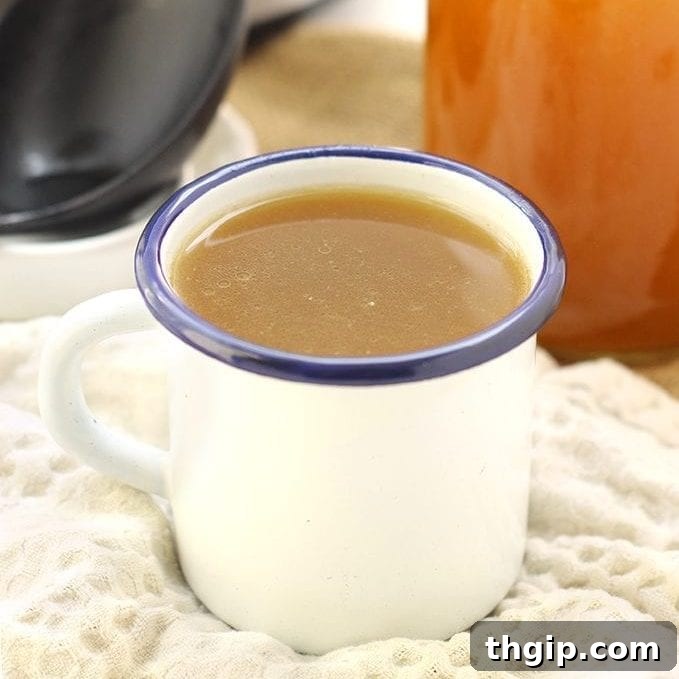
In the bustling world of health and wellness, few trends have captured as much attention as bone broth. It’s lauded for its incredible health benefits and comforting warmth, a true superfood making a remarkable comeback. Best of all? You can easily master the art of making this nourishing elixir right in your own slow cooker. Forget complex techniques or exotic ingredients; crafting delicious, nutrient-rich bone broth simply requires a handful of basic components and a generous dose of patience as your kitchen fills with its inviting aroma. This ancient remedy, rediscovered by modern nutritionists, is a testament to the power of simple, wholesome cooking.
You might think of bone broth as a recent sensation, a darling of the health-conscious community. And you wouldn’t be wrong about its current popularity. Yet, what makes this “trend” truly fascinating is its deep historical roots. Before it graced the covers of wellness magazines or became a staple in health cafes, bone broth, in various forms, was a cornerstone of nutrition across countless cultures for centuries. Our ancestors understood its profound restorative properties, even if they didn’t articulate them in terms of collagen and amino acids.
Consider your grandmother’s (or ‘Bubby’s,’ as the original article charmingly puts it) legendary chicken soup. It wasn’t just a comforting meal; it was a powerful elixir, intuitively known to heal, soothe, and nourish the soul. While she might not have had the scientific vocabulary to explain how it decreased inflammation, promoted robust hair and nails, or boosted the immune system, she knew it was a cure-all. And indeed, a truly good chicken soup has always been a beacon of warmth and healing.
What Exactly Is Bone Broth?
At its core, bone broth is a humble yet potent liquid created by simmering animal bones – typically from chicken, beef, lamb, or duck – in water for an extended period. This slow, gentle cooking process is crucial, as it meticulously extracts a treasure trove of beneficial compounds, minerals, and proteins directly from the bones and connective tissues, infusing them into the liquid.
Many wonder about the distinction between bone broth and traditional stock. While often used interchangeably, there’s a subtle yet significant difference. Stock is usually cooked for a shorter duration (2-4 hours) and focuses on savory flavor for culinary uses. Bone broth, however, is simmered for much longer, often 12 to 24 hours, sometimes even longer for beef bones. This extended cooking time is what allows for the maximum extraction of gelatin, collagen, amino acids, and minerals from the bones. Essentially, bone broth is a more nutrient-dense version of stock, designed for its therapeutic benefits as much as its flavor. You can certainly use bone broth in place of stock in any recipe, but you’d rarely want to sip on plain stock like you would a warm mug of fortifying bone broth.
The Remarkable Benefits of Incorporating Bone Broth Into Your Diet
The health community’s enthusiasm for bone broth isn’t unfounded; it’s backed by a wealth of nutritional science, primarily due to its rich collagen content, which transforms into gelatin upon cooking. The benefits are wide-ranging and impactful:
- Strengthens Bones and Joints: Bone broth is a natural source of collagen, glucosamine, chondroitin, and hyaluronic acid. These compounds are vital for maintaining healthy cartilage, reducing joint pain, and potentially preventing degenerative joint diseases like osteoarthritis. The calcium, magnesium, and phosphorus also contribute to overall bone density.
- Supports Muscle Repair and Growth: The amino acids found in bone broth, particularly glycine and proline, play a crucial role in protein synthesis, aiding in muscle repair after exercise and promoting lean muscle mass.
- Promotes Radiant Hair, Skin, and Nails: Collagen is the primary structural protein in skin, hair, and nails. Regular consumption of bone broth can significantly improve skin elasticity, reduce wrinkles, strengthen brittle nails, and add luster to hair. It’s like a beauty treatment from the inside out!
- Boosts Digestive Health: Gelatin, derived from collagen, is incredibly soothing and healing for the gut lining. It helps seal the gut, which can be beneficial for conditions like leaky gut syndrome, irritable bowel syndrome (IBS), and food sensitivities. It also aids in digestion by attracting and holding liquids, helping food move through the digestive tract more smoothly.
- Enhances Immune System Function: The amino acids, particularly glycine and arginine, found in bone broth have anti-inflammatory properties and support the body’s immune response. A healthy gut is also intrinsically linked to a strong immune system, making bone broth a powerful immune booster.
- Aids in Detoxification: Glycine is a critical amino acid involved in liver detoxification processes, helping your body eliminate toxins more efficiently.
- Supports Healthy Weight Management: Bone broth is low in calories but rich in nutrients, making it a satiating drink that can help curb cravings and promote feelings of fullness, supporting healthy weight goals.
Why Making Your Own Bone Broth is the Best Choice
While store-bought options are increasingly available, there are compelling reasons to take the homemade route. As an avid ingredient-reader, the author often highlights the questionable additives found in many commercial broths and stocks. You’d be surprised by the artificial colorings, excessive sodium, yeast extracts, and “natural flavors” that often sneak into store-bought varieties – ingredients that are entirely unnecessary for a truly wholesome broth. These additives can detract from the nutritional value and purity of the product.
By making your own bone broth, you gain complete control over the quality of your ingredients, ensuring it’s free from undesirable chemicals and preservatives. Furthermore, homemade bone broth is significantly more affordable, especially if you save bones from your own cooked meats or source them cheaply from a local butcher. Given its simplicity and cost-effectiveness, the arguments for making your own are overwhelmingly strong. Of course, if time is a major constraint, a few reputable brands like Kettle & Fire do offer high-quality, organic, grass-fed bone broths, proving that a healthy store-bought option can exist, but it often comes at a premium.
The Convenience of Making Bone Broth in Your Slow Cooker
Yes, absolutely! The slow cooker is arguably the easiest and most hands-off method for preparing bone broth, making it a favorite among busy home cooks. Many discover the joy of slow-cooker cooking through simple recipes like chicken soup, and the transition to bone broth is seamless. It’s as simple as extending the simmering time to allow for maximum nutrient extraction.
The slow cooker provides a constant, low heat that is ideal for breaking down bones and connective tissues over a long period without constant supervision. This means you can simply set it up, go about your day, and return to a house filled with the comforting aroma of slowly simmering broth. It’s perfect for making large quantities, which you can then portion out for daily sipping and freeze the rest for future use in soups, stews, sauces, or to cook grains.
The true beauty of this method lies in its minimal requirements. The primary ingredient you’ll need is animal bones. So, cultivate the habit of saving bones from your roasted chickens, beef roasts, or any meat dishes. Store them in a freezer bag, and when you’ve accumulated enough, simply toss them into the slow cooker with water. Twenty-four hours later, you’ll be rewarded with a rich, gelatinous, and incredibly healthy homemade bone broth.
While a basic bone broth requires only bones, water, and a splash of vinegar, you can certainly enhance its flavor with aromatic vegetables and herbs. Carrots, celery, onions, garlic, bay leaves, and peppercorns are popular additions that deepen the savory notes. However, if you’re short on time or simply plan to use the broth as a base for other recipes, these additions are entirely optional. The core nutritional benefits remain paramount.
To make your own slow cooker bone broth, you’ll generally need:
- High-quality animal bones (chicken, beef, pork, or a mix) – ask your butcher for soup bones or save them from your meals.
- Filtered water (enough to fully cover the bones).
- A small amount of apple cider vinegar (this acidic component helps draw minerals and collagen from the bones).
- Optional: Aromatic vegetables like carrots, celery, onion, and fresh herbs for added flavor.
Now that you’re well-versed in the wonders of bone broth, let’s dive into the simple steps to create your own batch of this liquid gold in your slow cooker.
How To Make Bone Broth In Your Slow Cooker

4.7 from 7 reviews
- Author: Davida Lederle
- Total Time: 24 hours
- Yield: 9-10 cups
Ingredients
- 1-2 lbs organic animal bones (chicken, beef, duck, bison, etc. are excellent choices. Consult your local butcher for quality soup bones or save them from your own cooking.)
- 2 organic celery stalks, roughly chopped in half
- 1 large organic carrot, cut into chunky pieces
- 1 medium onion, peeled and halved
- 9-10 cups filtered water (or enough to fully submerge the bones and vegetables)
- Salt and freshly ground black pepper, to taste
- 1 tsp apple cider vinegar (crucial for helping to extract maximum nutrients from the bones)
- Supplies: Cheesecloth, cooking twine, a fine-mesh strainer, and a 4-6 quart slow cooker.
Instructions
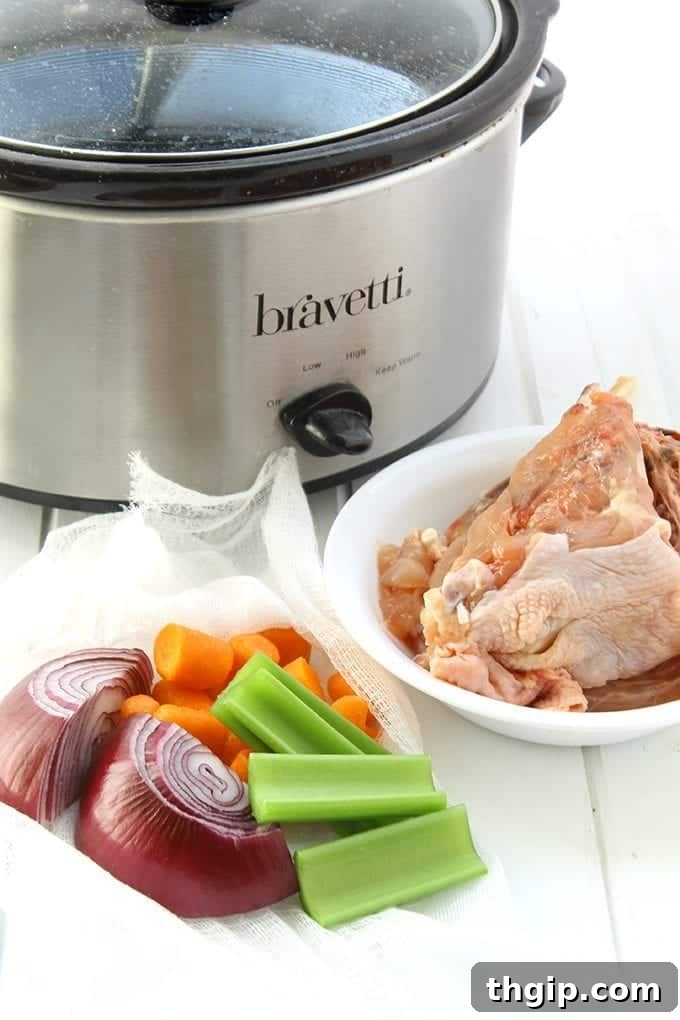
- If using vegetables for flavor, gather them in a double layer of cheesecloth and tie securely with cooking twine to create a neat bundle. This makes for easy removal later.
- Place your chosen bones along with the vegetable bundle (if using) into the slow cooker. Pour in the filtered water, ensuring all ingredients are fully covered. Add the apple cider vinegar.
- Set your slow cooker to the LOW setting and allow it to simmer for a minimum of 24 hours. While 24 hours is ideal for flavor and nutrient extraction, slight variations (a few hours more or less) are acceptable.
- After the first hour or two of simmering, a layer of “scum” or “gunk” may rise to the surface. Use a spoon to carefully skim this off. Cleaner, organic meats tend to produce less of this, but it’s a normal part of the process.
- Once the cooking time is complete, turn off the slow cooker and remove the lid. Let the broth cool down slightly before handling.
- Place a fine-mesh strainer over a large heat-proof bowl. Carefully ladle the broth through the strainer to separate the liquid from the bones and vegetable solids. Discard the solids.
- Season your freshly made bone broth with salt and pepper to your desired taste.
Storage Tips: For convenience, consider freezing half of your batch and keeping the other half in the refrigerator for daily use. Bone broth will last approximately one week in the fridge and several months in the freezer. When freezing, using ice cube trays or individual containers can create perfect portions for later use. If storing in the refrigerator, you may notice a layer of fat solidify on top; you can remove this if preferred or stir it back in – it’s a source of beneficial fats! Always thaw frozen broth in the refrigerator for several hours or overnight before reheating. When reheating, avoid the microwave if possible, opting for a stovetop for better flavor and nutrient preservation.
Slow Cooker Recommendations: The author enjoys a reliable slow cooker, but for those who prefer programmable options, a model with a timer function, like this one, comes highly recommended for added convenience.
Once you start making your own bone broth, you’ll discover its versatility. Beyond simply sipping it warm, use it as a flavorful and nutritious base for your favorite soups, stews, sauces, and gravies. Cook rice, quinoa, or other grains in bone broth instead of water for an added boost of flavor and nutrients. It’s an effortless way to enhance virtually any savory dish.
Embracing the tradition of homemade bone broth is a journey back to wholesome, natural nourishment. It’s a simple act of self-care that provides profound benefits for your gut, joints, skin, and immune system. Give this age-old remedy a try, and experience the comforting goodness for yourself!
Like this recipe? Here are a few others you might enjoy:
How To Make Homemade Kombucha
How To Make Green Juice In Your Blender
Turkey Sweet Potato Chili
How to Make Veggie Stock from Veggie Scraps