
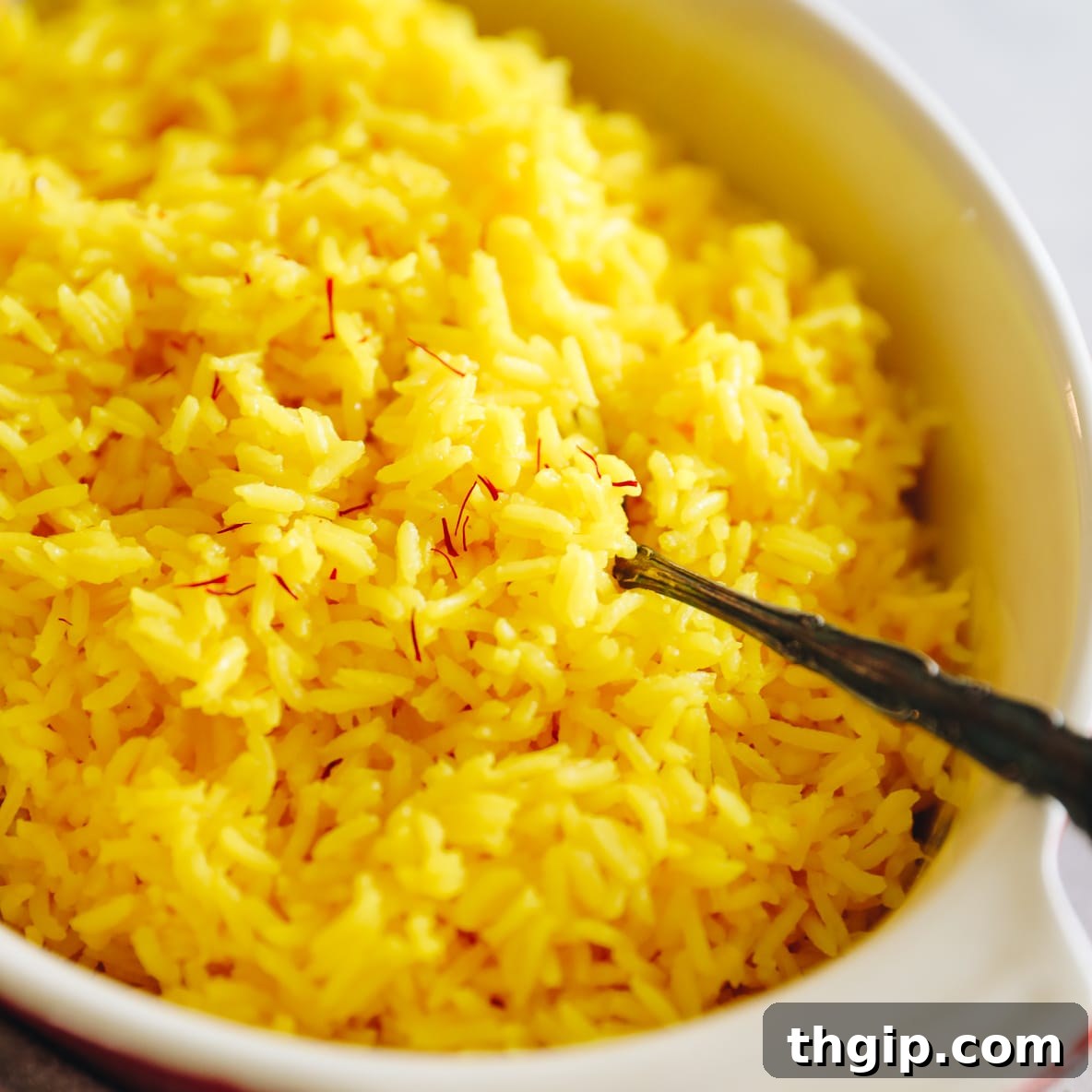
Elevate your dining experience with this incredibly flavorful and straightforward yellow saffron rice recipe. Crafted with aromatic basmati rice, exquisite saffron threads, and rich stock, this dish will forever change your perception of a simple rice side. Prepare to impress with its vibrant color, intoxicating aroma, and delicate taste.
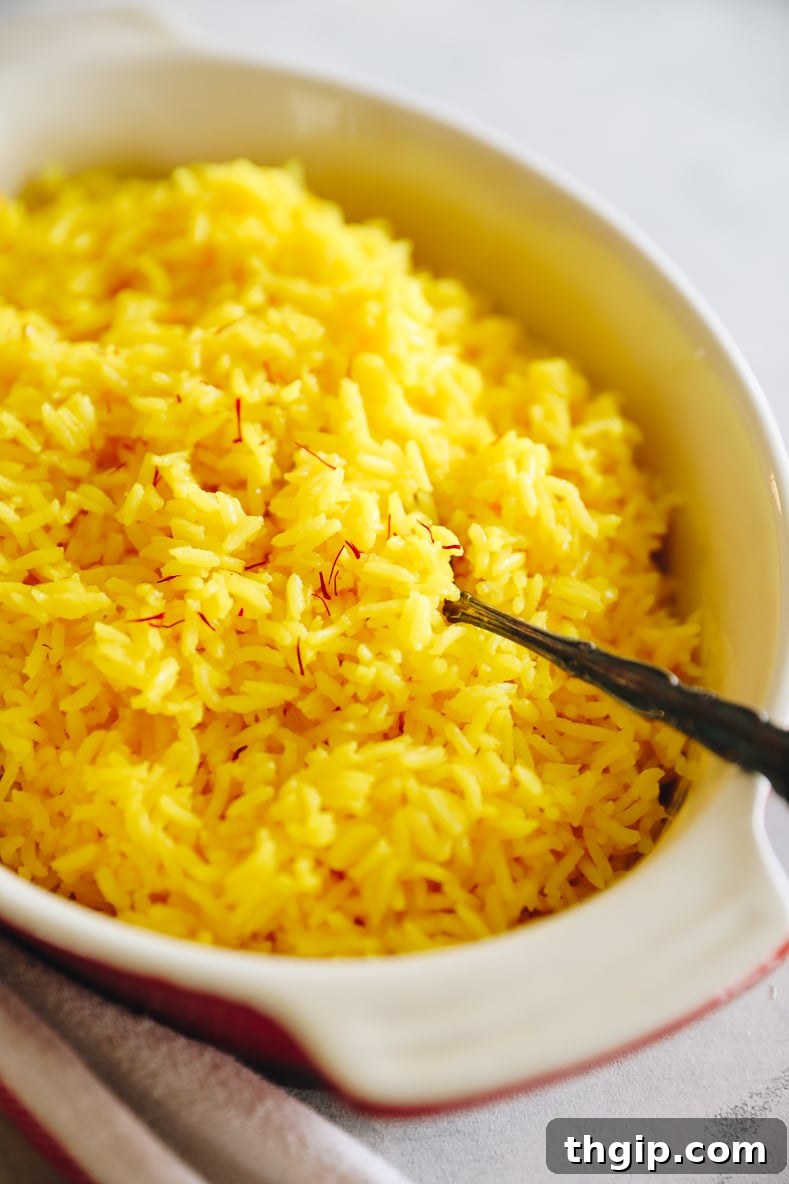
There’s something truly magical about saffron, a spice revered across cultures for its distinct flavor, vibrant hue, and myriad uses. Recently, while discussing the surprising versatility of saffron with my friend Sahar – specifically its applications in skincare, such as this saffron facial serum popular in Pakistan and India – my thoughts inevitably drifted to my culinary adoration for it. It sparked a nostalgic craving for one of my absolute favorite creations: this easy yellow saffron rice recipe, a staple I once prepared with delightful regularity.
Confession time: My frequency in making this exquisite saffron rice waned for a period. After moving to California, I found myself without ready access to my mother’s generously stocked pantry. Saffron, as many know, is a precious and often expensive spice. In my younger years, I guiltlessly “borrowed” from Mama Maven’s stash, a luxury I can no longer justify as a self-sufficient adult. So, when the yearning for golden rice struck again, I responsibly invested in a small, ethically sourced batch of saffron from Rumi. Their commitment to quality and ethical practices impressed me, and thankfully, their product lives up to its reputation. With this new treasure in hand, my beloved yellow saffron rice has triumphantly returned to our family meal plan, adding a touch of golden luxury to our everyday.
The Golden Allure of Saffron: Understanding the World’s Most Precious Spice
Saffron is more than just a spice; it’s a testament to ancient agricultural practices and a symbol of luxury. Derived from the delicate stigma of the Crocus sativus flower, it is renowned as the world’s most expensive spice by weight. The reason for its high value lies in its labor-intensive cultivation and harvesting process. Each saffron crocus produces only three tiny stigmas, which must be hand-picked during a short flowering period, typically in autumn. It takes tens of thousands of individual flowers to yield just one pound of dried saffron threads, making it a true treasure.
Beyond its rarity, saffron captivates with a complex flavor profile. High-quality saffron boasts an earthy, slightly sweet, and floral aroma with subtle notes of honey and hay. This unique complexity makes it indispensable in both savory and sweet dishes, lending depth and a distinctive character that no other spice can replicate. The vibrant golden-yellow color saffron imparts is due to crocin, a powerful carotenoid pigment, making it a natural and stunning food dye. Poor quality or adulterated saffron, however, can be disappointingly bitter, highlighting the importance of sourcing from reputable suppliers.
Historically, saffron has been cherished not only in cooking but also in traditional medicine and cultural practices. Ancient civilizations used it for its medicinal properties, as a dye for textiles, and even as a perfume. Its rich history and multifaceted uses further solidify its status as a spice of unparalleled significance.
A Journey Through History: The Rich Heritage of Saffron Rice
Saffron rice is a culinary cornerstone, deeply rooted in the gastronomic traditions of numerous cultures worldwide. Its presence is particularly pronounced across South Asia, including India, Bangladesh, and Pakistan, where it often graces festive occasions and everyday meals alike. In these regions, it’s typically prepared with white basmati rice and can be found in both delightfully sweet and profoundly savory renditions.
The Middle East, particularly Persia (modern-day Iran), is another bastion of saffron rice. Persian pilafs (polow) are legendary, often incorporating saffron to create dishes of unparalleled fragrance and beauty. From the delicate Morasa Polow (Jeweled Rice) to the crisp Tahdig (the coveted crunchy bottom layer), saffron is a star ingredient, infusing the rice with its signature golden hue and ethereal aroma.
The culinary journey of saffron rice extends further, reaching parts of Southeast Asia, where it takes on regional variations. For instance, in Thai cuisine, while less common than in South Asia or the Middle East, saffron rice can be found, often prepared with jasmine rice and occasionally enhanced with ingredients like fish sauce, demonstrating its adaptability across diverse flavor palettes. Even in Mediterranean cooking, the influence of saffron in rice dishes is evident, most famously in Spanish paella, where it is the defining spice that gives the dish its iconic color and a significant portion of its flavor.
This widespread adoption underscores saffron rice’s universal appeal as a dish that transcends borders, bringing together communities through its shared appreciation for this luxurious golden grain.
Key Ingredients for Your Perfect Yellow Saffron Rice Recipe
Crafting truly exceptional yellow saffron rice begins with selecting the right ingredients. Each component plays a vital role in achieving the desired texture, flavor, and vibrant color.
- Basmati Rice: For authentic saffron rice, white basmati rice is the ideal choice. Its long grains cook up light and fluffy, remaining separate rather than clumping together, which is crucial for a perfectly textured rice dish. Basmati also possesses its own subtle, aromatic fragrance that beautifully complements saffron. If basmati is unavailable, a high-quality white jasmine rice can be a suitable alternative, though basmati is preferred. The key is to use a long-grain rice variety.
- Chicken Broth/Stock: Using chicken broth or stock instead of plain water significantly enhances the depth of flavor in the rice. It adds a savory richness that makes the dish more satisfying. For a vegan or vegetarian version, simply substitute with a good quality vegetable broth or stock. Opt for low-sodium options to control the saltiness of the final dish.
- Olive Oil: A tablespoon of extra virgin olive oil contributes to a richer mouthfeel and adds a subtle, fruity undertone that harmonizes wonderfully with the other flavors. It also helps in preventing the rice from sticking.
- Saffron Threads: The star of the show! Always purchase saffron in thread form, not powdered, as threads are a better indicator of quality and less likely to be adulterated. Look for vibrant red threads with a slight elasticity. These precious threads are what infuse the rice with its characteristic golden-yellow color and unparalleled aroma.
- Turmeric: While saffron provides the primary golden hue, a touch of turmeric enhances the depth of yellow and adds an earthy, warm flavor note that complements saffron without overpowering it. It’s a subtle booster for both color and taste.
- Sea Salt: Essential for balancing and amplifying all the flavors in the dish. Adjust the amount according to your preference and the sodium content of your chosen broth.
Mastering Saffron: Essential Tips for Cooking with this Precious Spice
Working with saffron, the world’s most luxurious spice, can be incredibly rewarding. To truly unlock its full potential in your yellow saffron rice, keep these crucial tips in mind:
1. Invest in Good Quality Saffron: This is perhaps the most critical tip. Saffron’s distinctive flavor and color are unparalleled, but only if you use genuine, high-quality threads. While it can be an investment, the superior aroma and vibrant hue of premium saffron are truly worth it. Avoid overly cheap or powdered saffron, as these are often diluted or fake, lacking the true aromatic complexity. Look for threads that are deep red with minimal yellow stamens. Ideally, source fair-trade saffron from regions where it’s traditionally grown; historically, over 90% of the world’s saffron originates from Iran, known for its exceptional quality. Ethical sourcing ensures fair practices for growers and guarantees an authentic product for you.
2. A Little Bit Goes a Long Way: Despite its high cost, saffron is incredibly potent. You don’t need much to achieve a profound effect. A mere 1/4 teaspoon of saffron threads – roughly a pinch – is often sufficient to impart its characteristic color and aroma to a significant amount of rice. This makes your investment go further, ensuring that a small packet of saffron can enhance many meals.
3. Always “Bloom” Your Saffron in Hot Water: This step is non-negotiable for maximizing saffron’s flavor and color release. Grinding the saffron threads into a fine powder (using a mortar and pestle or crushing between your fingers) before steeping helps to break down the cells and extract more of its beneficial compounds. Adding this powdered saffron to a small amount of hot liquid (water, broth, or milk) allows it to “bloom” or infuse. This process, usually taking about 10-15 minutes, fully releases the aromatic oils and the crocin pigment, creating a potent saffron infusion that will evenly color and flavor your rice, ensuring every grain is imbued with its golden essence.
How to Make this Easy Yellow Saffron Rice Recipe: Step-by-Step Guide
Creating this beautiful and fragrant saffron rice is simpler than you might think. Follow these clear steps for perfect results every time:
STEP 1: PREP SAFFRON
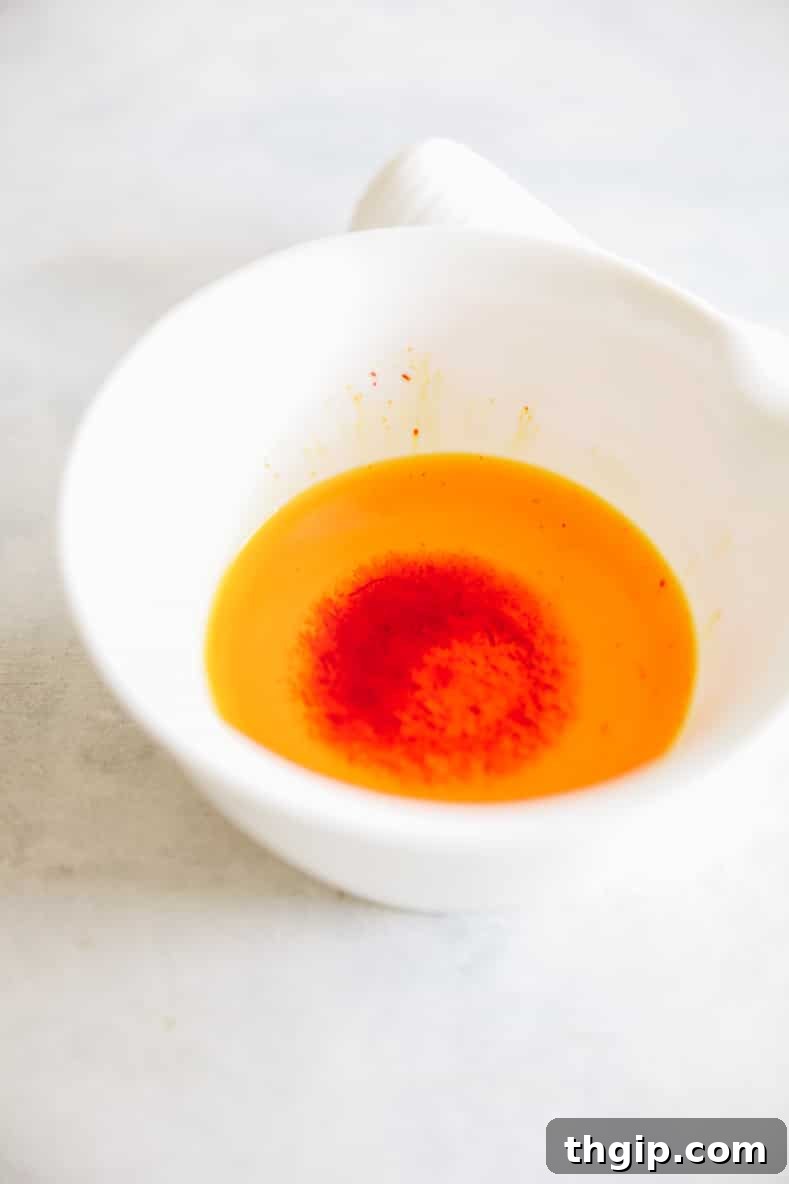
Begin by preparing your saffron to ensure maximum flavor and color extraction. Place your 1/4 tsp saffron threads into a mortar. Using a pestle, gently grind the saffron until it achieves a fine, powdery consistency. This helps to release its potent compounds. Once ground, add 1/4 cup of hot water directly into the mortar with the saffron powder and stir well to combine. Allow this saffron infusion to sit and bloom for at least 10-15 minutes while you prepare the other ingredients. This crucial step ensures that the saffron’s vibrant color and rich aroma are fully developed before being added to the rice.
STEP 2: COOK RICE
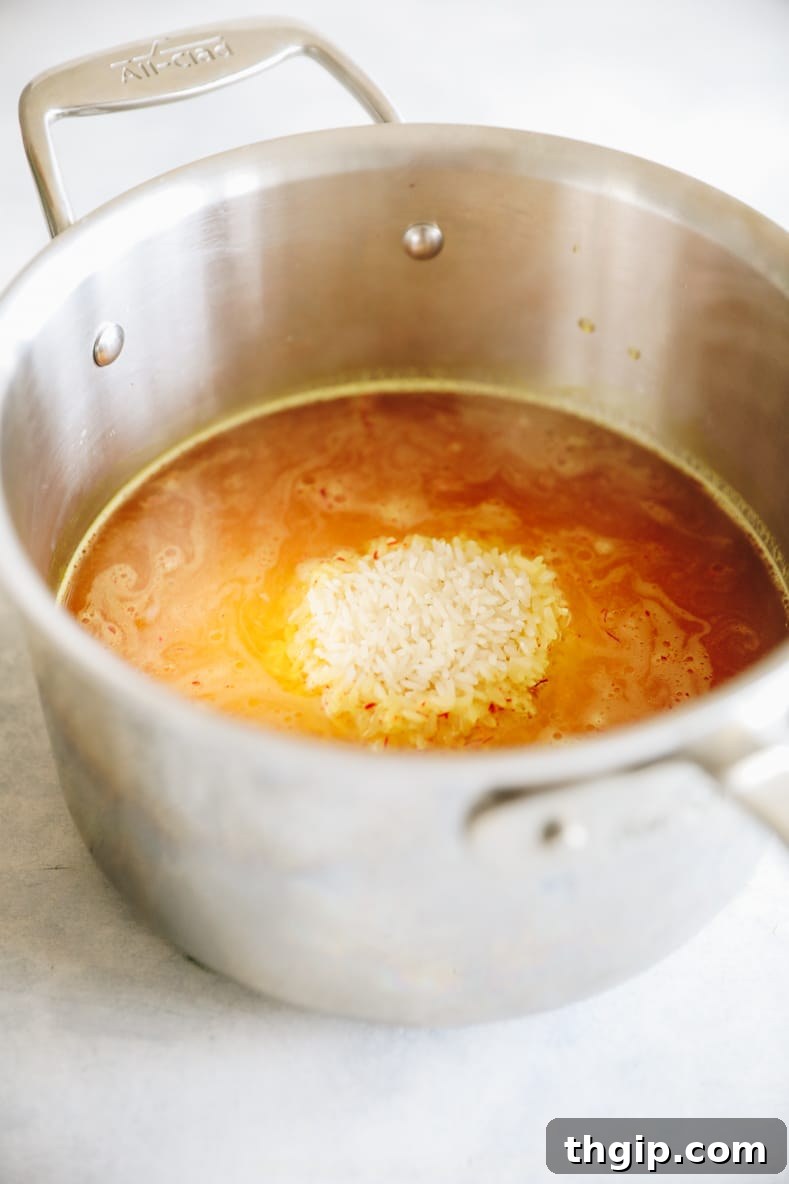
Take a medium-sized saucepan or pot and pour in 3 1/4 cups of chicken or vegetable stock. Place the pot on the stove top over medium-high heat and bring the stock to a rolling boil. Once the stock is vigorously boiling, carefully add in your bloomed saffron-water mixture, 1 tbsp of olive oil, 1/4 tsp of turmeric, and 3/4 tsp of sea salt. Stir all these ingredients thoroughly until well combined. Next, add the 2 cups of rinsed white basmati rice to the pot. Stir once more to ensure the rice is evenly distributed. Bring the mixture back up to a boil. As soon as it reaches a boil again, reduce the heat immediately to its lowest setting, cover the pot tightly with a lid, and let it simmer undisturbed for exactly 15 minutes. Resist the urge to lift the lid during this time, as steam is essential for perfectly cooked rice.
STEP 3: FINISH COOKING + FLUFF
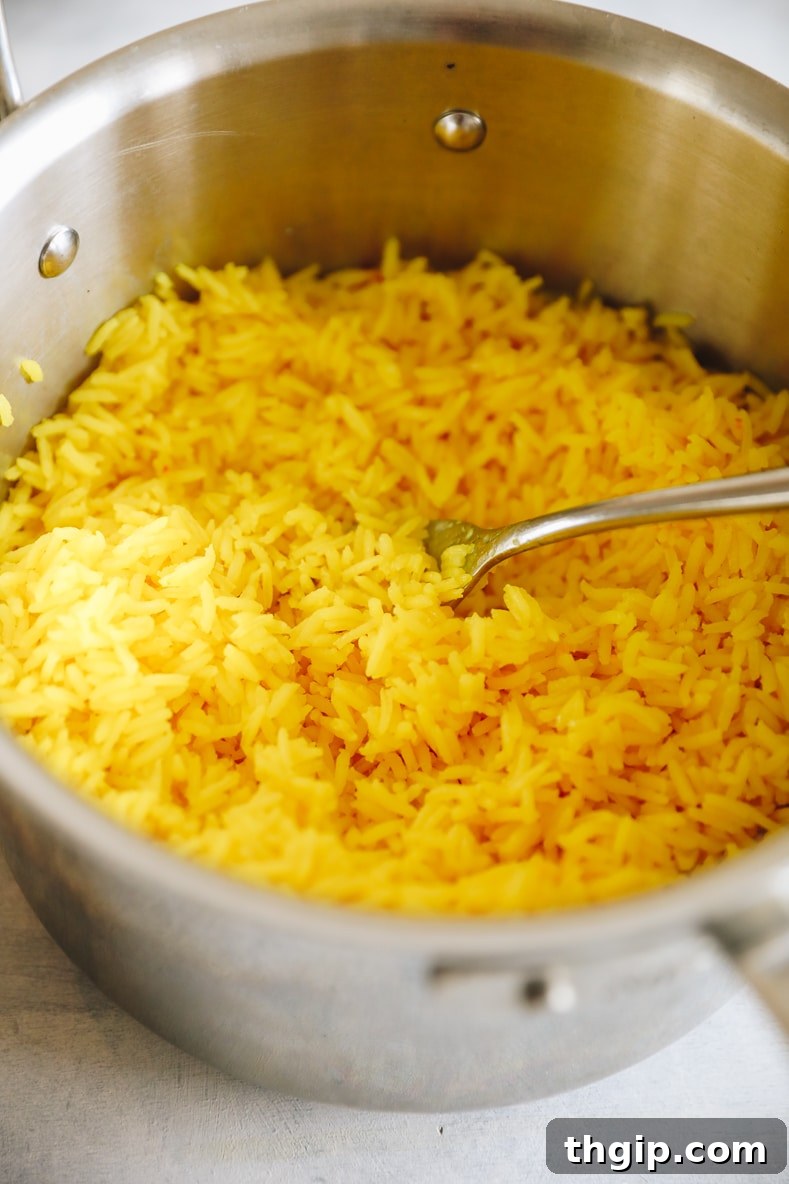
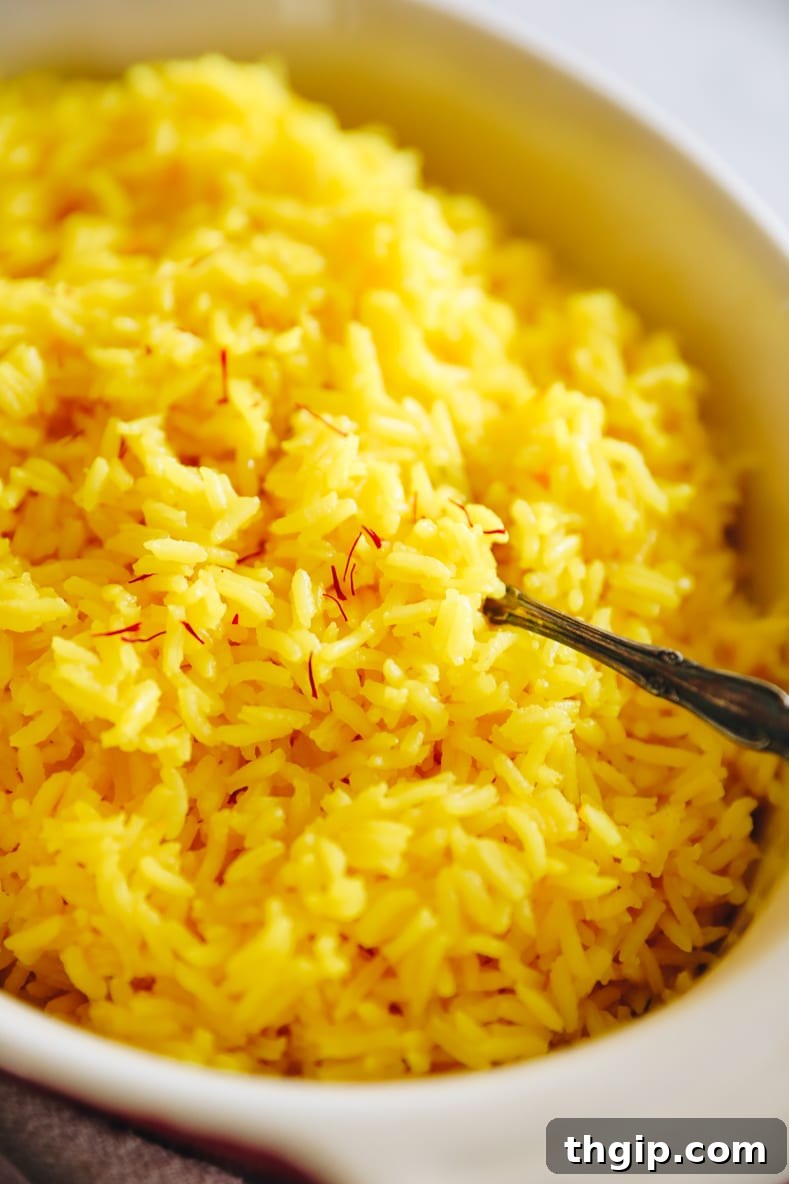
Once the 15 minutes of simmering are complete, turn off the heat completely. Crucially, leave the pot covered with its lid and allow the rice to rest for an additional 5-10 minutes. This resting period allows the remaining steam to gently finish cooking the rice, ensuring all liquid is fully absorbed and the grains become perfectly tender and separate. After resting, remove the lid and use a fork to gently fluff the saffron rice. This separates the grains and releases any trapped steam, resulting in a light, airy, and beautifully textured dish. Serve immediately and enjoy the exquisite aroma and flavor!
Storing Leftovers
Proper storage is key to enjoying your saffron rice leftovers safely and deliciously. Once cooled, transfer any leftover rice to an airtight container. It can be stored in the refrigerator for up to 5 days. While rice is generally best enjoyed fresh, reheating leftovers in the microwave is a convenient option. To prevent it from drying out, you can add a tablespoon of water or broth and cover it loosely before microwaving until heated through. Alternatively, gently warm it in a saucepan with a splash of liquid over low heat.
What to Pair with Saffron Rice
The versatility of this yellow saffron rice recipe makes it an exceptional accompaniment to a wide array of main courses. Its delicate flavor and stunning color can elevate any meal. Beyond replacing your regular plain rice, consider pairing it with these delicious options:
- Baked Chicken Shish Kabobs: The savory notes of grilled chicken are a perfect match for fragrant saffron rice.
- Crispy Tempeh Bowls: Swap out spicy turmeric rice for this milder, aromatic saffron version for a delightful vegetarian meal.
- Tandoori Chicken Kebabs: The bold, smoky flavors of tandoori chicken are beautifully balanced by the subtle sweetness of saffron rice.
- Baked Falafel Bowls: A fantastic plant-based pairing, where the falafel’s texture and spice complement the soft, fragrant rice.
Easy Saffron Rice Recipe
No reviews
Spice up your rice with this delicious and easy saffron rice recipe. Made with basmati rice, high-quality saffron threads and stock, you will never go back to your basic, boring rice recipe again.
- Author: Davida Lederle
- Prep Time: 5 minutes
- Cook Time: 25 minutes
- Total Time: 30 minutes
- Yield: 6 servings 1x
- Category: Side
- Method: Cook
- Cuisine: Persian
- Diet: Gluten Free
Ingredients
- 2 cups white basmati rice
- 3 1/4 cups chicken stock (or vegetable stock)
- 1 tbsp olive oil
- 1/4 tsp saffron threads (+ 1/4 cup hot water)
- 1/4 tsp turmeric
- 3/4 tsp sea salt
Instructions
- Add saffron to mortar and using a pestle grind up saffron until it reaches a powdery consistency.
- Add your 1/4 cup of hot water directly to the pestle and stir to combine. Set aside.
- Add your chicken or vegetable stock to a medium saucepan and bring to a boil on the stove top over medium-high heat.
- Once the stock is boiling add in your saffron/water mix, olive oil, turmeric and salt. Stir well.
- Add rice and bring mixture back up to a boil. Once boiling, lower heat to a simmer and cover tightly with a lid.
- Simmer on low for 15 minutes.
- Turn off heat and let rice sit, covered with lid for 5-10 minutes until all liquid has been absorbed.
- Remove lid and fluff rice with a fork.
Frequently Asked Questions About Saffron Rice
Here are some common questions to help you master your saffron rice culinary journey:
- Can I use brown rice instead of white basmati? While you can technically use brown rice, it’s not ideal for traditional saffron rice. Brown rice has a longer cooking time and a chewier texture that can overwhelm the delicate flavor of saffron. White basmati rice is preferred for its fluffy texture and neutral flavor that allows saffron to truly shine.
- Is this saffron rice recipe vegan? Yes, absolutely! Simply substitute chicken stock with an equal amount of high-quality vegetable stock to make this recipe completely vegan and vegetarian-friendly. The flavor will still be wonderfully rich and aromatic.
- What’s the difference between saffron and turmeric in terms of flavor and color? Both spices contribute a beautiful yellow hue, but their flavor profiles are distinct. Saffron provides a unique earthy, floral, and slightly sweet aroma with a delicate taste. Turmeric, while also yellow, offers a more robust, earthy, and slightly peppery flavor. In this recipe, turmeric enhances the golden color and adds a subtle background note without competing with saffron’s star quality.
- How should I store saffron threads to keep them fresh? To preserve saffron’s potency and aroma, store the threads in an airtight container in a cool, dark place, away from direct sunlight and heat. A cabinet or pantry is ideal. Stored correctly, high-quality saffron can retain its flavor and color for several years.
- Is saffron worth its expensive price tag? Many culinary enthusiasts would wholeheartedly say yes! The unique flavor, aroma, and vibrant color that saffron imparts to dishes are truly unparalleled and cannot be replicated by any other spice. A small amount goes a long way, making a little investment last through many delightful meals, proving its worth in elevating culinary creations.
Other Delicious Side Dishes You Might Enjoy:
- Butternut Squash and Wild Rice Pilaf
- Roasted Vegetables with Tahini Sauce
- Harvest Grain Salad
- Warm Lentil and Sweet Potato Salad