
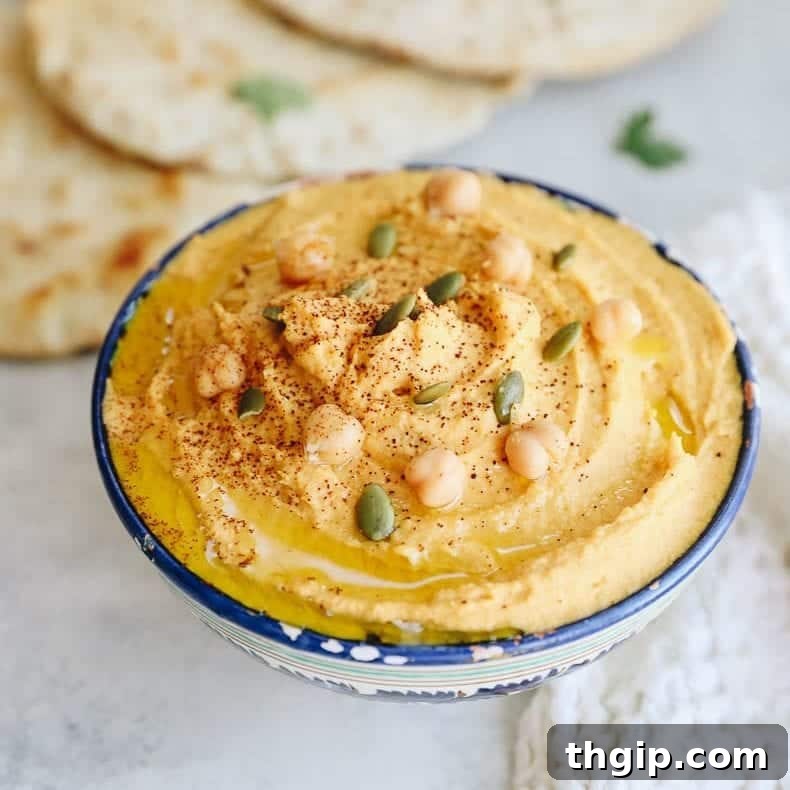
Welcome the vibrant flavors of autumn into your kitchen with this irresistibly creamy Roasted Butternut Squash Hummus. This delightful recipe takes the beloved traditional hummus and infuses it with the sweet, earthy goodness of roasted butternut squash, creating an extraordinary dip that’s perfect for fall dinner parties, cozy family gatherings, or simply elevating your everyday snacking. Not only is it incredibly flavorful, but it’s also entirely vegan and packed with wholesome ingredients, making it a guilt-free pleasure you’ll crave all season long.
Embracing the Flavors of Fall with Homemade Hummus
There’s something truly magical about autumn. The crisp air, the vibrant changing leaves, and the comforting aroma of seasonal produce filling the kitchen. For many, fall is synonymous with squash – a confession I often make, perhaps to the amusement or bewilderment of others. I admit, I’ve been known to spend a disproportionate amount at the farmer’s market on squash purely for aesthetic purposes, transforming my home into a cozy autumn sanctuary. But beyond their decorative appeal, squashes are culinary gems, offering a remarkable sweetness and versatility that shines in countless dishes, especially in this Roasted Butternut Squash Hummus.
My enthusiasm for squash peaks as soon as September rolls around. While I might need a six-month hiatus by March, come autumn, I’m ready for “all the squash!” This recipe perfectly encapsulates that seasonal excitement. It’s a celebration of fall, bringing together the rich, caramelized notes of roasted butternut squash with the classic, tangy, and savory profile of homemade hummus. It’s more than just a dip; it’s an experience that truly embodies the essence of the season, offering a unique twist on a beloved appetizer that will surely delight your taste buds.
Why You’ll Fall in Love with This Butternut Squash Hummus
This Roasted Butternut Squash Hummus isn’t just another dip; it’s a culinary delight with several compelling reasons to make it your next kitchen adventure:
- Seasonal & Comforting Flavor: It perfectly captures the warm, comforting essence of autumn, making it an ideal dish for fall and winter gatherings. The natural sweetness of butternut squash harmonizes beautifully with traditional hummus flavors.
- Incredibly Creamy Texture: Roasting the butternut squash until tender, then blending it with chickpeas and tahini, results in an exceptionally smooth and luscious dip that’s hard to resist.
- Wholesome & Nutritious: Packed with fiber from chickpeas and butternut squash, vitamins (especially Vitamin A and C from the squash), and healthy fats from olive oil and tahini, this hummus is a wonderfully healthy snack or appetizer. It’s also entirely plant-based and naturally gluten-free.
- Versatile for Any Occasion: Whether served as an elegant appetizer at a dinner party, a nutritious snack for kids and adults, or a flavorful spread for sandwiches and wraps, its versatility knows no bounds.
- Surprisingly Easy to Make: Despite its impressive flavor profile, the steps to create this gourmet-style hummus are straightforward and require minimal fuss, making it accessible for home cooks of all skill levels.
Key Ingredients for Your Creamy Butternut Squash Hummus
Creating an exceptional Roasted Butternut Squash Hummus starts with understanding the role of each ingredient. Here’s a closer look at what you’ll need to gather:
- Roasted Butternut Squash: This is unequivocally the star of our recipe. Roasting the squash is a crucial step as it intensifies its natural sweetness, caramelizes its sugars, and softens it to a tender, almost custardy consistency. This rich flavor and texture are what contribute to the hummus’s incredible depth and silkiness. You’ll find detailed instructions on how to perfectly prepare and roast it further down.
- Olive Oil: A cornerstone of Mediterranean cooking, good quality extra virgin olive oil is indispensable here. It not only adds a luxurious silkiness and mouthfeel to the hummus but also imparts a subtle peppery, fruity note that enhances the overall flavor. Beyond blending, a final drizzle of olive oil before serving adds richness and a beautiful sheen.
- Cooked Chickpeas (Garbanzo Beans): As the fundamental building block of any hummus, chickpeas provide the bulk, protein, and earthy base. While using dried chickpeas that have been soaked and cooked from scratch offers a slightly superior texture, canned chickpeas are a wonderfully convenient and perfectly acceptable alternative. Just ensure you rinse and drain them thoroughly to remove excess sodium and improve digestibility.
- Tahini: You simply can’t have authentic hummus without tahini! This creamy paste, made from ground sesame seeds, is vital for achieving the characteristic nutty flavor, deep richness, and smooth, velvety texture that defines traditional hummus. Investing in a good quality, runny tahini will make a noticeable difference in the final product.
- Garlic Cloves: Fresh garlic provides an essential aromatic and pungent kick that beautifully balances the inherent sweetness of the butternut squash. For a milder, more mellow garlic flavor, you can opt to roast the garlic cloves along with the butternut squash, which sweetens and softens them considerably.
- Fresh Lemon Juice: Bright, zesty lemon juice is a critical component that acts as a flavor enhancer. It cuts through the richness and sweetness of the other ingredients, adding a necessary acidic balance that brightens the entire dip and prevents it from tasting flat. Always use freshly squeezed lemon juice for the best, most vibrant results.
- Water: This simple ingredient is essential for achieving the perfect consistency. Water is added gradually during blending to thin out the hummus, allowing you to control and achieve your preferred level of creaminess and spreadability. Have extra on hand, as the amount needed can vary.
- Signature Spices: A thoughtfully chosen blend of smoked paprika, cumin, freshly ground black pepper, and sea salt elevates the flavor profile. Smoked paprika contributes a lovely warmth and subtle smokiness, which pairs exceptionally well with roasted vegetables. Cumin provides an earthy, robust depth that is characteristic of Middle Eastern cuisine, beautifully complementing the squash and chickpeas. Salt and pepper are crucial for seasoning to taste, bringing all the flavors into harmony.
Mastering the Art of Cutting and Roasting Butternut Squash
Many people shy away from fresh butternut squash, deeming it too challenging to cut. However, with the right technique and a sharp knife, it’s surprisingly simple and well worth the effort! The key to a safe and efficient squash preparation lies in your tools and approach. A high-quality, sharp chef’s knife is your best friend here. If you find yourself struggling, a quick trip to the microwave can make a world of difference.
Step-by-Step Guide to Preparing Butternut Squash:
- Ensure a Stable Surface: Begin by placing your butternut squash on a sturdy, non-slip cutting board. If the squash wobbles, carefully trim a tiny bit off one side to create a flat, stable base. This is crucial for safety during cutting.
- Trim the Ends: Using your sharp knife, carefully slice off about half an inch from both the stem and root ends of the squash. This makes it easier to handle and provides clear points for your main cut.
- Halve the Squash Lengthwise: Stand the squash upright on one of its freshly cut ends. Carefully and slowly cut the squash in half lengthwise, from top to bottom. If the knife encounters resistance, gently rock it back and forth, or for very tough squashes, place it in the microwave for 1-minute intervals to slightly soften it before attempting to cut again.
- Scoop Out the Seeds: Once halved, use a sturdy spoon (an ice cream scoop works exceptionally well here) to scrape out all the seeds and fibrous strands from the cavity of each squash half. You can discard these, compost them, or even roast the seeds for a delicious, crunchy snack.
- No Peeling Required for Hummus! A wonderful aspect of this particular hummus recipe is that there’s no need to peel the butternut squash. The skin becomes incredibly tender during the roasting process and will easily blend into a smooth puree, adding extra nutrients and a subtle rustic flavor without affecting the texture of your hummus.
Perfect Roasting for Optimal Flavor and Texture:
Roasting is where the magic happens, transforming the humble butternut squash into a sweet, caramelized ingredient bursting with intense flavor. The flesh-down method is particularly effective for achieving perfectly tender squash:
- Prepare for Roasting: Lightly drizzle the cut surfaces of your squash halves with a bit of olive oil. This helps with caramelization and prevents sticking to the baking sheet.
- Arrange on a Baking Sheet: Place the squash halves flesh-side down on a baking sheet. For remarkably easier cleanup, line the baking sheet with parchment paper or aluminum foil before placing the squash. Placing them flesh-down ensures that the squash steams in its own moisture while the exterior caramelizes, resulting in an incredibly tender and flavorful interior.
- Roast Until Tender: Roast in a preheated oven (typically around 425°F or 220°C) for approximately 30-45 minutes. The exact time will depend on the size and density of your squash. The squash is ready when it is impeccably fork-tender throughout and exhibits slight caramelization around the edges.
- Cool Before Scooping: Once perfectly roasted, remove the squash from the oven and allow it to cool slightly on the baking sheet. This step is important as it makes the squash easier to handle and scoop out the flesh. Scooping while the squash is too hot can also affect the temperature and potentially the texture of your hummus when blended, so patience is a virtue here.
Customizing Your Squash Hummus: Substitutions and Flavor Variations
While butternut squash offers a distinct sweetness and smooth texture, this recipe is remarkably flexible, inviting you to experiment and make it truly your own. Don’t feel limited to just butternut squash; you can certainly explore other options to create a unique flavor profile for your hummus.
Alternative Winter Squashes and Vegetables:
- Other Winter Squashes: Acorn squash, kabocha squash, or even a sugar pumpkin (ensure it’s a baking pumpkin, not a large carving pumpkin) would make excellent substitutes. Each offers a slightly different nuance in sweetness and earthiness, so feel free to choose your favorite based on availability or personal preference. Remember that roasting times might vary slightly depending on the squash type and size.
- Carrots: For a surprisingly delicious alternative that mimics the vibrant color and some of the inherent sweetness of butternut squash, try roasted carrots! Simply peel and chop carrots, then roast them until very tender and caramelized, following a similar roasting process. They blend beautifully into a sweet and earthy hummus.
It’s important to avoid summer squashes like zucchini or yellow squash, as their higher water content and milder flavor will not yield the same rich, creamy results. Similarly, spaghetti squash is not suitable due to its unique stringy, fibrous texture.
Fresh vs. Canned Puree: The Flavor Difference
While canned pumpkin or butternut squash puree might seem like a convenient shortcut, I wholeheartedly recommend using fresh, roasted squash for this recipe. The roasting process is transformative; it caramelizes the natural sugars in the squash, intensifying its flavor and adding a complex depth that canned purees simply cannot replicate. This slow caramelization develops rich, nuanced notes that are essential for the exceptional taste of this hummus. Trust me, the extra step of roasting fresh squash is truly worth the rich, complex, and superior taste it imparts to your homemade hummus!
Achieving the Perfect Silky-Smooth Butternut Squash Hummus
Once your butternut squash is perfectly roasted and cooled, the process of transforming it into creamy, flavorful hummus is quick and easy. The right equipment and technique are key to achieving that coveted velvety texture, though a more rustic version can certainly be made by hand.
Equipment for Blending:
- Food Processor: This is my preferred tool for making hummus. It efficiently breaks down ingredients and creates an incredibly smooth and consistent texture with minimal effort.
- High-Speed Blender: A high-speed blender can also achieve an exceptionally smooth consistency, often even silkier than a food processor. You may need to add a bit more liquid and frequently scrape down the sides.
- By Hand (for a rustic texture): If you don’t have a food processor or blender, you can manually mash the chickpeas and squash with a potato masher in a large bowl. While it won’t be as smooth and creamy, it will yield a charmingly rustic and chunky hummus.
Blending Your Hummus to Perfection:
- Combine Main Ingredients: In the bowl of your food processor (or high-speed blender), add the scooped-out roasted butternut squash, the specified amount of olive oil, rinsed and drained chickpeas, tahini, peeled garlic clove, and fresh lemon juice.
- Initial Blending: Begin processing the ingredients. At first, the mixture might appear quite thick and chunky. Stop occasionally to scrape down the sides of the bowl with a spatula, ensuring all ingredients are evenly incorporated and come into contact with the blades.
- Achieve Desired Consistency: With the processor running, gradually add the water, one tablespoon at a time. Continue blending and scraping until the hummus is incredibly smooth, creamy, and free of any noticeable chunks. The amount of water needed can vary slightly depending on the moisture content of your squash and chickpeas, so adjust as necessary until you reach your preferred consistency – from a thick spread to a thinner dip.
- Season and Taste: Once the hummus reaches your desired smoothness, add the sea salt, smoked paprika, and cumin. Blend again briefly to thoroughly combine all the spices. Now, taste the hummus and adjust the seasonings as needed. You might find it needs a little more salt, a dash more lemon juice to brighten it, or an extra pinch of paprika to deepen the flavor. Finish with a fresh grinding of black pepper for a subtle kick.
Troubleshooting Tip: If your hummus appears too thick, simply add an additional tablespoon of water, or even a tiny bit more olive oil, and blend again until smooth. If it’s too thin, you can add a few more chickpeas (if you have them) or allow it to chill in the refrigerator, which often thickens it slightly.
Serving Suggestions and Pairing Perfection
This Roasted Butternut Squash Hummus is incredibly versatile and pairs wonderfully with a wide array of dippers and accompaniments. Its creamy texture and balanced sweet-savory flavor make it a crowd-pleaser for almost any occasion.
- Classic Dipping: For traditional enjoyment, serve it with warm pita bread, crunchy homemade pita chips (I highly recommend trying out this fantastic recipe for homemade pita chips!), an assortment of your favorite crackers, or a vibrant platter of fresh, crisp crudités such as cucumber slices, carrot sticks, bell pepper strips, celery, and cherry tomatoes.
- Creative Spreads & Fillings: Beyond traditional dipping, this hummus makes a fantastic, flavorful spread for sandwiches and wraps, offering a healthier and more exciting alternative to mayonnaise. It can also be used as a delicious base for grain bowls, adding a creamy, savory element, or as a delightful accompaniment to grilled chicken, roasted vegetables, or falafel.
- Elegant Garnishes: For an extra touch of elegance and to enhance its appeal, consider garnishing your hummus before serving. A final swirl of high-quality olive oil, a sprinkle of toasted pumpkin seeds (pepitas), a pinch of extra smoked paprika for color and aroma, or a few fresh herb sprigs like rosemary or sage can really elevate both its presentation and taste.
Whether you enjoy it as a sophisticated appetizer for a fall dinner party, a simple and satisfying healthy snack, or a unique addition to your lunch, this butternut squash dip is truly delicious on its own!
Storage Tips for Your Homemade Hummus
One of the many great things about making your own hummus is that it stores beautifully, making it perfect for meal prepping ahead of time or enjoying throughout the week. You can easily make a larger batch and have a healthy, delicious snack ready whenever cravings strike.
- Refrigeration: Store your freshly made Roasted Butternut Squash Hummus in an airtight container in the refrigerator for up to one week. To help prevent it from drying out, forming a crust on top, or absorbing refrigerator odors, gently smooth the surface of the hummus and pour a thin layer of olive oil over it before sealing the container. This creates a protective barrier.
- Freezing for Longer Storage: Yes, you can absolutely freeze this recipe! Hummus freezes remarkably well, making it an excellent option for long-term storage or for those who like to batch cook. Transfer the hummus to a freezer-safe container, leaving a little headspace (about half an inch) as it may expand slightly when frozen. It can be frozen for up to 3-4 months without significant loss of quality. When you’re ready to enjoy it, simply transfer the frozen hummus to the refrigerator to thaw overnight, or for a few hours at room temperature. Give it a good stir before serving, and you might find it beneficial to add a touch more water or lemon juice to restore its perfect creamy consistency and vibrant flavor after thawing.
Explore More Delicious Dip Recipes:
If you’ve fallen in love with this butternut squash hummus, you’re in for a treat! The world of homemade dips is vast, flavorful, and incredibly rewarding to explore. Don’t stop here; venture into these other fantastic recipes that are sure to become new favorites in your kitchen:
- Jess’ Famous Hummus Recipe
- Easy Greek Yogurt Tzatziki Dip
- Lemon Hemp Hummus
- Vegan Basil and Artichoke Dip
- Homemade Baba Ganoush
Roasted Butternut Squash Hummus

No reviews
Experience the comforting flavors of fall with this incredibly creamy and delicious roasted butternut squash hummus. This recipe guides you through roasting butternut squash to perfection and blending it into a smooth, fall-inspired dip that will be a cherished appetizer all season long.
- Author: Davida Lederle
- Prep Time: 10 minutes
- Cook Time: 30 minutes
- Total Time: 40 minutes
- Yield: 8 servings
- Category: Snack, Appetizer
- Method: Blend
- Cuisine: Middle Eastern, Fusion
- Diet: Vegan, Gluten-Free
Ingredients
- 1 1/2 cups roasted butternut squash (approximately half of a 2.5 lb butternut squash) – directions for roasting above
- 2 tablespoons olive oil, plus more for garnish
- 1 1/2 cups cooked chickpeas (from one 15 oz can, rinsed and drained)
- 2 tablespoons tahini
- 1 garlic clove, peeled (or roasted for a milder flavor)
- Juice of 1 fresh lemon (about 2-3 tablespoons)
- 2 tablespoons water (plus more as needed for desired consistency)
- 1/2 teaspoon sea salt
- 1/4 teaspoon smoked paprika
- 1/4 teaspoon cumin
- Freshly ground black pepper, to taste
Instructions
- Preheat oven to 425 degrees F (220 degrees C).
- Carefully cut butternut squash in half lengthwise and scoop out seeds and fibrous strands.
- Drizzle 1 teaspoon of olive oil over the cut surfaces of the butternut squash (1/2 teaspoon on each half).
- Place the squash halves, olive oil-rubbed-side down, on a baking sheet lined with parchment paper or foil. Roast for 30-40 minutes, or until fork-tender and slightly caramelized.
- Remove from oven and let cool slightly until cool enough to handle.
- Once cooled, scoop out 1 1/2 cups of the roasted butternut squash flesh. (Any leftover squash can be stored in the fridge for other uses).
- In a food processor or high-speed blender, combine the scooped butternut squash, remaining 1 1/2 tablespoons olive oil, chickpeas, tahini, peeled garlic clove, fresh lemon juice, and initial 2 tablespoons of water.
- Process until completely smooth and creamy, scraping down the sides as necessary. If the hummus is too thick, add additional water, 1 tablespoon at a time, until your desired consistency is reached.
- Add in the sea salt, smoked paprika, cumin, and freshly ground black pepper. Blend again until all spices are well-combined and flavors are harmonized.
- Taste and adjust seasoning as needed (more salt, lemon juice, or spices).
- Serve immediately with your choice of veggies, crackers, pita bread, or homemade pita chips.
- Store any leftover hummus in an airtight container in the refrigerator for up to 1 week. It can also be frozen for longer storage.
*Depending on the size of your squash, you may have leftover roasted squash beyond the 1 1/2 cups needed for this recipe. You can scoop it out and store it in the fridge for other culinary creations!
Conclusion: Your New Favorite Fall Appetizer Awaits!
This Roasted Butternut Squash Hummus is more than just a recipe; it’s an invitation to savor the season’s best flavors in a healthy, delicious, and incredibly satisfying way. From its vibrant color to its silky-smooth texture and complex sweet-savory notes, every spoonful is a testament to the simple magic of wholesome ingredients. Whether you’re hosting a festive gathering, looking for a nutritious snack, or simply want to bring a touch of autumn comfort to your table, this butternut squash hummus is guaranteed to impress.
So, gather your ingredients, embrace the warmth of your oven, and prepare to fall in love with your new favorite fall dip. Don’t hesitate to experiment with the spices or serving suggestions to make it truly your own. We can’t wait to see and hear about your butternut squash hummus creations!