
The Ultimate Car Camping Checklist: Your Essential Guide to a Memorable Outdoor Adventure
Embarking on a car camping adventure offers an incredible blend of outdoor immersion and creature comforts. Whether you’re a seasoned wilderness explorer or just dipping your toes into the world of camping, having a well-organized packing list is key to a stress-free and enjoyable experience. This comprehensive guide, meticulously curated from years of personal camping escapades, provides an itemized list covering everything from shelter and cooking essentials to personal gear and crucial safety items. Prepare to connect with nature, create lasting memories, and discover the sheer joy of the great outdoors!
If you had asked me just a few years ago if I could ever envision myself writing a blog post about camping, I would have responded with an incredulous laugh. My past “camping” experiences were limited to a single night at summer camp – a drop-off arrangement, no less – and a challenging three-day “outward bound” trip during middle school. Both excursions, frankly, resulted in an abundance of mosquito bites and painfully blistered feet, hardly inspiring me to embrace the wilderness.
What I failed to appreciate then, but wholeheartedly embrace now, is the unparalleled beauty and majesty of the natural world that surrounds us. The most profound way to truly experience and absorb this beauty is to fully immerse yourself within it. And yes, sometimes, that profound immersion means setting up camp under the stars.
While I’m not quite ready to paddle a canoe across a lake or trek multi-day trails far off the grid – primarily because the thought of portaging gear or carrying triple my body weight on my back still fills me with a certain dread – car camping has emerged as a fantastic and accessible solution. It bridges the gap between urban life and wild adventure, offering the perfect entry point into outdoor living without sacrificing too much comfort.
Certainly, car camping offers a few more creature comforts. You might have access to clean, running water at a developed campsite, or the convenient option to retreat to your vehicle if the mosquitos launch a full-scale assault. However, if you’re sleeping on the ground, cooking your meals over an open fire, and breathing in that crisp, fresh air, I firmly believe it qualifies as legitimate camping. Think of it as baby steps towards deeper wilderness exploration, allowing you to build confidence and hone your outdoor skills at your own pace.
Recently, my friend Danielle reached out, planning an exciting car camping trip through Maine (she’s actually staying at the very same Acadia campsite we enjoyed!). She asked if I had any tips or a packing list for car camping. True to form, I maintain a meticulous Google Doc containing “must-pack items” for various types of trips, and car camping holds a prominent spot on that list. When you’re out in nature, much of the experience is inherently unpredictable. However, being thoroughly prepared can mitigate many challenges and allow you to fully savor every moment. So, I decided to share my go-to car camping essentials with you, hoping it inspires your next weekend getaway or grand outdoor adventure. This list is designed to be helpful, ensuring you have everything you need for a comfortable and memorable trip!
Essential Shelter for a Restful Night
Your shelter is your sanctuary in the wild, protecting you from the elements and providing a comfortable space to recharge. Choosing the right tent and sleeping system is paramount for a good night’s sleep.
- Tent: I always recommend opting for a tent that’s rated for one person more than your actual occupancy – for example, a 3-person tent for two people. This extra space makes a significant difference for storing gear, moving around, and generally feeling less cramped. Don’t forget a tent footprint (a protective ground cloth) to shield the tent floor from abrasion and moisture, and a rainfly or canopy tarp, which is absolutely crucial for staying dry if unexpected rain showers occur. Look for tents with good ventilation to prevent condensation.
- Sleeping Bag: The ideal sleeping bag depends heavily on the specific environment and time of year you’re camping. For summer camping in milder climates, a bag with a comfort rating around 0 to 10 degrees Celsius (32-50°F) is usually sufficient. However, for cooler autumn nights or higher altitudes, you’ll need a bag rated for much lower temperatures. Consider the fill (down for warmth-to-weight, synthetic for moisture resistance) and shape (mummy for warmth, rectangular for more room).
- Sleeping Pads: These are game-changers for both comfort and insulation from the cold ground. We personally prefer the fold-up foam pads for their durability and ease of use, but many campers love the inflatable air pads for their superior cushioning. If you’re really in a pinch, even a thick yoga mat can provide a slight buffer. While they make the ground more even and comfortable, remember you’re still sleeping outdoors! Look for an R-value rating for insulation, especially in colder conditions.
- Pillows: One of the perks of car camping is the luxury of bringing real pillows from home! There’s no need to sacrifice comfort when space in the car isn’t a major constraint. If, however, you’re looking to save a little space, dedicated compressible camp pillows are excellent, or you can simply stuff your clothes into a pillowcase or stuff sack.
Essential Tools & Equipment for a Smooth Trip
Beyond your shelter, a collection of practical tools and equipment will ensure your campsite runs efficiently and safely. These items are the backbone of a functional outdoor experience.
- Firewood: While many established campsites sell firewood directly on-site, it’s always wise to check their policies in advance. If not available, you can often find local hardware stores or gas stations selling bundles. Remember to buy local firewood to prevent the spread of invasive pests.
- Fire Starters (Matches/Lighter): Absolutely essential for igniting your campfire or camp stove. Always bring waterproof matches or a reliable lighter, and consider a secondary ignition source for redundancy.
- Utility Rope or String: You’ll be amazed at how often a good length of string or paracord comes in handy. From hanging wet clothes to securing a tarp or even making minor repairs, it’s a versatile item to have on hand.
- Hammer or Rubber Mallet: Crucial for firmly driving in your tent stakes and ensuring your shelter is securely pitched against wind and weather. Don’t underestimate its utility.
- Headlamp or Flashlight: Every camper’s best friend. A headlamp allows for hands-free illumination, which is invaluable when cooking, setting up camp in the dark, or navigating to the bathroom at night. Always bring extra batteries!
- Lantern/Area Light: While not strictly necessary, an ambient light source can greatly enhance your campsite experience, especially when cooking or socializing after dark. We brought our Luminaid on our last trip and loved it – it’s inflatable, solar-powered, and provides decent light, perfect for illuminating the cooking area.
- Garbage Bags: These are indispensable for upholding the “Leave No Trace” principle, ensuring you pack out everything you pack in. They also double as emergency rain ponchos or extra ground cover if needed. Bring several sizes and sturdy ones.
- Camp Blanket or Rug: While not a tool, a cozy blanket is a wonderful addition for lounging inside the tent, wrapping around you by the campfire on a chilly evening, or creating a comfortable seating area. We love using an old Mexican rug for its durability and rustic charm.
- Towels: Quick-drying varieties, like microfiber towels, are ideal for camping. They’re lightweight, absorbent, and dry rapidly, preventing mildew. Bring one for personal use and another for dishes.
- First Aid Kit: This is non-negotiable for any outdoor adventure. Ensure it’s well-stocked with essentials like bandages, antiseptic wipes, pain relievers, blister treatment, gauze, medical tape, and any personal medications.
- Multi-tool or Pocket Knife: A versatile tool for countless small tasks, from opening cans to making minor repairs.
- Duct Tape: The universal fix-it solution for tears, breaks, and endless improvisations.
Clothing & Personal Gear for All Conditions
Layering is the golden rule of camping attire. Be prepared for fluctuating temperatures, sudden rain, and cool evenings, even during summer months.
- Waterproof Sandals or Camp Shoes: Essential for comfort around the campsite, quick trips to the bathroom, and letting your feet breathe. We are big fans of Chacos around here – especially when paired with socks for that ultimate camp chic look!
- Raincoat (and Rain Pants): Never, ever go camping without reliable rain gear. A sudden downpour can quickly turn a pleasant trip into a miserable one if you’re not prepared. You will regret every second of being wet and cold. Look for waterproof and breathable options.
- Wool or Synthetic Socks: Bring multiple pairs of moisture-wicking socks. Wool socks are fantastic for their warmth and ability to regulate temperature even when damp. I like to keep one pristine pair specifically for sleeping to ensure my feet stay clean and cozy inside the tent.
- Fleece Jacket or Insulated Layer: Even on warm days, temperatures can drop significantly once the sun sets. A warm mid-layer like a fleece is invaluable. I’m utterly in love with my Patagonia Fleece; I wear it practically every day, camping or not!
- Gloves: If you anticipate chilly evenings or mornings, especially in shoulder seasons, a pair of warm gloves will keep your hands comfortable while you’re tending the fire or preparing breakfast.
- Warm Hat or Beanie: Ditto for gloves. A significant amount of body heat is lost through your head, so a warm hat is crucial for staying comfortable when temperatures dip, particularly while sleeping.
- Comfortable Camp Clothes: Think durable, quick-drying fabrics. Layers of t-shirts, long-sleeved shirts, sturdy pants or shorts.
- Pajamas/Dedicated Sleepwear: Keeping a clean set of clothes specifically for sleeping helps maintain hygiene and comfort in your tent.
*Note: This clothing list focuses on essential items for the campsite and general comfort, not specialized apparel for specific activities like hiking, climbing, or water sports. Always tailor your activity-specific clothing to your planned adventures.
Cooking & Dining Essentials for Delicious Camp Meals
One of the great joys of car camping is cooking delicious meals outdoors. Having the right tools makes the experience enjoyable and hassle-free.
- Camp Stove & Fuel: While cooking over a fire is classic, a reliable camp stove (like a propane or butane model) and sufficient fuel ensure you can cook quickly and efficiently, regardless of fire bans or weather.
- Mugs: Absolutely essential for your morning coffee (obviously!) and whatever other warm or “sneaky” beverages you might enjoy around the campfire.
- Water Bottles or Hydration Reservoir: Staying hydrated is crucial. Bring multiple reusable water bottles to ensure you always have fresh water on hand, especially after those “sneaky beverages.”
- Plates: Nice to have if space allows for a more civilized meal, but not strictly a necessity if you have versatile bowls or other containers. Reusable, durable plates are best.
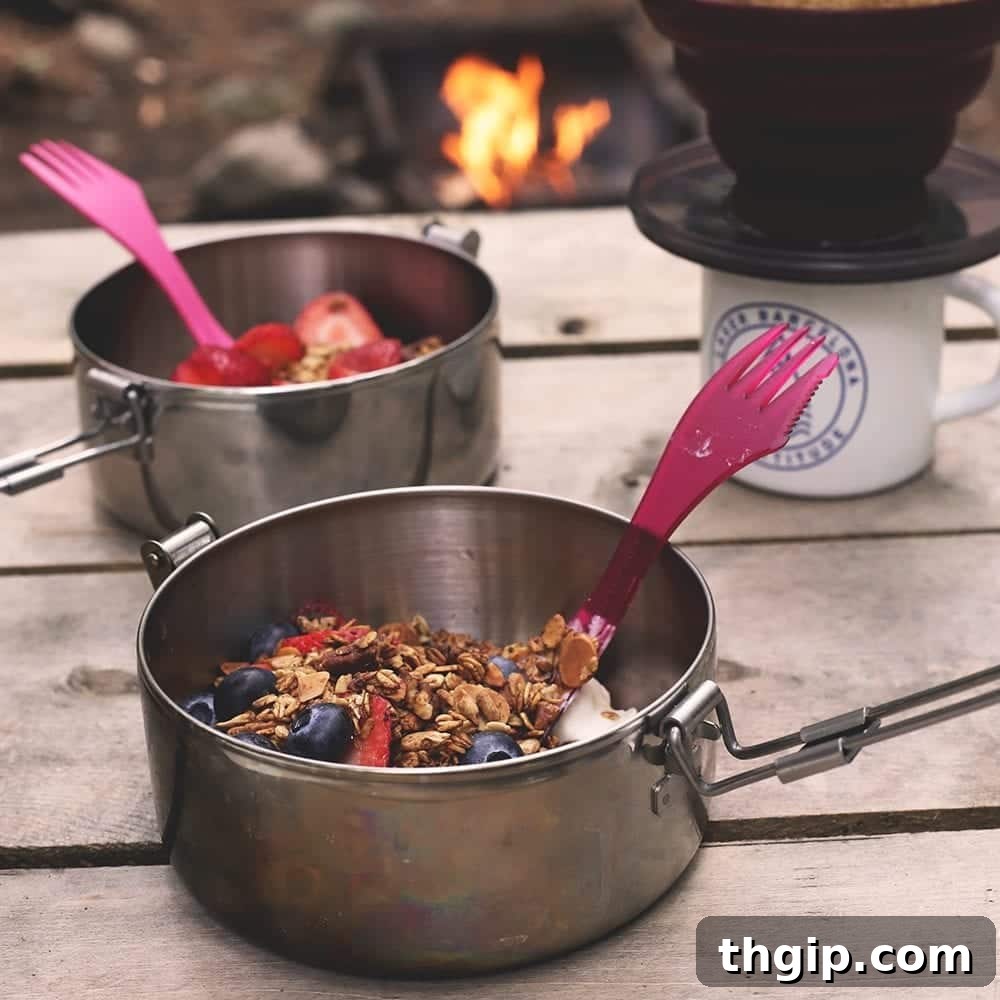
- Bowls: Highly versatile! We particularly like using metal camping containers that can also double as small pots for heating water or soup.
- Sporks: You truly can’t beat the efficiency and convenience of a spoon-fork combo for minimalist eating.
- Cutting Board: Even an old, flimsy plastic cutting board is a clutch item for camping. It provides a clean surface for food prep and keeps your knife sharp.
- Knife: A good quality camping knife or even a sturdy Swiss Army Knife will suffice for most tasks. On occasion, you might want something bigger and more robust for heavier chopping.
- Pot & Pan: Bring at least one versatile pot for boiling water, cooking pasta, or stew, and a frying pan for eggs or grilling vegetables. Consider nesting sets to save space.
- Tongs: This is arguably the biggest under-appreciated item in camping cookware. Unless you’re prepared to literally reach into a hot fire, I highly recommend bringing a good pair of tongs for flipping food, moving coals, and handling hot items safely.
- Aluminum Foil: Invaluable for cooking foil packet meals directly in the coals, lining grills that have wide ridges, or ensuring hygiene when the public grill grates don’t look the most sanitary for direct contact.
- Tupperware or Food Storage Containers: Perfect for storing leftovers, keeping food fresh, and protecting it from curious critters. Choose sturdy, sealable options.
- Collapsible Coffee Drip Cup: This was truly one of the best purchases ever! It collapses flat, making it incredibly portable, yet it’s incredibly handy for brewing a fresh cup of coffee each morning.
- Coffee Filters: Don’t forget these if you’re using a drip method. Once you’re done, you can often toss the used filters and grounds into the campfire (if permitted and fully burned) or into your compost/garbage bag.
- Cooler & Ice/Ice Packs: Essential for keeping perishable foods and drinks cold for the duration of your trip. Choose a cooler appropriate for the length of your stay.
- Dishwashing Kit: Biodegradable soap, a dedicated sponge, and a dish rag are vital for maintaining hygiene and cleaning up after meals.
Food Provisions: Fueling Your Adventure
Smart meal planning and packing the right provisions will keep you energized and satisfied throughout your car camping trip.
- Cooking Oil: I always bring a mason jar filled with olive oil. It’s incredibly versatile for cooking various dishes, greasing the grill, or adding flavor to salads.
- Ground Coffee or Tea: Because, for many of us, it simply isn’t camping without that comforting first cup of coffee or tea in the morning.
- Peanut Butter: The ultimate camping food staple! High in protein, easy to store, and perfect for sandwiches, toast, or a quick energy boost.
- Bread or Tortillas: We’re quite particular about our bread, so I usually bring a loaf of organic sourdough for sandwiches, toast, or to accompany breakfast. Tortillas are also excellent for wraps or quick quesad.
- Spices and Seasonings: Don’t settle for bland camp food! Bring your favorite spices in small, resealable containers to elevate the flavor of your meals. A small kit with salt, pepper, garlic powder, and a versatile blend can make a huge difference. (A post dedicated to camping spices is coming soon!)
- Snacks: Absolutely key for sustained energy and preventing hunger pangs between meals. I typically have a stash of homemade trail mix, energy balls, or protein bars readily available at all times.
- Breakfast Items: This is totally up to your preference and cooking setup. Granola with berries, instant oatmeal packets, or even a hearty breakfast of eggs and bacon are all fantastic ways to start your day.
- Dinner Ingredients: Again, your call on what to cook, but simple, satisfying meals are often best. Grilled meat and potatoes (with a side of pre-chopped veggies if you wish!) is always a crowd-pleasing and easy way to go. Foil packet meals are also excellent for minimal cleanup.
- Bananas: Because you can never, ever have enough bananas for a quick, healthy snack or breakfast addition!
- Water: Bring plenty of potable water for drinking, cooking, and washing. Even if there’s water on-site, a backup supply is always wise.
Other Essentials for Comfort, Hygiene & Safety
Don’t overlook these vital items that contribute to overall well-being and a responsible camping experience.
- Biodegradable Soap: We like to bring a large bottle of Dr. Bronner’s because of its versatility – we can use it for washing our bodies and for cleaning dishes, minimizing the number of products we need to pack. Remember to always use biodegradable soap at least 200 feet away from any water source to protect the environment.
- Sponge & Dish Rag: Absolutely necessary for thoroughly cleaning those dirty dishes after meals. Keep them separate from personal hygiene items.
- Bug Spray or Insect Repellent: Twilight hours are beautiful and magical, but aggressive mosquitos and other biting insects are certainly not. Invest in a good bug spray (with DEET, Picaridin, or natural alternatives) to enjoy your evenings without constant irritation.
- Sunscreen: Even on cloudy days or during cooler weather, UV rays can be strong. Protect your skin with a high SPF sunscreen.
- Toiletries: Pack your toothbrush, toothpaste, any personal medications, and enough toilet paper. While many car camping sites have facilities, it’s always smart to be prepared with your own supply.
- Hand Sanitizer: Great for quick clean-ups when soap and water aren’t readily available.
- Quarters/Small Bills: Most car camping sites offer on-site showers, but they often require payment. Bring a stash of quarters or small bills for showers, vending machines, or laundry facilities.
- Portable Power Bank: Keep your essential devices charged (phone for emergencies, headlamp, camera) when you don’t have access to electrical outlets.
- Books, Games, or Cards: For entertainment during downtime, rainy spells, or relaxed evenings around the fire.
- Camp Chairs & Table: While you can sit on the ground, comfortable folding chairs and a small camp table dramatically enhance relaxation and dining at your campsite.
- Bear Canister or Bag (if in bear country): If you’re camping in an area known for bears or other wildlife, proper food storage is critical for your safety and the animals’ well-being.
- Navigation Tools: Even if you have a phone, a physical map of the area and a compass can be invaluable for exploring nearby trails and as a backup.
- Fire Extinguisher or Water Bucket: Always have a way to put out your campfire safely and completely.
Tips for a Perfect Car Camping Experience
Beyond the gear, a few crucial tips can elevate your car camping trip from good to unforgettable:
- Plan Your Meals: Decide what you’ll eat for each meal and pre-chop vegetables, pre-mix dry ingredients, and pack items efficiently. This saves time and reduces waste at the campsite.
- Check the Weather: Always consult the forecast before and during your trip. This helps you pack appropriate clothing and adjust plans for rain or extreme temperatures.
- Reserve Campsites in Advance: Popular car camping spots, especially during peak season, can fill up quickly. Make reservations well in advance to secure your spot.
- Practice Setting Up Gear: If you have new gear, especially a tent, practice setting it up at home before your trip. This prevents frustration and saves time when you arrive at your campsite.
- Leave No Trace: Adhere to the seven principles of Leave No Trace. Pack out everything you pack in, respect wildlife, minimize campfire impacts, and dispose of waste properly.
- Share the Load: If you’re camping with others, coordinate who brings what gear and food. This minimizes duplication and ensures everyone contributes.
- Embrace Flexibility: The best camping trips often involve unexpected moments. Be prepared to adapt to changing weather, spontaneous adventures, or slight hiccups with a positive attitude.
Car camping truly is a fantastic way to experience the beauty of nature without having to sacrifice all the comforts of home. By preparing thoughtfully with this comprehensive checklist, you’re setting yourself up for an adventure that is both comfortable and deeply rewarding. So, pack your bags, fill your cooler, and get ready to create incredible memories under the open sky!
Are you an avid car camper? What’s one item you absolutely can’t camp without? Did I miss any of your must-have essentials on this list? Share your tips and insights in the comments below!