
The weight of the moment is undeniable, and I must begin by acknowledging a profound sense of discomfort. It stems from the fear of uttering the wrong words, the regret of not having spoken sooner, and, most powerfully, an incandescent outrage that a Black Man was brutally murdered by a Minneapolis Police Officer, with the silent complicity of several others, in an act of cold-blooded violence. This deeply unsettling event is not an isolated incident; it is a stark reminder of the pervasive issue of police brutality in this country. My discomfort is compounded by the realization that it has taken me this long to address such a critical issue publicly.
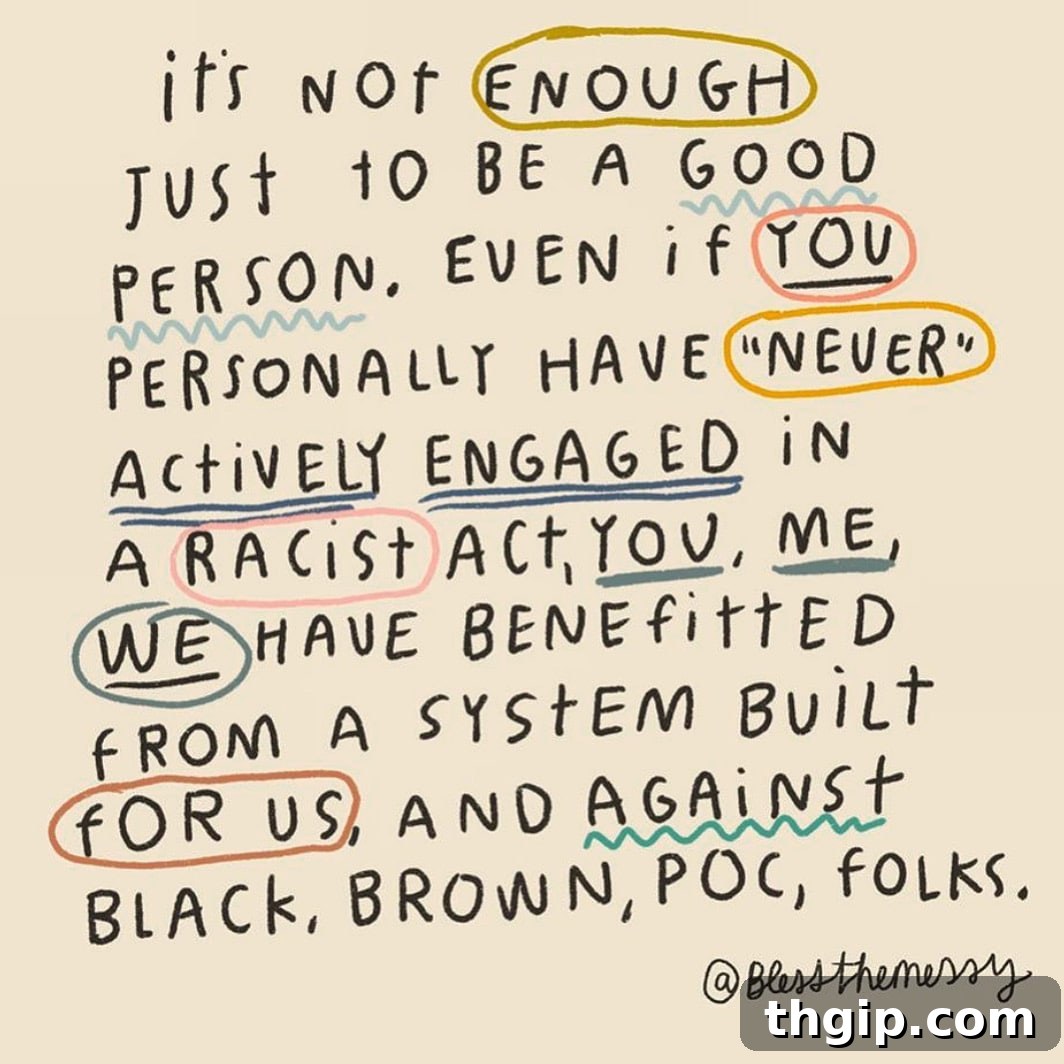
Furthermore, I am acutely aware that despite not actively engaging in overtly racist actions, I have undeniably benefited from a societal system built upon a foundation of entrenched racial inequality, often at the direct expense of Black lives. My feelings are a complex tapestry of unease, profound sadness, and simmering anger. Yet, I recognize that my emotional landscape pales in comparison to the lived reality of Black Americans, who confront systemic injustice and racial prejudice every single day of their lives. While I may grapple with discomfort, I am committed to showing up and taking action, precisely because experiencing such discomfort is a privilege. This critical moment, this urgent call to action, is not about my feelings or my personal discomfort; it is about justice, equity, and the dismantling of oppressive systems.
For white individuals, the phrase “do the work” has likely resonated in recent times. Initially, for many, including myself, the true depth and practical application of this directive might have felt elusive. What does it truly entail, and where does one even begin? The answer unfolds as you bravely step into the process itself. It begins to make profound sense when you commit to engaging in this vital self-reflection and action. “Doing your own work” necessitates a deep dive into challenging questions and honest introspection about your role within a racially stratified society. It means confronting the uncomfortable truth that you may be complicit in perpetuating systemic racism, even without consciously or overtly engaging in racist acts. It demands dedicated and sustained listening to Black voices, absorbing their experiences, perspectives, and pain with an open mind and heart. This process also requires a humble willingness to accept criticism, learn from mistakes, and grow, because missteps are an inevitable part of this challenging but necessary journey.
As white women, Tanya and I are deeply committed to understanding and actively addressing the pervasive racial injustices that plague our nation. We felt it was crucial to share some of the resources and insights that have been instrumental in our ongoing education and anti-racism journey. We emphasize that Black Lives Matter is far from a passing trend or a fleeting hashtag; it is a fundamental assertion of human dignity and a call for justice that has deep historical roots and continues to demand our collective attention. This movement is not new, and our commitment to it must not be ephemeral. It is a profound imperative that we must all embrace wholeheartedly, right now, and sustain until we achieve a society where Black Americans are afforded true equality, freedom, and unfettered access to opportunity in every facet of life.
The following compilation is by no means exhaustive. Our journey of learning and activism is continuous, and we pledge to update this list as we uncover more valuable resources. We recognize that the wealth of information available on racial justice is vast and ever-growing. The onus is on each of us to actively seek out these resources, engage with them thoughtfully, and commit to a process of lifelong learning. Remember, impactful change often begins with a single, intentional step.
Our Active Commitment: What We’re Doing Now
Our commitment to racial justice is a dynamic and evolving process, requiring continuous self-assessment and adaptation. Currently, our efforts are focused on several key areas that we believe are foundational to meaningful anti-racism work:
1. Engaging in Profound Personal Work and Self-Education
We are consistently challenging our own understanding and confronting the uncomfortable truths surrounding white privilege, white fragility, and the insidious nature of white supremacy. This involves a rigorous examination of what it truly means to be white in a historically unjust society, and how our very identity has, often unknowingly, contributed to and benefited from centuries of oppression. We firmly believe that the responsibility for education on these critical issues rests squarely on our own shoulders. It is not, and should never be, the burden of our Black friends or colleagues to educate us about racism or their lived experiences. Our education is our duty.
To further this personal work, we are actively engaging with seminal texts and articles that offer deep insights into systemic racism and its manifestations:
- So You Want to Talk About Race by Ijeoma Oluo: This essential book provides a direct and unflinching look at race in America, offering vital tools for constructive dialogue and understanding.
- Between the World and Me by Ta-Nehisi Coates: A powerful exploration of race, identity, and the American dream, written as a letter to the author’s son, offering a deeply personal and historical perspective.
- The Case for Reparations by Ta-Nehisi Coates: A meticulously researched and compelling argument for reparations, examining the historical and ongoing economic disparities faced by Black Americans.
- 75 Things White People Can Do For Racial Justice: A practical and actionable guide offering concrete steps white individuals can take to contribute to racial justice.
2. Cultivating Intentional Listening and Empathy
Beyond our self-education, dedicated listening is paramount. While we are doing our own internal work, we are also actively tuning into Black voices and experiences. This means truly hearing what they are saying, understanding how they are feeling, and resisting the urge to immediately respond, debate, or center our own perspectives. Thoughts and intense emotions may inevitably arise within us as we listen to stories of pain and injustice. The challenge is to sit with these feelings, acknowledge their presence without judgment, and reflect deeply on their origins and what they reveal about our own biases and assumptions. This is not passive listening; it is an active practice of empathy and receptivity.
Some of the influential Black voices and platforms we are currently engaging with include:
- Rachel Cargle – A distinguished public academic, writer, and lecturer whose activism and academic pursuits are dedicated to fostering intellectual discourse, providing practical tools, and sharing vital resources that explore the intricate intersections of race and womanhood. To begin, we highly recommend watching this insightful video. Consider taking her impactful course here.
- Layla F. Saad – An acclaimed author, speaker, and teacher whose work delves into profound topics such as race, identity, leadership, personal transformation, and social change. Her bestselling book, Me and White Supremacy, has been transformative for many. Listen to her thought-provoking podcast, Good Ancestor.
- The Conscious Kid – An essential education, research, and policy organization committed to actively reducing bias and fostering positive identity development in children and young people. Follow their incredibly valuable work on Instagram.
- The 1619 Podcast – An impactful audio series from The New York Times that meticulously explores how slavery fundamentally reshaped America, expertly connecting historical narratives to contemporary realities through compelling storytelling.
3. Providing Financial Support Through Donations
Our commitment extends beyond words and self-reflection; we are actively putting our financial resources towards organizations that are on the front lines, doing crucial work in the fight for racial justice and community support. Investing financially in these initiatives is a tangible way to contribute to systemic change and provide immediate relief and empowerment to Black communities. Here are some of the organizations we have currently supported:
- Black Visions Collective – This organization is dedicated to creating safe and autonomous spaces for Black communities in Minnesota, fostering leadership, and advocating for radical social change.
- Lake Street Council – Committed to rebuilding efforts, this council donates 100% of its funds directly to small businesses and non-profits within the Lake Street Community to help them restore their storefronts and revitalize their neighborhood after periods of unrest.
- The Loveland Foundation – This vital foundation is focused on providing access to culturally competent mental health services and therapy for Black women and girls, addressing the unique challenges they face.
- Minnesota Freedom Fund – This fund works to end discriminatory, coercive, and oppressive jailing practices by paying bail and immigration bonds for protestors and individuals who cannot afford them, ensuring freedom and fair legal process.
- Minnesota ACLU – The American Civil Liberties Union of Minnesota is dedicated to promoting, protecting, and extending the civil liberties and civil rights of all people in Minnesota through strategic litigation, effective lobbying, and robust community engagement.
- Northside Funders Group – This collaborative works directly with local Community-Based Organizations in North Minneapolis to efficiently distribute crucial funds and resources to those who are most in need within the community.
4. Engaging in Peaceful Protest and Advocacy
We are also actively participating in local protests to stand in solidarity with the movement for Black lives. It is important to approach these demonstrations with humility and a clear understanding of our role as white allies. We are there as guests and as protectors, our primary purpose being to amplify Black voices, ensure their safety, and serve as foot soldiers in the ongoing struggle for justice. Our presence is not to lead or to be centered, but to support and protect.
- Suggestions for finding local protests: Utilize search engines like Google and community platforms like Next Door to locate smaller, local demonstrations that may not receive widespread media attention.
- Tips for protesting safely: Refer to reliable resources such as this guide for how to protest safely, ensuring you are prepared and protected.
- Important reminder: In light of ongoing public health concerns, please wear a mask and maintain appropriate physical distancing. We are still navigating a global pandemic.
5. Evaluating and Reforming Our Content and Industry
A critical component of our current work involves a rigorous evaluation of our content calendar and the materials we create. We are asking difficult questions to ensure that our messaging is genuinely inclusive and representative. As I have discussed previously, the wellness industry, regrettably, is often inherently exclusionary, reflecting underlying racist structures and benefiting from significant privilege. Therefore, we are not only scrutinizing our own contributions before creation and sharing, but also looking critically at the industry as a whole. Our aim is to identify concrete actions we can take to challenge and ultimately transform these systemic biases within our sphere of influence, fostering a more equitable and accessible wellness space for everyone.
Immediate Action: What YOU Can Do Today
As we mentioned, taking the first step into anti-racism work can feel daunting, leading to questions of “Where do I start?” or “How do I even begin?” Our experience strongly suggests that the most crucial thing is simply to start. This is not a sprint; it is a lifelong commitment and an evolving journey. We wholeheartedly invite you to embark on this journey today. Here are concrete actions you can take right now to begin your vital anti-racism work:
Dedicate specific time to deeply reflect on your own privilege and the numerous ways you have benefited, consciously or unconsciously, from our society’s unjust cultural, financial, and governmental systems. This reflection requires honesty and vulnerability. Give yourself ample time and a quiet space to truly process these challenging questions and observations. Consider your access to education, housing, healthcare, legal protection, and economic opportunities—how has your racial identity played a role in these experiences?
After this initial personal reflection, invite another white person into the conversation. This might be a partner, a family member, or a trusted friend. The goal is to create a safe space for shared learning and reflection. Encourage them to consider these questions for themselves and to engage in a dialogue with you. Initiating these conversations among white individuals is incredibly powerful and necessary for collective growth. Please, however, refrain from approaching your Black friends or acquaintances to unload your newfound insights, express your guilt, or ask them to educate you. Black individuals are already navigating immense pain, exhaustion, and the ongoing trauma of systemic racism. While your emotions are valid and deserve acknowledgment, please seek support and process these feelings with other white allies, trusted friends, family members, or, as we strongly encourage, with a mental health professional who can offer guidance and tools for emotional processing.
Sustained Commitment: What YOU Can Do For the Long Haul
The work of dismantling systemic racism is not a task that can be completed in a week, or even a month. This is merely the beginning of an expansive, ongoing conversation and a lifelong commitment to action. Start by engaging with those initial reflective questions, and then deliberately dive deeper into the extensive work that lies ahead. It is absolutely crucial to internalize that this is your job. It is not the responsibility of Black people to educate you about the pervasive nature of racism or to recount the profound hurt and trauma they have endured over centuries. Rather, it is your job to diligently educate yourself, to listen with an open heart, and to understand the mechanisms through which you and the systems you inhabit have contributed to and perpetuated this harm.
Read, Listen, and Watch Extensively
There is an abundance of invaluable resources available to guide white individuals committed to anti-racism. Here is an excellent, comprehensive LIST OF RESOURCES specifically curated for white people seeking to take meaningful action. Understand that this list serves as a foundational starting point, not an endpoint. The avenues for deep learning and engagement are limitless. Once you genuinely begin this journey of anti-racism education, you will find it becomes an ongoing and deeply transformative process. This comprehensive list includes a wide array of mediums: essential books to read, insightful podcasts to listen to, impactful shows and movies to watch, and influential organizations to follow on social media. Diversify your learning to gain a holistic understanding.
Consciously Evaluate Your Time and Financial Investments
Consider with intention where your time, energy, and financial resources are being allocated:
- Where do you live, shop, and socialize? Reflect on the diversity of the spaces you inhabit. Are these environments genuinely inclusive, or do they primarily reflect a singular demographic?
- Are you actively seeking out and engaging with information and perspectives from people who are different from yourself? Broadening your intellectual and social horizons is crucial for understanding diverse realities.
- Are you consciously supporting Black-owned businesses? Investing in Black-owned enterprises is a powerful act of economic justice and community empowerment. Discover some today and make supporting them a regular practice.
- Are you consistently donating to grassroots organizations that champion Black causes? Acknowledge that much of the success and prosperity in America has been built, directly or indirectly, on the labor and often exploited contributions of Black Americans. It is a moral imperative to give back and invest in the communities that have historically been marginalized.
Actively Employ, Share, and Amplify Black People and Voices
Your platform, whether personal or professional, holds immense power. Consider how you are leveraging it:
- As an employer: Does your workforce accurately reflect the diversity of society, or are your employees predominantly white? Actively recruit and hire Black talent across all levels of your organization.
- As a business owner, content creator, and/or influencer: Are you inadvertently (or explicitly) centering only white stories, experiences, and perspectives? Make a conscious effort to diversify the narratives you share and the individuals you feature.
- On social media: Are you actively sharing and promoting Black stories, artwork, written works, and initiatives? Use your platform to elevate voices that have historically been silenced or underrepresented.
Sustain Financial Support Through Regular Donations
Consistent financial contributions are vital for the long-term sustainability of racial justice efforts:
- Find and support your local chapter of Black Lives Matter, a global movement advocating for the rights and liberation of Black people.
- Donate to your local ACLU (American Civil Liberties Union), an organization dedicated to defending and preserving the individual rights and liberties guaranteed by the Constitution and laws of the United States.
- Contribute to your local bail out fund to provide critical support for protestors and individuals needing assistance with bail, helping to counter the injustices of the cash bail system.
- Support the NAACP (National Association for the Advancement of Colored People), a venerable civil rights organization founded in 1909, committed to achieving political, educational, social, and economic equality for all people of color.
VOTE with Intent and Purpose
Your voice and values are expressed not only through your daily actions and financial decisions but powerfully at the ballot box. Make it a priority to show up in November and VOTE in every election, from local to federal.
- Ensure you are properly registered to vote here. This fundamental step ensures your participation in our democratic process.
- If you have concerns about in-person voting due to public health crises or other reasons, select the option to vote by mail if available in your area.
I acknowledge, with humility, that my journey in unraveling my own white privilege and deeply understanding the nuances of systemic racism is extensive and ongoing. This article, however, represents a sincere effort to initiate that process and provide a framework for others. Please know that I am genuinely open to receiving your feedback, constructive criticism, and additional resources, as I believe continuous learning and accountability are paramount. Expect to hear more from us soon as we deepen our commitment. In the interim, all other content on this platform will be temporarily paused for the next several days. This deliberate action is intended to redirect attention and amplify the crucial voices and stories of Black individuals, ensuring their experiences are centered and heard during this critical time.
To my Black readers – I see your enduring strength, your profound pain, and your unwavering resilience. I am so deeply sorry for the injustices and suffering you have experienced. I stand in unwavering solidarity with you today, and every single day moving forward. Your lives matter, unequivocally and always.