
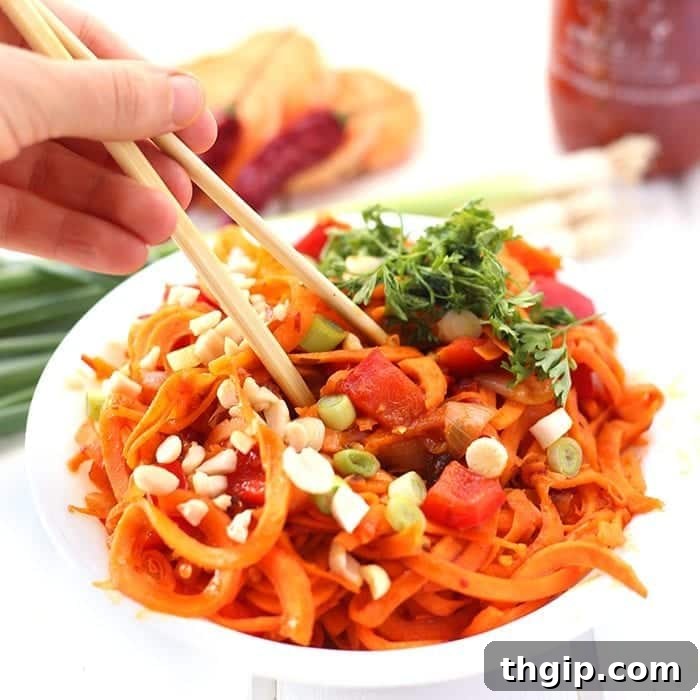
Revitalize your weeknight meals with this healthy and incredibly delicious Sweet Potato Noodle Pad Thai. This vibrant, gluten-free, and vegan-friendly twist on a classic Thai dish swaps traditional rice noodles for nutrient-rich sweet potato spirals, delivering a flavorful, tangy, and spicy experience in just 30 minutes. Perfect for busy evenings, this one-pot wonder makes healthy eating effortless and enjoyable.
From Basement Beginnings to Healthy Maven Meals
When I first embarked on my culinary journey with The Healthy Maven, my kitchen experiments leaned heavily towards baking and homemade nut butters. Part of this was my undeniable passion for baking, but circumstances also played a significant role. Starting this blog at 23, living back in my parents’ basement – or as they affectionately called it, my “basement apartment” – meant I often relied on my mom’s comforting soups and my dad’s preferred takeout after our gym sessions. While those days hold fond memories, my approach to cooking has since transformed dramatically.
Fast forward three years, and my kitchen priorities have completely shifted. Now, being one of two adults responsible for cooking in our household – and arguably the only one with actual cooking prowess (you can guess who!) – means quick, healthy, and easy one-pot dinners are not just a preference, but a necessity. This culinary evolution led me to create and perfect recipes like this Sweet Potato Noodle Pad Thai, which has become a beloved staple in our busy weeknight rotation.
This recipe isn’t just about convenience; it’s about making smart, healthy swaps without compromising on flavor. Sweet potatoes offer a fantastic nutrient boost and a delightful texture, transforming a beloved takeout dish into a nourishing homemade meal. It’s a testament to how simple ingredient changes can elevate a classic and fit seamlessly into a healthier lifestyle.
Why Choose Sweet Potato Noodles? The Healthy Twist
Sweet potato noodles are a game-changer for several reasons, making this Pad Thai not just delicious but also incredibly wholesome. Firstly, sweet potatoes are packed with vitamins, minerals, and fiber, contributing to digestive health and sustained energy. They are an excellent source of Vitamin A, Vitamin C, and manganese, offering a nutritional profile superior to traditional rice noodles.
Beyond nutrition, sweet potato noodles bring a unique texture and subtly sweet flavor that beautifully complements the tangy and spicy Pad Thai sauce. Their spiralized form creates fun, easy-to-eat strands that absorb the sauce wonderfully. Plus, opting for sweet potato noodles makes this dish naturally gluten-free, catering to various dietary needs without sacrificing the authentic Pad Thai experience.
This recipe is also incredibly versatile. While it’s presented as a vegetarian/vegan dish, you can easily incorporate your favorite protein. Add some pan-seared tofu for an extra plant-based boost, or for non-vegans, cooked chicken or shrimp can be stirred in during the final minutes. The beauty of this Sweet Potato Noodle Pad Thai lies in its adaptability, ensuring it can become a household favorite for everyone.
Essential Ingredients for Your Sweet Potato Noodle Pad Thai
Crafting the perfect Sweet Potato Noodle Pad Thai relies on a harmonious blend of fresh vegetables and a robust, authentic sauce. Each ingredient plays a crucial role in building the layers of flavor that make this dish so irresistible.
- Fresh Vegetables:
- Garlic Cloves: Minced fresh garlic forms the aromatic base, providing a pungent and savory depth.
- Yellow Onion: Diced yellow onion adds sweetness and a foundational flavor when sautéed until translucent.
- Red Bell Peppers: Chopped red bell peppers offer a vibrant color, a hint of sweetness, and a satisfying crunch.
- Sweet Potatoes: The star of the show! Spiralized sweet potatoes are transformed into tender, nutrient-dense noodles. Look for large, firm sweet potatoes for the best spiraling results.
- Green Onions: Sliced green onions provide a fresh, mild onion flavor and a beautiful garnish.
- Cilantro: Fresh chopped cilantro adds a bright, herbaceous note that is quintessential to Thai cuisine.
- Coconut Oil: Used for sautéing, coconut oil imparts a subtle tropical aroma and helps develop the flavors of the vegetables.
- The Signature Sauce Components:
- Sweet Chili Sauce: Adds a delightful balance of sweetness and mild heat. Adjust the amount to your spice preference.
- Coconut Aminos: A fantastic soy-free alternative that provides a savory, umami flavor. (Alternatively, use tamari for a gluten-free option, or regular soy sauce if dietary restrictions aren’t a concern.)
- Fish Sauce: Crucial for authentic Pad Thai flavor, fish sauce provides a salty, umami kick. (For a vegan version, you can substitute with extra tamari or a vegan fish sauce alternative.)
- Lime Zest and Juice: Fresh lime is vital for that signature tangy brightness that cuts through the richness of the sauce. Don’t skip the zest for maximum citrusy aroma.
- Tamarind Paste: This is a non-negotiable ingredient for authentic Pad Thai. Tamarind paste delivers a unique sweet-sour tanginess that defines the dish. It can be found in most Asian grocery stores or online. If you can only find block tamarind, you’ll need to reconstitute it in hot water and strain.
- Coconut Palm Sugar: Provides a natural, caramel-like sweetness to balance the sour and spicy notes. (Brown sugar is a suitable substitute if coconut palm sugar is unavailable.)
- For Topping:
- Peanuts: Crushed peanuts add a lovely crunchy texture and nutty flavor, a classic Pad Thai garnish.
- Crushed Red Pepper Flakes: For an extra kick of heat, sprinkle these on top to taste.
How to Make This Flavorful Sweet Potato Noodle Pad Thai
This 30-minute recipe is designed for ease and efficiency, making it perfect for even the busiest evenings. Follow these simple steps to bring a taste of Thailand to your table:
Step-by-Step Instructions:
- Prepare the Tamarind Base: In a small bowl, combine the tamarind paste with 1/4 cup of hot water. Whisk or stir vigorously until the tamarind paste has completely dissolved and you have a smooth, thin mixture. This ensures the tamarind flavor is evenly distributed throughout the sauce.
- Assemble the Pad Thai Sauce: To the dissolved tamarind mixture, add the sweet chili sauce, coconut aminos (or tamari/soy sauce), fish sauce (or vegan alternative), fresh lime zest, fresh lime juice, and coconut palm sugar (or brown sugar). Whisk all the ingredients together until well combined and the sugar has dissolved. Taste and adjust for desired sweetness, tanginess, and spice. Set this flavorful sauce aside.
- Sauté Aromatics and Vegetables: Heat 2 tablespoons of coconut oil in a large skillet or wok over medium heat. Once shimmering, add the diced yellow onions. Sauté for 3-5 minutes, stirring occasionally, until they become fragrant and translucent.
- Add Garlic and Bell Peppers: Stir in the minced garlic and cook for an additional minute until fragrant, being careful not to burn it. Immediately add the chopped red bell peppers to the skillet and continue to cook for 5 minutes, allowing them to soften slightly but still retain a pleasant crispness.
- Introduce Sweet Potato Noodles: Gently add the spiralized sweet potato noodles to the vegetable mixture in the skillet. Toss lightly to combine. Cook for just 1 minute to lightly coat the noodles and begin the cooking process.
- Steam for Tenderness: Cover the skillet with a lid and let the mixture steam for 2 minutes. This brief steaming period helps the sweet potato noodles soften quickly without becoming mushy.
- Check and Continue Cooking: Remove the lid and check the tenderness of your sweet potato noodles. Continue cooking, stirring occasionally, for another 1-3 minutes until they reach your desired texture – al dente is usually preferred for Pad Thai, but adjust to your liking.
- Incorporate the Sauce: Pour the prepared Pad Thai sauce evenly over the cooked sweet potato noodles and vegetables. Stir everything thoroughly until the noodles and vegetables are beautifully coated in the rich, tangy sauce. Cook for just 1-2 minutes more to allow the sauce to heat through and meld with the ingredients.
- Serve and Garnish: Transfer the Sweet Potato Noodle Pad Thai to individual plates or bowls. Garnish generously with fresh chopped cilantro, crunchy crushed peanuts, sliced green onions, and a sprinkle of crushed red pepper flakes for an extra touch of heat if desired. Serve immediately and enjoy!
Sweet Potato Noodle Pad Thai
No reviews yet
- Author: Davida Lederle
- Prep Time: 10 minutes
- Cook Time: 20 minutes
- Total Time: 30 minutes
- Yield: 2-4 servings depending on size
Ingredients
For the Sauce:
- 2 1/2 tbsp sweet chili sauce (use more if you like extra spicy)
- 2 1/2 tbsp coconut aminos (or tamari or soy sauce)
- 2 tbsp fish sauce (or use tamari or soy sauce, if vegan)
- zest and juice from 1 lime
- 1 tbsp tamarind paste*
- 1/4 cup hot water
- 1 tbsp coconut palm sugar (or brown sugar)
For the Noodles:
- 2 tbsp coconut oil
- 4 garlic cloves, minced
- 1 medium yellow onion, diced
- 2 red bell peppers, chopped
- 2 large sweet potatoes, spiralized on second largest setting
For Topping:
- 1/4 cup cilantro, chopped
- 2 tbsp peanuts, crushed
- 3 green onions, sliced
- crushed red pepper flakes, to taste
Optional:
- If you aren’t vegan, stir in some cooked chicken, shrimp, or add an egg in the last minute of cooking.
Instructions
For the Sauce:
- Mix together tamarind paste and hot water until paste has dissolved in water.
- Combine with all other sauce ingredients (sweet chili sauce, coconut aminos, fish sauce, lime zest and juice, coconut palm sugar) and then set aside.
For the Noodles:
- Add coconut oil to a large skillet over medium heat.
- Add in onions and sauté until translucent (about 3-5 mins).
- Add in garlic and cook for 1 more minute until fragrant.
- Add in bell peppers and cook for 5 more minutes until slightly softened.
- Add in spiralized sweet potato noodles and cook for one minute before covering skillet and letting steam for 2 minutes to tenderize.
- Continue cooking, stirring occasionally, until sweet potato noodles are cooked to desired texture (al dente is recommended).
- Add in the prepared sauce and stir until well combined and the noodles are evenly coated.
- Plate and top generously with cilantro, crushed peanuts, green onions, and red pepper flakes.
*Tamarind paste is essential for authentic Pad Thai flavor. You can find it in most Asian grocery stores or order online.
Pro Tips for the Best Sweet Potato Noodle Pad Thai
- Perfect Spiralizing: For best results, use firm, medium-to-large sweet potatoes. Ensure your spiralizer is clean and correctly assembled. The “second largest” blade setting often yields the best noodle-like strands for this dish.
- Don’t Overcook the Noodles: Sweet potato noodles cook relatively quickly. They should be tender but still have a slight bite (al dente). Overcooking can make them mushy. Keep a close eye on them during the steaming and final cooking steps.
- Taste and Adjust: The beauty of homemade Pad Thai is that you can customize it. Taste the sauce before adding it to the noodles, and again at the end. Adjust sweetness with more sugar, tanginess with more lime juice, or heat with more sweet chili sauce or red pepper flakes.
- Fresh Ingredients Matter: Fresh lime and cilantro make a significant difference in the vibrancy of this dish. Don’t be tempted to use bottled lime juice if fresh is available.
- High Heat, Quick Cooking: Like traditional Pad Thai, cooking over medium-high heat helps achieve that desirable slight caramelization on the vegetables and quick cooking for the noodles, preventing them from becoming soggy.
Serving Suggestions & Variations
This Sweet Potato Noodle Pad Thai is a complete meal on its own, but it pairs wonderfully with a few additions or can be adapted for variety:
- Protein Boost: For a heartier meal, stir in cooked chicken, shrimp, or pan-fried tofu cubes during the last minute of cooking. A fried egg, placed on top before serving, is also a classic Pad Thai addition.
- Extra Veggies: Feel free to toss in other quick-cooking vegetables like snap peas, shredded carrots, or bean sprouts along with the bell peppers.
- Spice Level: If you love heat, increase the crushed red pepper flakes in the sauce or as a topping. For a milder version, reduce or omit them.
- Meal Prep Friendly: This dish reheats well! Store leftovers in an airtight container in the refrigerator for up to 3-4 days.
Health Benefits of Sweet Potato Pad Thai
This recipe isn’t just a delicious alternative to takeout; it’s a powerhouse of nutrition:
- Rich in Vitamins & Minerals: Sweet potatoes are an excellent source of beta-carotene (which converts to Vitamin A), essential for vision and immune function, as well as Vitamin C, B vitamins, and manganese.
- High in Fiber: The fiber content in sweet potatoes aids digestion, promotes satiety, and helps regulate blood sugar levels.
- Gluten-Free & Dairy-Free: By using sweet potato noodles and coconut aminos, this recipe naturally caters to gluten-free and dairy-free diets, making it accessible to a wider audience.
- Antioxidant Properties: Sweet potatoes are rich in antioxidants, which help combat free radicals and reduce inflammation in the body.
- Heart Healthy: Coconut oil, while a saturated fat, has been shown to have beneficial effects on cholesterol levels for some individuals, and the overall dish is low in unhealthy fats when prepared fresh.
Frequently Asked Questions (FAQ)
Can I make sweet potato noodles without a spiralizer?
Yes! You can use a vegetable peeler to create wide, ribbon-like noodles, or carefully cut the sweet potato into thin matchsticks. While the texture won’t be identical, the flavor will still be fantastic.
Is tamarind paste really necessary?
Tamarind paste is highly recommended for the authentic tangy, sour flavor characteristic of Pad Thai. While you could try a small amount of rice vinegar and lime juice as a very last resort, the depth of flavor from tamarind paste is unique and irreplaceable for a truly classic taste.
Can I make this recipe ahead of time?
The Pad Thai sauce can be prepared up to 3-4 days in advance and stored in the refrigerator. The noodles are best cooked fresh to prevent them from becoming too soft. However, leftovers will still be delicious for a few days if stored in an airtight container.
What if I don’t have coconut palm sugar?
Brown sugar is an excellent substitute for coconut palm sugar, offering a similar depth of sweetness. You can also use maple syrup or agave nectar, though they might slightly alter the flavor profile.
How can I make this dish spicier?
To increase the heat, add more sweet chili sauce to the overall sauce mixture. You can also sprinkle extra crushed red pepper flakes generously over individual servings, or even add a pinch of cayenne pepper during the sautéing process.
This Sweet Potato Noodle Pad Thai offers a delightful blend of authentic Thai flavors with a healthful twist. It’s a quick, easy, and satisfying meal that proves eating well doesn’t mean sacrificing taste or spending hours in the kitchen. Give it a try and transform your perception of healthy weeknight dinners!
Like this post? Here are others you might enjoy:
- Thai Peanut Quinoa Bake
- Thai Basil Tofu
- Thai Zucchini Noodle Salad
- Lemon Herb Zucchini Noodle Salad