
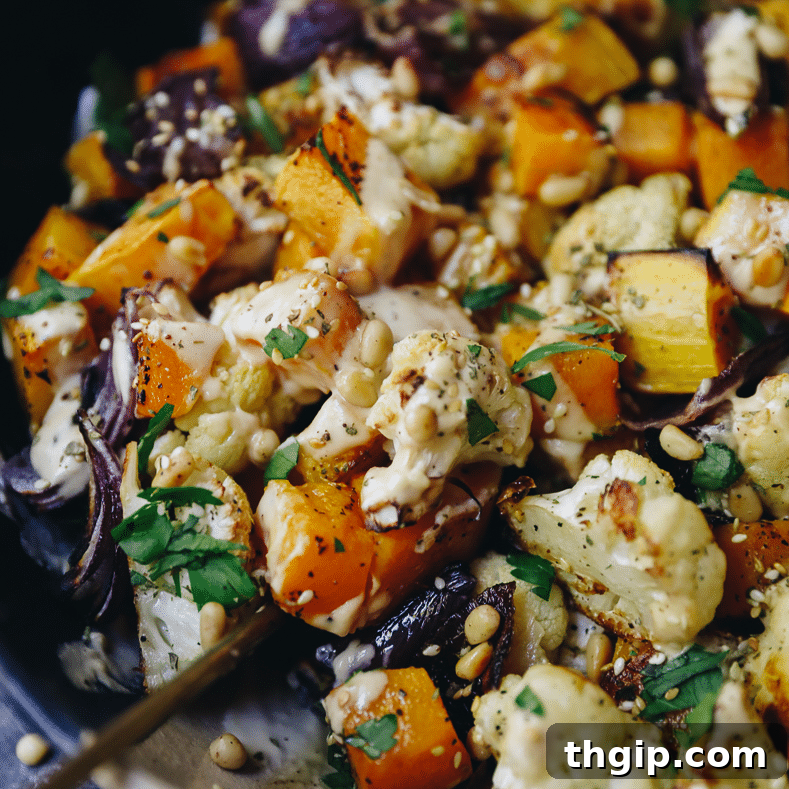
Discover the ultimate healthy and flavorful side dish: roasted vegetables with a creamy, rich tahini sauce. This incredibly versatile recipe transforms simple veggies into an unforgettable culinary experience, perfect as a vibrant side or a light meal-in-one.
Welcome back to a beloved classic from our kitchen, updated with fresh perspectives and vibrant new photos! This recipe for roasted vegetables with tahini sauce isn’t just an “oldie but goodie” – it’s a testament to the timeless appeal of simple, wholesome ingredients elevated by an extraordinary flavor. It’s one of the first dishes that truly ignited our passion for healthy eating, proving that nutritious meals can be incredibly delicious and easy to prepare. Whether you’re a seasoned chef or a beginner in the kitchen, this dish offers a foolproof path to a satisfying and nutritious meal.
My culinary journey often circles back to one ingredient: tahini. My obsession is undeniable, and for good reason! This humble sesame paste has found its way into countless creations in my kitchen, from refreshing smoothies and decadent brownies to more traditional Middle Eastern staples like creamy baba ganoush and classic hummus. Today, we’re taking roasted vegetables, a staple in themselves, and elevating them to a whole new level with an irresistible tahini sauce. Trust me, once you experience the rich, nutty, and tangy embrace of this sauce, plain roasted vegetables will become a distant memory. Tahini isn’t just an ingredient in our house; it’s practically a main condiment!
What is Tahini? The Secret to Flavorful Roasts
Often hailed as the unsung hero of Middle Eastern cuisine, tahini is a condiment crafted from finely ground sesame seeds. Imagine peanut butter, but with a unique, milder, and distinctly nutty or seedy flavor profile that harmonizes beautifully with an expansive array of sweet and savory dishes. Its creamy texture and delicate taste make it a staple in kitchens worldwide, prized for its versatility and nutritional benefits.
You can typically find tahini alongside other nut and seed butters in your local grocery store. When selecting tahini, look for brands with a smooth, pourable consistency and minimal separation of oil (though some separation is natural and easily stirred back in). A lighter color often indicates a higher quality, milder flavor. Once opened, tahini should be stored in the refrigerator to maintain its freshness and prevent it from going rancid, preserving that exquisite flavor for all your culinary adventures.
The Nutritional Powerhouse of Tahini
Beyond its incredible taste, tahini is also a nutritional powerhouse. It’s an excellent source of healthy fats, including monounsaturated and polyunsaturated fats, which are beneficial for heart health. It also provides a significant amount of plant-based protein, making it a valuable ingredient for vegetarian and vegan diets. Rich in essential minerals like calcium, magnesium, iron, and zinc, tahini contributes to bone health, energy production, and immune function. Furthermore, sesame seeds are packed with antioxidants, which help protect the body against free radical damage. Incorporating tahini into your diet is a delicious way to boost your nutrient intake and enjoy a wholesome, satisfying meal.
Ingredients for the Best Roasted Vegetables with Tahini Sauce
The beauty of this recipe lies in its flexibility and reliance on simple, fresh ingredients. You can truly “mix and match” your favorite vegetables, but a colorful selection always makes for a more appealing and nutrient-dense dish. Here’s what you’ll need to create this culinary masterpiece:
- Chopped Vegetables: This is where you can get creative! I love using a vibrant mix like butternut squash, red onion, and cauliflower for their distinct flavors and textures. However, the possibilities are endless. Consider broccoli florets, zucchini chunks, sweet potato cubes, bell peppers, asparagus, carrots, Brussels sprouts, or even mushrooms. Aim for similar-sized pieces to ensure even roasting. The more colors, the prettier and more nutritious your dish will be!
- Olive Oil: A good quality extra virgin olive oil is essential for coating the vegetables, promoting browning, and enhancing their natural flavors. It also helps to distribute the salt and pepper evenly.
- Tahini Paste: The star of our sauce! As discussed, choose a smooth, good-quality tahini for the best flavor and texture.
- Lemon Juice: Freshly squeezed lemon juice is crucial for brightening the tahini sauce, adding a zesty tang that cuts through the richness of the tahini and roasted vegetables.
- Water: Used to thin the tahini paste into a pourable sauce consistency. You might need a little more or less depending on the thickness of your tahini.
- Garlic Clove: Freshly minced garlic adds an aromatic depth and pungent flavor to the tahini sauce, complementing the nutty sesame.
- Pine Nuts: These small, buttery nuts add a delightful crunch and a subtle, earthy flavor when lightly toasted, providing a perfect textural contrast to the soft roasted vegetables.
- Za’atar Seasoning: A quintessential Middle Eastern spice blend, za’atar typically includes dried thyme, oregano, marjoram, sumac, and toasted sesame seeds. It imparts an incredibly aromatic, tangy, and savory flavor that perfectly ties the dish to its Mediterranean roots. If you can’t find it, a pinch of dried thyme and sumac can offer a hint of a similar profile.
- Fresh Parsley: Chopped fresh parsley provides a burst of herbaceous freshness, a vibrant green color, and a light, peppery finish to the dish.
- Sea Salt and Freshly Ground Black Pepper: Essential for seasoning the vegetables before roasting and balancing the flavors in the tahini sauce.
How to Make the Best Roasted Veggies with Tahini Sauce
Creating this flavorful dish is incredibly straightforward, involving just a few simple steps. The key is proper preparation and attention to roasting techniques to achieve perfectly tender-crisp vegetables.
STEP 1: Prepare Your Vegetables for Roasting
Begin by preheating your oven to 450 degrees F (230 degrees C). This high temperature is crucial for achieving that desirable crispy, caramelized exterior on your vegetables. While the oven heats, take your chosen chopped vegetables and place them in a large mixing bowl. Drizzle generously with olive oil. I find that tossing them in a bowl ensures every piece is evenly coated, leading to consistent roasting. Once coated, spread the vegetables in a single layer on a large baking sheet lined with parchment paper. Parchment paper is your friend here, preventing sticking and making cleanup a breeze. Finish by sprinkling generously with sea salt and freshly ground black pepper. Don’t overcrowd the pan; if necessary, use two baking sheets to ensure vegetables roast rather than steam.
STEP 2: Roast to Perfection
Place the baking sheet(s) into your preheated oven. Roast the vegetables for 15 minutes. After this initial roasting time, carefully remove the baking sheet from the oven and, using a spatula, flip the vegetables to ensure even browning on all sides. Return them to the oven and continue roasting for an additional 15-20 minutes, or until they are tender when pierced with a fork and beautifully browned and slightly caramelized around the edges. Keep an eye on them, as roasting times can vary based on your oven and the type/size of vegetables used.
STEP 3: Prepare the Creamy Tahini Sauce
While your vegetables are roasting, it’s the perfect time to whip up the star of the show: the tahini sauce. In a small bowl, combine the tahini paste, freshly squeezed lemon juice, minced garlic, and water. Stir vigorously with a spoon or whisk until all ingredients are thoroughly combined and the mixture forms a smooth, creamy sauce. Tahini tends to seize up at first when liquid is added, but keep stirring, and it will magically transform into a luscious, pourable consistency. If the sauce appears too thick, add more water, one tablespoon at a time, until you reach your desired consistency – somewhere between a thin yogurt and a thick dressing.
STEP 4: Toast the Pine Nuts
For an extra layer of flavor and texture, toast your pine nuts. You can do this in a small dry saucepan over medium-low heat on the stovetop, stirring frequently, or in a toaster oven. Watch them very carefully, as pine nuts can go from perfectly golden to burnt in a matter of seconds! They are done when they are lightly browned and fragrant, usually taking about 3-5 minutes. Immediately remove them from the heat and transfer to a plate to cool, preventing them from continuing to cook in the hot pan.
STEP 5: Assemble and Serve Your Masterpiece
Once the roasted vegetables are perfectly tender and golden, transfer them to a serving platter or individual plates. Generously drizzle the creamy tahini mixture over the warm vegetables, ensuring every piece gets a taste of that incredible sauce. Finally, sprinkle with the toasted pine nuts, a generous dusting of za’atar seasoning, and a scattering of fresh chopped parsley. Serve immediately and prepare to enjoy a dish that is as visually stunning as it is delicious!
Roasted Vegetables with Tahini Sauce

Mix and match your veggies and top with the ultimate tahini sauce in this recipe for roasted veggies with tahini. The perfect side dish recipe or meal-in-one!
Ingredients
- 8–10 cups chopped veggies (see above for options)
- 2 tbsp olive oil
- 3 tbsp tahini
- 1/2 lemon, juiced
- 4 tbsp water (+ more if too thick)
- 1 garlic clove, minced
- 3 1/2 tbsp pine nuts
- 1 tbsp za’atar
- 1–2 tbsp chopped fresh parsley
- 1/2 tsp sea salt
- pinch of pepper
Instructions
- Preheat oven to 450 degrees F (230°C).
- Place chopped vegetables in a bowl with olive oil. Mix well and spread on parchment lined baking sheet. Sprinkle with sea salt and pepper.
- Roast vegetables for 15 minutes. Remove from oven and flip. Roast for an additional 15-20 minutes or until browned.
- While vegetables are roasting, mix together tahini, lemon juice, garlic, and water. Stir to combine completely. If too thick, add more water, 1 tablespoon at a time, until desired consistency is reached.
- Toast pine nuts on the stovetop in a dry pan or in a toaster oven until slightly browned. Watch carefully to prevent burning.
- When vegetables are done, drizzle generously with the tahini mixture and top with toasted pine nuts, za’atar, and fresh parsley.
- Store any leftovers in an airtight container in the fridge for up to 3 days.
Serving Suggestions and Variations for Your Tahini Roasted Veggies
This dish is incredibly versatile and can be enjoyed in many ways. Serve it warm as a beautiful and healthy side dish alongside grilled chicken, fish, or your favorite plant-based protein like chickpeas or lentils. It also makes a fantastic light lunch or dinner when enjoyed on its own, perhaps with a side of quinoa or couscous to make it more filling. For meal prep, roast a large batch and store it in containers for quick and easy healthy meals throughout the week.
Feel free to experiment with the vegetables based on what’s in season or what you have on hand. Seasonal vegetables like asparagus and cherry tomatoes in spring, bell peppers and zucchini in summer, or root vegetables like carrots and parsnips in winter all work wonderfully. You can also adjust the spice level by adding a pinch of red pepper flakes to the tahini sauce or a dash of smoked paprika to the vegetables before roasting. For an added protein boost, toss in some canned chickpeas with the vegetables during the last 15 minutes of roasting.
Storage and Reheating Tips
Leftovers of these delicious roasted vegetables with tahini sauce are a true treat! Store any remaining portions in an airtight container in the refrigerator for up to 3 days. When ready to enjoy again, you can gently reheat them in the oven at 350°F (175°C) for about 10-15 minutes until warmed through, or microwave them for a quicker option. For best results, avoid over-reheating to maintain their texture. The flavors tend to meld even more beautifully after a day, making it an excellent candidate for meal prepping.
Conclusion: A Must-Try Vegan Delight
In summary, this roasted vegetable and tahini recipe is a shining example of how simple, wholesome ingredients can be transformed into something truly spectacular. It’s not just a side dish; it’s a celebration of vibrant flavors, healthy eating, and culinary creativity. Easy to make, endlessly customizable, and bursting with nutrients, it’s a dish that will quickly become a favorite in your household. So, gather your favorite colorful veggies, whip up that glorious tahini sauce, and prepare to embark on a delightful culinary journey!
Like this post? Here are more savory tahini recipes you may enjoy:
- Maple Roasted Squash with Tahini Yogurt Dressing
- Kale Tahini Salad
- Roasted Cauliflower and Chickpeas with Tahini and Za’atar