
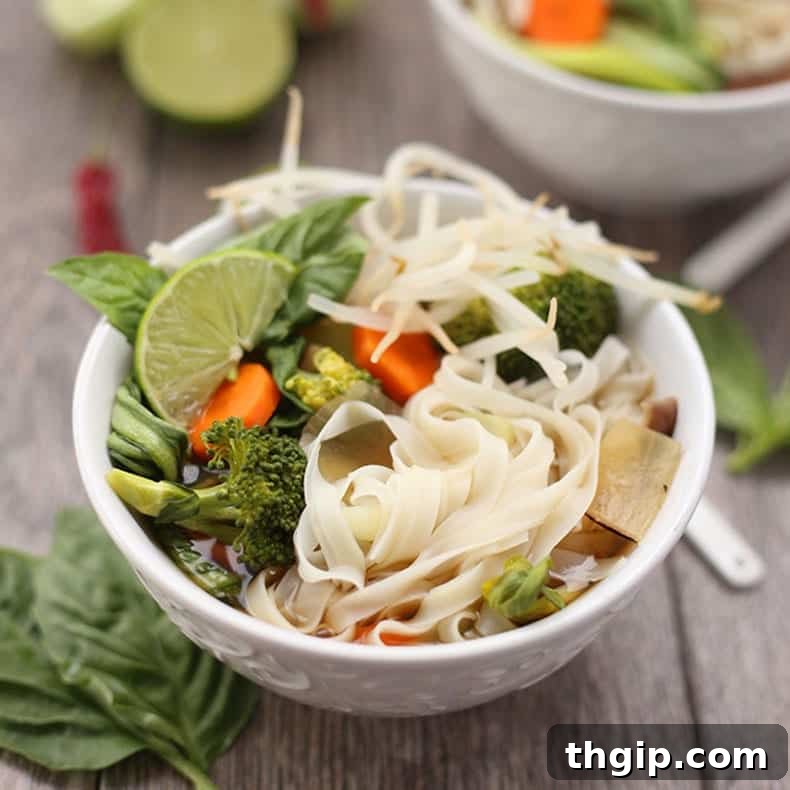
Imagine a steaming bowl of aromatic, deeply flavorful pho, brimming with fresh vegetables and tender noodles, all swimming in a rich, savory broth that’s entirely plant-based. This isn’t just a dream – it’s your reality with our ultimate Healthy Vegetarian Pho recipe! Forget expensive takeout and the uncertainty of restaurant ingredients; this homemade Vietnamese classic will become a family favorite, proving that vegan pho can be just as satisfying, if not more so, than its traditional counterparts.
For many, pho seems like a culinary Everest – a complex, labor-intensive dish best left to seasoned chefs in bustling Vietnamese eateries. The truth, however, is beautifully simple: making authentic, deeply flavorful pho at home is surprisingly accessible. While it certainly demands a bit of patience, primarily for the essential simmering time that builds layers of taste, the process itself is straightforward. With our guidance and a little dedication, you’ll confidently craft this incredible vegan pho in your own kitchen.
The soul of any great pho lies unequivocally in its broth. It’s the foundation, the heart, and the very essence that distinguishes an unforgettable bowl from a mediocre one. Traditionally, pho broth is built upon a meat base, typically beef or chicken, slow-cooked for hours to extract profound flavors. This conventional approach often leaves vegetarians and vegans feeling left out, or resorting to less authentic vegetable broths that simply don’t capture the characteristic depth of true pho.
My own journey to perfecting vegetarian pho began with a healthy dose of skepticism. Could a plant-based broth truly replicate the umami richness and aromatic complexity that defines this beloved Vietnamese noodle soup? My doubts began to dissipate when a new Vietnamese restaurant, touting an innovative vegan pho made with a mushroom broth, opened its doors near me. Intrigued and committed to reducing my meat consumption – plus recognizing the incredible health benefits of mushrooms – I approached it with an open mind.
What I discovered was a revelation. That first bowl transformed me into a true pho enthusiast, specifically for the unparalleled depth a well-crafted mushroom broth can achieve. This experience ignited a passion, leading to countless weekends spent experimenting and refining. The result? This meticulously developed vegetarian pho recipe, featuring an ultimate mushroom broth that delivers all the savory satisfaction you crave, completely meat-free. For all you plant-based food lovers, this recipe is for you.
Is Vegetarian Pho a Healthy Choice?
The question of whether pho is “healthy” often yields a nuanced answer, largely depending on its preparation and ingredients. In my view, all foods can fit into a balanced diet, and pho is no exception. However, when it comes to dining out, the nutritional profile of pho can vary dramatically from one restaurant to another. The healthfulness of any pho hinges significantly on what goes into the stock, as well as the quantity and variety of fresh vegetables included in the final dish.
Traditional pho typically features a beef or chicken broth, which can offer some benefits like collagen and amino acids (especially if it’s a genuine bone broth). You can explore the health benefits of bone broth here, but it’s crucial to acknowledge that the quality of meat and bones used in restaurant broths isn’t always transparent. This uncertainty makes homemade pho an attractive alternative, giving you full control over every ingredient.
Our vegetarian pho, however, elevates the health factor even further by utilizing a rich mushroom broth. Mushrooms, particularly shiitakes, are nutritional powerhouses. They are low in calories, high in fiber, and packed with essential vitamins and minerals like B vitamins, selenium, copper, and potassium. Shiitake mushrooms are also renowned for their immune-boosting properties and unique umami flavor, which is key to creating a deeply satisfying meat-free broth. This plant-based approach means you’re enjoying all the warming comfort of pho without the saturated fats often associated with meat broths, making it an excellent choice for heart health and digestive wellness.
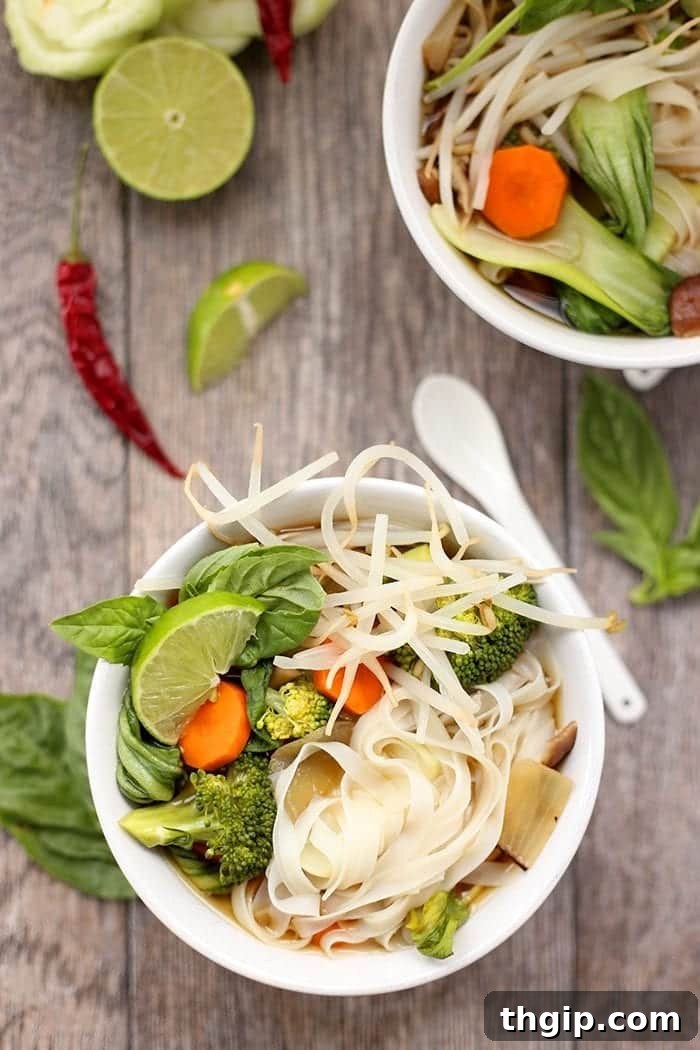
Beyond the broth, the beauty of homemade vegetarian pho lies in its customizable abundance of vegetables. Many commercial pho establishments might offer a sparse serving of chicken, noodles, and bean sprouts, leaving much to be desired in terms of nutritional density. In stark contrast, this recipe encourages an overflowing bounty of fresh produce. You’ll incorporate nutrient-rich baby bok choy, crisp broccoli florets, and vibrant carrots – and you’re always free to add more of your favorite greens and veggies. When dining out, I always make it a point to order an extra side of vegetables to stir in. But at home, you have the freedom to truly load up your bowl, transforming this delicious meal into a powerhouse of vitamins, minerals, and antioxidants, ensuring every spoonful is both delicious and incredibly nourishing.
Key Ingredients for Flavorful Vegetarian Pho
Crafting the perfect vegetarian pho means selecting ingredients that build complex flavors and provide satisfying textures. Each component plays a vital role in achieving that authentic Vietnamese taste profile. Here’s a closer look at what you’ll need for this exquisite plant-based noodle soup:
- Vegetable Stock: This forms the liquid base for our broth. Opt for a good quality, low-sodium vegetable stock to control the overall saltiness. For an even lighter base, or if you prefer to build all the flavor from scratch, water can also be used, though you might need slightly more seasoning.
- Shiitake Mushrooms: These are absolutely essential for our umami-rich broth! Shiitake mushrooms provide a deep, savory, almost meaty flavor that is crucial for mimicking the complexity of traditional pho broth. Don’t substitute these with other mushrooms if you want that true umami depth.
- Yellow or White Onion: Half a large onion, roasted until caramelized, contributes a subtle sweetness and depth to the broth. Roasting brings out its natural sugars and adds a foundational layer of flavor.
- Fresh Ginger: Peeled and cut into substantial 1-inch chunks, fresh ginger infuses the broth with its signature warm, pungent, and slightly spicy notes, a hallmark of authentic pho. Roasting it alongside the onion intensifies its aromatic qualities.
- Star Anise + Whole Cloves: These are the star aromatics that define pho’s distinctive fragrance. Star anise offers a sweet, licorice-like aroma, while whole cloves provide a warm, spicy undertone. Together, they create an intoxicating perfume that is undeniably Vietnamese and adds immense depth of flavor to your broth.
- Tamari: For that essential savory, salty kick, tamari is our choice. It’s a gluten-free alternative to soy sauce, delivering similar umami notes. If gluten isn’t a concern, regular soy sauce works perfectly fine.
- Coconut Sugar: A touch of sweetness helps to balance the savory and spicy elements of the broth, harmonizing all the flavors. Brown sugar can be used as a direct substitute if preferred.
- Salt + Pepper: Basic seasonings to enhance all the other flavors. Adjust the amount of salt based on your dietary needs and the sodium content of your vegetable stock.
- Jalapeño Pepper (Optional): For those who enjoy a little heat, half a sliced jalapeño adds a welcome, subtle kick to your Vietnamese noodle soup, elevating the flavor profile without overwhelming it.
- Fresh Vegetables: We recommend a vibrant mix of baby bok choy, broccoli, and carrots. Baby bok choy adds a tender, leafy green element, broccoli florets provide a hearty crunch and extra nutrients, and carrots contribute a natural sweetness and beautiful color. Feel free to customize this with other favorites like spinach, bell peppers, or snow peas.
- Rice Noodles: A staple of pho, a whole package (typically 8 ounces) of flat rice noodles provides the comforting base of this soup. Choose wider flat noodles for an authentic pho experience.
- Essential Toppings: These are crucial for the full pho experience! Include fresh bean sprouts for crunch, fragrant Thai basil leaves for aromatic freshness, and juicy lime wedges for a burst of citrusy brightness.
- Optional Toppings: Elevate your bowl further with a drizzle of sweet and savory hoisin sauce and a dash of fiery sriracha for personalized flavor and heat. Other great additions include sliced green onions, cilantro, or a sprinkle of toasted sesame seeds.
Crafting the Perfect Vegetarian Pho Broth: A Step-by-Step Guide
The secret to an extraordinary homemade pho, especially a vegetarian one, lies entirely in the broth. It’s an intricate dance of simmering, roasting, and infusing that builds layers of complex flavor. While it might be tempting to cut corners, I assure you, going through each step of this process is what transforms a simple vegetable stock into a rich, umami-packed vegan pho broth that rivals any restaurant.
Part 1: The Umami Mushroom Base
Begin by harnessing the power of shiitake mushrooms. In a large pot, combine shiitake mushrooms (about 1/2 lb or 2 cups) with 10 cups of vegetable stock (or water). Bring this mixture to a gentle boil, then immediately reduce the heat to a steady simmer. Allow it to simmer undisturbed for at least 30 minutes. This crucial step allows the shiitakes to deeply infuse the liquid, releasing their potent umami compounds and creating a foundational savory depth that will be the backbone of your pho broth.
Part 2: Aromatic Roasting for Enhanced Flavor
While your mushroom stock simmers, prepare your aromatics. Preheat your oven to a robust 475 degrees F (245 degrees C). Take one large yellow or white onion, peel it, and chop it in half. Peel a 3-inch knob of fresh ginger and slice it into three roughly 1-inch chunks. Place these onion halves and ginger pieces on a baking sheet. Roast them on the top rack of your oven for 20 minutes, flipping them halfway through to ensure even caramelization. Roasting is not merely about cooking; it’s about developing a profound sweetness and smoky complexity that cannot be achieved through simmering alone.
After the initial 20 minutes, carefully add 3 star anise pods and 6 whole cloves to the baking sheet alongside the onion and ginger. Return the sheet to the oven and roast for an additional 5 minutes. These essential spices are highly aromatic, and a brief roast awakens their fragrant oils, allowing them to better infuse the broth with their signature sweet and spicy notes. This step is non-negotiable for an authentic pho flavor!
Part 3: Infusion and Harmonization
Once roasted, remove the aromatics from the oven. Roughly chop the now-tender ginger and onion, then add them directly to your simmering mushroom stock. Introduce the toasted star anise and cloves, along with 2 tablespoons of tamari (or soy sauce), 1 tablespoon of coconut sugar (or brown sugar), 1 teaspoon of sea salt, 1/2 teaspoon of black pepper, and if desired, the optional 1/2 sliced jalapeño pepper for a subtle warmth. Bring the entire pot back to a boil, then reduce the heat once more to a low simmer. Let this aromatic concoction meld and deepen for another 40 minutes. This extended simmering time allows all the flavors to fully integrate, creating a harmonious and deeply satisfying broth.
Part 4: Vegetable Enrichment
In the final stages of broth preparation, it’s time to add your fresh vegetables. Gently stir in 2 heads of chopped baby bok choy, 1 small head of broccoli (about 2 cups of florets), and 1 peeled and sliced carrot. Continue to simmer the broth for an additional 10 minutes, or until the vegetables are tender-crisp. You want them cooked through but still retaining a pleasant bite and their vibrant colors. This step ensures your pho is not only flavorful but also packed with nutrients and satisfying textures.
Part 5: Assembly and Serving
While your vegetables are cooking in the broth, prepare your rice noodles according to their package instructions. Most rice noodles require only a quick soak in hot water or a brief boil, so they cook very quickly. Once the noodles are ready, drain them and divide them evenly among individual serving bowls. Ladle the hot, aromatic broth generously over the noodles, ensuring each bowl gets a good portion of the tender vegetables. Finally, complete your masterpiece with a bounty of fresh toppings: a generous handful of cooked bean sprouts, fragrant Thai basil leaves, and bright lime wedges. For an extra layer of flavor and heat, offer hoisin sauce and sriracha on the side for guests to customize their bowls. Serve immediately and savor the incredible flavors of your homemade vegetarian pho!
Customizing Your Vegetarian Pho: Recipe Swaps and Additions
One of the joys of cooking at home is the freedom to customize, and this vegetarian pho recipe is incredibly versatile. While we’ve perfected a fantastic base, feel free to experiment with swaps and additions to tailor it to your preferences or what you have on hand. The most significant adaptation, of course, is replacing the traditional meat-based stock with our robust mushroom broth. We specifically recommend shiitake mushrooms for their intense umami and meaty texture, which are unparalleled in building a savory, satisfying foundation. However, other dried mushrooms like porcini or a mix of dried forest mushrooms can also contribute wonderful depth if shiitakes are hard to find, though they might yield a slightly different flavor profile.
Beyond the broth, loading up on vegetables is paramount for a hearty and nutritious bowl. Our suggested trio of baby bok choy, broccoli, and carrots provides a fantastic blend of textures and nutrients. However, don’t limit yourself! Consider adding other quick-cooking greens like spinach, kale, or napa cabbage. Sliced bell peppers (red, yellow, or orange) can add sweetness and color, while thin slices of daikon radish or zucchini could offer a unique crunch. For an extra boost of plant-based protein, consider adding cubes of pan-fried or baked tofu, tempeh, or even edamame towards the end of the cooking process. You could also experiment with different types of rice noodles – thicker flat noodles for more chew, or thinner vermicelli for a lighter feel.
For those seeking even more adventurous flavors, a tiny pinch of black cardamom or a small piece of cinnamon stick added during the broth simmering stage can introduce an additional layer of warmth and complexity, mirroring some regional pho variations. Just be mindful not to overpower the delicate balance. Don’t forget to play with your toppings as well! Beyond the essential bean sprouts, basil, and lime, consider adding fresh cilantro, thinly sliced green onions, a sprinkle of toasted peanuts or cashews for crunch, or even a dash of chili garlic sauce for an extra kick. The possibilities are endless for making this vegetarian pho truly your own.
Storage and Freezing Tips for Vegetarian Pho
Making a large batch of this delicious vegetarian pho is a fantastic idea, as it makes for wonderful leftovers. Proper storage is key to maintaining its fresh taste and delightful texture.
Storage in the Refrigerator:
To ensure your vegetarian pho remains fresh and enjoyable for several days, it is absolutely crucial to store the broth separately from the noodles and any fresh toppings. If the noodles are left soaking in the broth, they will absorb too much liquid and become mushy, losing their desirable texture. Likewise, fresh toppings like bean sprouts and basil can wilt and lose their crispness when stored with the hot broth. Kept apart, your fragrant vegetarian pho broth will stay fresh in an airtight container in the fridge for 3-5 days. For the best experience, cook your rice noodles fresh just before each serving. This ensures they have the perfect al dente bite. You can also prepare and store bean sprouts and other fresh herbs in separate containers, adding them right before you enjoy your warmed bowl of pho.
Freezing for Future Enjoyment:
The vegetarian pho broth is incredibly freezer-friendly, making it perfect for meal prep or having a quick, healthy meal ready on demand. You can prepare the broth well in advance and freeze it. The ideal time to freeze is before adding the fresh vegetables (bok choy, broccoli, carrots). Allow your prepared stock to cool completely to room temperature. Once cooled, transfer it to freezer-safe airtight containers or heavy-duty freezer bags. Make sure to leave some headspace if using containers, as liquids expand when frozen. The broth can be safely stored in the freezer for up to 3 months.
When you’re ready to enjoy your frozen pho, simply remove the container from the freezer and let it thaw in the refrigerator overnight, or on the counter for several hours. Once thawed, gently reheat the broth in a pot over medium heat. Bring it to a simmer, then proceed with the recipe by adding your fresh vegetables (bok choy, broccoli, carrots) and cooking them for 10 minutes. Finally, cook fresh rice noodles and assemble your bowl with all the delightful toppings. This method ensures that the vegetables are cooked to perfection and retain their nutritional value and texture, while the broth maintains its rich, aromatic integrity.
Vegetarian Pho Recipe Card
Vegetarian Pho Recipe
Rated: 4.7 out of 5 stars from 3 reviews
- Author: Davida Lederle
- Total Time: 1 hour 25 minutes
- Yield: 6 large bowls
Ingredients
- 10 cups of vegetable stock (you can also use water)
- 1/2 lb shiitake mushrooms (2 cups), stems discarded and caps chopped
- 1 large yellow or white onion, peeled and halved
- 3 inch knob of fresh ginger, peeled and sliced into 1-inch pieces
- 3 star anise pods
- 6 whole cloves
- 2 tbsp tamari or soy sauce
- 1 tbsp coconut sugar (or brown sugar)
- 1 tsp sea salt
- 1/2 tsp black pepper
- Optional: 1/2 jalapeño pepper, thinly sliced
- 2 heads of baby bok choy, chopped
- 1 small head broccoli (about 2 cups), chopped into florets
- 1 carrot, peeled and sliced
- 1 package of rice noodles (8 ounces)
- 2 cups bean sprouts, cooked (or fresh for topping)
- Fresh Thai basil leaves, for serving
- 1 lime, cut into wedges, for serving
- Optional toppings: hoisin sauce + sriracha
Instructions
- Preheat oven to 475 degrees F (245°C).
- In a large pot over medium-high heat, combine the chopped shiitake mushrooms with vegetable stock (or water). Bring to a boil, then reduce heat to a simmer while you prepare other aromatics.
- Place the halved onion and 1-inch ginger pieces on a baking sheet. Roast on the top rack of the preheated oven for 20 minutes, flipping halfway through for even caramelization.
- After 20 minutes, add the star anise and whole cloves to the baking sheet and roast for an additional 5 minutes to awaken their fragrant oils.
- Remove roasted ingredients from the oven. Roughly chop the roasted ginger and onions, then add them to the simmering shiitake stock.
- Stir in the toasted star anise and cloves, tamari (or soy sauce), coconut sugar (or brown sugar), sea salt, black pepper, and the optional sliced jalapeño pepper.
- Bring the stock back to a boil, then reduce the heat and let it simmer for 40 minutes, allowing all flavors to fully integrate.
- Add the chopped bok choy, broccoli florets, and sliced carrot to the simmering broth. Cook for 10 minutes, or until the vegetables are tender-crisp.
- While the vegetables are cooking, prepare the rice noodles according to package instructions. Drain well.
- To serve, divide the cooked noodles among individual bowls. Ladle the hot, aromatic broth generously over the noodles, ensuring each bowl receives a good portion of the tender vegetables.
- Garnish with fresh bean sprouts, Thai basil leaves, and lime wedges. Offer hoisin sauce and sriracha on the side for customization. Serve immediately.
- For Storage: Keep any leftover broth separate from cooked noodles and fresh toppings to prevent the noodles from becoming mushy and toppings from wilting. Store broth in an airtight container in the refrigerator for 3-5 days. Cook fresh noodles and add fresh toppings when reheating.
Like this healthy and flavorful vegetarian recipe? Here are a few other plant-based delights you might enjoy:
- Nourishing Detox Vegetable Soup
- The Ultimate Healthy Immune-Boosting Soup
- Hearty Vegetable Root Dal
- Creamy Curried Thai Coconut Ramen