
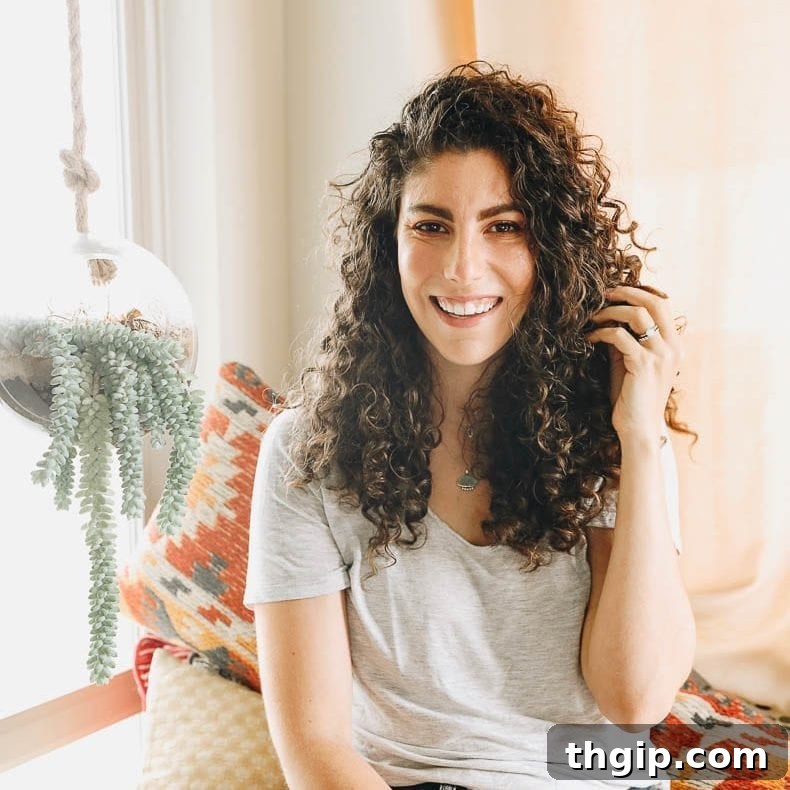
Embrace Your Natural Beauty: The Ultimate Guide to Styling and Loving Your Curly Hair
For many with textured hair, the journey to self-love and embracing natural curls can be a deeply personal and transformative one. In a world that often champions sleek, perfectly straight strands, allowing your curls to flourish can feel like a rebellious act of self-acceptance. This article delves into the art and science of loving and embracing your unique curly hair, offering a comprehensive guide to natural styling, product selection, and essential care tips.
For years, many of us, myself included, felt compelled to straighten our hair, believing it would make us appear more beautiful or command greater respect. However, the truth is often the opposite. There’s an undeniable feeling of authenticity and beauty that comes with showcasing your natural curls. While societal biases towards perfectly manicured, straight hair still exist, part of shifting this perception lies in curly-haired individuals confidently owning their natural texture. This guide is dedicated to empowering you to understand, cherish, and style your natural curls with confidence.
Finding genuine role models who openly celebrate and discuss their love for curly hair can be challenging. Realizing this, many of us feel a responsibility to become that role model for others. Over time, the question, “How do you style your curly hair naturally?” has become one of the most frequently asked, highlighting a collective desire for practical, empowering advice.
Styling curly hair is far from a one-size-fits-all solution. Hair exists on a vast spectrum, ranging from subtle waves to tight, coily curls. Your hair’s unique characteristics—including its porosity, density, and specific curl type—all play a crucial role in determining the most effective care and styling regimen. What works for a person with 2a waves will differ significantly from what works for someone with 4c coils. This individuality can make the journey feel complex, but there are fundamental curly hair tips that can benefit everyone, regardless of their specific texture.
This comprehensive guide aims not only to show you how to style curly hair naturally but also to educate and empower you to truly understand your unique curl pattern. By grasping the nuances of your hair, you can make informed decisions about products and techniques, ultimately fostering a deeper appreciation for your natural beauty. While personal recommendations will be shared, remember that your hair’s needs are distinct, and what works for one may not work for another. The ultimate goal is to inspire excitement and self-love for your hair, whether it’s curly, wavy, straight, or somewhere in between. Loving all parts of yourself, including your hair, is a powerful act of self-care. Let’s dive in!
Understanding Your Unique Curls: Texture, Porosity, and Density
No two curls are exactly alike, and your hair’s characteristics can evolve throughout your life due to factors like hormonal changes, pregnancy, or even environmental exposure. Identifying your current curl type, porosity, and density is the foundational step toward mastering your natural curly hair routine.
Decoding Curly Hair Types (Texture Chart)
Hair texture is categorized on a spectrum from 2 to 4, with sub-classifications from ‘a’ to ‘c’. These classifications help describe the tightness of your curl pattern:
- Type 2 (Wavy Hair): Ranges from loose, barely-there waves (2a) to defined S-shaped waves that cling closer to the head (2c).
- Type 3 (Curly Hair): Characterized by distinct, springy curls that form a discernible S-shape. 3a curls are larger and looser, while 3c curls are tighter, more voluminous corkscrews.
- Type 4 (Coily Hair): Features very tight, dense coils, often forming Z-patterns. 4a coils are softer, while 4c coils are extremely tight and often appear shorter due to shrinkage.
Many individuals have a combination of curl types. For instance, my hair typically falls within the 3a-3b range, depending on various factors. You can identify your specific curl texture HERE to better tailor your styling approach.
The Science of Hair Porosity
Beyond texture, hair porosity is a critical metric for understanding how your hair behaves and determining the right products. Porosity refers to your hair’s ability to absorb and retain moisture. There are three main types:
- Low Porosity Hair: The hair cuticles are tightly closed, making it difficult for moisture to penetrate. Products tend to sit on the hair surface, and drying time can be significantly longer (hours to even days). Heat can help open the cuticles for better product absorption.
- High Porosity Hair: The hair cuticles are open or raised, allowing moisture to be absorbed quickly but also lost just as easily. This hair type can feel dry, frizzy, and often requires more sealing products to lock in hydration. It also tends to dry faster.
- Medium Porosity Hair: This type has loosely aligned cuticles, allowing for a good balance of moisture absorption and retention. It’s generally easier to manage and style, striking a balance between the other two types.
Understanding your porosity is key to choosing products that truly work. There are several ways to determine your hair porosity, including the float test, which you can learn more about HERE. Remember, no porosity type is inherently “better” or “worse”; it’s simply about knowing your hair and adapting your routine accordingly.
Hair Density Explained
Hair density refers to the number of individual hair strands on your scalp, often perceived as the “thickness” or “fullness” of your hair. It’s distinct from strand thickness. To test your hair density: part your hair down the center and let it fall naturally.
- Low Density Hair: You can see a significant amount of your scalp. This hair type may feel finer or less voluminous.
- Medium Density Hair: You can see some scalp, but it’s not overly prominent. This is a common density.
- High Density Hair: Your scalp is barely visible, indicating a large number of hair strands. This hair type often appears very thick and full.
Knowing your hair density helps in selecting products that won’t weigh down fine strands or adequately moisturize thick, dense curls.
Choosing the Right Natural Products for Your Curls
While curl texture is often the first thing people consider, I firmly believe that knowing your hair porosity and density is more crucial for selecting effective products. Texture primarily influences styling techniques, whereas porosity and density dictate how your hair interacts with and benefits from products.
A Personalized Approach to Product Selection
Once you’ve identified your porosity and density, choosing the right natural curly hair products becomes much clearer:
Products for Low Porosity Hair
Because your hair struggles to absorb moisture, focus on products that actively attract and retain hydration. Look for:
- Humectants: Ingredients like honey, glycerin, and hyaluronic acid draw moisture from the air into your hair.
- Lightweight Oils: Jojoba oil, apricot kernel oil, argan oil, and grapeseed oil can penetrate more easily without sitting on the surface. Avoid heavy oils like coconut or olive oil, which can cause build-up.
- Avoid Proteins: Be cautious with protein-rich products (hydrolyzed wheat, oat, silk, soy protein, keratin) as they can cause stiffness and dryness in low porosity hair.
Products for Medium Porosity Hair
Your hair generally maintains a good moisture balance. The key is to avoid extreme product choices:
- Balanced Moisture: Most moisturizing products will work well. Experiment to find your sweet spot – not too heavy, not too light.
- Moderate Protein: A small amount of protein occasionally can be beneficial, but avoid daily use or overly concentrated protein treatments that might alter your hair’s porosity.
Products for High Porosity Hair
Your open cuticles mean moisture escapes easily, so your focus should be on sealing in hydration and providing repair:
- Anti-Humectants & Sealants: Ingredients that create a barrier to prevent moisture loss are essential. Look for heavier oils and butters like avocado oil, raw shea butter, coconut oil, and olive oil.
- Protein-Rich Products: Proteins (as listed for low porosity) can help repair damage, strengthen the hair shaft, and fill gaps in the cuticle, reducing frizz and improving elasticity.
- Deep Conditioning: Regular deep conditioning treatments are vital to replenish lost moisture.
Now, let’s consider hair density:
Product Choices Based on Hair Density
- Low Density Hair (Fine Curls): Be mindful of product weight. Opt for lighter oils such as apricot kernel oil, argan oil, and almond oil. Use mousses and volume-enhancing products for styling, and steer clear of heavy creams and thick gels that can weigh down your curls, making them limp.
- Medium Density Hair: You have the most flexibility. A little bit of everything works, but avoid going overboard with overly heavy oils or gels, or conversely, completely omitting them.
- High Density Hair (Thick Curls): This hair type can handle and often requires heavier products. Embrace rich creams, thick gels, and nourishing butters like shea and mango to provide adequate moisture and definition without causing build-up. Avoid products designed to add volume, as your hair likely has plenty already.
Take a moment to consider: what kind of hair porosity and density do you have? Share your findings below!
Essential Curly Hair Care: What to AVOID
Regardless of your specific curl texture, porosity, or density, certain practices and ingredients can hinder your curly hair journey. Adhering to these “no-nos” is crucial for maintaining healthy, vibrant curls.
The Golden Rules: Brushing and Heat Styling
- DO NOT BRUSH YOUR CURLY HAIR WHEN IT’S DRY. This is the cardinal rule of curly hair care. Brushing dry curls disrupts the curl pattern, leading to extreme frizz, breakage, and damage. The only appropriate time to detangle curly hair is in the shower, saturated with conditioner, using a wide-tooth comb or your fingers. This allows the conditioner to provide slip, minimizing friction and breakage.
- Don’t get your haircut by just ANY stylist. If you’re serious about embracing your curls, seek out a stylist who specializes in cutting curly hair. Many conventional stylists are trained on straight hair and may not understand how to cut curls to fall beautifully. Inquire about techniques like dry cutting or DevaCuts, which are designed to shape curls in their natural state. Ideally, find someone who not only understands curl structure but also prioritizes clean, natural ingredients.
- Don’t straighten your hair often. While occasional heat styling (e.g., 3-4 times a year) can be a fun change, be aware of its impact. Heat can temporarily alter your natural curl pattern, and it may take several washes for your curls to fully revert to their original shape. During the transition back to your natural texture, minimizing heat tools is highly recommended to allow your curls to reform and thrive.
Harmful Ingredients to Ditch for Healthy Curls
To truly embrace natural curly hair, it’s vital to become an ingredient-savvy consumer. Certain chemicals commonly found in hair products can be detrimental to curl health:
- Silicones: Often used to create a silky, smooth feel and tame frizz, silicones can be the arch-nemesis of curly hair. Over time, they build up on the hair shaft, weighing down curls, making them appear limp, dull, and ultimately even frizzier. Look out for ingredients ending in “-cone,” “-conol,” or “-xane” (e.g., dimethicone, cyclomethicone, amodimethicone).
- Sulfates: These harsh detergents are responsible for the rich lather in most conventional shampoos. While satisfying, sulfates are incredibly stripping, removing your hair’s natural oils (sebum) that are vital for moisture and curl definition. This can lead to dryness, frizz, and an overproduction of oil by the scalp to compensate. Avoid ingredients like Sodium Laureth Sulfate, Sodium Lauryl Sulfate, and Ammonium Laureth Sulfate.
- Drying Alcohols: Many alcohols are highly dehydrating for curly hair, especially for high porosity types already prone to dryness. These can lead to brittle strands and increased frizz. Watch out for simple alcohols such as Isopropyl alcohol, Ethanol, Alcohol Denat., and Propanol. Fatty alcohols (e.g., Cetyl Alcohol, Stearyl Alcohol, Cetearyl Alcohol) are beneficial and are not drying.
- Parabens & Phthalates: These ingredients, often used as preservatives (parabens) and emulsifiers/fragrance carriers (phthalates), are not just bad for curly hair but generally harmful for overall health. They are endocrine disruptors and have been linked to various health concerns, including potential cancer risks. Avoid anything containing “paraben” (e.g., methylparaben, propylparaben) and “phthalate” on ingredient lists. Also, be wary of “fragrance” or “parfum” if not specified as natural, as it can hide phthalates.
Mastering Your Natural Curly Hair Styling Routine
My hair, with its 3b curls, medium porosity, and density, generally responds well to a variety of products, though it craves extra moisture in drier conditions. The following steps outline an effective natural curly hair styling routine, drawing from proven techniques and product insights.
1. Cleansing Your Curls (Shampoo & Conditioner)
Minimizing shampooing is a game-changer for curly hair, which thrives on its natural oils. I typically shampoo only once a week, sometimes extending to 10 days. Frequent shampooing strips these essential oils, leading to dryness and frizz.
- Co-washing: Many in the curly community embrace co-washing (using conditioner to cleanse) or the “no-poo” method (skipping shampoo entirely). These methods aim to preserve moisture during washing. While effective for some, I personally find that using a high-quality, sulfate-free shampoo prevents excessive stripping without leading to product build-up, which I experienced with a complete “no-poo” approach.
- Product Choice: Since my hair has medium porosity and density, I lean towards sulfate-free shampoos and conditioners with a touch of protein and nourishing oils, especially as my hair can get quite dry. The Shea Moisture Coconut and Hibiscus Shampoo and Conditioner are favorites for their natural oils that enhance my curl definition. However, if I heat style, I switch to a more clarifying option like the Evolvh Ultra Shine Shampoo and Conditioner, which uses Disodium Sulfosuccinate (a non-sulfate foaming agent) to remove any product residue without being overly harsh.
2. Seal the Hair Cuticles in Cold Water
After conditioning, a final rinse with cold water is a beneficial step, particularly for medium to high porosity hair. Cold water helps to close the hair cuticles, locking in moisture and increasing shine. If you have low porosity hair, however, this step might not be ideal; warm water or steam is generally preferred during conditioning to help products penetrate more effectively.
3. Gentle Drying Techniques: Microfiber Towel or Cotton T-Shirt
Traditional terrycloth towels can be abrasive, roughing up the hair cuticles and contributing to frizz. Instead, opt for a microfiber towel (like this one) or a soft cotton t-shirt. Gently scrunch your curls to remove excess water, patting rather than rubbing. This helps maintain the curl pattern and reduces frizz as your hair dries.
4. Applying Styling Products Effectively
Immediately after towel-drying, apply your styling products to damp hair:
- Leave-in Conditioner: A good leave-in conditioner is essential for providing continuous moisture and acting as a base for other styling products. I’m particularly fond of the Smart Curl Leave-In Conditioner from Evolvh, which I spray liberally through my hair.
- Curl-Defining Gel or Cream: Follow with a curl-defining product. I use the Evolvh Wonderbalm gel, applying roughly three pumps per side of my head. Distribute it lightly over your curls, then gently scrunch upwards from the ends towards the roots. Scrunching helps to encourage curl formation and definition.
5. Air-Dry When Possible
After years of heat styling, I prioritize air-drying my curls to minimize heat damage. While diffusers can speed up drying and add volume, air-drying allows curls to form naturally without external heat. It typically takes a few hours for my hair to air-dry. During this time, it’s crucial to resist touching your hair as much as possible, as excessive manipulation can lead to frizz.
6. Protect Your Curls Overnight
To preserve your beautiful curls for multiple days, overnight protection is key. Many opt for a silk or satin bonnet, but I find that gathering my hair into a loose “pineapple” on top of my head with a soft scrunchie or a non-kink hair tie (such as these) works wonderfully. This prevents crushing and tangling while you sleep. With this method, my curls typically last for 3-4 days before needing a refresh.
A Holistic Approach to Curly Hair Love
This guide, while comprehensive, only scratches the surface of the vast world of curly hair care. The journey with curly hair is dynamic and ever-evolving, and that’s what makes it so engaging. You never quite know what your curls will do, and learning to embrace this beautiful unpredictability is the essence of enjoying the process. Growing up, I yearned for a role model to tell me that my curly hair was beautiful and worthy of celebration. If I can be that source of encouragement for even one person, that is more than enough.
It’s worth remembering that we often desire what we don’t have. One of the most common search terms online is “how to make my hair curly.” So, if you ever find yourself frustrated with your curls, know that there are countless individuals who wish they had your natural waves or coils. Embrace the beauty of your unique texture, practice patience, and celebrate the incredible journey of loving your natural self.
Got more questions about curly hair care? Feel free to ask!