
Mastering the Art of Gratin: From Classic French to Healthy Dairy-Free Delights
The culinary world is rich with terms that evoke images of delicious, comforting dishes. Among them, the term Gratin (/ˈgrätn/) stands out as a beloved classic, originating from French cuisine. In its essence, a gratin refers to any dish prepared in a shallow oven-proof dish, baked with a topping that typically consists of seasoned breadcrumbs, cheese, or both. The hallmark of a truly successful gratin is its irresistibly golden-brown crust—a crispy, savory layer that provides a delightful textural contrast to the soft, creamy interior. This signature finish can be achieved through baking alone or enhanced by a brief period under a broiler, ensuring that perfect caramelized sheen that signifies a perfectly cooked gratin.
While often intimately associated with potatoes, particularly in the famous Gratin Dauphinois, the versatility of gratin extends far beyond. Indeed, almost any ingredient can be transformed into a comforting gratin, from various vegetables like broccoli, zucchini, and asparagus, to pasta, seafood, and even fruits in sweeter applications. The core principle remains consistent: a rich, flavorful base, frequently bound by a creamy sauce or stock, topped with a delicious crust, and baked until bubbly and golden brown. This simple yet elegant preparation method has cemented gratin’s status as a cherished staple in numerous cuisines worldwide, celebrated for its remarkable ability to elevate humble ingredients into something truly special and deeply satisfying.

My Culinary Muse: The Unforgettable Julia Child
One might naturally assume that twelve years of French immersion education would have thoroughly ingrained every French culinary term into my memory. Yet, it was the legendary Julia Child, rather than my formal schooling, who truly introduced me to the magic and nuance of the word “gratin.” My admiration for Julia Child borders on obsession, a profound sentiment shared by countless food enthusiasts across the globe. Her indelible influence on my cooking philosophy and my deeper understanding of French cuisine is truly immeasurable. I’ve delved into her captivating biography, “My Life In France,” multiple times, finding endless inspiration in her remarkable journey from a hesitant home cook in post-war Paris to a trailblazing culinary icon who revolutionized American cooking. Her passion, resilience, unwavering commitment to the joy of cooking, and sheer exuberance resonate deeply with me.
My dedication to her enduring legacy even led me to acquire an original copy of her seminal work, “Mastering the Art of French Cooking,” a highly prized treasure for which I willingly paid a substantial sum (only to tragically misplace it later, much to my enduring dismay and continuous search!). Beyond her groundbreaking cookbooks, the film “Julie & Julia” holds an exceptionally special place in my heart, arguably ranking as my favorite movie of all time. It brilliantly captures the essence of Julia’s indomitable spirit, her infectious enthusiasm, and her groundbreaking efforts to demystify complex French cooking techniques for an eager American audience. Her unique ability to make daunting culinary processes approachable and her profound belief in the transformative power of good food continue to inspire new generations of home cooks and professional chefs alike, proving that her legacy is truly timeless.

Julia’s Iconic Potatoes au Gratin and the Unapologetic Butter Philosophy
Julia Child is perhaps most famously associated with her iconic Potatoes au Gratin recipe, a rich, indulgent, and utterly classic dish that perfectly epitomizes her unapologetic and generous approach to flavor. While I must confess I have yet to attempt this revered classic myself – primarily because I tend to favor my potatoes with a distinct and pervasive crispiness rather than a creamy texture – its legendary reputation precedes it. As one might expect from Julia, the recipe is a glorious symphony of rich, unadulterated ingredients: generous amounts of butter, robust cheese, hearty potatoes, and, for good measure, even more butter! Julia’s legendary quip, “If you’re afraid of butter, use cream!” perfectly encapsulates her audacious yet brilliant culinary philosophy. She firmly believed in using the finest ingredients generously, without hesitation, to achieve unparalleled taste, texture, and depth of flavor. Her dedication to flavor over austerity was truly revolutionary, boldly encouraging home cooks to wholeheartedly embrace the richness and indulgence inherent in classic French cuisine without fear or compromise.
Her work transcended mere recipes; it encouraged people to experiment fearlessly, to taste critically, and to truly savor and enjoy the entire process of cooking and eating. She taught us that cooking isn’t just about sustenance or following instructions; it’s an art form, a profound source of pleasure, and a beautiful way to connect with others through shared meals. While I deeply admire her philosophy and the sheer indulgence of her original recipes, my own stomach, unfortunately, tends to rebel against such an abundance of dairy and richness in my daily diet. Modern dietary considerations, personal health goals, and the increasing popularity of plant-based eating often necessitate clever adaptations of even the most revered culinary classics. This realization led me to ponder a significant question: could a beloved Julia Child-inspired dish receive a contemporary makeover, becoming healthier and dairy-free, without losing its comforting essence or flavorful soul? I decided it was time to put her spirit of fearless experimentation to the test, even if it meant a slight deviation from her original masterpiece. I secretly imagined she’d approve of the creativity and the delicious outcome, even if the butter content was considerably reduced!
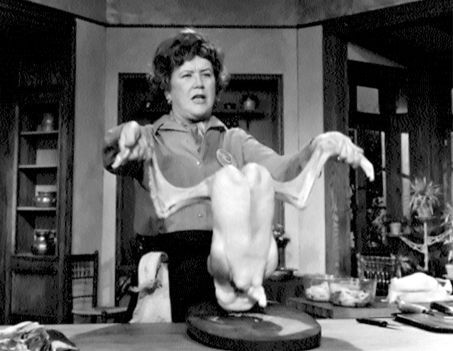 |
| Julia Child, the legendary chef and culinary inspiration. |
A Modern Twist: Crafting a Dairy-Free Cauliflower Gratin for the Health-Conscious Era
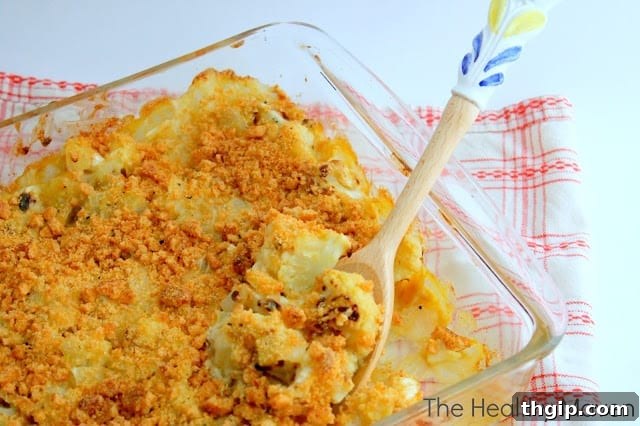
Inspired by Julia’s adventurous spirit and her unwavering encouragement to be fearless in the kitchen, I embarked on a mission to thoughtfully reimagine the classic gratin. My primary goal was to create a dish that captured the comforting essence and satisfying texture of a traditional gratin while being entirely dairy-free and incorporating significantly healthier ingredients. This endeavor culminated in my unique Dairy-Free Cauliflower Gratin, a recipe that lovingly pays homage to the original while expertly catering to contemporary dietary preferences and health goals. For this culinary experiment, I made a crucial and impactful swap, substituting the traditional, starchy potatoes with nutrient-dense cauliflower. Cauliflower, a remarkably versatile cruciferous vegetable, brings a wealth of health benefits to the table, including being rich in essential vitamins C and K, abundant in dietary fiber, and packed with powerful antioxidants, all while offering a significantly lower carbohydrate count, making it an excellent choice for a lighter meal.
To achieve the signature creamy texture so vital to any gratin without incorporating any dairy, I meticulously crafted a luscious and smooth sauce from unsweetened almond milk, expertly thickened with a touch of tapioca starch. The essential “cheesy” flavor, so absolutely crucial to any successful gratin, comes from a generous amount of nutritional yeast. This incredible, deactivated yeast, widely beloved in plant-based cooking circles, provides a distinct savory, umami-rich profile that mimics the flavor of cheese remarkably well, all without containing any actual dairy products. For the all-important golden-brown and delightfully crispy topping, I chose to use my favorite chili-flavored Simply Chips. Not only do these savory chips add an unexpected yet delightful crunch and a subtle hint of spice, but they also cleverly boost the overall protein content of the dish, making it more satisfying and helping to reduce any lingering “guilt” often associated with indulging in a rich gratin. The crispy, savory chip topping forms a fantastic, flavorful crust that truly elevates the dish, adding an exciting textural dimension.
Admittedly, this dairy-free rendition doesn’t perfectly replicate the deep, complex, and aged flavor of a five-year-aged Gouda or the richness of traditional French cheese. However, for a dish that is entirely plant-based and meticulously crafted to be dairy-free, it is exceptionally good, offering a truly satisfying and flavorful experience. I take immense pride in my kitchen creations, especially when they represent a successful, innovative adaptation of a cherished classic. While my version might not stand toe-to-toe with Julia’s original in terms of traditional, butter-laden richness, it certainly aligns perfectly with her spirit of innovation, experimentation, and profound passion for creating delicious, wholesome food. I truly believe Julia, ever the adventurous cook, would appreciate the creative effort and the ultimately delicious outcome, recognizing that true culinary artistry lies not just in strict adherence to tradition, but also in the courage to explore, adapt, and invent new pathways to flavor and enjoyment.
This timeless and profoundly encouraging advice from Julia Child serves as the ultimate guiding principle for home cooks and professional chefs everywhere. It encourages all of us to bravely step outside our culinary comfort zones, wholeheartedly embrace new challenges, learn valuable lessons from every mistake, and, most importantly, find immense joy and fulfillment in the entire cooking process, even when things don’t go perfectly according to plan. My dairy-free cauliflower gratin is a direct testament to this beautiful philosophy – an honest attempt to learn, adapt, and have an abundance of fun in the kitchen while simultaneously creating a wholesome, incredibly tasty, and deeply comforting dish that can be enjoyed by many, regardless of dietary restrictions.
Print Recipe
Dairy-Free Cauliflower Gratin
No reviews yet. Be the first to rate this recipe!
- Yield: 4 sides
- Prep time: 15 minutes
- Cook time: 45 minutes
- Total time: 1 hour
Ingredients
- 1 large head of cauliflower, chopped into florets (approximately 6-7 cups)
- 1/2 large onion, finely chopped
- 1 1/2 cups unsweetened almond milk (warmed to prevent lumps)
- 3 T tapioca starch (or cornstarch, arrowroot powder, or all-purpose flour for thickening)
- 1/2 cup nutritional yeast (for a cheesy, umami flavor)
- 1/2 cup crumbled Simply Chips (chili-flavored recommended for a kick) or traditional seasoned breadcrumbs
- Salt and freshly ground black pepper, to taste
- Olive oil, for roasting and sautéing
Instructions
- Preheat your oven to a robust 425 degrees F (220 degrees C). This higher temperature is crucial for achieving beautifully roasted cauliflower with slightly caramelized edges, which enhances its flavor profile.
- Evenly spread the chopped cauliflower florets on a large baking sheet. Drizzle them generously with olive oil and sprinkle with a good pinch of salt. Ensure the cauliflower is well-coated for optimal roasting and browning.
- Roast the cauliflower in the preheated oven for 15 minutes. After this initial period, remove the baking sheet, carefully flip the florets to ensure even browning on all sides, and return to the oven for another 10 minutes, or until they are tender-crisp and beautifully golden brown.
- While the cauliflower is roasting, begin preparing the creamy, dairy-free “cheese” sauce. In a medium saucepan, heat 1 teaspoon of olive oil over medium heat. Add the finely chopped onion and cook for about 5 minutes, stirring occasionally, until it is softened and translucent. Be careful not to brown the onions too much, as we want a subtle flavor for the sauce.
- In a separate small bowl, combine the warmed unsweetened almond milk with the tapioca starch (or your chosen starch/flour). Whisk diligently until thoroughly combined and no lumps remain. Warming the milk slightly beforehand can significantly help in preventing lumps and ensuring a perfectly smooth sauce.
- Reduce the stovetop heat for the onions to low. Gradually pour the almond milk and starch mixture into the saucepan with the softened onions, whisking constantly to incorporate.
- Continue to stir the mixture gently as it simmers over low heat. It will gradually thicken into a smooth, luxurious, and creamy sauce. This typically takes a few minutes; patience is key here to avoid scorching.
- Once the sauce has reached your desired creamy consistency, remove it from the heat and vigorously stir in the nutritional yeast. Season generously with salt and freshly ground black pepper to taste. The nutritional yeast is the star here, providing that essential cheesy, umami flavor without any dairy.
- In an 8 x 8 inch baking dish (or a similar size), gently combine the roasted cauliflower florets with the creamy stovetop sauce. Stir carefully to ensure all the cauliflower is evenly coated with the rich sauce. Spread the mixture evenly across the bottom of the dish.
- Generously crumble the Simply Chips (or your preferred seasoned breadcrumbs) over the top of the cauliflower mixture. This crucial step will form the signature crispy, golden crust that defines a gratin.
- Bake the gratin in the 425 degree F (220 degrees C) oven for an additional 20 minutes, or until the topping is beautifully golden brown and crispy, and the sauce is visibly bubbly around the edges.
- Allow the gratin to rest for at least 5-10 minutes before serving. This resting period is important as it allows the sauce to set slightly, making it much easier to portion and serve cleanly. Enjoy this delightful, healthy, and innovative twist on a cherished classic!
Who is your culinary idol? Does anyone else share my profound admiration for Julia Child?
Beyond her iconic recipes and groundbreaking techniques, Julia Child imparted to us the invaluable lesson of embracing pure joy in the kitchen, of learning valuable lessons from every culinary adventure, and of being utterly fearless in our cooking pursuits. Her extraordinary legacy continues to inspire millions of people around the world to cook with passion, to eat with gusto, and to live life fully. Whether you’re a seasoned chef with years of experience or a complete beginner just starting your culinary journey, her timeless message resonates deeply: cook with an open heart and unwavering passion, experiment boldly with new flavors and techniques, and, most importantly, savor every precious moment both in the kitchen and at the dining table. So, I turn the question to you, dear reader: who inspires your personal culinary journey? Is there anyone whose dedication to food, life, and learning you admire as profoundly as I do Julia Child?