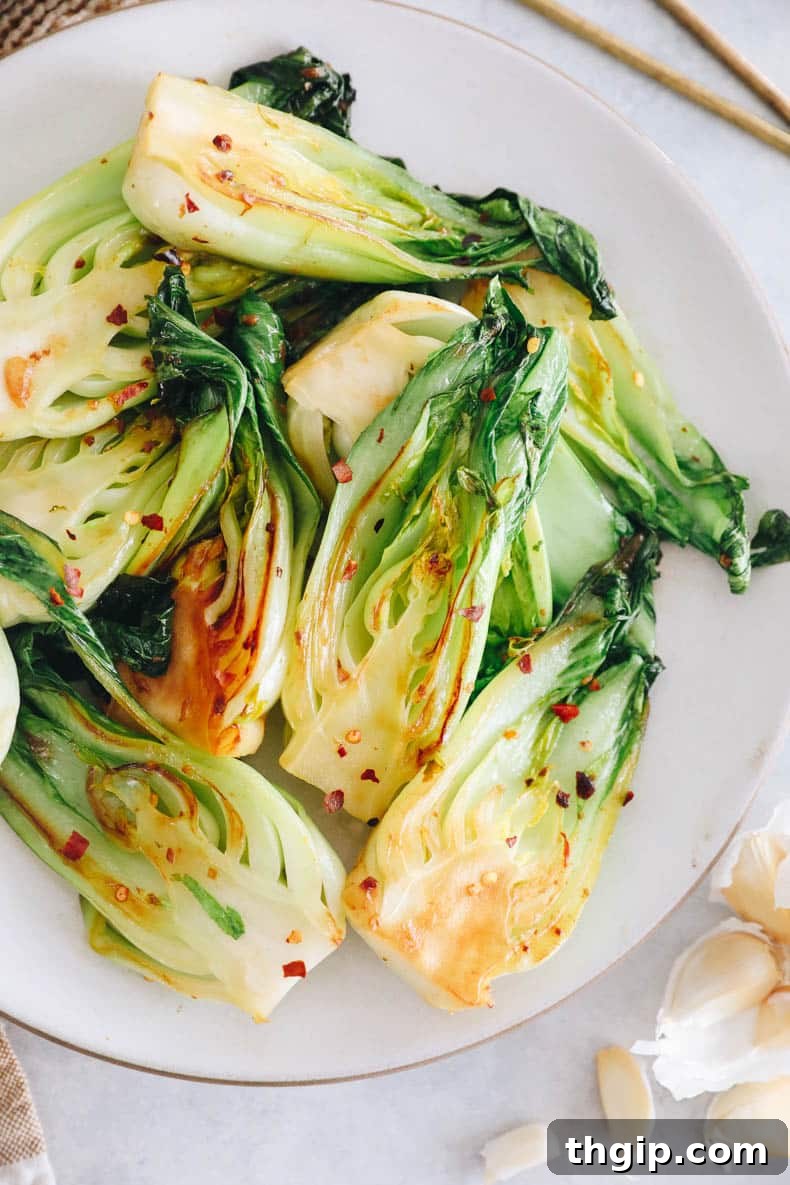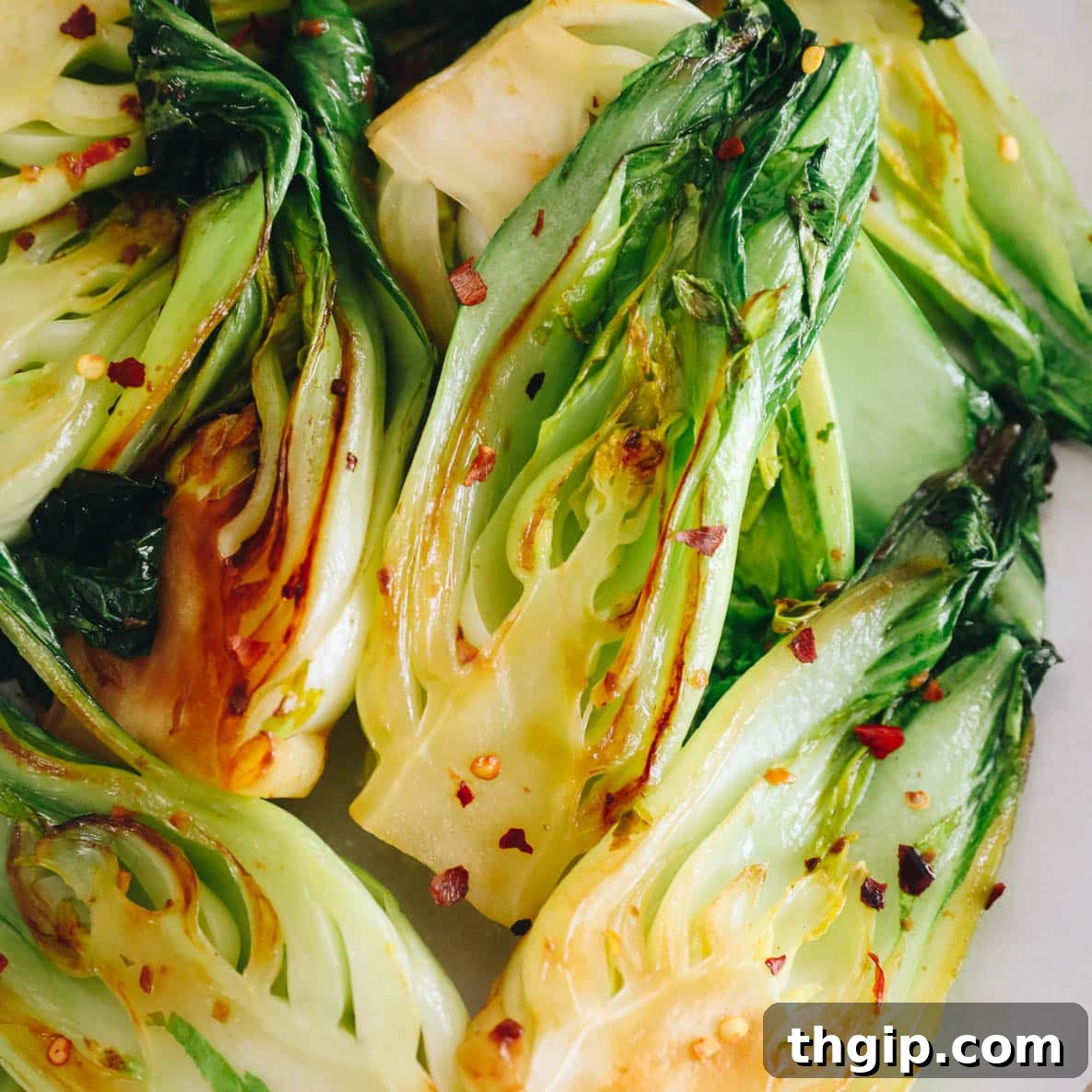
This incredible sautéed baby bok choy recipe offers a perfect blend of crisp texture and savory flavors, making it an effortlessly elegant side dish that comes together in under 10 minutes. Infused with aromatic garlic and balanced with a touch of soy sauce, this simple yet sophisticated recipe will quickly become a favorite in your kitchen. Whether you’re a seasoned cook or just starting, this guide will show you how to transform humble baby bok choy into a delicious culinary delight.
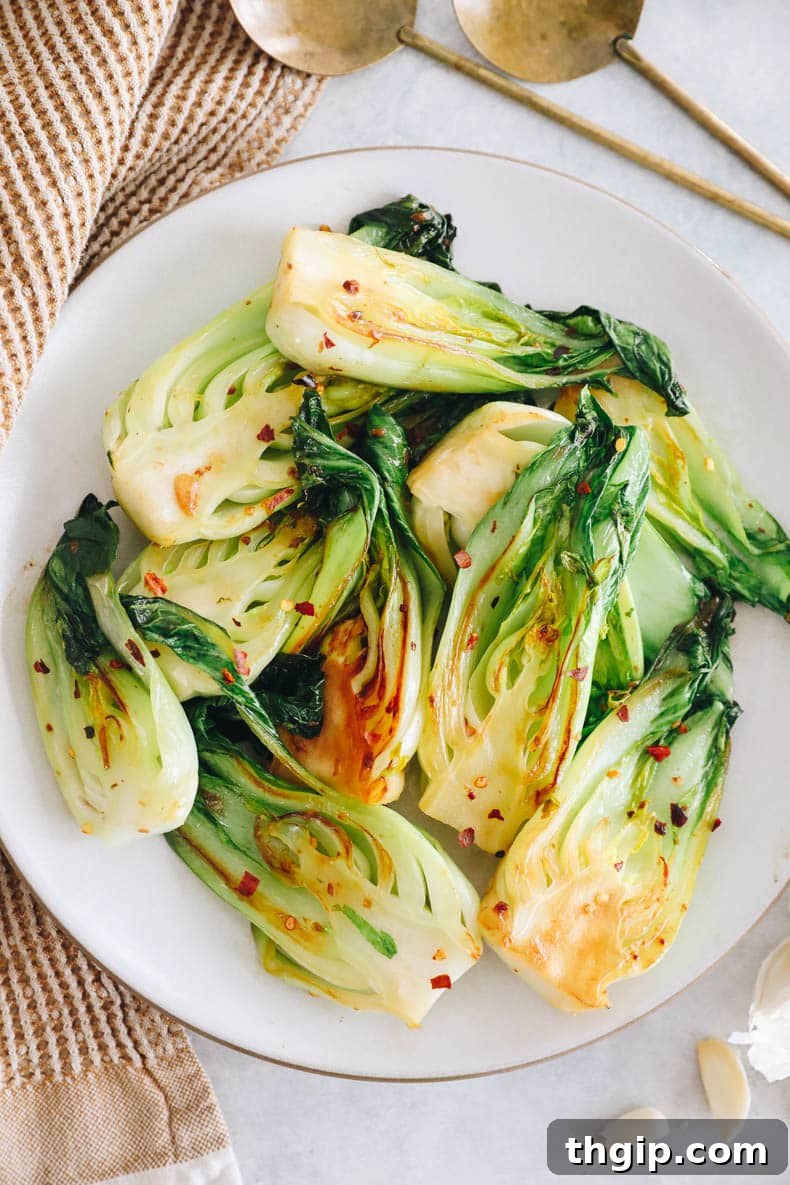
Baby bok choy is truly an unsung hero of the vegetable world. Its delicate crunch and mild, slightly sweet flavor make it incredibly versatile and a joy to eat. Unlike some vegetables that can be overpowering, baby bok choy readily absorbs the flavors of the ingredients it’s cooked with, making it a fantastic canvas for various culinary creations. From vibrant stir-fries to a standalone star like in this garlicky sautéed baby bok choy recipe, its potential is limitless. Many discover bok choy first in Asian cuisine, but its ease of preparation and health benefits are rapidly expanding its appeal to home cooks everywhere seeking quick, nutritious, and flavorful side dishes.
What sets this recipe apart is its remarkable simplicity and speed. You don’t need a lengthy ingredient list or complex techniques; just a handful of staple items, a large skillet or wok, and a mere 10 minutes from start to finish. If you often find yourself pondering what to serve alongside your main course, struggling to find a healthy yet quick option, look no further. This sautéed baby bok choy recipe is the answer – a guaranteed crowd-pleaser that adds vibrant color, satisfying texture, and deep flavor to any meal. It’s an ideal choice for busy weeknights, yet impressive enough for special occasions, proving that healthy eating doesn’t have to be time-consuming or complicated.
Understanding Bok Choy: A Nutritional Powerhouse
Bok Choy, scientifically known as Brassica rapa subsp. chinensis, is a fascinating member of the Chinese cabbage family, also commonly referred to as pak choy or pak choi. This leafy green vegetable has been a staple in Asian diets for centuries, celebrated for its unique flavor and impressive nutritional profile. It’s distinctive for its crisp white stalks and tender, dark green leaves, offering a delightful textural contrast in every bite. Bok choy is incredibly nutrient-dense, making it an excellent addition to any healthy eating plan. It boasts high levels of dietary fiber, crucial for digestive health, while remaining remarkably low in carbohydrates and calories. This makes it a popular choice for those mindful of their carb intake or looking for light, satisfying options.
Beyond fiber, bok choy is a powerhouse of essential vitamins and minerals. It’s an exceptional source of Vitamin C, vital for immune function and skin health, and Vitamin K, which plays a critical role in blood clotting and bone health. You’ll also find a significant amount of Vitamin A, in the form of beta-carotene, supporting vision and cellular growth. Furthermore, it’s rich in folate, a B vitamin important for cell division and DNA synthesis, and even contains a notable amount of calcium, contributing to strong bones and teeth. Interestingly, bok choy bridges two categories: it’s considered both a cruciferous vegetable (like broccoli and cauliflower, known for their potential cancer-fighting properties) and a leafy green vegetable (like spinach and kale, celebrated for their nutrient density), giving you the best of both worlds.
Baby Bok Choy vs. Regular Bok Choy: What’s the Difference?
While both regular (mature) bok choy and baby bok choy share the same botanical classification and fundamental nutritional benefits, their primary difference lies in their harvest time. Baby bok choy is, as its name suggests, harvested at an earlier stage of growth compared to its mature counterpart. This earlier harvest results in smaller, more compact heads with noticeably more tender leaves and stems. Many culinary enthusiasts also find that baby bok choy possesses a slightly sweeter and milder flavor profile, making it particularly appealing for quick cooking methods like sautéing or steaming, where its delicate texture can truly shine without requiring extensive cooking to soften. Regular bok choy has larger, tougher stalks and a slightly more robust flavor, often preferred for longer cooking times in stews or braises.
Essential Ingredients for Sautéed Baby Bok Choy
Crafting this quick and flavorful side dish requires just a few simple ingredients, each playing a crucial role in developing its signature taste and texture. Quality ingredients, even in a minimalist recipe, make all the difference. Here’s what you’ll need, along with some helpful tips and substitutions:
- Avocado Oil: This neutral-flavored oil is an excellent choice for sautéing due to its high smoke point, allowing it to withstand the medium-high heat required without breaking down or imparting unwanted flavors. Other suitable neutral oils include grapeseed oil, canola oil, or even a light vegetable oil. While olive oil is not strictly neutral, its fruity notes can still work beautifully in this recipe if that’s what you have on hand, adding a delicious Mediterranean twist.
- Garlic Cloves: Freshly minced garlic is non-negotiable for this recipe. Its pungent, aromatic qualities are central to the flavor profile, infusing the bok choy with a savory depth. Avoid pre-minced jarred garlic if possible, as it often lacks the vibrant flavor of fresh cloves. You can adjust the amount of garlic to your preference, adding more for a truly garlicky experience or less for a milder taste.
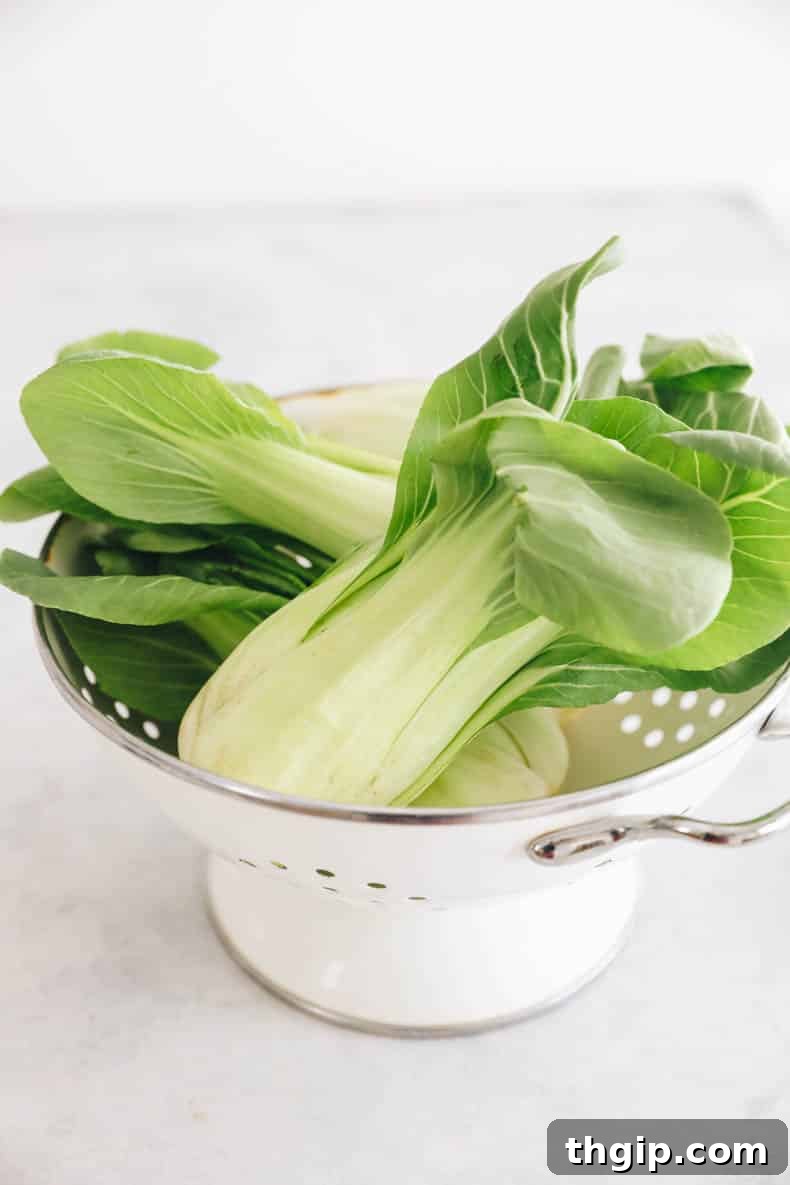
- Baby Bok Choy: The star of our dish! Look for heads that are firm, with vibrant green leaves and crisp white stalks, free from blemishes or wilting. Proper preparation is key: slice each head in half lengthwise, ensuring the root end holds the stalks together. Most importantly, thoroughly rinse the bok choy under cold running water, paying special attention to the areas between the stalks where dirt and sand can often accumulate. A quick soak in a bowl of cold water can also help dislodge any stubborn grit.
- Soy Sauce: This staple Asian condiment provides the essential umami, salty, and slightly sweet notes that elevate the bok choy’s natural flavor. For those following a gluten-free diet, tamari is an excellent substitute, offering a similar depth of flavor without the wheat. You can also opt for low-sodium soy sauce to better control the saltiness of the dish, adding more to taste if desired.
- Sesame Oil: Used as a finishing oil, a small drizzle of toasted sesame oil right before serving adds a wonderful nutty aroma and a delicate complexity to the dish. Its flavor is potent, so a little goes a long way. It’s best added at the end to preserve its fragrant qualities, as high heat can diminish its aroma.
- Red Pepper Flakes: These are entirely optional but highly recommended if you enjoy a touch of heat and a subtle kick. They beautifully complement the savory garlic and soy sauce. Adjust the quantity to suit your spice preference, or omit them entirely for a milder version. For a fresher heat, a tiny pinch of finely minced fresh red chili can also be used.
Step-by-Step Guide: How to Sauté Baby Bok Choy to Perfection
Achieving perfectly tender-crisp baby bok choy is incredibly straightforward with these simple steps. The key is high heat and quick cooking to maintain its vibrant color and satisfying texture.
STEP 1: PREPARE YOUR BOK CHOY
Before you even think about heating the pan, dedicate a few moments to properly prepare your baby bok choy. Begin by trimming off the very end of the root, leaving enough to keep the stalks intact. Then, carefully slice each head of baby bok choy lengthwise, right down the middle. This exposes the inner layers where dirt often hides. Thoroughly rinse each half under cold, running water, gently separating the leaves to ensure all grit and soil are washed away. You might even want to give them a quick soak in a bowl of water for a few minutes before rinsing again. Once clean, gently shake off excess water or pat them dry with a clean kitchen towel. Excess water can make your bok choy steam rather than sauté, preventing that desired golden-brown char.
STEP 2: BLOOM THE GARLIC
Place a large skillet or a wok over medium-high heat. Allow the pan to heat up for about a minute or two until it’s sufficiently hot. Add your avocado oil (or chosen neutral oil) to the hot pan. Swirl the oil to coat the bottom. Immediately add the freshly minced garlic cloves. Sauté the garlic for approximately 1 minute, stirring constantly. The goal here is to “bloom” the garlic, allowing its aromatic oils to release their fragrance into the hot oil without burning. Watch it closely; garlic burns quickly, and burnt garlic will impart a bitter taste to your dish. You’re looking for a fragrant, lightly golden garlic, not dark brown.
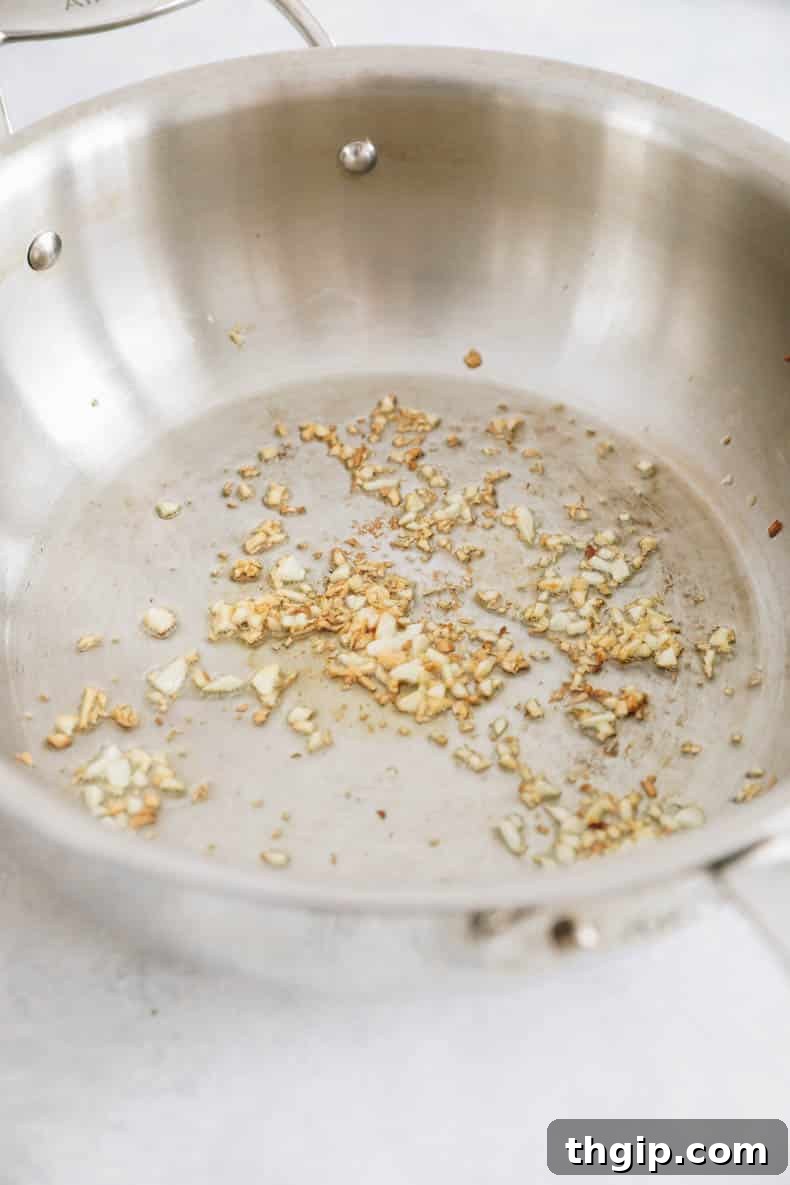
STEP 3: SAUTÉ THE BOK CHOY
Once the garlic is fragrant, add the halved baby bok choy directly into the pan. Pour the soy sauce evenly over the bok choy. Using tongs or a spatula, gently toss the bok choy to coat each piece thoroughly in the garlic-infused oil and soy sauce. Then, arrange the bok choy halves cut-side down in a single layer as much as possible in the pan. This allows the cut surfaces to make direct contact with the hot pan, promoting caramelization and a beautiful sear. Immediately cover the pan with a tight-fitting lid or a piece of aluminum foil. Cook for 1-2 minutes. The steam trapped under the lid will help tenderize the thicker stalks and wilt the dark green leaves. After this initial steaming, remove the lid. Continue to cook, uncovered, for another 2-3 minutes, or until the bok choy is lightly browned and fork-tender, yet still retains a delightful crunch. Avoid overcooking, as this can make the bok choy mushy. Gently stir occasionally, but allow the cut sides to crisp up on the hot surface.
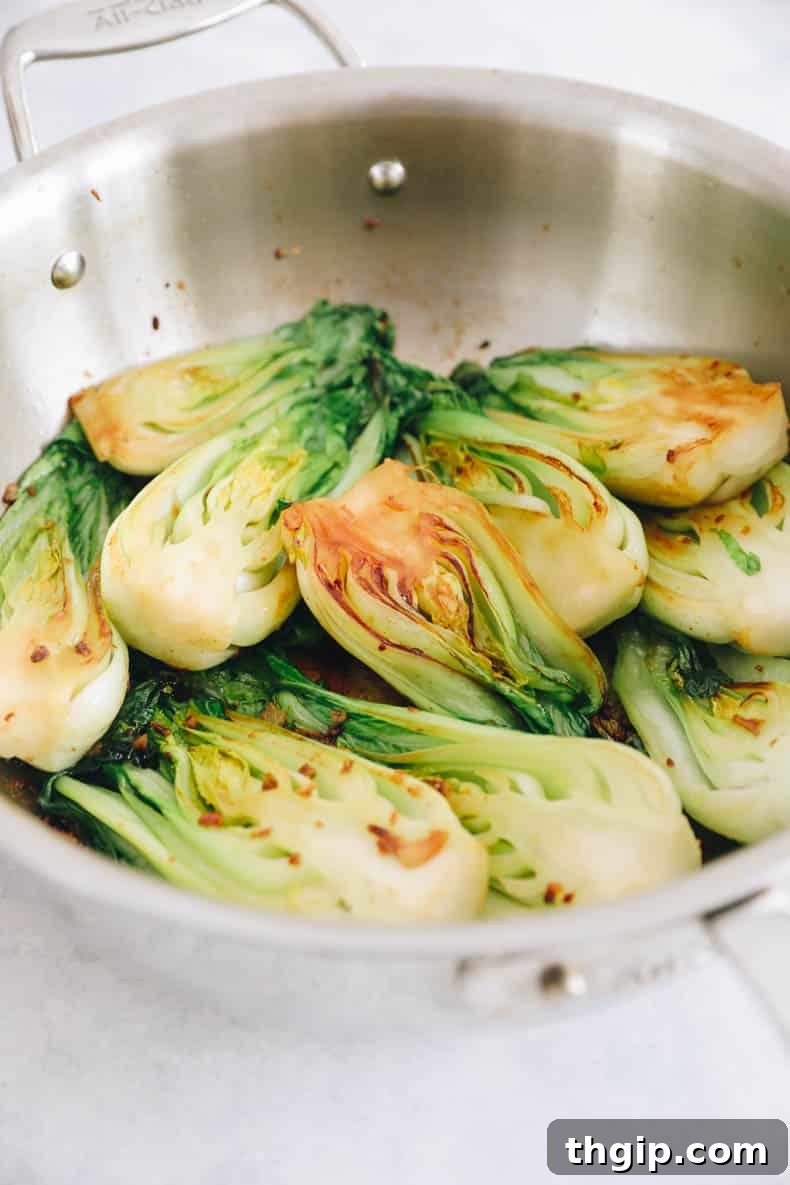
STEP 4: FINISH AND SERVE
Once the baby bok choy has reached your desired tenderness and has a beautiful golden-brown char, remove the pan from the heat. Drizzle generously with toasted sesame oil, allowing its fragrant notes to permeate the dish. If using, sprinkle a pinch of red chili flakes over the top for an added layer of subtle heat and visual appeal. Taste and adjust seasoning if necessary, adding a pinch of salt and freshly ground black pepper to taste. Serve your vibrant, aromatic sautéed baby bok choy immediately as a delightful side dish. The crispness and fresh flavors are best enjoyed right after cooking.
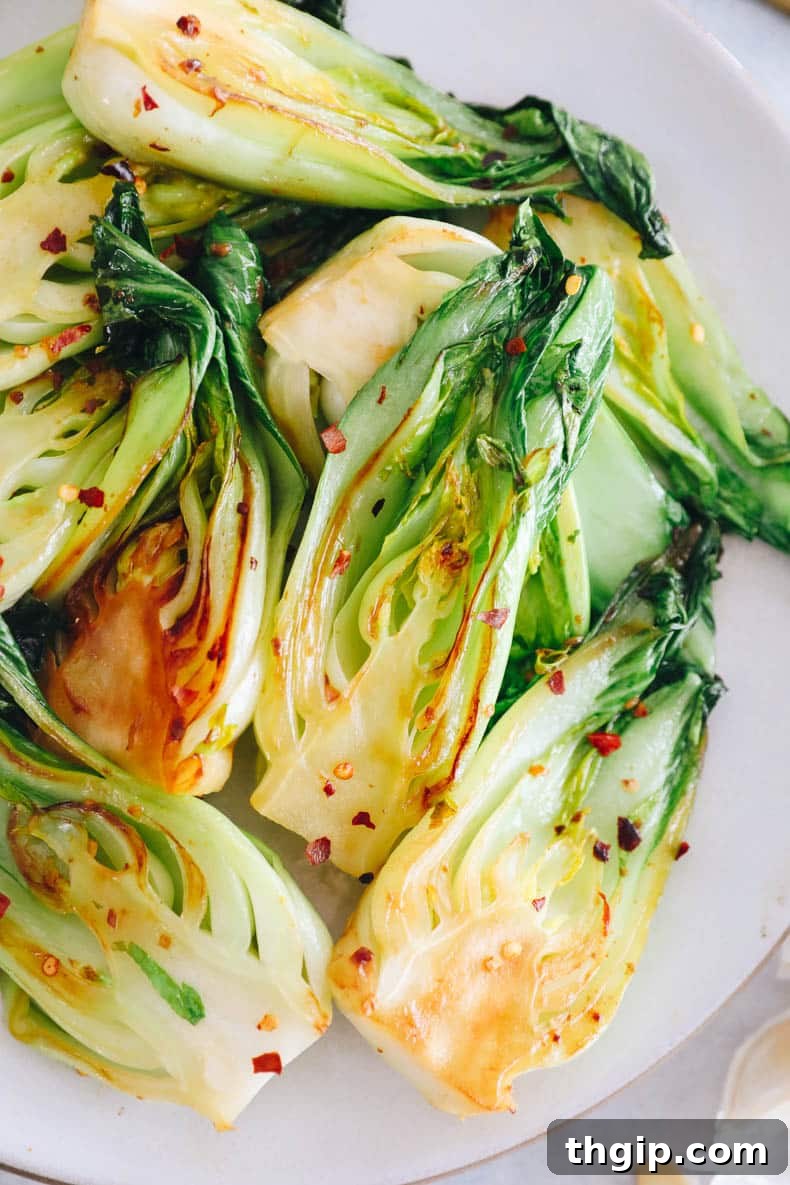
Expert Tips for the Best Sautéed Baby Bok Choy
While this recipe is incredibly simple, a few expert tips can elevate your sautéed baby bok choy from good to extraordinary:
- Don’t Overcrowd the Pan: For proper sautéing and browning, ensure there’s enough space for the bok choy to cook without steaming. If your pan is too small, cook in batches. Overcrowding lowers the pan temperature and prevents the desired caramelization, leading to soggy bok choy.
- High Heat is Key: Sautéing means cooking quickly over medium-high heat. This ensures the exterior gets a nice char while the interior remains tender-crisp. Adjust your heat as needed, but don’t be afraid of a hot pan.
- Thorough Cleaning is a Must: Bok choy is notorious for harboring dirt and sand within its layers. Always separate the leaves and rinse meticulously under running water. A quick soak in cold water can also help loosen stubborn grit.
- Pat Dry: After washing, lightly pat the bok choy dry. Excess water can steam the vegetables instead of sautéing them, making them less crisp.
- Adjust Seasoning to Taste: The amount of soy sauce and chili flakes can be adjusted based on your personal preference. Taste a piece of bok choy before serving and add more if needed. A squeeze of fresh lemon juice at the end can also brighten the flavors.
- Slice for Even Cooking: Halving or quartering larger baby bok choy heads ensures all parts cook evenly and become tender at the same rate. Keep the root end intact to hold the leaves together during cooking.
- Serve Immediately: Sautéed bok choy is best enjoyed fresh from the pan when it’s at its most tender-crisp. While leftovers are still good, the texture will soften upon sitting.
Variations and Customizations
This basic recipe is a fantastic starting point, but don’t hesitate to get creative and customize it to your liking:
- Add Ginger: For an extra layer of aromatic complexity, add 1 teaspoon of freshly grated or minced ginger along with the garlic in Step 2.
- Citrus Brightness: A squeeze of fresh lime juice or a splash of rice vinegar at the very end can add a bright, acidic counterpoint to the rich flavors.
- Toasted Sesame Seeds: A sprinkle of toasted sesame seeds before serving not only adds a lovely visual appeal but also provides a pleasant nutty crunch.
- Spice It Up: If you love heat, consider adding a pinch of freshly sliced bird’s eye chili alongside the red pepper flakes, or a dash of sriracha at the end.
- Umami Boost: A teaspoon of oyster sauce (not vegan) or mushroom sauce (vegan) can be added with the soy sauce for an even richer umami flavor.
- Nutty Crunch: Stir in some chopped cashews or peanuts during the last minute of cooking for an added layer of texture and flavor.
Leftovers + Storage
Should you have any delectable leftovers of this garlicky sautéed baby bok choy, they can be easily stored for enjoyment later. Transfer any cooled bok choy into an airtight container and refrigerate for up to 5 days. While the bok choy will lose some of its initial crispness upon cooling and reheating, it will still retain its wonderful flavor. To reheat, you can gently warm it in the microwave until heated through, or for a slightly better texture, reheat it in a skillet over medium heat for a few minutes, adding a tiny splash of water or broth to prevent it from drying out. Avoid overheating, which can make it mushy.
Perfect Pairings: What to Serve with Sautéed Baby Bok Choy
This versatile side dish complements a wide array of main courses, especially those with Asian-inspired flavors. Its crisp texture and savory notes provide a refreshing contrast and balance to richer dishes. Here are some fantastic options to pair with your sautéed baby bok choy:
- Easy Miso Salmon: The umami-rich miso glaze on salmon pairs beautifully with the light, garlicky bok choy, creating a well-rounded and healthy meal.
- Sesame Soba Noodles: Serve the bok choy alongside a bowl of nutty soba noodles tossed in a sesame dressing for a light yet satisfying vegetarian meal.
- Sticky Orange Chicken: The tangy, sweet, and savory notes of orange chicken find a perfect counterpoint in the fresh, slightly bitter bok choy, balancing the richness of the main dish.
- Thai Basil Stir Fry (with Tofu or Chicken): Incorporate the sautéed bok choy as a vibrant green component to any spicy or savory Thai basil stir-fry, adding texture and nutrients.
- Teriyaki Chicken: The classic sweet and savory teriyaki sauce is a natural fit with the garlic and soy flavors of the bok choy, making for a quick and delicious weeknight dinner.
- Chicken Satay with Peanut Sauce: The richness of peanut sauce and grilled chicken satay is beautifully cut by the fresh, crisp bok choy, offering a refreshing palate cleanser.
More Healthy Side Dish Recipes to Explore
If you’re looking to expand your repertoire of quick, healthy, and flavorful vegetable side dishes, here are a few more excellent options that are easy to prepare and pair well with a variety of meals:
- Lemon Ginger Asparagus: A bright and zesty dish that brings out the best in fresh asparagus, perfect for a light and refreshing accompaniment.
- Roasted Broccolini: Simple yet elegant, roasting broccolini caramelizes its natural sugars, resulting in a tender-crisp texture and nutty flavor.
- Roasted Brussel Sprouts w/ Balsamic: Transform often-maligned Brussels sprouts into a delightful dish with the sweet and tangy notes of balsamic glaze.
- Maple Roasted Carrots: Sweet and earthy, these carrots are coated in a maple-Dijon glaze and roasted to perfection, offering a comforting side.
- Orange Cashew Broccoli: A vibrant and crunchy dish that combines the freshness of broccoli with the citrusy zest of orange and the satisfying crunch of cashews.
- Wild Rice Stuffed Mushrooms: Hearty and flavorful, these stuffed portobello mushrooms make for an impressive side or a light main course.
Print Recipe
Garlic Baby Bok Choy
No reviews
This simple sautéed baby bok choy recipe pairs the crunchiness of bok choy with the flavors of garlic and soy sauce for an easy side dish that comes together in less than 10 minutes.
- Author: Davida Lederle
- Prep Time: 5 minutes
- Cook Time: 5 minutes
- Total Time: 10 minutes
- Yield: 4 servings
- Category: Side Dish
- Method: Sauté
- Cuisine: Asian
- Diet: Vegan
Ingredients
- 2 tbsp avocado oil (can also use olive oil or other neutral oil)
- 2 garlic cloves, minced
- 2 lbs baby bok choy (roughly 4–5 heads), halved and thoroughly rinsed
- 1 tbsp soy sauce (or tamari for gluten-free)
- 1 tsp sesame oil, for drizzling
- Optional: red chili flakes for heat
Instructions
- Heat a large pan or wok over medium-high heat.
- Add in avocado oil and minced garlic, then sauté for 1 minute until fragrant.
- Add in the halved baby bok choy and soy sauce. Toss to coat in the garlic and soy sauce mixture, then place cut-side down in the pan. Cover the pan with a lid or tinfoil. Cook for 1-2 minutes or until the dark green leaves have begun to wilt.
- Remove the lid and allow to cook for 2-3 more minutes, or until the bok choy is lightly browned and the desired tender-crisp consistency is reached. Try to avoid moving the bok choy too much during this stage to achieve a nice char on the cut sides.
- Drizzle with sesame oil and sprinkle with red chili flakes (if using). Add salt and pepper, to taste.
- Serve immediately to enjoy its best texture, or store in the fridge for up to 5 days.