
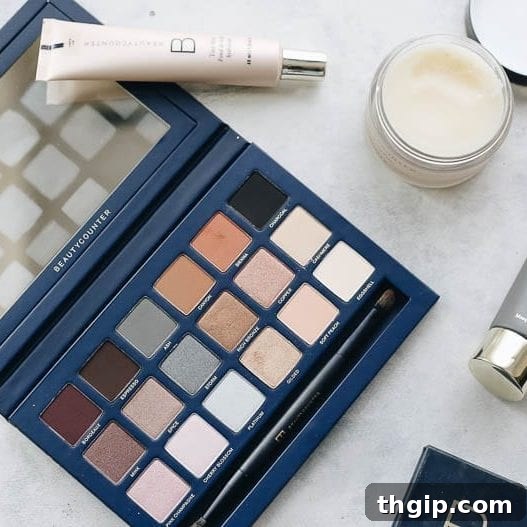
From the outset, I harbored a quiet suspicion that this review might unveil some profound, perhaps even scandalous, truths about Beautycounter. In the burgeoning world of “clean beauty,” where brand narratives often sparkle with promises of purity and ethical sourcing, my inherent skepticism led me to expect an exposé – a metaphorical lifting of the rug to reveal the unsavory secrets of a company so widely celebrated in wellness circles. However, as my intensive 30-day Beautycounter experiment concluded, I must admit a crucial spoiler: I unearthed no hidden horrors. Yet, at the same time, I haven’t fully joined the chorus of fervent advocates.
Perhaps it’s the weekly barrage of invitations from Beautycounter consultants, or simply my natural inclination to question everything, but my initial reaction was, “This sounds too good to be true.” And in certain aspects, it indeed carries nuances that warrant further scrutiny, which I will delve into shortly. Nevertheless, I firmly believe in the adage that you can’t truly judge something until you’ve experienced it firsthand. Thus, my month-long trial of Beautycounter products officially commenced, paving the way for this comprehensive and candid Beautycounter review.
Let me be unequivocally clear: this post is not a sales pitch in disguise. It is an earnest, unbiased assessment of Beautycounter’s product line, offered by someone with extensive experience navigating the diverse and often confusing landscape of natural beauty and skincare. Many reviews available online tend to originate from individuals new to the clean beauty movement. Understandably, they find immense relief and satisfaction in discovering products free from hormone-disrupting chemicals and other questionable ingredients, often leading them to transition into consultants themselves. I grasp the appeal and the passion that drives such transitions! But for someone like myself, whose cupboards are brimming with a carefully curated collection of green beauty essentials, the critical question becomes: how does Beautycounter genuinely stack up against the competition? This in-depth analysis aims to provide precisely that answer.
What is Beautycounter? Unpacking the Clean Beauty Mission
Before diving into my personal experience and evaluations, it’s essential to establish a foundational understanding of what Beautycounter represents. Founded in 2013 by Gregg Renfrew in Santa Monica, California, Beautycounter emerged with a clear and ambitious mission: to offer a safer, more natural alternative to conventional beauty and skincare products. What distinguishes Beautycounter from many other beauty companies is its expansive product range, encompassing everything from makeup and skincare to hair care. All these offerings are marketed under the overarching banner of “clean beauty.”
The impetus for Beautycounter’s creation, and indeed for the broader clean beauty movement, stems from a profound concern over the ingredients commonly found in mainstream beauty products. These formulations frequently contain substances that many consumers would undoubtedly be uncomfortable applying to their skin daily. Among the most notorious offenders are:
- Parabens: Widely used as preservatives, parabens can mimic estrogen in the body, potentially disrupting the endocrine system. This hormonal interference has raised concerns among scientists and consumers alike.
- Phthalates: These chemicals are often employed to make plastics more flexible and are found in many fragrances and nail polishes. Research suggests phthalates can adversely affect the reproductive system and may be linked to other health issues.
Beyond parabens and phthalates, a host of other problematic ingredients populate conventional beauty products, including talc, various butylated compounds, and petroleum-derived substances. These chemicals are typically included for practical purposes, such as emulsifying water and oil in creams or extending product shelf-life. However, a growing body of evidence suggests their potential harm often outweighs any perceived benefits. So, why are they so prevalent? The primary reasons are their low cost and, crucially, the alarmingly lax regulatory framework governing the beauty industry. In the United States, for instance, no significant federal legislation concerning personal care products has been passed since 1938. It’s noteworthy that Beautycounter, alongside other pioneering clean beauty brands, actively engages in advocacy efforts to reform these outdated regulations and push for greater ingredient transparency and safety standards.
It’s important to preface this discussion by acknowledging that much of the research linking these chemicals to health problems establishes correlation rather than direct causation. Attributing a specific illness solely to one ingredient can be complex. However, much like how consistently consuming unhealthy foods (e.g., a box of Oreos daily) is strongly associated with an increased risk of future health complications, repeated exposure to potentially harmful chemicals in personal care products is a valid concern for many. The precautionary principle often guides the clean beauty philosophy: if an ingredient is questionable, it’s better to avoid it.
Since the original publication of this review in 2017, Beautycounter has undergone significant changes. In 2021, founder Gregg Renfrew and her leadership team sold a majority stake in the company to Carlyle Group, a prominent Washington D.C.-based investment firm. This acquisition marked a new chapter for the brand, influencing its distribution strategies and market positioning.
Where to Buy Beautycounter? Navigating its Evolving Distribution Model
When I initially penned this article in 2017, Beautycounter operated almost exclusively through a Multilevel Marketing (MLM) model, meaning products were sold by independent consultants rather than through conventional retail channels or direct-to-consumer online sales. However, the distribution landscape for Beautycounter has evolved considerably. Today, you can find Beautycounter products at major retailers like Sephora, and they are also available for purchase directly through their official website, circumventing the need to go through a consultant. This shift, in many ways, is a positive development for consumers, offering broader accessibility.
However, it’s crucial not to overlook the brand’s history. Beautycounter leveraged its MLM structure to build brand awareness and establish a significant presence, essentially utilizing its consultants as a vast network of free marketers. The subsequent move to direct-to-consumer and retail sales, while beneficial for the company’s growth, can be seen by some as undermining the very consultants who helped build its foundation. This transition warrants a closer look at the nature of MLMs.
In an MLM model, companies distribute products through a network of independent consultants, often referred to as “sellers.” Each consultant typically has an upline mentor, and with every product sale (often tracked via unique referral links or cookies), the selling consultant earns a commission. Furthermore, their mentor, and potentially their mentor’s mentor, also earn a percentage, creating a multi-tiered commission structure. This contrasts sharply with traditional retail or even many dedicated clean beauty stores like Credo Beauty, which often specialize in a narrower range of products from various brands. Beautycounter, in its earlier iteration, branded all its products across numerous categories, with all purchases funneled through consultants. This structure often blurred the lines, making it difficult to discern whether the primary focus was on promoting genuinely clean beauty products or, perhaps more subtly, on recruiting more sales consultants to expand the network. My thoughts on MLMs are further elaborated below.
As mentioned, the landscape has changed. While Beautycounter still maintains its MLM model, allowing consultants to sell products, it has simultaneously expanded its reach. Consumers now have the flexibility to purchase Beautycounter items at Sephora and other physical retail locations, as well as directly from the company’s website.
Why Did I Decide To Try Beautycounter? A Quest for Unbiased Truth
My decision to delve into Beautycounter products ultimately stemmed from a potent blend of professional curiosity and a desire to provide an authentically unbiased review. The sheer volume of chatter surrounding the brand was undeniable. As I mentioned, back in 2017, I received at least one pitch a week from a consultant, a number that has astonishingly escalated to almost daily in 2023! While I appreciate the outreach, joining an MLM has never resonated with me. However, when many friends began embracing Beautycounter, my curiosity peaked. It suggested there was more to this phenomenon than met the eye, prompting me to investigate further.
My journey into the world of clean beauty began years ago, spurred by a long and frustrating battle with acne. Through extensive experimentation and research, I discovered the transformative power of safer, more natural alternatives. This personal quest evolved into a collective mission to share my favorite skincare and makeup products, all meticulously vetted to be free of harmful ingredients. Today, I proudly curate the Green Beauty Shop, showcasing products I genuinely adore, and my YouTube channel is dedicated to reviewing clean beauty offerings. It’s safe to say I possess a considerable degree of experience and expertise in this niche. My primary objective in trying Beautycounter was to rigorously test how it would perform against some of my established favorite clean beauty brands. In essence, I sought to provide a genuinely unbiased Beautycounter review from someone who is not a consultant, and critically, someone who possesses a deep understanding of the clean beauty landscape.
My Full Beautycounter Review: Deep Dive into Products and Experience
While this blog post will cover my overarching thoughts, a truly exhaustive, product-by-product breakdown of Beautycounter’s extensive line is best captured in my accompanying video review. There, I hold nothing back, offering my 100% honest truth on everything from their lipsticks and toners to skin tints, dew skin, and vitamin C serums. For the most granular details, I encourage you to watch the video.
Beyond the efficacy and performance of individual products, I did find myself appreciating the overall packaging and delivery experience. While I don’t necessarily require extravagant packaging – in fact, I actively dislike excessive and wasteful materials – I do expect products to arrive intact and well-organized. I’ve unfortunately encountered instances with other companies where items arrived damaged or even exploded. For a premium beauty brand, a delivery experience that elevates beyond standard Amazon Prime expectations is certainly a welcome touch. It demonstrates attention to detail that contributes to the overall brand perception, and in this regard, Beautycounter largely succeeded.
Now, let’s delve into the crucial pros and cons that emerged from my 30-day Beautycounter trial, encapsulating my initial thoughts and findings.
Is Beautycounter Worth It? A Balanced Perspective
The Pros of Beautycounter: Surprising Discoveries
I confess, my initial inclination was to approach this section with a critical eye, not expecting to uncover many significant advantages. However, I was genuinely surprised by several positive aspects of the Beautycounter experience:
1) Excellent Entry Point for Green Beauty Newcomers: For individuals new to the world of green beauty and non-toxic skincare, Beautycounter serves as an exceptional starting point. While I, as someone well-versed in this space and an enthusiastic experimenter, don’t prioritize a single-brand solution, for a novice, the convenience of sourcing all beauty, skincare, and hair care products from one reputable company is a considerable benefit. It simplifies the often overwhelming process of transitioning to cleaner alternatives, providing a sense of trust and guidance in an otherwise complex market.
2) Extensive Product Selection: Beautycounter boasts an impressively vast and comprehensive product catalog. This means you can essentially fulfill all your personal care needs with just a few clicks, with products conveniently delivered to your door. From foundational skincare to diverse makeup options and haircare solutions, they offer a ‘one-stop-shop’ experience. This breadth of offerings is a significant advantage for consumers who prefer efficiency and don’t enjoy the exhaustive research typically required to build a clean beauty routine from multiple brands.
3) Generally Good Product Quality: It’s important to clarify that I didn’t fall in love with every single product I tried. However, a significant portion of their line proved to be quite enjoyable and effective. Overall, I would confidently rate their products as decent to good quality. While the price point often leans towards the higher end, the performance and sensory experience of many items justify the investment, especially when compared to conventional mainstream brands laden with questionable ingredients. They deliver on the promise of effective, safer formulations.
4) Genuine Commitment to Cleaner Products and Advocacy: Beyond merely formulating and selling more natural products, Beautycounter demonstrates a profound commitment to driving systemic change within the beauty industry. They actively engage in lobbying efforts in Washington D.C., advocating for stricter regulations and the banning of harmful ingredients from conventional skincare and beauty products. This legislative push is a critical differentiator, showcasing that their mission extends beyond profit generation to genuine consumer protection and public health improvement. This advocacy work is a powerful testament to their foundational values, and it’s something I wholeheartedly admire and support.
The Cons of Beautycounter: Areas for Consideration
While Beautycounter certainly has its merits, several aspects gave me pause and warrant critical examination:
1) Not the Most “Natural” (Employs Synthetics): This is a point of contention even among Beautycounter consultants – some address it transparently, while others gloss over it. While Beautycounter undeniably adheres to “cleaner” standards than conventional brands, it is not entirely chemical-free. Their formulations do incorporate several synthetics, albeit those rigorously screened and deemed to have minimal to no impact on the body, aligning with their extensive “Never List” of excluded ingredients. My primary concern, however, lies in the length of their ingredient lists. Often, I’ve found comparable products from other clean beauty brands with significantly shorter, more minimalist ingredient decks. Beautycounter’s more extensive lists, which often include more synthetics, are likely a strategic choice to enhance product stability and extend shelf-life. While I understand the commercial rationale, my personal preference leans towards products that prioritize fewer, less synthetic ingredients, even if it means a slightly shorter shelf-life. This isn’t a definitive flaw, but a significant personal preference worth highlighting in this comprehensive Beautycounter review.
2) Concerns with the Multilevel Marketing (MLM) Model: My apprehension regarding the MLM structure is a deeply held conviction. Consultants, while passionate, are often presented to consumers as “experts” in skincare and beauty. The reality, however, is that many are simply individuals, much like myself, who lack formal credentials or extensive scientific training in dermatology or cosmetic chemistry. Genuine skincare experts typically invest years in academic study and practical experience to truly understand skin physiology and product formulation. The proliferation of advice from individuals without these qualifications, even with the best intentions, can be problematic. Furthermore, the inherent design of most MLM structures often presents significant challenges for consultants to achieve substantial, sustainable success. Despite the narrative of “investing” in their own businesses, the financial reality for many participants is often bleak, with a disproportionate amount of the revenue ultimately benefiting the parent company and the top tiers of the network. This raises ethical questions about the true beneficiary of the model.
3) Variable Product Performance Compared to Alternatives: Based on my rigorous testing, I found that only approximately one-quarter to one-third of Beautycounter’s products genuinely compared favorably or surpassed other alternatives currently available on the market. There are numerous companies specializing in specific categories (e.g., a brand focusing solely on exceptional serums or another on natural makeup) that, through their concentrated expertise, produce superior products, often at a more accessible price point. Perhaps Beautycounter’s ambition to offer a complete line across all beauty categories dilutes its ability to excel in every single product. My worry is that if someone’s first foray into green beauty is with a Beautycounter product that doesn’t meet their expectations, they might prematurely dismiss the entire clean beauty movement. It’s crucial for consumers to understand that the clean beauty market is diverse, and an unsatisfactory experience with one brand doesn’t reflect on the quality of the entire industry.
Why I Became a Consultant {Spoiler: It Didn’t Last Long!}
Following my 30-day product trial and the completion of this Beautycounter review, I made the decision, albeit a short-lived one, to become a consultant. This choice was driven by two distinct motivations:
1) To Understand the Consultant Experience: My primary objective was pure curiosity. I wanted to gain firsthand insight into the mechanics of becoming and operating as a Beautycounter consultant. The process essentially required finding an existing consultant to act as a mentor (mine was Lexi) and paying an $85 sign-up fee. Upon joining, I received a substantial stack of physical papers and books, ostensibly for training. The truth is, I never genuinely engaged with these materials. As a digitally-inclined individual, I prefer online learning, and the sheer volume of printed matter felt overwhelming. This experience led me to ponder: how many other consultants feel similarly overwhelmed? While online training modules are available, the question remains how many actually complete them, leading back to my earlier reservations about the “expert” status within MLMs. This is a significant generalization, but it fueled my doubts about the efficacy and thoroughness of the consultant training process.
2) Support for the Mission and Select Products: Despite my reservations about the MLM model, I genuinely support Beautycounter’s overarching mission to promote safer beauty and advocate for stronger regulations. Furthermore, there were indeed a few standout products that impressed me immensely and which I would unequivocally repurchase. When I discover a product I truly love, I make it a point to recommend it to my audience, believing in its value. As someone who earns a living through content creation and recommendations, receiving a small commission for endorsing worthwhile products is naturally a benefit. The fact that Beautycounter isn’t solely focused on sales but also on legislative change resonated deeply with my personal values, and that commitment was something I wanted to get behind.
In the end, these were the three specific products that truly won me over: the Nude Eyeshadow Palette, the nourishing Cleansing Balm, and the revitalizing Balancing Face Mask.
NOTE: Approximately six months after the initial publication of this article in 2017, I made the definitive decision to discontinue my role as a Beautycounter consultant. My decision was primarily driven by the fact that I was not genuinely enthusiastic about the majority of their product line. Consequently, I wasn’t actively or intentionally promoting and selling them. To maintain active consultant status with Beautycounter, individuals are required to meet a specific sales quota within a six-month period, or alternatively, pay a fee to be reinstated. This mandatory sales pressure, coupled with my lack of widespread product affection, simply did not align with my values or my commitment to authentic recommendations. Therefore, I chose to exit the program.
* * * * *
And there you have it – my transparent and in-depth Beautycounter review. I genuinely hope this post has provided valuable insights and served as an educational resource in your clean beauty journey. Don’t forget to complement this reading with my video review, where I delve into my experiences with each specific product I tested. I am always here to answer any questions you may have, so please feel free to reach out. As I consistently strive for 100% transparency in this space, I cherish the role of being a ‘guinea pig’ and offering my unfiltered feedback. However, it’s crucial to remember that this represents my personal opinion and experience. I am, as always, eager to hear your thoughts and perspectives on Beautycounter or clean beauty in general!
Enjoyed this post? You might find these other articles equally insightful:
5 Natural Skincare Alternatives to Beautycounter
The Best Skincare Products from Whole Foods
Natural Deodorants that Actually Work