
Are you considering a significant shift towards a healthier, more sustainable home environment? Making the move to natural cleaning products is a powerful step in that direction. This comprehensive guide will equip you with everything you need to know, from identifying harmful chemicals to discovering highly effective non-toxic alternatives and even simple DIY solutions. Get ready to transform your cleaning routine into one that prioritizes both your well-being and the planet.
For years, I’ve cultivated a deep appreciation for a clean and orderly home – a habit undoubtedly inherited from my incredibly meticulous mother, whose prowess with baking soda is legendary! While I understand that a “spotless” home is an elusive ideal in the chaos of daily life, I genuinely find immense peace and happiness in a tidy living space. It’s a priority I consistently maintain. Just as I’m passionate about natural beauty, my commitment extends to using natural cleaning products throughout my home. This article delves into the crucial reasons behind this choice, offers practical insights into my cleaning regimen, and highlights the best natural cleaning products available on the market today.
Why Choose Natural Cleaning Products for a Healthier Home?
The decision to switch to natural cleaning products is far more than just a trend; it’s a critical choice for your health and the environment. Many conventional cleaning solutions, despite their widespread use, harbor a cocktail of harsh chemicals that can silently undermine your well-being and leave a lasting negative impact on our ecosystems.
To truly understand the implications, I encourage you to visit the Environmental Working Group (EWG) website. This invaluable resource allows you to search for your current cleaning products and view their hazard rating, from A (low concern) to F (high concern). The EWG’s comprehensive analysis considers the effects of these chemicals on our respiratory system, their potential for skin irritation, developmental and reproductive toxicity, cancer concerns, and overall environmental impact. The results for many popular household cleaners can be quite alarming, often revealing a surprisingly high level of toxicity.
Beyond personal health, the environmental repercussions of conventional cleaning products are significant. According to the EPA, flushing toxic chemicals down our drains contributes to widespread pollution of waterways, harming aquatic life and entire ecosystems. Furthermore, many traditional cleaners are formulated with ingredients that are not only toxic and hazardous but also non-biodegradable and derived from non-renewable resources like petroleum. Making the switch to non-toxic, biodegradable, and plant-based alternatives significantly reduces your ecological footprint and supports a healthier planet for everyone.
Harmful Chemicals to Avoid in Your Cleaning Products
Navigating the labels of cleaning products can be daunting, but knowing which specific ingredients to avoid is key to making safer choices. Here are some of the most common and problematic chemicals frequently found in conventional cleaners:
1. Phthalates: These pervasive chemicals are often found in products containing “fragrance,” such as air fresheners, dish soap, and even scented paper products. Due to proprietary laws, companies are not required to disclose the specific ingredients within their “fragrance” mixtures, meaning phthalates are rarely listed explicitly on labels. Always be wary of the term “fragrance” or “parfum” if you’re aiming to avoid phthalates, as they are endocrine disruptors linked to reproductive and developmental issues.
2. Perchloroethylene (PERC): A potent neurotoxin, PERC is commonly used in dry-cleaning solutions, spot removers, and carpet and upholstery cleaners. Exposure can lead to dizziness, headaches, and in severe cases, damage to the kidneys and liver. It’s also classified as a probable human carcinogen.
3. 2-Butoxyethanol: This solvent is frequently present in window, kitchen, and multipurpose cleaners. It’s a known respiratory irritant and can be absorbed through the skin, potentially leading to kidney and liver damage with prolonged or high-level exposure.
4. Triclosan: Primarily found in liquid dishwashing detergents and hand soaps marketed as “antibacterial,” triclosan has been banned by the FDA for use in most over-the-counter antibacterial soaps due to concerns about antibiotic resistance and its role as an endocrine disruptor. It also poses significant harm to aquatic environments.
5. Quaternary Ammonium Compounds (QUATS): Common in fabric softener liquids and sheets, as well as many household cleaners labeled “antibacterial,” QUATS are linked to asthma, skin irritation, and may contribute to antibiotic resistance. Their germ-killing properties can also disrupt the beneficial bacteria in your home.
6. Ammonia: Frequently used in polishing agents for bathroom fixtures, sinks, and jewelry, as well as glass cleaners, ammonia is a strong irritant to the respiratory system, eyes, and skin. Mixing ammonia with bleach or other cleaning agents can produce highly toxic gases.
7. Chlorine: A staple in toilet bowl cleaners, mildew removers, and laundry whiteners, chlorine (often in the form of sodium hypochlorite) is a powerful disinfectant but also a potent respiratory irritant. It can cause severe skin and eye irritation, and its fumes can be dangerous, especially when mixed with other chemicals.
Dispelling Myths: Do Natural Products Truly Deliver a Deep Clean?
Absolutely, unequivocally YES! It’s a common misconception that effective cleaning necessitates the use of the harshest-smelling, most intense chemical formulations. The truth is, non-toxic and natural cleaning counterparts are just as, if not more, effective than their chemical-laden predecessors. Modern natural cleaning science has advanced significantly, leveraging the power of plant-derived ingredients, beneficial microbes, and natural minerals to tackle dirt, grime, and germs without compromising health.
In fact, some traditional cleaning products can leave behind a sticky residue that, over time, can actually attract and trap more dust, dirt, and grime, making surfaces appear duller and harder to clean. Many conventional “anti-bacterial” cleaners also indiscriminately wipe out all bacteria – both harmful and beneficial – disrupting the natural microbiome of your home. A healthy indoor environment requires a balanced microbial ecosystem, and constant exposure to harsh disinfectants like bleach can weaken our immune systems and contribute to the rise of antibiotic-resistant bacteria. Natural cleaners, on the other hand, often work by lifting dirt, breaking down oils, and utilizing plant-based antimicrobials without sterilizing your entire living space, promoting a healthier balance.
Making a Seamless Transition to Green Cleaning
The thought of overhauling your entire cleaning cabinet might feel overwhelming, especially after learning about the potential dangers of conventional products. However, much like transitioning to green beauty, my advice for switching to natural cleaning is to do it gradually. There’s no need to toss everything out at once. Instead, as you run out of a particular cleaning product, simply replace it with a non-toxic, eco-friendly option. This approach makes the transition manageable, cost-effective, and sustainable.
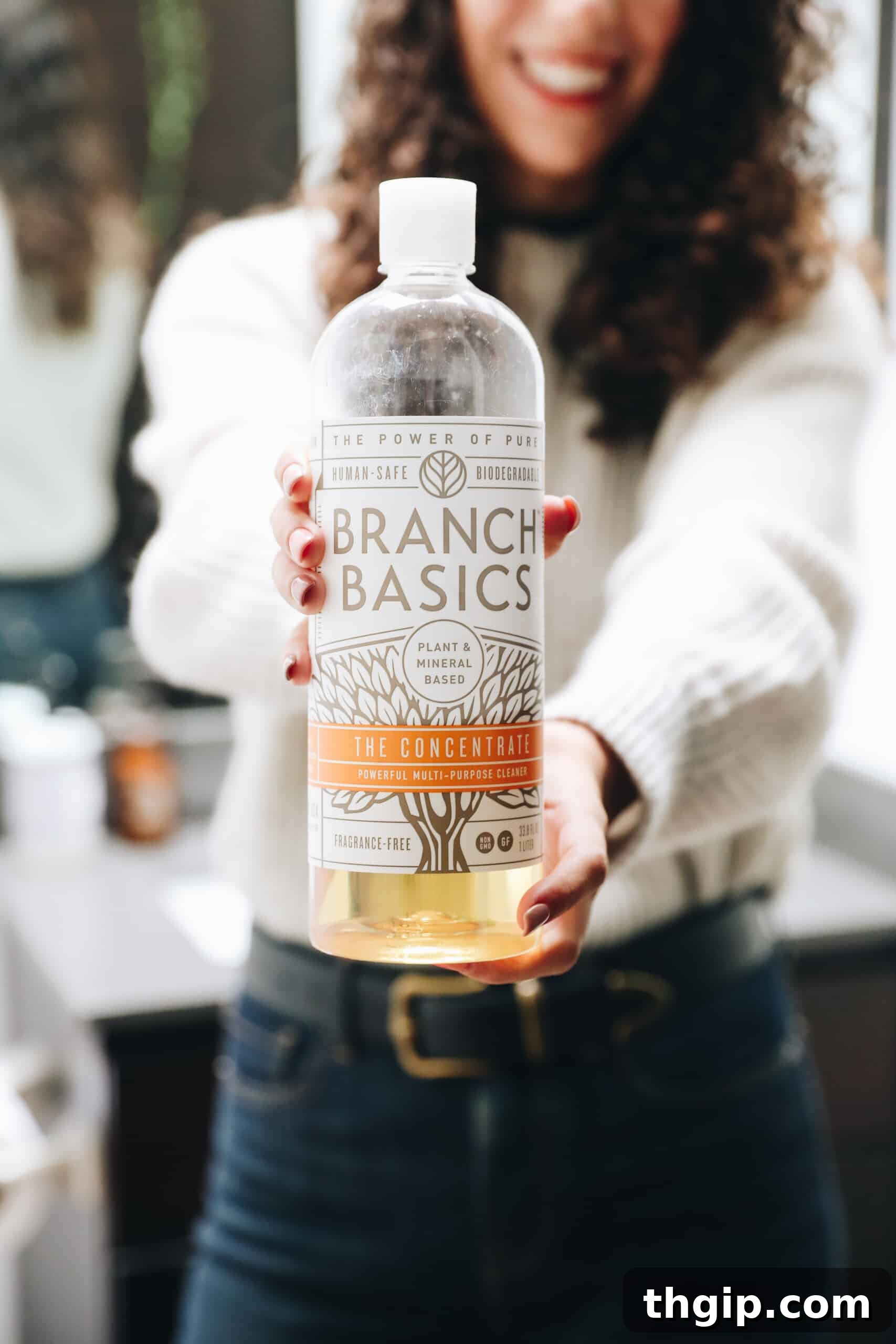
One of the most effective solutions I’ve discovered for streamlining the switch to green cleaning is Branch Basics. I received their cleaning kit years ago, initially skeptical that a single concentrate could be truly effective across multiple applications. After finally diving in and giving their products a thorough try, I’ve become 100% impressed. What makes Branch Basics particularly exceptional is their ingenious concentrate system. You purchase a starter kit with reusable bottles for various purposes (all-purpose, bathroom, streak-free, hand soap) and then simply refill them with the appropriate ratio of their cleaning concentrate and water. This not only reduces plastic waste significantly but also saves money in the long run.
FYI: While this post is not directly sponsored by Branch Basics, I’ve since become an affiliate due to my genuine admiration for their products. As you’ll see below, I also incorporate many other natural brands into my routine. However, Branch Basics remains my top recommendation for anyone seeking an excellent, comprehensive starter kit to embark on their natural cleaning journey.
Your Essential Non-Toxic Cleaning Arsenal
Ready to transform your cleaning routine? Here’s a detailed breakdown of the natural cleaning products I personally use and highly recommend. This curated list combines versatile systems like Branch Basics with other specific, highly effective natural solutions to cover all your household needs.
Branch Basics: The Versatile Core of My Cleaning Routine
Branch Basics stands out as a true game-changer in the world of non-toxic cleaning. Their innovative system allows one powerful concentrate to replace a multitude of specialized cleaners, drastically simplifying your routine and reducing waste. The Branch Basics starter kit, priced at $69, is an incredible value. It includes their all-purpose cleaning spray, bathroom spray, streak-free spray, hand soap bottles, and a bottle of their highly concentrated cleaner. The process is simple: you fill each reusable bottle to a designated line with water, then top it off with the concentrate according to the specific instructions for each purpose. This means when a bottle is empty, you simply refill it with water and concentrate, eliminating the need to constantly buy new plastic bottles.
Here are the Branch Basics products I rely on:
- All-Purpose Cleaning Spray: Perfect for everyday spills, countertops, and general surface cleaning.
- All-Purpose Bathroom Cleaner Spray: Specifically formulated for tackling soap scum and grime in showers, tubs, and tiles.
- Streak-Free Window + Mirror Cleaner: Delivers sparkling, streak-free results on glass surfaces without harsh chemicals.
- Hand Soap: Gentle yet effective, leaving hands clean without dryness or irritating fragrances.
- Laundry Detergent: I was initially hesitant, but since incorporating their Oxygen Boost, I’ve been incredibly impressed with how effectively it cleans our clothes. While the liquid consistency might take a moment to get used to, I can confidently say, after rigorous testing on even the dirtiest dishtowels, that this formula removes stains and leaves laundry fresh and clean.
EXPLORE THE BRANCH BASICS STARTER KIT HERE
Other Tried-and-True Natural Cleaning Favorites
While Branch Basics covers many bases, a few other products fill specific needs in my non-toxic cleaning regimen. Please note that “natural” is a spectrum, and while I strive for the cleanest options, some products represent the best effective balance currently available. Where possible, we opt for large refill bottles to minimize plastic waste and reuse our original containers.
- Laundry Care: In addition to Branch Basics Laundry Detergent and Oxygen Boost for powerful stain removal, I exclusively use wool dryer balls. These are a fantastic, natural alternative to chemical-laden fabric softeners and dryer sheets, reducing static and drying time while leaving clothes soft.
- Dishwasher Detergent: For sparkling dishes without harsh chemicals, I rely on Ecover Zero Dishwashing Tablets. They are fragrance-free and effectively cut through grease and dried-on food.
- Dish Soap: Seventh Generation Free & Clear Fragrance-Free Dish Soap is my go-to for handwashing. It’s gentle on hands, tough on grime, and free from dyes and synthetic fragrances.
- Toilet Bowl Cleaner: Seventh Generation Toilet Bowl Cleaner offers an effective way to keep the toilet clean and fresh without the use of harsh bleaches or fumes.
- Floor Cleaner: For a truly clean floor, I use Aunt Fannie’s Floor Cleaner Wash. This probiotic-powered cleaner effectively cleans and deodorizes. I pair it with a reusable floor wipe, which we cleverly adapted for our old Swiffer mop by adding Velcro to the top and sides for a sustainable and effective mopping system on both floors and tiles.
- Carpet Cleaner/Stain Remover: For those inevitable spills and stains, Miss Mouth’s Messy Eater Stain Treater Spray is an absolute miracle worker. This product truly lives up to its name and effectively lifts even the toughest food stains from carpets and upholstery.
Embracing DIY: Simple & Effective Homemade Cleaners
For those on a budget or simply looking to minimize their environmental footprint even further, crafting your own DIY cleaning products is a fantastic option. A homemade all-purpose cleaner is surprisingly easy to make and incredibly effective. While I personally avoid it due to a strong aversion to the smell of vinegar (my nose is just too sensitive, even with essential oils!), it remains a popular and powerful choice for many. By refilling your own spray bottles, you significantly reduce overall waste.
The foundation of a great DIY all-purpose cleaner is white vinegar, known for its mild acidity that helps cut through grease, dissolve mineral deposits, and act as a natural disinfectant. It’s crucial to dilute vinegar with water to prevent damage to certain surfaces and to reduce the intensity of its scent. A common and effective ratio is 1 part white vinegar to 4 parts water.
To enhance cleaning power and add a pleasant aroma, essential oils are your best friend. Lemon essential oil is excellent for degreasing and brightening, peppermint offers invigorating freshness and antimicrobial properties, while lavender provides calming aromatherapy and antibacterial benefits. Tea tree oil is a powerful natural antiseptic, ideal for boosting your cleaner’s germ-fighting capabilities.
Here’s a simple recipe for a DIY All-Purpose Cleaner:
- 1/2 cup of white vinegar*
- 2 cups of water
- 5-7 drops of lemon essential oil (for degreasing and fresh scent)
- 3-5 drops of peppermint essential oil (for invigorating aroma and antimicrobial action)
- 3-5 drops of lavender essential oil (for calming scent and antibacterial properties)
- 1-2 drops of tea tree oil (for enhanced antiseptic power)
Combine all ingredients in a glass spray bottle (glass is preferred for essential oils as they can degrade plastic over time) and shake gently to mix. Spray onto counters, sinks, and other non-porous surfaces, then wipe clean with a microfiber cloth or dish towel. Always perform a patch test on an inconspicuous area before widespread use.
*Note: If you are particularly sensitive to the pungent smell of vinegar, a wonderful trick is to infuse it beforehand. Simply add citrus peels (lemon, orange, grapefruit) and/or fresh herbs like rosemary or mint to a jar of white vinegar and let it sit for one to two weeks. Strain out the solids, and use this infused vinegar in place of plain white vinegar in your recipe. The infusion significantly masks the strong vinegar odor while retaining its cleaning power.
Cultivating Sustainable Cleaning Habits for a Greener Home
Beyond the products you choose, adopting sustainable cleaning habits further amplifies your positive impact. Simple shifts can make a big difference:
- Embrace Reusables: Ditch disposable paper towels in favor of washable microfiber cloths or old cotton t-shirts. They are highly effective, save money, and drastically reduce waste.
- Ventilate Your Home: Always open windows when cleaning, even with natural products, to ensure good air circulation and flush out any airborne particles.
- Maximize Concentrates & Refills: Prioritize purchasing concentrated cleaning solutions and products that offer refill options. This minimizes packaging waste and often proves more economical.
- Regular Maintenance: Consistent, light cleaning prevents major buildups that might require more intensive products. A little effort each day keeps your home fresh and reduces the need for harsh interventions.
Begin Your Journey to a Healthier, Greener Home
Transitioning to natural cleaning products is a journey, not a race. Each step you take, whether it’s swapping one product or embracing a full DIY approach, contributes to a healthier environment for you, your family, and the planet. By making informed choices, avoiding harmful chemicals, and utilizing effective natural solutions, you can enjoy a beautifully clean home without compromise. Embrace this powerful shift and feel the tangible difference it makes in your daily life. What are your favorite natural cleaning tips or products? Share them in the comments below!
Like this post? Here are some others you might enjoy:
- Clean Beauty Daily Essentials
- How to Deep Clean Your Kitchen
- What is Greenwashing + Why You Need to Know About It
- What is Sugaring Hair Removal? [Natural Hair Removal Method]
- The Best Natural Deodorants on the Market