
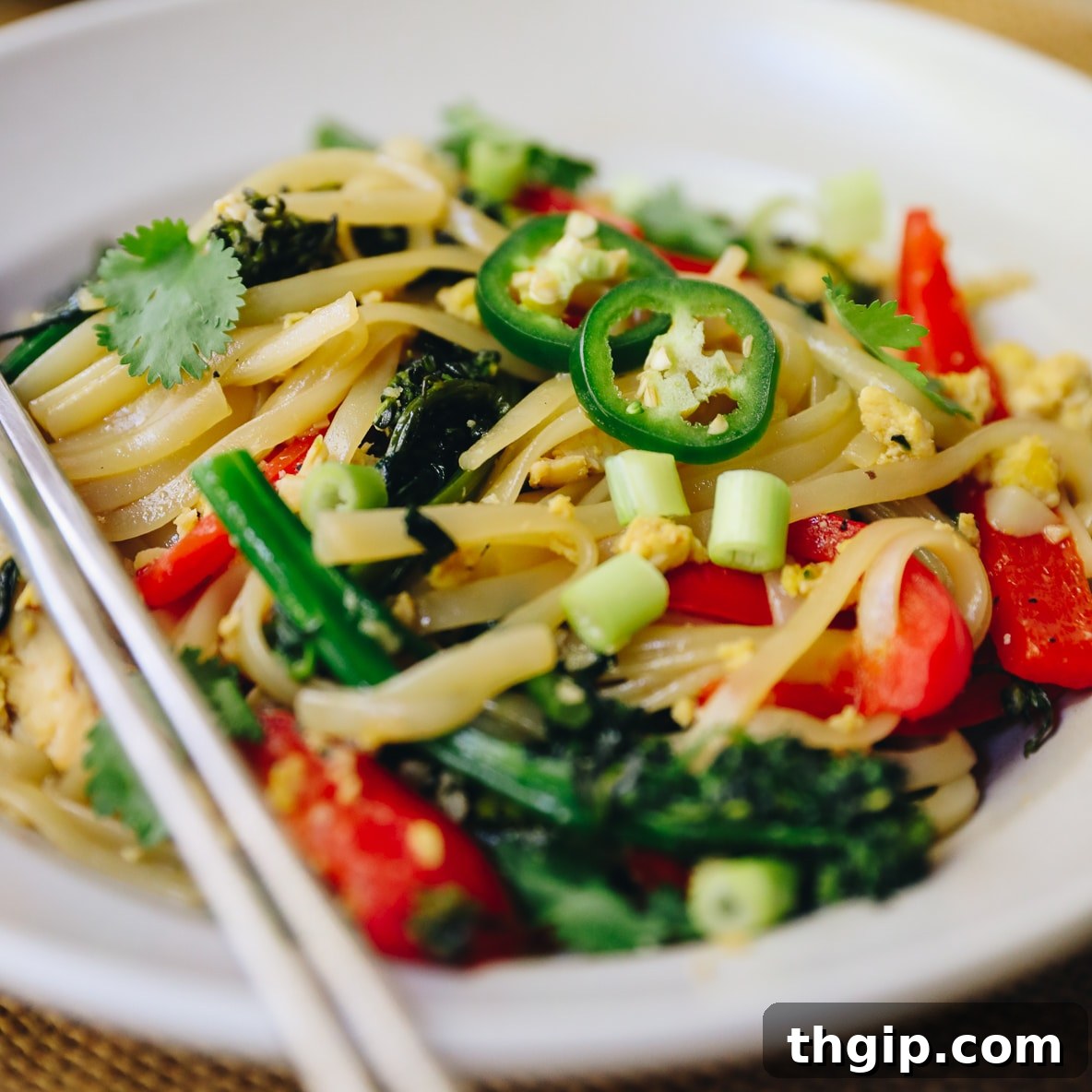
Craving an authentic yet easy Thai stir-fried noodle dish that’s bursting with flavor? Look no further than this incredible Pad See Ew recipe with chicken. This beloved classic delivers a delicious blend of savory, sweet, and smoky notes, making it a guaranteed family favorite. Best of all, it comes together in 30 minutes or less, perfect for busy weeknights!
Life often throws curveballs, and sometimes those curveballs come with moving boxes and the delightful chaos of relocating. For us, things moved incredibly quickly, and by the time you’re reading this, we’re likely settled into our new chapter. While moving means a big purge and a renewed focus on essentials – both in life and in the kitchen – it also highlights the need for quick, satisfying meals. And when it comes to quick, satisfying, and utterly delicious, nothing has topped our list this year quite like this Chicken Pad See Ew. It’s been our go-to comfort food, a testament to its irresistible taste and remarkable simplicity. After countless batches and perfect tweaks, it’s high time I share this absolute staple with you!
What Is Pad See Ew? An Introduction to This Thai Noodle Classic
Pad See Ew, pronounced “pahd see-ew,” is a cherished traditional Thai stir-fried noodle dish that translates literally to “stir-fried soy sauce noodles.” Originating from Chinese influence on Thai cuisine, it has become a cornerstone of Thai street food and restaurant menus worldwide. Unlike the often spicier and tangier Pad Thai, Pad See Ew offers a distinctly savory and slightly sweet flavor profile, characterized by its signature broad, flat rice noodles (Sen Yai) wok-fried with a rich soy-based sauce.
Typically, this hearty dish features tender slices of meat (most commonly chicken, beef, or pork), crisp Chinese broccoli, and scrambled egg, all coated in a glossy, dark sauce. The magic happens in a screaming hot wok, where the ingredients are tossed quickly to achieve that coveted “wok hei” – a smoky, charred aroma that signifies a perfectly executed stir-fry. While traditionally using specific Thai ingredients like dark soy sauce and often thick-cut fresh rice noodles, this recipe adapts the authentic flavors for the home cook, utilizing readily available ingredients without compromising on taste. It’s a comforting, wholesome, and incredibly satisfying meal that brings the vibrant flavors of Thailand right into your kitchen.
Why This Easy Chicken Pad See Ew Will Become Your New Favorite
- Effortlessly Delicious: This recipe proves that authentic Thai flavors don’t have to be complicated. With straightforward steps and readily available ingredients, you can achieve restaurant-quality Pad See Ew at home.
- Lightning Fast: Designed for speed, this dish is perfect for those busy weeknights when you need a wholesome meal on the table in under 30 minutes. Minimal prep and quick cooking make it a weeknight hero.
- Family-Friendly: With its balanced savory-sweet profile and absence of overpowering spice (though easily customizable if you love heat!), Pad See Ew is a crowd-pleaser that even picky eaters will enjoy.
- Customizable & Versatile: Don’t have Chinese broccoli? No problem! This recipe embraces substitutions, allowing you to use what you have on hand. Feel free to swap proteins or add your favorite vegetables.
- Satisfying & Hearty: The combination of tender chicken, perfectly cooked noodles, fresh vegetables, and savory sauce creates a well-rounded meal that’s both filling and incredibly satisfying.
Essential Ingredients for Your Homemade Pad See Ew
Creating an authentic-tasting Pad See Ew starts with understanding the role of each ingredient. This recipe focuses on accessibility while maintaining the core flavor.
- Rice Noodles: Traditionally, wide, flat rice noodles (Sen Yai) are preferred for their chewy texture and ability to absorb sauce. If fresh Sen Yai are hard to find, dried wide rice noodles or even thinner flat rice noodles will work well. Just ensure they are cooked al dente according to package directions before stir-frying.
- Sesame Oil: Used for its distinct nutty aroma and flavor, it’s key for stir-frying and adding depth.
- Chicken: Boneless, skinless chicken breast is a lean and quick-cooking protein choice. You can easily substitute with chicken thighs, sliced beef, pork, or even tofu for a vegetarian option.
- Garlic: The aromatic foundation of many stir-fries, minced garlic adds a pungent warmth.
- Baby Broccoli (Broccolini) / Chinese Broccoli: Chinese broccoli (Gai Lan) is traditional, offering a slightly bitter, earthy counterpoint. Baby broccoli (broccolini) is an excellent, widely available substitute with a similar tender-crisp texture. Regular broccoli florets also work in a pinch.
- Bell Pepper: Adds a touch of sweetness, color, and a pleasant crunch. Red or yellow bell peppers are ideal.
- Jalapeño Pepper (Optional): For those who enjoy a subtle kick of heat without overwhelming the dish. Remove seeds and membranes for less spice.
- Soy Sauce: A primary component of the savory sauce. Traditional Pad See Ew uses both light and dark soy sauce for color and depth; this recipe simplifies with regular soy sauce, balanced by other ingredients. Gluten-free tamari is a perfect substitute.
- Oyster Sauce: Provides a rich, umami depth and slight sweetness. Look for good quality brands. If unavailable, see substitution notes below.
- Fish Sauce: Essential for authentic Thai flavor. It adds a salty, savory, umami punch that is irreplaceable. Don’t skip it!
- Honey (or Maple Syrup): Balances the savory notes of the soy and fish sauces, adding a touch of sweetness and helping the sauce caramelize slightly.
- Eggs: Scrambled directly into the wok, eggs add a wonderful texture and richness, often absorbing some of the delicious sauce.
- Optional Garnishes: Fresh green onion and cilantro add a pop of color and freshness when served.
Smart Substitutions for Your Pad See Ew
Don’t let a missing ingredient stop you from making this incredible dish! Cooking should be fun and adaptable.
- Rice Noodles: While thick-cut rice noodles (Sen Yai) are traditional and offer the best texture, they can be elusive outside of Asian grocery stores. If you can’t find them fresh, look for dried wide rice noodles or even thinner flat rice noodles in the international aisle of your supermarket. Ensure they are cooked until just tender but still firm enough to hold up to stir-frying.
- Chinese Broccoli: Authentic Gai Lan offers a distinct flavor, but baby broccoli (broccolini) is a fantastic and widely available alternative. Its tender stalks and small florets cook quickly and provide a similar texture. Regular broccoli, chopped into bite-sized florets, is another excellent option. The key is to get some green, slightly crunchy vegetable in there!
- Soy Sauce: Traditional recipes often call for both light and dark soy sauce. For simplicity, use a good quality all-purpose soy sauce. If you’re looking for a gluten-free option, tamari is an ideal 1:1 replacement that maintains the savory depth. To achieve a deeper color without dark soy sauce, you can add a tiny pinch of brown sugar to the sauce mixture.
- Oyster Sauce: This can sometimes be challenging to find. If you don’t have it, you can substitute with an additional tablespoon of fish sauce and a teaspoon of honey or brown sugar to compensate for the missing sweetness and thickness. For a vegetarian/vegan version, look for mushroom-based stir-fry sauces, often labeled as “vegetarian oyster sauce.”
- Protein: Not a fan of chicken? Feel free to use thinly sliced beef, pork, shrimp, or even firm tofu for a vegetarian option. Just adjust cooking times accordingly.
Embrace creativity in the kitchen! These suggestions ensure you can enjoy a delicious Pad See Ew even with a slightly modified ingredient list.
How to Master Homemade Chicken Pad See Ew: A Step-by-Step Guide
Achieving that perfect balance of textures and flavors in Pad See Ew is simpler than you think. Follow these steps for a truly authentic experience.
STEP 1: Prepare Your Noodles. Follow the package instructions for your chosen rice noodles. Typically, this involves soaking in hot water or boiling for a few minutes until al dente – tender but still firm to the bite. Overcooked noodles will become mushy during stir-frying, so err on the side of slightly undercooked. Drain thoroughly and set aside. You can toss them with a tiny bit of sesame oil to prevent sticking.
STEP 2: Sear the Chicken. Heat sesame oil in a large pot or wok over medium-high heat. Once shimmering, add about one minced garlic clove and stir-fry quickly for just 30 seconds until fragrant. Immediately add your thinly sliced chicken, sprinkle with salt and pepper, and stir-fry, flipping occasionally, until all sides have turned from pink to white (this usually takes 1-2 minutes). The goal is to sear it quickly to lock in moisture. Remove the chicken from the wok and set aside, reserving any drippings. This prevents overcooking the chicken.
STEP 3: Cook the Vegetables. Add the remaining minced garlic, baby broccoli (or your chosen broccoli), bell pepper, and optional jalapeño to the hot wok. Stir to combine with any residual oil and chicken drippings. If the wok seems dry, add a tiny bit more sesame oil. Place a lid on your pot or wok and let the vegetables steam for 2 minutes to tenderize slightly. Remove the lid and continue stir-frying for another 3-5 minutes, or until the vegetables are tender-crisp and cooked through. You want them vibrant and still with a bit of bite. Return the chicken to the wok and combine with the vegetables.
STEP 4: Whisk the Signature Sauce. While the vegetables are cooking, whisk together the soy sauce (or tamari), oyster sauce, fish sauce, and honey (or maple syrup) in a medium bowl. This creates the rich, savory-sweet sauce that defines Pad See Ew. Set this mixture aside.
STEP 5: Scramble the Eggs. Push the cooked vegetables and chicken to one side of the wok, creating an empty space. Crack the eggs directly into the cleared section of the hot wok. Immediately scramble them using a spatula, breaking them into small pieces. Once the eggs are fully cooked and fluffy, combine them with the chicken and vegetables. This technique allows the eggs to cook quickly without getting lost in the other ingredients.
STEP 6: Combine and Serve. Add the prepared rice noodles to the wok, spreading them out evenly. Pour the whisked sauce over the noodles and other ingredients. Toss everything together vigorously for about 2 minutes, ensuring all the noodles, chicken, and vegetables are thoroughly coated in the delicious, glossy sauce. Continue to stir-fry until the sauce has slightly thickened and caramelized onto the noodles. If desired, garnish with fresh green onion and cilantro. Serve your hot and flavorful Pad See Ew immediately to enjoy it at its best!
Pad See Ew with Chicken Recipe
No reviews
Looking for an easy Thai stir-fried noodle dish? Look no further than this simple Pad See Ew recipe with chicken. A stir-fried noodle dish the whole family will love and ready in 30 minutes or less.
- Author: Davida Lederle
- Prep Time: 10 minutes
- Cook Time: 20 minutes
- Total Time: 30 minutes
- Yield: 4 servings
- Category: Dinner
- Method: Cook
- Cuisine: Thai
Ingredients
- 8 oz rice noodles (thin or thick depending on what you can find)
- 2 tbsp sesame oil
- 1 lbs boneless, skinless chicken breast, cut into thin slices
- 4 garlic cloves, minced (divided)
- 1 head of baby broccoli or regular broccoli (destemmed + chopped into florets)
- 1 red bell pepper, seeded + sliced
- 1 jalapeño pepper, seeded + chopped (optional)
- 1/3 cup soy sauce or tamari
- 1 tbsp oyster sauce
- 1 tbsp fish sauce
- 1 tbsp honey (or maple syrup)
- 2 large eggs
- Optional: green onion + cilantro, for serving
Instructions
- Make noodles according to package instructions. Set aside once done cooking.
- While noodles are cooking, add sesame oil to a large pot or wok and heat over medium-high heat.
- Add 1 minced garlic clove and quickly stir-fry for 30 seconds until fragrant.
- Add your chicken, sprinkle with salt and pepper, and flip occasionally until all sides have turned from pink to white (1-2 minutes). Remove chicken from wok and set aside.
- Add remaining garlic, baby broccoli, bell pepper, and jalapeño to the wok. Stir to combine with any residual oil. Place a lid on your pot or wok and let veggies steam for 2 minutes.
- Remove lid and continue cooking until all veggies are tender-crisp – around 3-5 minutes. Return chicken to the wok.
- While veggies are cooking, combine soy sauce, oyster sauce, fish sauce, and honey in a medium bowl. Set aside.
- Push veggies and chicken to one side of the pot or wok and crack eggs directly into the cleared space. Scramble immediately using a spatula. Once cooked, combine with veggies and chicken.
- Add rice noodles to the wok and top with the prepared sauce. Cook for about 2 minutes, tossing vigorously until everything is well coated and heated through.
- Top with fresh green onion and cilantro, if desired, and serve hot.
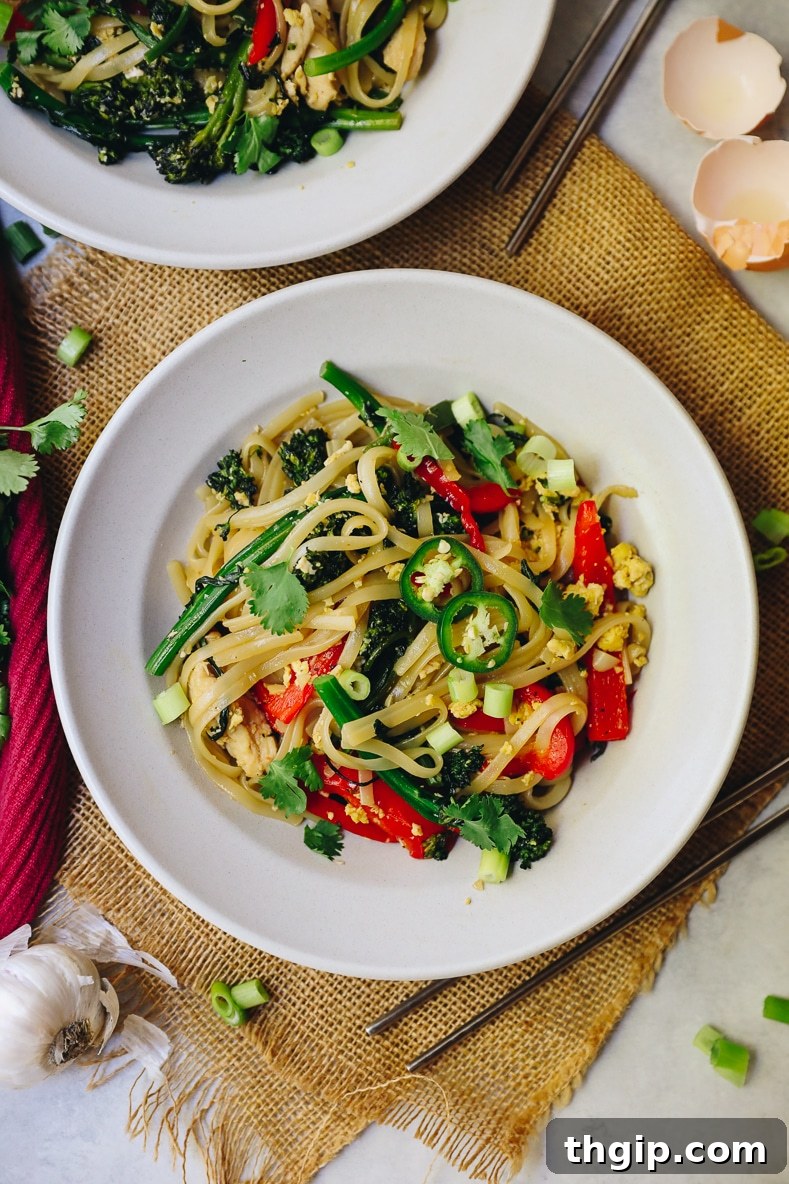
Storing and Reheating Your Pad See Ew Leftovers
While Pad See Ew, like most stir-fried noodle dishes, is undoubtedly best enjoyed fresh off the wok, any leftovers can be stored and savored later. Allow the dish to cool completely before transferring it to an airtight container. It will keep well in the refrigerator for up to 3 days.
When you’re ready to reheat, you have a couple of options. For the best texture, especially for the noodles, I recommend reheating on the stovetop. Place the leftovers in a non-stick pan or wok over medium heat. Add a splash or two of water or chicken broth (about 1-2 tablespoons per serving) to help loosen the noodles, which tend to firm up in the fridge. Stir-fry gently until everything is heated through and the noodles have regained their tender flexibility. Alternatively, you can use a microwave, heating in 1-minute intervals and stirring in between, again with a small splash of water to prevent drying out. While it won’t have the same “wok hei” as freshly made, it will still be a delicious and convenient meal!
Frequently Asked Questions About Pad See Ew
Can I make Pad See Ew vegetarian or vegan?
Absolutely! For a vegetarian version, simply omit the chicken and replace it with firm tofu or your favorite plant-based protein. Ensure to press the tofu well to remove excess water before cutting and frying. For a vegan version, in addition to omitting chicken, you’ll need to use a mushroom-based “vegetarian oyster sauce” (often found in Asian markets) and replace fish sauce with an equal amount of light soy sauce or a vegan fish sauce alternative if you can find one. You can also add more vegetables like mushrooms, carrots, or snap peas.
How can I make this Pad See Ew recipe gluten-free?
Making this dish gluten-free is straightforward. The key substitutions are:
- Soy Sauce: Use tamari instead of traditional soy sauce. Tamari is a gluten-free soy sauce alternative with a similar flavor profile.
- Oyster Sauce: While some brands of oyster sauce contain gluten, many Asian markets now offer gluten-free oyster sauce options. Alternatively, you can follow the substitution tip above: an extra tablespoon of fish sauce (ensure it’s gluten-free) and a teaspoon of honey.
- Rice Noodles: Most rice noodles are naturally gluten-free, but it’s always wise to double-check the ingredient list on the package.
With these simple changes, you can enjoy a delicious and safe gluten-free Pad See Ew.
What kind of wok or pan should I use?
A traditional carbon steel wok is ideal for stir-frying because it heats quickly and evenly and develops a natural non-stick surface over time (seasoning). Its high sides also make tossing ingredients easy. However, if you don’t have a wok, a large, heavy-bottomed skillet or a high-sided sauté pan will work perfectly fine. The most important thing is to use a pan that can get very hot and is large enough to not overcrowd the ingredients. Overcrowding will steam your food instead of stir-frying it, preventing that desired “wok hei.”
How can I adjust the spice level of my Pad See Ew?
This recipe provides a mild flavor profile, making it suitable for most palates. If you enjoy a bit of heat, here are a few ways to increase the spice:
- Jalapeño: Include the jalapeño pepper as listed, and for more heat, don’t remove all the seeds and membranes.
- Thai Chili: For a more authentic and fiery kick, add thinly sliced Thai bird’s eye chilies along with the garlic in Step 2. Start with one and add more to taste.
- Chili Flakes/Oil: Sprinkle red chili flakes or drizzle chili oil over the finished dish to taste.
Can I add other vegetables to Pad See Ew?
Absolutely! Pad See Ew is very flexible when it comes to vegetables. Feel free to incorporate other quick-cooking stir-fry friendly vegetables like sliced carrots, snap peas, bok choy, mushrooms (shiitake or cremini), or even baby corn. Add them along with the broccoli and bell peppers, ensuring they are cut into similar sizes for even cooking. This is a great way to boost the nutritional content and customize the dish to your liking.
More Asian-Inspired Recipes You’ll Love
If you enjoyed this easy Chicken Pad See Ew, be sure to explore more of our delicious Asian-inspired recipes that are perfect for any occasion!
- Vegetable Pad Thai Recipe
- Instant Pot Kung Pao Chicken
- Thai Basil Tofu Recipe
- Chinese Chicken Salad