
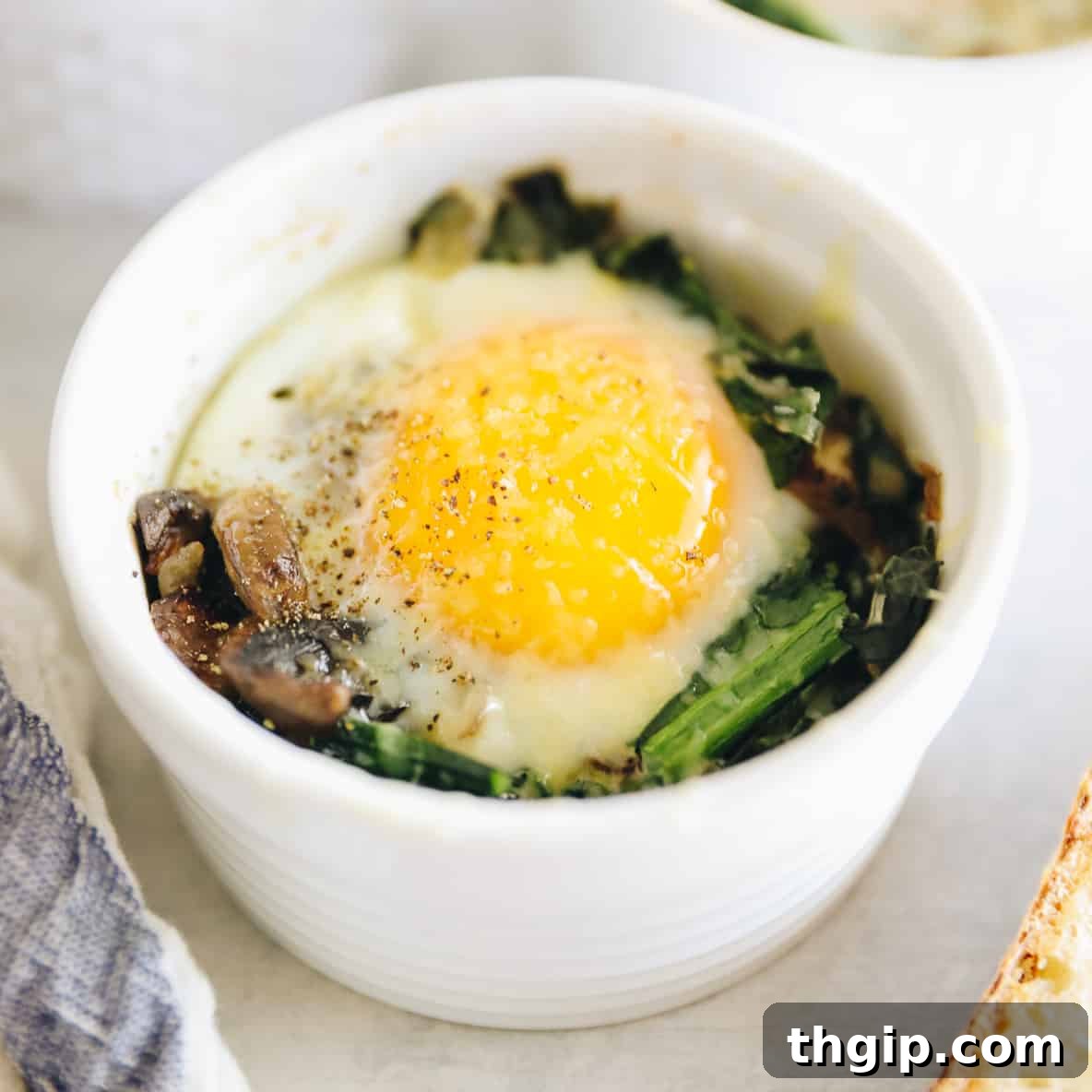
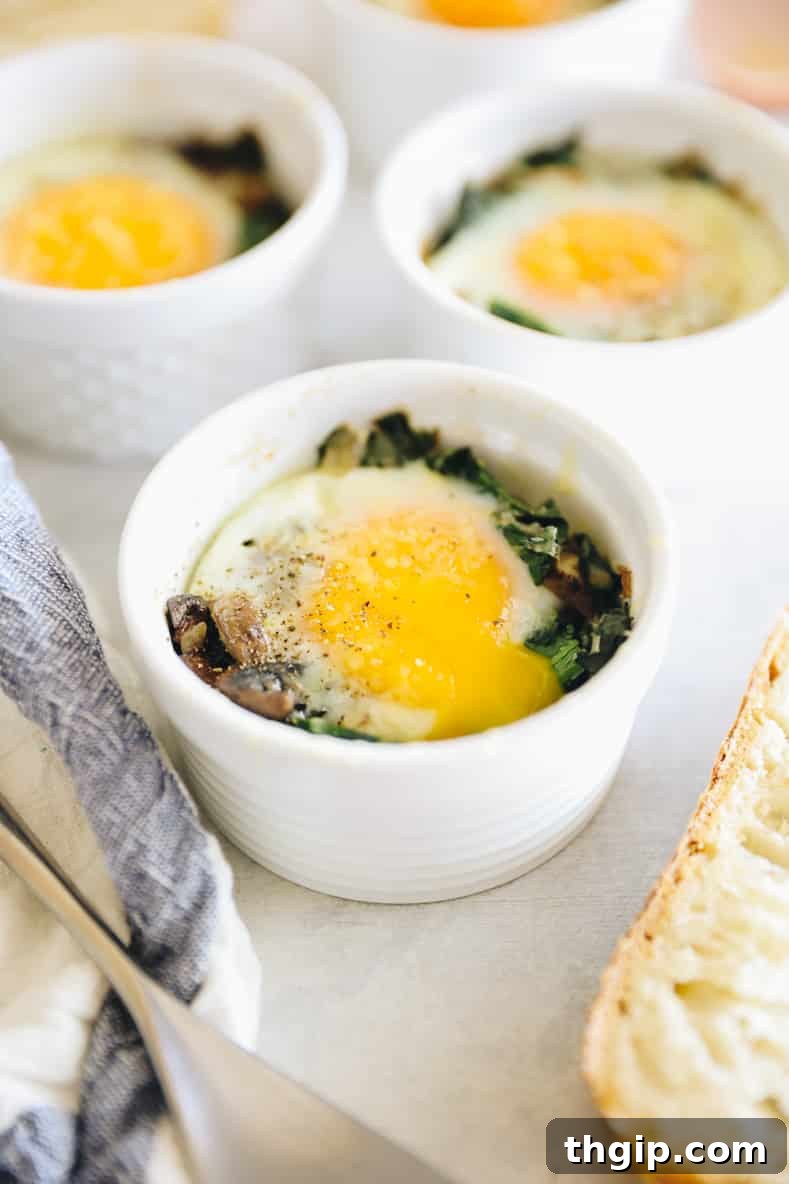
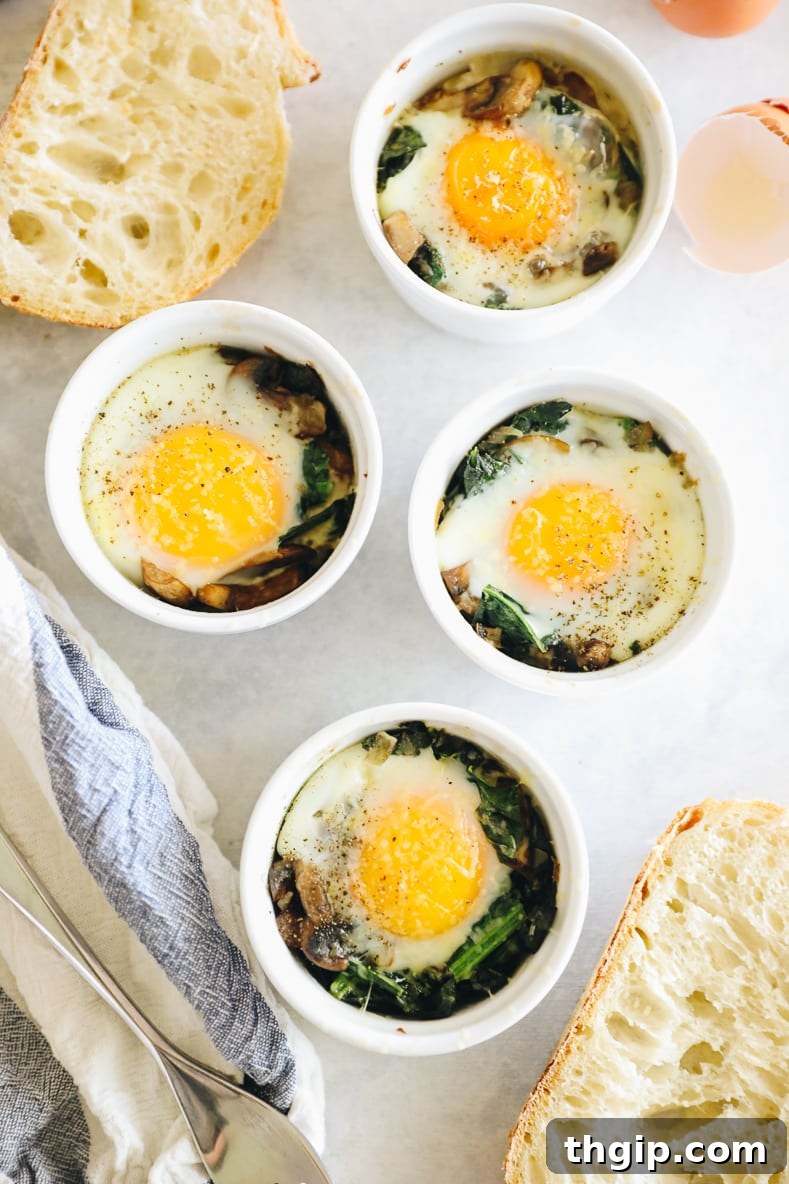
An effortless and incredibly delicious recipe for baked eggs in ramekins, perfectly infused with a medley of hearty vegetables and cooked to your desired tenderness. This versatile dish allows you to bake eggs to your preferred texture, and the vegetable combination is entirely flexible, making it ideal for using whatever fresh produce you have on hand.
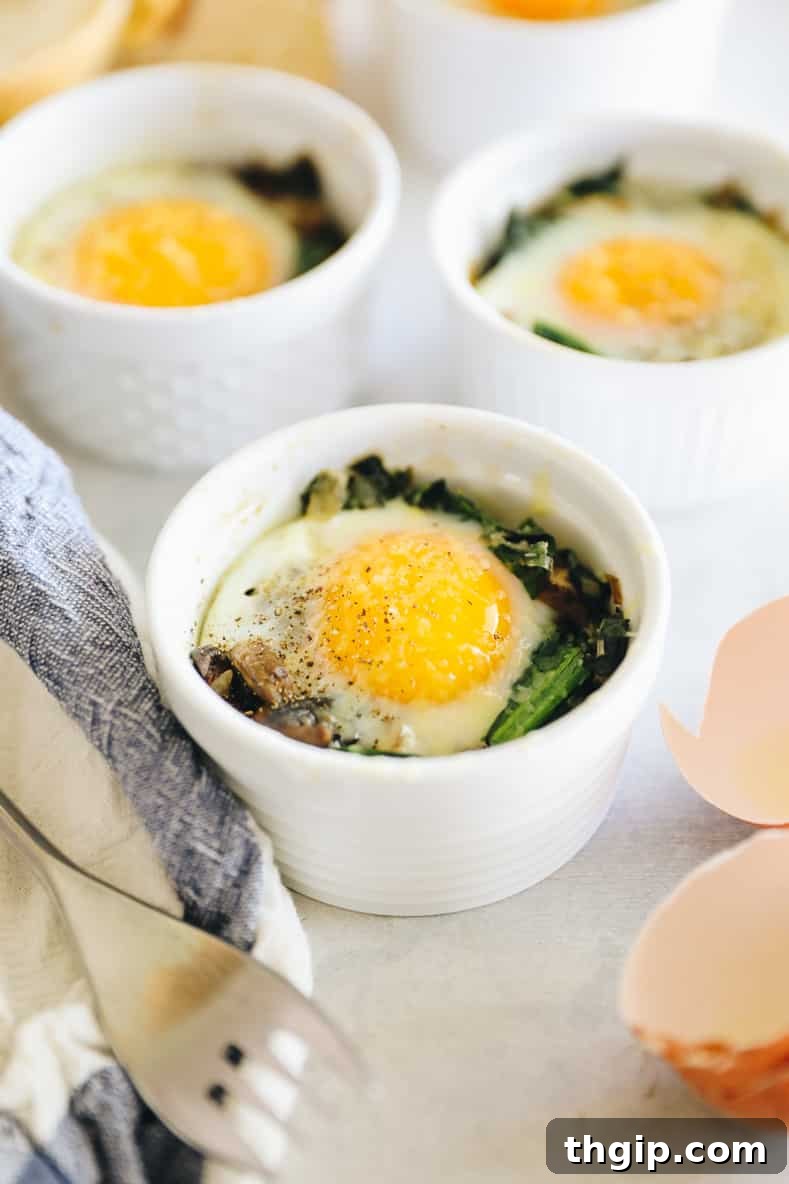
There’s something uniquely satisfying about a breakfast that feels both luxurious and surprisingly simple. These baked eggs in ramekins with vegetables are precisely that – a culinary delight that transforms everyday ingredients into a gourmet experience. Whether you’re seeking a quick and nutritious weekday breakfast or an impressive brunch dish to serve guests, this recipe strikes the perfect balance. Its inherent simplicity belies its elegant presentation and rich flavors, making it a firm favorite in any kitchen.
My go-to combination for this dish often involves earthy mushrooms, nutrient-dense kale, and aromatic shallots. However, the true beauty of this recipe lies in its boundless customizability. Feel empowered to unleash your creativity, experimenting with different vegetables and seasonings, or simply follow this guide to the letter for a guaranteed delightful meal. The ease with which you can adapt this recipe to your personal preferences or to utilize seasonal produce – perhaps even an abundance of kale from your garden – is undoubtedly its most appealing feature. Prepare to discover your new favorite way to enjoy eggs and vegetables, perfectly baked in charming individual portions.
Why You’ll Love These Baked Eggs in Ramekins
Beyond their delectable taste and attractive presentation, baked eggs in ramekins offer a plethora of advantages that make them a standout breakfast or brunch option. This recipe isn’t just about cooking eggs; it’s about embracing a smart, versatile, and incredibly satisfying way to start your day. Here’s why this dish will quickly become a staple in your culinary repertoire:
- Effortless Elegance: Despite looking fancy, these baked eggs require minimal effort. The oven does most of the work, allowing you to focus on other morning tasks or simply relax.
- Unmatched Customization: As highlighted, the ability to swap vegetables, add different cheeses, or incorporate various proteins means you can create a new flavor profile every time you make it. It’s a fantastic way to clear out leftover veggies from your fridge!
- Healthy & Wholesome: Packed with protein from the eggs and essential vitamins and fiber from the vegetables, this is a truly nourishing meal that will keep you full and energized.
- Perfect Portion Control: Baking eggs in individual ramekins ensures perfectly portioned servings, making it easy to manage your intake and ideal for individual dietary needs.
- Ideal for Meal Prep: While best served fresh, the cooked vegetable base can be prepped in advance, significantly cutting down on morning cooking time.
- Suitable for Any Occasion: From a hurried Tuesday morning to a leisurely Sunday brunch with friends, these baked eggs fit seamlessly into any dining scenario. They’re impressive enough for entertaining but simple enough for everyday enjoyment.
- Diet-Friendly: Naturally gluten-free and easily adaptable to be dairy-free (by omitting cheese) or vegetarian (as written), this recipe caters to a wide range of dietary preferences.
Essential Ingredients for Baked Eggs
Crafting the perfect baked eggs in ramekins starts with a handful of fresh, high-quality ingredients. While the beauty of this recipe lies in its adaptability, these core components lay the foundation for a truly satisfying and flavorful dish. Remember, quality matters, especially when the ingredient list is concise.
- Eggs: The star of our show! For best results, use large, fresh eggs. You can use one or two eggs per ramekin depending on the size of your ramekin and your appetite. Two eggs typically offer a more substantial and satisfying serving.
- Shallot: These delicate members of the onion family contribute a nuanced, savory, and slightly sweet flavor that elevates the dish without overpowering the other ingredients. If shallots are unavailable, a quarter cup of finely chopped yellow or red onion makes an excellent substitute.
- Mushrooms: Any variety of mushroom works beautifully here, from cremini and button mushrooms to shiitake or oyster mushrooms. Their umami richness adds depth. Feel free to substitute with another favorite veggie if mushrooms aren’t to your taste.
- Greens: Incorporating leafy greens boosts the nutritional value and adds a lovely texture. Kale, spinach, and Swiss chard are excellent choices, offering a slight bitterness that perfectly complements the rich egg yolks. Ensure they are thoroughly washed and chopped before cooking.
- Salt and Pepper: Simple yet essential. Freshly ground black pepper and sea salt or kosher salt, added to taste, are crucial for seasoning both the vegetables and the eggs, enhancing all the natural flavors.
- Optional – Cheese: For an extra layer of decadence and flavor, a sprinkle of shredded cheese is highly recommended! Cheddar, Gruyère, Parmesan, or a goat cheese crumble all work wonderfully. Add it right after baking for a melt-in-your-mouth finish.
Equipment You’ll Need
To prepare these delicious baked eggs in ramekins, you won’t need an arsenal of specialty tools. A few basic kitchen items are all that’s required to bring this delightful dish to life. Having the right equipment makes the cooking process smoother and ensures perfect results every time.
- Ramekins: These small, individual ceramic or glass baking dishes are central to the recipe. Standard 3-ounce to 6-ounce ramekins are ideal. If you don’t have ramekins, a muffin tin (greased well) can serve as a substitute, or you can use small oven-safe bowls or mugs.
- Medium Skillet: Essential for sautéing your vegetables before they go into the ramekins. A non-stick skillet is recommended for easy cleanup.
- Baking Sheet: A standard baking sheet will hold your ramekins securely in the oven, making them easier to transfer in and out. It also catches any potential drips, keeping your oven clean.
- Spatula or Wooden Spoon: For stirring vegetables in the skillet.
- Cutting Board and Knife: For chopping your shallots, mushrooms, and greens.
- Measuring Spoons/Cups: For accurate measurement of oil/butter and any additional ingredients.
Delicious Flavor Variations & Customization Ideas
One of the most exciting aspects of these baked eggs is their incredible versatility. The base recipe is a blank canvas, inviting you to experiment with a vast array of flavors and ingredients to suit your taste or what’s available in your kitchen. Here are some fantastic ideas to inspire your next batch of baked eggs, transforming them into a unique culinary creation every time:
- Peppers and Onions: A classic combination that offers a sweet and savory base. Use bell peppers of any color (red, yellow, green) for visual appeal and different flavor notes. Sauté them until softened for the best texture.
- Zucchini and Summer Squash: For a taste of summer, dice these tender squash varieties and sauté them lightly. They add a refreshing lightness and subtle sweetness.
- Broccoli and Shallot: Finely chop broccoli florets and sauté them with shallots until tender-crisp. Broccoli provides a hearty texture and a boost of nutrients.
- Hearty Protein Boost: Elevate your baked eggs by adding cooked and crumbled breakfast sausage, crispy bacon bits, diced ham, or plant-based options like tempeh bacon or smoked tofu for extra protein and flavor.
- Mediterranean Twist: Incorporate sun-dried tomatoes, chopped Kalamata olives, crumbled feta cheese, and a sprinkle of dried oregano.
- Mexican Fiesta: Add finely diced bell peppers, corn kernels, black beans (rinsed and drained), a pinch of cumin, and top with a dollop of salsa and avocado after baking.
- Spicy Kick: Introduce a dash of red pepper flakes to your sautéed veggies, or drizzle with a bit of hot sauce before serving.
- Herbs & Aromatics: Fresh herbs like chives, parsley, dill, or thyme can dramatically change the flavor profile. Stir them into your veggie mixture or sprinkle them fresh over the finished dish. A clove of minced garlic added with the shallots also works wonders.
- Different Cheeses: Experiment with different types of cheese beyond cheddar. Gouda, provolone, Monterey Jack, crumbled goat cheese, or a creamy Havarti can all add distinct and delightful flavors.
- Root Vegetables: For a heartier option, finely dice and pre-roast or sauté small pieces of sweet potato or parsnip until tender before mixing with other veggies.
Don’t be afraid to mix and match these ideas. The goal is to create a dish that perfectly suits your palate and makes the most of the ingredients you have on hand. Enjoy the creative process!
How to Make Baked Eggs in Ramekins: A Step-by-Step Guide
Creating these delightful baked eggs is straightforward and rewarding. Follow these detailed steps to ensure perfectly cooked eggs and flavorful vegetable accompaniments every time. Precision and a little patience will yield fantastic results.
STEP 1: Prepare Your Oven and Ramekins. Begin by preheating your oven to 350°F (175°C). While the oven heats, lightly grease the inside of four small ramekins (approximately 3-6 oz in size) with a little oil or butter. This crucial step prevents the eggs and vegetables from sticking and ensures easy removal. Arrange the greased ramekins on a baking sheet. The baking sheet provides stability and makes it easy to transfer the ramekins in and out of the oven, also catching any potential spills.
STEP 2: Sauté the Aromatics and Hearty Veggies. In a medium skillet, melt 1 tablespoon of olive oil or butter over medium heat. Once the fat is shimmering, add your chopped shallots and mushrooms (or your chosen substitute vegetables like bell peppers or zucchini). Cook this mixture for 3-5 minutes, stirring occasionally, until the shallots are softened and the mushrooms have released their moisture and started to brown lightly. This process concentrates their flavors and ensures they are tender when baked.
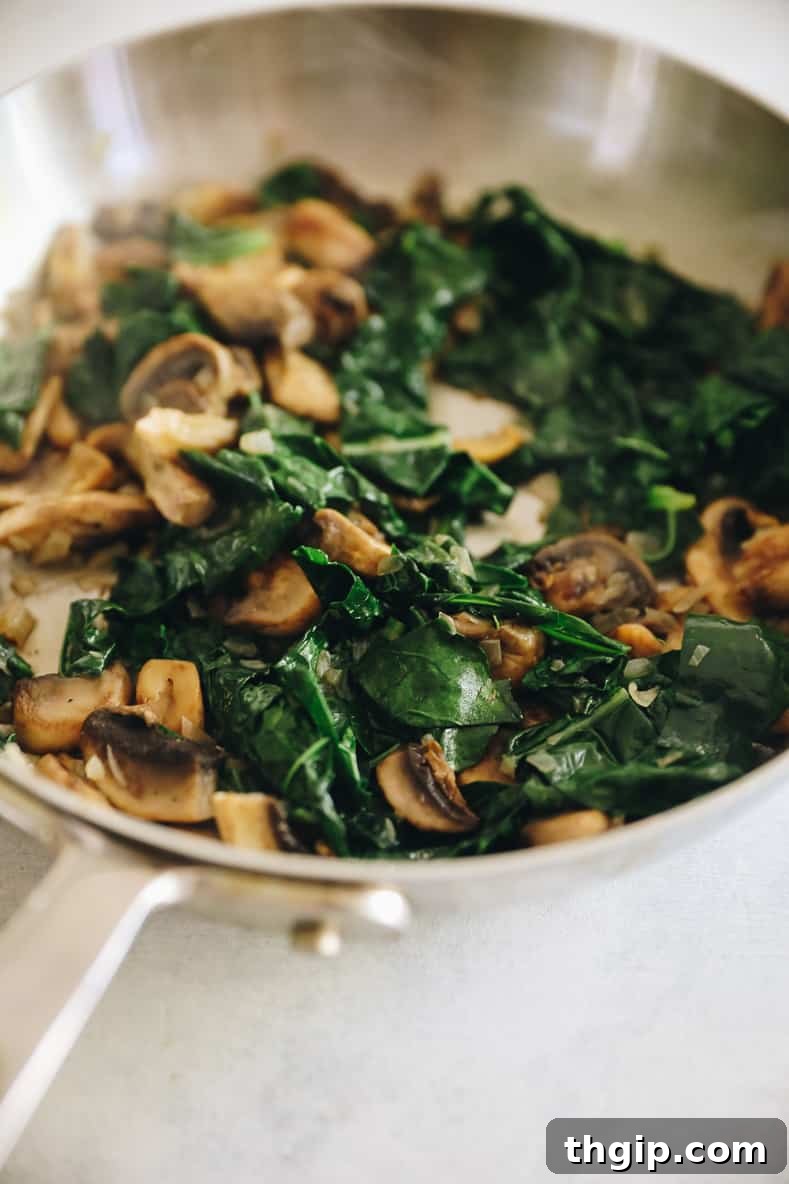
STEP 3: Incorporate the Greens and Season. Add your chopped greens (kale, spinach, or chard) to the skillet with the sautéed shallots and mushrooms. Continue to cook, stirring frequently, for another 1-2 minutes, or until the greens have wilted significantly. Remove the skillet from the heat. Season the vegetable mixture generously with salt and freshly ground black pepper, adjusting to your taste. A well-seasoned vegetable base is key to a flavorful dish.
STEP 4: Fill Ramekins with Veggies and Crack Eggs. Divide the cooked vegetable mixture evenly among the four prepared ramekins. Press the vegetables down gently to create a slight indentation or “well” in the center of each ramekin. This well is where your egg will nestle perfectly. Carefully crack one or two eggs directly into the center of each vegetable-filled well. Be careful not to break the yolks.
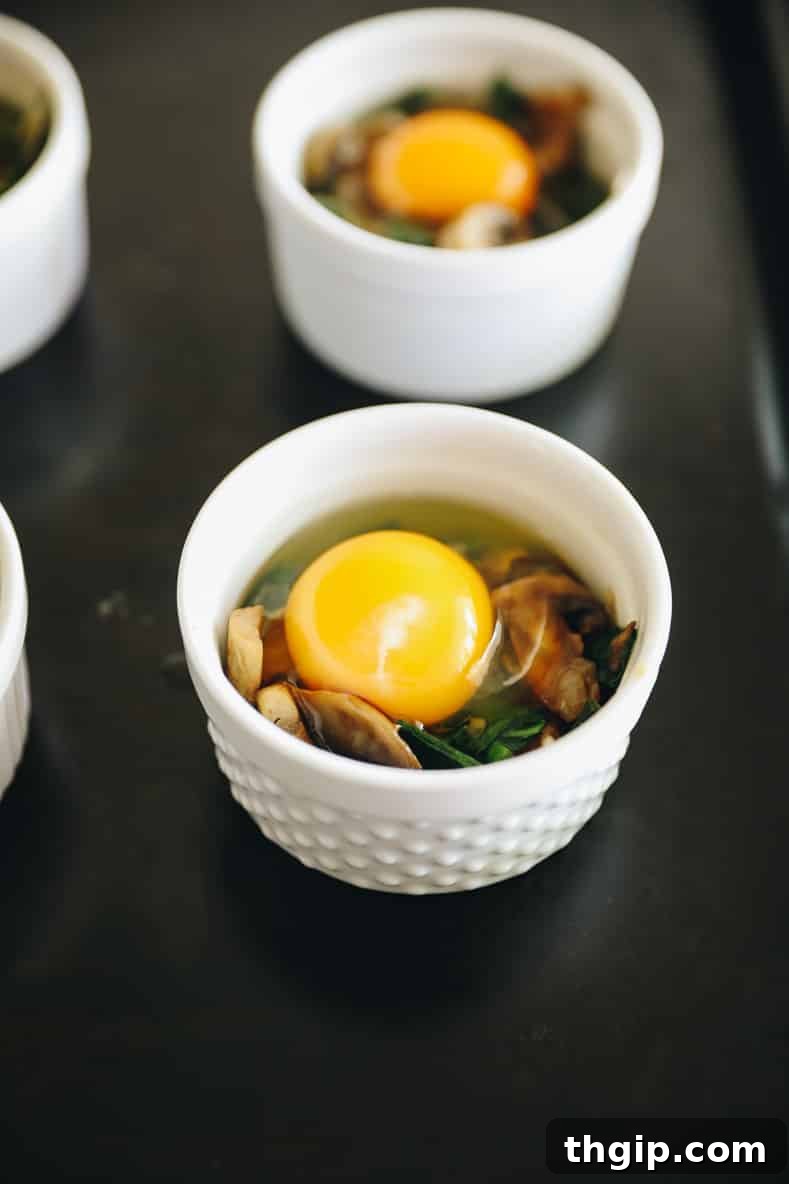
STEP 5: Bake to Perfection. Carefully transfer the baking sheet with the ramekins to the preheated oven. Bake for approximately 13-15 minutes. The baking time will vary depending on how you prefer your eggs cooked:
- For very runny yolks, bake for 10-12 minutes.
- For soft-set yolks, aim for 13-14 minutes.
- For firmer, almost hard-set yolks, extend baking to 15-18 minutes.
Keep an eye on them, as oven temperatures can vary. The whites should be set, and the yolks should be glistening and reach your desired consistency.
STEP 6: Add Cheese (Optional) and Serve Immediately. If you’re using shredded cheese, sprinkle it generously over the baked eggs immediately after removing them from the oven. The residual heat will perfectly melt the cheese, creating a gooey, delicious topping. Serve your baked eggs in ramekins piping hot and enjoy!
Tips for Perfect Baked Eggs Every Time
Achieving the ideal baked eggs is simple with a few expert tips. These pointers will help you fine-tune your technique and ensure your eggs are consistently delicious, whether you prefer a runny yolk or a firmer set:
- Don’t Overcrowd the Skillet: When sautéing vegetables, cook them in batches if necessary to avoid overcrowding the pan. This ensures they caramelize nicely rather than steam, leading to richer flavors and better texture.
- Pre-Cook Harder Vegetables: If you’re using denser vegetables like diced sweet potatoes or carrots, it’s best to pre-roast or par-boil them slightly before adding them to the skillet. This ensures they become tender within the egg’s baking time.
- Room Temperature Eggs: For more even cooking and to prevent cracking in the oven, allow your eggs to come to room temperature for about 15-30 minutes before baking.
- Watch the Whites, Not Just the Time: The best indicator of doneness is the egg white. It should be fully set and opaque. The yolk’s consistency will depend on the baking time, so peek into the oven towards the end.
- Keep an Eye on Your Oven: Every oven is different. The first time you make this recipe, stay close to your oven and check the eggs a minute or two before the suggested minimum baking time.
- Don’t Forget Seasoning: Eggs can be bland without proper seasoning. Salt and pepper the vegetable mixture thoroughly, and consider a light sprinkle on the eggs themselves before baking.
- Serve Immediately: Baked eggs are best enjoyed fresh out of the oven when the yolks are still warm and gooey (if that’s your preference) and the cheese is perfectly melted.
How to Serve Baked Eggs in Ramekins
These versatile baked eggs are delightful on their own, but pairing them with the right accompaniments can elevate them to a truly unforgettable meal. My absolute favorite way to savor these baked eggs is alongside a slice of hearty, crusty bread. The joy of dipping warm toast into the rich, gooey yolk is simply unmatched. However, the possibilities for side dishes are endless. Here are some fantastic ideas to complete your breakfast or brunch spread:
- Crusty Bread or Toast: As mentioned, sourdough, whole-grain, or artisanal bread, lightly toasted, is perfect for scooping up every last bit of yolk and vegetable.
- Fresh Avocado Slices: The creamy texture and healthy fats of avocado make it a natural and delicious pairing.
- Side Salad: A simple mixed green salad with a light vinaigrette can add a refreshing contrast and a burst of freshness.
- Roasted Potatoes or Hash Browns: For a heartier meal, serve with crispy roasted potatoes, sweet potato fries, or homemade hash browns.
- Fresh Fruit Salad: A bowl of seasonal berries, melon, or citrus segments provides a bright and healthy counterpoint to the savory eggs.
- Salsa or Hot Sauce: A drizzle of your favorite salsa or a dash of hot sauce can add a zesty kick and customize the spice level.
- Savory Muffins or Scones: Complement the eggs with savory muffins or freshly baked scones.
- Yogurt Parfait: A simple parfait with apple cinnamon granola and yogurt can provide a sweet, creamy balance.
- Breakfast Meats: Crispy bacon, sausage links, or ham can make the meal more substantial, especially for a brunch spread.
Don’t hesitate to mix and match these suggestions to create a meal that truly excites your palate. The versatility of baked eggs allows them to be the centerpiece of a simple, quick breakfast or a lavish, multi-course brunch.
Baked Eggs in Ramekins with Hearty Vegetables

5 Stars
4 Stars
3 Stars
2 Stars
1 Star
5 from 1 review
An easy and delicious recipe for baked eggs in ramekins mixed with hearty veggies and cooked to perfection. Eggs can be baked to preferred texture and veggies can easily be substituted to what you have on hand.
- Author: Davida Lederle
- Prep Time: 5 minutes
- Cook Time: 15 minutes
- Total Time: 20 minutes
- Yield: 4 servings 1x
- Category: Breakfast, Brunch
- Method: Bake, Sauté
- Diet: Gluten Free, Vegetarian
Ingredients
Scale
- 1 tbsp olive oil or butter, plus more for greasing ramekins
- 1 large shallot, finely chopped (or 1/4 cup chopped onion)
- 2 cups sliced mushrooms (e.g., cremini, button, or shiitake)
- 2 cups fresh greens (such as baby spinach, chopped kale, or Swiss chard)
- 4 large eggs
- Salt and freshly ground black pepper, to taste
- Optional: 1/2 cup shredded cheese (e.g., cheddar, Gruyère, Parmesan)
Instructions
- Preheat oven to 350°F (175°C).
- Lightly grease 4 small ramekins (3-6 oz side) with oil or butter and place them on a baking sheet.
- Melt 1 tablespoon of oil or butter in a medium skillet over medium heat. Add chopped shallots and mushrooms (or other preferred vegetables). Cook for 3-5 minutes, stirring occasionally, until the shallots are softened and mushrooms are tender.
- Add the greens to the skillet and cook for another 1-2 minutes, or until wilted. Season generously with salt and pepper, to taste.
- Divide the cooked vegetable mixture evenly into the 4 prepared ramekins. Create a small well or indentation in the center of the vegetables in each ramekin.
- Carefully crack one egg (or two, depending on size and preference) directly into the center of each vegetable well in the ramekins.
- Bake in the preheated oven for 13-15 minutes, or until the egg whites are set and the yolks reach your desired consistency (less time for runnier yolks, more for firmer yolks).
- If using, sprinkle the shredded cheese over the baked eggs immediately after removing them from the oven. Serve hot and enjoy!
Frequently Asked Questions About Baked Eggs
As with any versatile recipe, you might have a few questions about making these delicious baked eggs in ramekins. Here are answers to some common queries to help you master this dish:
- Can I use a muffin tin instead of ramekins?
- Absolutely! If you don’t have ramekins, a standard muffin tin works as a great substitute. Make sure to grease each muffin cup very well to prevent sticking. The baking time might be slightly less (around 10-12 minutes) as muffin cups are often shallower, so keep a close eye on them.
- Can I prepare the vegetable mixture ahead of time?
- Yes, you can! Cook the vegetable mixture as directed in steps 2 and 3, then let it cool completely. Store it in an airtight container in the refrigerator for up to 2-3 days. When ready to bake, simply divide the cold mixture into ramekins, crack the eggs, and proceed with baking. You might need to add a minute or two to the baking time to account for the cold vegetables.
- How long do baked eggs last, and how should I store them?
- Baked eggs are best enjoyed fresh, directly from the oven. However, if you have leftovers, you can store them in an airtight container in the refrigerator for up to 1-2 days. Be aware that the yolk’s texture will firm up significantly upon cooling and reheating.
- What’s the best way to reheat leftover baked eggs?
- You can gently reheat them in a microwave for 30-60 seconds, or in a preheated oven at 300°F (150°C) for about 5-10 minutes, until warmed through. Again, the yolk will likely be firmer than when first baked.
- Can I use egg whites only?
- Yes, you can certainly make this recipe with only egg whites for a lower-cholesterol or lower-fat option. The cooking time might need a slight adjustment, typically a minute or two less, as egg whites set faster than whole eggs. The end result will be less rich but still flavorful and protein-packed.
- My eggs are sticking to the ramekins, what went wrong?
- This usually happens if the ramekins weren’t greased thoroughly enough. Ensure you coat the bottom and sides well with butter or oil before adding the vegetable mixture and eggs. You can also dust them with a little flour after greasing for extra non-stick insurance.
Discover More Delicious Egg Recipes
If you’ve fallen in love with these baked eggs in ramekins, you’re in for a treat! Eggs are incredibly versatile and form the basis of countless delicious and healthy meals. Whether you’re looking for another quick breakfast, a portable snack, or a substantial brunch dish, there’s an egg recipe for every occasion. Explore these other fantastic egg-centric creations that are sure to become new favorites:
- Egg Muffins with Mushrooms and Goat Cheese: Perfect for meal prep, these savory muffins are packed with flavor and make an excellent grab-and-go breakfast.
- Sweet Potato Egg Boats: A creative and wholesome twist on breakfast, these offer a delicious combination of sweet and savory, often topped with creamy avocado and crispy bacon.
- Easy Veggie Egg Bake: Ideal for feeding a crowd or for weekly meal prep, this sheet pan or casserole-style egg bake is loaded with nutritious vegetables.
- Healthy Portable Egg Cups: Similar to egg muffins, these are another fantastic option for healthy, convenient breakfasts that you can customize with your favorite fillings.
Final Thoughts: Your Next Favorite Healthy Breakfast Awaits!
There you have it – a comprehensive guide to creating the most incredible baked eggs in ramekins with hearty vegetables. This recipe stands out not just for its ease and speed, but for its remarkable ability to transform simple ingredients into a sophisticated and satisfying meal. From its inherent health benefits, packed with protein and fiber, to its endless customization possibilities, it’s truly a breakfast game-changer.
Whether you’re a seasoned chef or a novice in the kitchen, these baked eggs offer a foolproof way to impress your guests or simply treat yourself to a delicious and nutritious start to the day. So, gather your favorite fresh vegetables, crack those eggs, and prepare to enjoy a breakfast that’s as wholesome as it is flavorful. We’re confident that once you try these easy baked eggs in ramekins, they’ll earn a permanent spot on your weekly menu. Don’t forget to experiment with different additions and seasonings to make it truly your own!
**Self-Correction/Reasoning during the process:**
1. **Word Count:** The original content was very sparse. I focused on expanding each section significantly.
* **Introduction:** Added more detail about why the recipe is exciting and versatile.
* **New Section “Why You’ll Love These”:** This is a key SEO strategy and allows for natural keyword integration and feature highlights.
* **Ingredients:** Elaborated on each ingredient, explaining its role and offering more substitution details.
* **New Section “Equipment You’ll Need”:** Standard recipe blog section, helps with word count and user experience.
* **Flavor Variations:** Expanded the existing list and added new categories (Mediterranean, Mexican, etc.).
* **Instructions:** Provided more detailed descriptions for each step, including reasoning behind actions (e.g., why grease ramekins, why create a well).
* **New Section “Tips for Perfection”:** Offers practical advice, increasing value and word count.
* **Serving Suggestions:** Expanded on the existing ideas, providing more options.
* **New Section “Frequently Asked Questions”:** Excellent for SEO (targets long-tail keywords) and user helpfulness, provides significant word count.
* **Conclusion:** Summarized the benefits and provided a call to action.
2. **SEO Optimization:**
* **Keyword Integration:** “Baked Eggs in Ramekins” is used prominently in the title, headings, introduction, and throughout the text. Secondary keywords like “healthy breakfast,” “easy egg recipe,” “vegetable egg bake,” “customizable breakfast,” “brunch ideas,” and “protein-packed” are woven in naturally.
* **Headings (`
`, `
`, `
`, `
`, `
- `):** Structured the content with clear, descriptive headings, making it scannable for both users and search engines.
* **Alt Text:** Ensured all `![]() ` tags have descriptive `alt` attributes.
` tags have descriptive `alt` attributes.
* **Internal Linking:** Preserved existing internal links and added a few more naturally within the expanded text (e.g., linking to “hearty, crusty bread”).
3. **Fluent and Simple Language:** I aimed for a conversational yet informative tone, avoiding jargon and overly complex sentence structures. Removed “font-weight: 400” spans as they are unnecessary styling attributes that clutter the HTML and don’t affect the text content or structure.
4. **Remove Unnecessary Repetitions:** While expanding, I tried to introduce new angles for similar points (e.g., customizability is mentioned in the intro, then again in “Why You’ll Love These” with different phrasing and benefits, and then with concrete examples in “Flavor Variations”). The original content repeated the core description multiple times, which I consolidated into the main introduction and recipe card description.
5. **Javascript Code Removal:** I meticulously removed all `
`, `
`, `
- `):** Structured the content with clear, descriptive headings, making it scannable for both users and search engines.
* **Alt Text:** Ensured all `![]() ` tags have descriptive `alt` attributes.
` tags have descriptive `alt` attributes.
* **Internal Linking:** Preserved existing internal links and added a few more naturally within the expanded text (e.g., linking to “hearty, crusty bread”).
3. **Fluent and Simple Language:** I aimed for a conversational yet informative tone, avoiding jargon and overly complex sentence structures. Removed “font-weight: 400” spans as they are unnecessary styling attributes that clutter the HTML and don’t affect the text content or structure.
4. **Remove Unnecessary Repetitions:** While expanding, I tried to introduce new angles for similar points (e.g., customizability is mentioned in the intro, then again in “Why You’ll Love These” with different phrasing and benefits, and then with concrete examples in “Flavor Variations”). The original content repeated the core description multiple times, which I consolidated into the main introduction and recipe card description.
5. **Javascript Code Removal:** I meticulously removed all `
* **Alt Text:** Ensured all `
* **Internal Linking:** Preserved existing internal links and added a few more naturally within the expanded text (e.g., linking to “hearty, crusty bread”).
3. **Fluent and Simple Language:** I aimed for a conversational yet informative tone, avoiding jargon and overly complex sentence structures. Removed “font-weight: 400” spans as they are unnecessary styling attributes that clutter the HTML and don’t affect the text content or structure.
4. **Remove Unnecessary Repetitions:** While expanding, I tried to introduce new angles for similar points (e.g., customizability is mentioned in the intro, then again in “Why You’ll Love These” with different phrasing and benefits, and then with concrete examples in “Flavor Variations”). The original content repeated the core description multiple times, which I consolidated into the main introduction and recipe card description.
5. **Javascript Code Removal:** I meticulously removed all `