
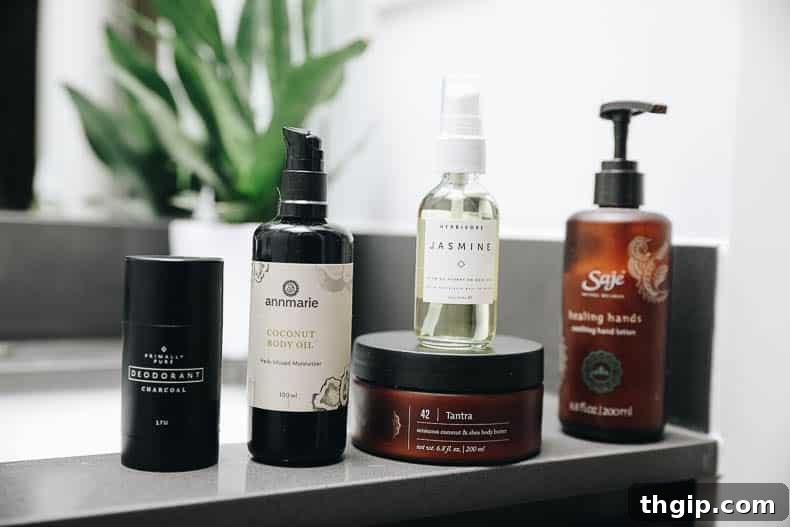
Navigating the world of beauty products can often feel overwhelming, especially when the conversation turns to “clean beauty” or “green beauty” – whatever label resonates most with you. For nearly six years, I’ve immersed myself in this journey, transitioning to more natural body care products and accumulating a wealth of knowledge along the way. From discovering products that utterly disappointed to unearthing absolute treasures, it sometimes feels like I’ve explored every option available (though certainly not all!). Sharing these insights and experiences with you is a passion of mine. However, I completely understand that for many, the clean beauty landscape appears incredibly daunting, particularly when you’ve developed a strong loyalty to your conventional products. Rest assured, I truly sympathize with that feeling of hesitation and uncertainty.
One of the most frequent questions I receive is: “I’m eager to switch to more natural products, but I simply don’t know where to begin.” This sentiment is entirely valid. To address this common challenge, our first step must be to define what clean beauty truly entails. Understanding the core principles behind this movement is crucial for anyone looking to make informed choices and embark on a healthier beauty regimen. Let’s demystify it together.
What is Clean Beauty? Demystifying the Movement
The term “clean beauty” has become a widespread descriptor encompassing a vast array of personal care items. This includes everything from your daily body care essentials like body wash and moisturizer, to comprehensive skincare routines featuring face washes, oils, and toners, all the way to intricate haircare products and a full spectrum of makeup. At its heart, a product is deemed “clean” because the brands producing it consciously opt out of using a significant number of chemicals and toxins commonly found in conventional beauty formulations, many of which have been linked to potential health concerns. This commitment aims to offer consumers safer, more transparent choices.
However, it’s vital to acknowledge that the clean beauty industry can often feel like the “wild, wild West.” There’s a notable lack of stringent regulation regarding the use of the term “clean,” leading to a phenomenon known as “greenwashing.” This means that many brands might market their products as clean, natural, or eco-friendly, even when they still contain ingredients that conflict with the true ethos of clean beauty. This ambiguity can, understandably, make your product search even more challenging and confusing.
Despite these challenges, the clean beauty movement reflects a growing consumer demand for greater transparency, safer ingredients, and more ethical production practices. It encourages us to look beyond marketing claims and delve into ingredient lists, empowering us to make choices that align with our health and values. It’s a journey towards mindful consumption, focusing on formulations that are not only effective but also benign for our bodies and the planet.
What You Put on Your Skin Matters: Your Body’s Largest Organ
Many of you are keenly aware that what you put into your body profoundly impacts your overall health. Yet, it’s equally, if not more, important to recognize the significance of what you put on your body. Your skin isn’t merely a protective barrier; it is your largest organ, incredibly absorbent, and a direct pathway to your bloodstream. This means that every product you apply to your skin – from lotions and serums to shampoos and cosmetics – has the potential to be absorbed into your system. Consequently, the ingredients in these products, whether beneficial or harmful, can impact your internal health over time. Prioritizing clean beauty is about respecting this vital organ and ensuring that it absorbs only ingredients that support your well-being, rather than introducing potential irritants or endocrine disruptors.
Essential Ingredients to Avoid in Clean Beauty
Navigating ingredient labels can be daunting, as there’s a seemingly endless list of chemicals to be wary of. To simplify your initial steps into clean beauty, I’ll equip you with knowledge about some of the most common and concerning ingredients you should actively try to avoid. Becoming familiar with these allows you to make more informed decisions right from the start.
Parabens – These synthetic preservatives are widely used across the beauty industry to prevent the growth of bacteria and mold, thus extending product shelf life. While effective, parabens like methylparaben, propylparaben, and butylparaben have raised significant health concerns. Studies suggest they can mimic estrogen in the body, potentially disrupting the endocrine system. This estrogenic activity has led to discussions and research linking them to various health issues, including breast cancer and reproductive problems. Always check labels for ingredients ending in “-paraben.”
Phthalates – Often referred to as the “everywhere chemical,” phthalates are a group of chemicals used to make plastics more flexible and as solvents in cosmetics. In beauty products, they commonly function as dissolving agents, particularly in fragrances, nail polishes, and hair sprays. Research has consistently shown that phthalates may have adverse effects on the reproductive system, contribute to hormonal imbalances, and have been linked to developmental issues. The challenge with phthalates is that manufacturers are not always required to list them explicitly on labels; instead, they are frequently hidden under the broad term “fragrance” or “parfum.” This makes it crucial to choose “fragrance-free” products or those scented only with essential oils.
Synthetic Colors – Artificial colors, also known as synthetic dyes, are chemicals added to beauty products to make them visually appealing with vibrant, often “funky” hues. However, these dyes are derived from petroleum or coal tar and can be harsh chemicals that irritate and damage your skin, especially for those with sensitivities. Beyond irritation, synthetic colors have been linked to more severe health concerns, including allergies, hyperactivity in children, and even certain cancers and tumors in animal studies. It’s a striking fact that many of these dyes have been banned from food products in various countries due to health risks, yet they remain prevalent in cosmetics and skin products. On ingredient labels, you’ll typically see them listed by an actual color and number, such as “FD&C Yellow No. 5” or “CI 19140.”
Formaldehyde – This potent chemical is primarily used as a preservative in a vast array of personal care products, including soaps, shampoos, lotions, and sunscreens, to prevent bacterial contamination. However, formaldehyde is a known human carcinogen, meaning it has been definitively linked to cancer, particularly nasopharyngeal cancer and leukemia. While direct formaldehyde might be less common, many products contain “formaldehyde-releasing preservatives” (FRPs) like quaternium-15, DMDM hydantoin, imidazolidinyl urea, and diazolidinyl urea. These ingredients slowly release formaldehyde over time, posing similar health risks. It’s essential to look out for both formaldehyde and its releasers on ingredient lists.
Fragrance / Parfum – The term “fragrance” or “parfum” on an ingredient list can be one of the most problematic. Under this single label, manufacturers can hide hundreds of undisclosed chemicals, many of which are synthetic compounds designed to create a specific scent. These undisclosed ingredients are a leading cause of skin reactions, allergies, headaches, respiratory issues, and can even act as hormone disruptors. The lack of transparency makes it impossible for consumers to know what they are truly being exposed to. It’s crucial to distinguish this from naturally derived essential oils, which are plant-derived and typically listed individually (e.g., “lavender oil,” “peppermint oil”). For genuine clean beauty, opt for products that are truly “fragrance-free” or explicitly state they are scented with pure essential oils.
Sulfates (SLS/SLES) – Sodium Lauryl Sulfate (SLS) and Sodium Laureth Sulfate (SLES) are common detergents and foaming agents found in shampoos, body washes, and toothpastes. While they create that satisfying lather, they can be harsh on the skin and hair, stripping natural oils and leading to dryness, irritation, and allergic reactions. For people with sensitive skin or conditions like eczema, sulfates can exacerbate symptoms. Clean beauty alternatives use gentler, plant-derived surfactants.
These ingredients, individually and collectively, have the potential to disrupt your endocrine system, increase cellular damage from free radicals, and generally worsen existing body sensitivities or health issues. By actively avoiding them, you’re taking a significant step towards a healthier, more balanced approach to personal care.
Your Gateway to Clean Beauty: Everyday Essentials
I’ve previously delved into various aspects of clean living, from natural makeup swaps and comprehensive skincare favorites to discussions about BeautyCounter alternatives, general green beauty swaps, sourcing affordable skincare, and even pinpointing the best natural deodorants. However, I realized there’s a crucial missing piece for those just beginning their transition: a definitive, comprehensive list of everyday clean beauty essentials. If you’re simply dipping your toes into the vast ocean of green and clean beauty, you’re likely not yet concerned with overhauling your entire makeup collection or committing to a multi-step, advanced skincare regimen. Your primary questions probably revolve around the products you use consistently, day in and day out – items like shampoo, conditioner, body wash, and body lotion. These are the foundational products that touch the most surface area of your body, most frequently, making them the ideal starting point for a impactful switch.
Before you even think about differentiating between a toner and a serum, or perfecting your makeup routine, there are some fundamental personal care items that offer an excellent and manageable entry point into clean beauty for you and your entire family. Of course, every individual’s body and preferences are unique, so this is a generalized list designed to serve as a strong foundation. If you’re just embarking on your clean beauty journey, here are some highly recommended everyday essentials to explore and consider incorporating into your routine:
- The Best Natural Shampoo: Switching your shampoo is a fantastic first step, as it directly impacts scalp health and the water that runs over your entire body. I highly recommend Evolvh shampoos for their gentle yet effective formulas. (Note: For those with curly hair, refer to this post for specialized tips!) Use code MAVEN15 to save 15% off your first Evolvh order.
- The Best Natural Conditioner: Complementing a natural shampoo, a clean conditioner helps maintain hair health without synthetic silicones or heavy fragrances. Evolvh conditioners are exceptional for nourishing and detangling. (Again, see this post for curly hair guidance!) Use code MAVEN15 to save 15% off your first Evolvh order.
- The Best Body Wash: Your body wash covers a significant portion of your skin daily, making it a crucial clean swap. The Ann Marie Gianni Rosemary Peppermint Body Wash offers an invigorating, clean experience. Use code MAVEN15 to save 15% off your first Ann Marie Gianni order.
- The Best Body Lotion/Oil: Hydrating your skin with clean ingredients is paramount. For luxurious moisture, consider Ann Marie Gianni Coconut Body Oil or the deeply nourishing OSEA Undaria Algae Body Oil. Additionally, Saje Wellness offers a fantastic range of body butters that provide rich hydration.
- The Best Natural Deodorant: Switching to natural deodorant can be a challenging but highly rewarding transition, as conventional antiperspirants often contain aluminum and harsh chemicals. Each & Every Deodorant provides effective, gentle protection. You can read my full review here.
- The Best Hand Soap: You wash your hands countless times a day, so a clean hand soap is a simple yet impactful swap. Everyone Hand Soap is an excellent, widely available option that is gentle and free from harsh chemicals.
- The Best Hand Moisturizer: Keep your hands soft and protected without questionable ingredients. Saje Hand Moisturizers are celebrated for their natural formulations and nourishing properties.
A Practical Guide: How To Seamlessly Switch To Clean Beauty
Embarking on a clean beauty journey doesn’t have to be an intimidating overhaul. It’s a gradual, conscious transition that, when approached strategically, can be both sustainable and rewarding. Here’s a detailed guide on how to make the switch without feeling overwhelmed:
Start Small and Be Patient– The most common mistake people make is trying to switch every single product simultaneously. This approach is not only expensive but also incredibly overwhelming and often leads to burnout. Instead, embrace the “one product at a time” philosophy. When a product you currently use runs out, that’s your perfect cue to replace it with a cleaner, natural alternative. This allows you to integrate new items slowly, manage your budget, and truly assess how each new product works for your body. Remember, consistency over speed is key.
Prioritize Your Most-Used Products – When deciding which product to swap first, consider the items you use most frequently and those that cover the largest surface area of your body. These “everyday essentials” are excellent starting points because they maximize your exposure to clean ingredients from the outset. For example, if you’re not an everyday makeup wearer, focus on switching your body wash, shampoo, and lotion before tackling your mascara or foundation. The principle here is that the skin on your body is just as absorbent as your face, and constant exposure to potentially harmful ingredients can add up. Swapping high-contact, high-volume products first will yield the most immediate benefits.
Allow Time for Adjustment – It’s important to acknowledge that our bodies sometimes need a period of adjustment when transitioning to new, natural products. This is particularly true for items like natural deodorant, where a “detox” phase might occur as your body adjusts to not being blocked by antiperspirants. Give yourself and the new product ample time – typically a few weeks – to truly determine if it’s the right fit for you. Don’t be discouraged by initial reactions; sometimes, your body just needs to recalibrate. Patience is a virtue in clean beauty.
Adjust Your Priorities and Perspective on Price – One of the biggest complaints I often hear about clean beauty is the price point. And I completely empathize; clean products can indeed be more expensive upfront. However, it’s crucial to understand why this is the case. Clean beauty products are often crafted with higher-quality, ethically sourced, and often organic ingredients, and they meticulously avoid cheap, toxic fillers that drive down the cost of conventional products. This higher standard of ingredient sourcing, coupled with potentially more sustainable manufacturing practices, naturally results in a higher price. It’s worth asking yourself: what is more important in the long run – a lower initial price tag, or the sustained health and well-being of your body? While acknowledging that this is a conversation often rooted in privilege, reframing cost as an investment in your health can be a powerful shift in perspective. Look for sales, buy in bulk when possible, and remember that fewer, higher-quality products can sometimes be more effective than a multitude of cheaper alternatives.
Become an Ingredient Investigator – In an industry with loose regulations and prevalent greenwashing, your best defense is knowledge. Make it a habit to read ingredient labels thoroughly. Utilize resources like the Environmental Working Group (EWG) Skin Deep database or mobile apps that scan product barcodes and highlight problematic ingredients. Educate yourself on common chemical names and their potential impacts. The more informed you are, the better equipped you’ll be to discern genuine clean beauty products from those making misleading claims. Empower yourself to be a proactive consumer.
It’s no secret that I absolutely love discussing clean beauty, and having the opportunity to try and share my favorite products is certainly a major perk! However, my ultimate and overarching goal extends beyond mere product recommendations. It is to empower and educate you, providing you with the essential knowledge to make the best choices for your individual needs. This means going deeper than just listing products; it involves sharing helpful resources and insights that aid you in better understanding ingredients, how they interact with your body, and ultimately, selecting products that are truly aligned with your personal values and health goals.
We are currently in the exciting process of developing a dedicated platform designed to make this vital knowledge as accessible as possible for everyone. Our aim is to guide you step-by-step in making informed decisions for a healthier, cleaner beauty routine. To ensure you’re among the first to hear about this transformative new resource and stay updated on the latest in green beauty, I invite you to join our exclusive green beauty list. Let’s build a cleaner, healthier beauty future together!
What are some of your absolute favorite clean beauty essentials? Share your must-haves in the comments below!