
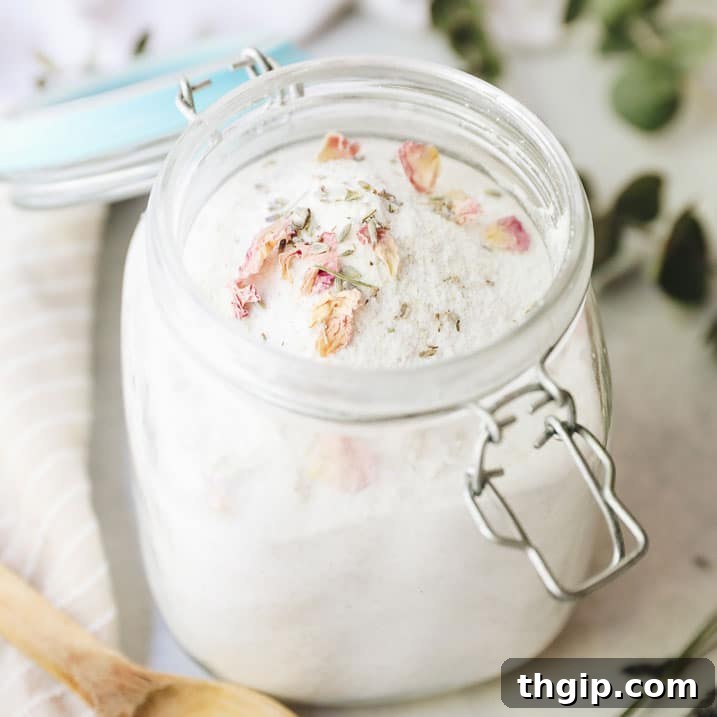
Welcome to the ultimate guide for crafting your very own luxurious bath salts! If you’ve ever dreamt of transforming your ordinary bathroom into a serene spa retreat, this comprehensive article will show you exactly how. Dive into the world of homemade bath salts, where we explore four delightful combinations designed to soothe aching muscles, deeply moisturize your skin, and melt away stress, leaving you utterly relaxed. With detailed instructions and tips, you’ll be able to customize your perfect blend, ensuring every bath is a personalized escape tailored to your needs.
For as long as I can remember, the bath has been my sanctuary. From childhood, where bath time was the highlight of my day, to adulthood, where it remains my sacred nightly ritual, the allure of warm water and therapeutic salts has never faded. While “self-care” might sometimes feel like a cliché, my evening bath is genuinely where I find my peace. It’s a simple pleasure: a generous scoop of aromatic bath salts, a soothing face mask, and a good book. There’s nothing fancy or Instagram-worthy about it, but it’s profoundly relaxing, deeply comforting, and the perfect antidote to a busy day. Baths aren’t for everyone, but for me, they are everything.
If you’re seeking an incredibly easy, rewarding, and fun DIY project – whether for your own indulgence or as a thoughtful, personalized gift – look no further than homemade bath salts. This guide goes beyond a single recipe, offering several versatile options so you can tailor your creations to any desired effect. Trust me, once you experience the purity and efficacy of handmade bath salts, you’ll find it hard to go back to store-bought varieties.
Why Make Your Own Bath Salts? The Benefits of DIY
Creating your own bath salts offers a multitude of advantages over their commercially produced counterparts. It’s not just a hobby; it’s a step towards more mindful self-care and natural living. Here’s why you should embrace the DIY approach:
- Complete Control Over Ingredients: When you make your own bath salts, you know exactly what goes into them. You can avoid artificial fragrances, dyes, and preservatives that can irritate sensitive skin or detract from the natural benefits of the salts. This is particularly important for those with allergies or specific skin conditions.
- Customization for Specific Needs: Store-bought bath salts often come in limited variations. By crafting your own, you can customize blends to address specific concerns – be it sore muscles, dry skin, sleeplessness, or simply a desire for a particular aroma. You choose the salts, essential oils, and herbs that align perfectly with your wellness goals.
- Cost-Effectiveness: High-quality bath salts can be surprisingly expensive. Making them at home allows you to create large batches for a fraction of the price, especially when buying ingredients in bulk. This makes luxurious self-care accessible and sustainable.
- Thoughtful & Personalized Gifts: Handmade bath salts are a wonderful, heartfelt gift for friends, family, or as hostess presents. They show care and effort, and you can tailor the blend to the recipient’s preferences, making it truly special.
- Therapeutic Experience: The process of mixing and blending your own bath salts can be a therapeutic experience in itself. Engaging with natural ingredients and creating something with your hands adds to the overall sense of well-being even before you step into the bath.
The Core Ingredients for Perfect Bath Salts
Crafting effective and aromatic bath salts requires just a few key components. Understanding each ingredient’s role will empower you to create blends that truly deliver on their promises of relaxation and rejuvenation.
Epsom Salts: Your Muscle-Soothing Ally
Often mistaken for a traditional salt, Epsom salt is actually a naturally occurring mineral compound composed of magnesium and sulfate. Its scientific name is magnesium sulfate, and it is perhaps the most famous ingredient for relaxing sore muscles and easing tension. When dissolved in warm water, Epsom salts release magnesium and sulfate ions. Magnesium is crucial for over 300 biochemical reactions in the body, including muscle and nerve function, blood glucose control, and blood pressure regulation. Many people are magnesium deficient, and transdermal absorption (through the skin) during an Epsom salt bath is believed to be an effective way to replenish levels. This helps to reduce muscle aches, inflammation, and pain, making it an excellent choice for post-workout recovery or simply unwinding after a long day. While you can certainly use Epsom salts on their own, combining them with other salts and botanicals significantly enhances their efficacy and contributes to an unparalleled calming bath experience.
The Power of Sea Salts: Dead Sea & Pink Himalayan
As mentioned, Epsom salts aren’t true salts. To achieve a potent “double-whammy” effect in your bath salts, incorporating actual sea salts is highly recommended. These natural salts offer unique mineral profiles and therapeutic benefits that complement Epsom salts beautifully.
- Dead Sea Salt: Sourced from the mineral-rich waters of the Dead Sea, these salts are renowned for their exceptional therapeutic properties. They contain a high concentration of minerals like magnesium, calcium, potassium, bromide, and sulfur, which are readily absorbed by the skin. Dead Sea salts are known to promote deep relaxation, aid in sore muscle release, and provide significant relief for various skin conditions such as eczema, psoriasis, and acne due to their anti-inflammatory and detoxifying properties.
- Pink Himalayan Salt Crystals: Harvested from ancient sea beds deep within the Himalayan mountains, this beautiful pink salt is prized for its pure mineral content, including iron, potassium, magnesium, and calcium. Himalayan pink salt is believed to help balance the body’s pH levels, improve hydration, support detoxification, and ease certain skin conditions. Its distinctive color comes from the trace minerals present, adding an aesthetic appeal to your bath blends.
I personally favor a combination of both Epsom salt and coarse sea salt for a comprehensive mineral boost, but you can certainly substitute one type of sea salt for another based on availability and personal preference.
Essential Oils: Aromatherapy for Your Bath
Essential oils are highly concentrated plant extracts that capture the plant’s scent and flavor, or “essence.” In bath salts, they serve a dual purpose: providing exquisite natural fragrances and delivering powerful therapeutic benefits. From calming lavender to invigorating eucalyptus, essential oils can dramatically alter the mood and effects of your bath. When selecting essential oils, opt for high-quality, pure essential oils from reputable brands. Always be mindful of dilution, as essential oils are potent and should not be applied undiluted directly to the skin. In bath salts, the oils are dispersed in the water, but still, a moderate amount is key.
Harnessing Nature with Dried Herbs
After earning my herbalism certificate, I became a staunch advocate for the incredible benefits of fresh and dried herbs. While essential oils are fantastic, dried herbs add another layer of therapeutic potency, visual appeal, and subtle, earthy aromas to your bath salts. They infuse the water with their natural properties and botanical essence. Many of you may only have access to essential oils, which are perfectly fine on their own, but I strongly encourage you to experiment with dried herbs if you can. The synergy between herbs and essential oils can be profoundly effective.
Optional Enhancements: Carrier Oils & Natural Colorants
To further elevate your bath salt experience, consider these optional additions:
- Carrier Oils: A small amount of a light carrier oil, such as jojoba oil, sweet almond oil, or fractionated coconut oil, can be added to your bath salts. This helps to disperse the essential oils more effectively and provides an extra layer of skin moisturization, leaving your skin feeling soft and supple after your bath. Use sparingly (1-2 tablespoons per batch) to avoid making the bath too oily.
- Natural Colorants: For a touch of visual appeal, you can incorporate natural colorants. Mica powders (mineral pigments) are popular for creating beautiful, shimmery effects. Always use cosmetic-grade, skin-safe micas. Alternatively, natural powders like spirulina (green), turmeric (yellow/orange), or beetroot powder (pink/red) can add subtle color.
Master Recipe: Crafting Your Basic Bath Salt Blend
Before diving into specific variations, let’s establish a foundational recipe that provides an excellent base for all your homemade bath salt creations. This “big batch” recipe ensures you have plenty to enjoy or share.
What You Need To Make Bath Salts [Big Batch Recipe]
- 4 cups Epsom salts
- 1 cup Coarse Dead Sea salt or Pink Himalayan salt crystals
- 40-60 drops of your chosen essential oils (see blends below for specific suggestions)
- Optional (though highly recommended for enhanced benefits and aesthetics!): 4-6 tablespoons dried herbs (refer to blend suggestions)
Customizable Bath Salt Recipes for Every Mood
While the basic blend is fantastic, the true magic of DIY bath salts lies in customization. Here are four of my favorite unique blends, each formulated to evoke a specific mood or address a particular need. You’ll notice I include both essential oils and dried herbs, leveraging the best of both worlds for maximum benefit.
1. Serene Sleep Blend: Drift Away to Dreamland
This calming blend is perfect for winding down before bed, promoting deep relaxation and preparing your mind and body for a restful night’s sleep. Lavender is renowned for its anxiety-reducing and sleep-inducing properties, while chamomile offers gentle sedative effects.
- 4 cups Epsom salts
- 1 cup Coarse Dead Sea salt or Pink Himalayan salt crystals
- 20 drops of Lavender essential oil
- 20 drops of Chamomile essential oil
- Optional: 2 tbsp Dried lavender buds and 2 tbsp Dried chamomile flowers
2. Rejuvenating Skin Nourishment: A Treat for Your Skin
Indulge your skin with this blend designed to moisturize, soften, and leave you feeling utterly pampered. Rose essential oil is celebrated for its skin-rejuvenating and anti-inflammatory properties, while coconut is incredibly hydrating and provides a delicate, tropical aroma.
- 4 cups Epsom salts
- 1 cup Coarse Dead Sea salt or Pink Himalayan salt crystals
- 40 drops Rose essential oil
- Optional: 2 tbsp Dried rose petals and 4 tbsp Dried desiccated coconut (blended)
3. Stress Relief Sanctuary: Melt Away Tension
When the weight of the day becomes too much, this blend offers a soothing embrace. Bergamot is uplifting and anxiety-reducing, neroli helps calm the nervous system, and sandalwood provides a grounding, meditative aroma, creating a truly tranquil escape.
- 4 cups Epsom salts
- 1 cup Coarse Dead Sea salt or Pink Himalayan salt crystals
- 20 drops Bergamot essential oil
- 10 drops Neroli essential oil
- 10 drops Sandalwood essential oil
- Optional: 2 tbsp Dried lavender buds
4. Invigorating Uplift: Energize Your Senses
Feeling sluggish or in need of a mental pick-me-up? This refreshing blend will awaken your senses and invigorate your spirit. Eucalyptus is excellent for clearing congestion and boosting focus, grapefruit is uplifting and detoxifying, and clove adds a warm, stimulating note, while rosemary enhances mental clarity.
- 4 cups Epsom salts
- 1 cup Coarse Dead Sea salt or Pink Himalayan salt crystals
- 20 drops Eucalyptus essential oil
- 20 drops Grapefruit essential oil
- 10 drops Clove essential oil
- Optional: 1 tbsp Dried rosemary
Step-by-Step Instructions for Your DIY Bath Salts
Making your bath salts is incredibly straightforward. Follow these simple steps to create your perfect blend:
- Gather Your Ingredients: Ensure you have all your chosen salts, essential oils, and dried herbs ready.
- Combine Salts: In a large mixing bowl, combine the Epsom salts and coarse sea salts. Use a bowl large enough to allow for easy stirring without spillage.
- Add Essential Oils: Drip your chosen essential oils directly onto the salt mixture. For an even distribution, you might want to add half the oils, stir, then add the remaining half and stir again. This helps prevent clumping.
- Incorporate Dried Herbs (if using): Add your dried herbs to the mixture. If you’ve chosen to blend them for easier cleanup (highly recommended, see “Quick Tip” below), add them in their processed form.
- Mix Thoroughly: Using a spoon or your hands (wearing gloves is recommended if you have sensitive skin or are using strong essential oils), mix all ingredients thoroughly. Ensure there are no clumps, and the essential oils are evenly distributed throughout the salts. You’ll notice the aroma immediately begin to fill the air!
- Storage: Transfer your freshly made bath salts into an airtight container. Glass jars with tight-fitting lids (like mason jars) are ideal, as they protect the essential oils from degrading and prevent moisture from getting in.
- Labeling (for gifts): If you’re planning to gift your homemade bath salts, now is the perfect time to add a beautiful label. Include the blend name, ingredients, and simple usage instructions.
How to Enjoy Your Homemade Bath Salts
Once your beautiful bath salts are ready, it’s time to indulge! To fully experience the therapeutic benefits, follow these simple usage guidelines:
- Amount: For a truly therapeutic effect – to soothe sore muscles, moisturize skin, and benefit from the essential oils – aim to add roughly 1/2 to 1 cup of bath salts to your bathwater. If you’re primarily seeking just the scent, you can use a smaller amount.
- Water Temperature: Fill your bathtub with warm water, ideally between 98-102°F (37-39°C). Water that’s too hot can lead to dehydration and diminish the relaxing effect.
- Add to Running Water: Sprinkle your bath salts into the tub as the water is running. This helps them dissolve more quickly and evenly throughout the water.
- Soak Time: To allow your body to absorb the minerals and essential oil properties, aim for a soak of at least 20 minutes. Lie back, relax, and let the calming aromas and soothing warmth work their magic.
- Post-Bath Care: After your bath, gently pat your skin dry and consider applying a light moisturizer, especially if you have dry skin. Remember to hydrate by drinking a glass of water.
Maximizing Your Bath Salt Experience: Pro Tips
Elevate your bath salt game with these expert tips, ensuring both maximum enjoyment and easy maintenance.
The Herb Dilemma: Easy Cleanup Solutions
While floating herbs can look incredibly beautiful and add to the sensory experience of a bath, they can also lead to a rather messy cleanup post-soak. Here are two effective strategies for enjoying herbs without the hassle:
- Blend Your Herbs: For significantly easier cleanup, I highly recommend pulsing your dried herbs (such as lavender buds, rose petals, or chamomile flowers) in a blender or food processor before mixing them into your salts. This breaks them down into smaller pieces. Not only does this help release their beneficial essential oils more effectively, but it also allows them to go down the drain easily with the rest of your bathwater, preventing clogs and tedious scrubbing. A few quick pulses are all it takes to transform a potential cleanup nightmare into a breezy rinse.
- Herb “Tea Bags”: If blending isn’t your preference, or if you prefer larger botanical pieces, consider creating small “tea bags” for your herbs. Place your desired amount of dried herbs into a compostable tea bag or a small muslin pouch. Secure it tightly and toss it directly into your bathwater. The water will infuse with the herbal properties, and when your bath is done, you can simply dispose of the bag in your compost or trash without any loose debris in your tub.
A Word of Caution: Baking Soda and Essential Oils
Many bath salt recipes include baking soda (sodium bicarbonate) for its skin-softening and detoxifying properties, and I am generally a fan of adding it to baths. However, there’s a crucial warning to heed when making bath salts: if you add baking soda directly to a mix containing essential oils, particularly citrus essential oils, it can react and cause your storage container to explode! I’ve had this happen to me, and it’s not a pleasant surprise. The chemical reaction creates gas build-up, leading to pressure. Therefore, to ensure safety, always plan to add baking soda directly to your bathwater as you’re running it, rather than incorporating it into your dry bath salt mixture.
Personalize Your Blend: Experiment and Discover
The recipes provided are wonderful starting points, but don’t be afraid to experiment! Adjust the ratios of salts, mix and match essential oils, or introduce new dried herbs based on what resonates with you. Perhaps you love the scent of cedarwood or prefer the invigorating feel of peppermint. The beauty of DIY is the freedom to create what truly suits your body and mind. Keep a small journal to note down your favorite combinations and their effects.
Frequently Asked Questions About Homemade Bath Salts
How long do homemade bath salts last?
When stored correctly – in a glass jar with a tight-fitting lid in a cool, dark place (like a cabinet) – your DIY bath salts can last indefinitely. Salts themselves do not expire. The main concern is the potency of the essential oils, which can degrade over time, losing their fragrance and therapeutic properties. While the salts will still be effective, the aroma might fade after about 6 months to a year. Always prevent them from getting wet or exposed to excessive sunlight, as moisture can cause clumping and sunlight can accelerate oil degradation.
Are bath salts safe for sensitive skin?
Generally, yes, bath salts can be very beneficial for sensitive skin, especially mineral-rich options like Dead Sea salts. However, if you have very sensitive skin, be mindful of the essential oils you choose. Some oils, particularly citrus oils or those known for their stimulating properties (like peppermint or cinnamon), can be irritating. Always do a patch test with any new essential oil blend on a small area of your skin before using it in a full bath. Start with a lower concentration of essential oils in your bath salts, and avoid any artificial fragrances or dyes.
Can I use fresh herbs in bath salts?
While dried herbs are ideal for bath salts due to their stability and concentrated properties, you can technically use fresh herbs in your bath. However, it’s generally not recommended to mix fresh herbs directly into your dry bath salt mixture for storage. Fresh herbs contain moisture, which can cause the salts to clump, and more importantly, they can mold or spoil quickly, contaminating your entire batch. If you wish to use fresh herbs, it’s best to add them directly to your bathwater just before you get in, perhaps by steeping them in a tea bag or muslin pouch to contain them.
What are the general benefits of taking a warm bath?
Beyond the specific benefits of bath salts, a warm bath itself offers numerous health advantages. It helps to improve circulation, reduce inflammation, and soothe the nervous system, which can alleviate stress and anxiety. The warmth can also promote better sleep, ease headaches, and even help with respiratory issues by opening up airways. Combining these intrinsic benefits with the therapeutic properties of homemade bath salts creates a powerful wellness ritual.
Making your own bath salts is a simple yet profound act of self-care. It allows you to control the ingredients, tailor the experience to your exact preferences, and create a truly luxurious and beneficial product. Whether you’re seeking muscle relief, skin nourishment, or pure relaxation, these recipes and tips empower you to craft the perfect bath for any occasion. Embrace the joy of DIY and transform your next bath into an exquisite, personalized spa experience.
Like this post? Here are a few other DIYs you might enjoy:
- How to Make Homemade Deodorant
- How to Make Bar Soap [For Sensitive Skin]
- DIY Gingerbread Body Scrub
- Hydrating Avocado Face Mask
- Homemade Lip Sugar Scrub