
Is retinol clean beauty? Dive deep into understanding what retinol is, how to effectively incorporate it into your skincare routine, and whether this highly acclaimed ingredient truly fits the ‘clean beauty’ philosophy.
Table of Contents
- What is Retinol? A Comprehensive Guide
- Is Retinol-Based Skincare Safe and Does it Qualify as Clean Beauty?
- The Remarkable Benefits: What Does Retinol Do for Your Skin?
- Navigating Retinol Use: Precautions and Potential Side Effects
- Patience is Key: How Long Does It Take to See Retinol Results?
- Optimizing Your Routine: When and How to Apply Retinol
- The Marie Veronique Difference: Gentle Retinol Serum Explained
- Curated Selection: The Best Clean Retinol Products on the Market
- Embracing Nature: Effective Natural Alternatives to Retinol
- My Retinol Journey: Before and After Transformation
My personal quest for flawless skin began approximately six years ago, driven by a sudden and severe battle with cystic acne. Prior to turning 25, my skin had been remarkably cooperative, sparing me the struggles often associated with teenage breakouts. However, a series of hormonal shifts, initially triggered by switching and then discontinuing hormonal birth control, sent my complexion into a frantic state. What started as an assumption that my acne would resolve on its own, quickly escalated into widespread breakouts across my face, back, and chest.
In desperation, I sought medical advice. My doctor prescribed a course of antibiotics along with Tretinoin, a potent topical retinoid. For six diligent months, I adhered to this regimen, hoping for a miracle. Unfortunately, relief never came. The constant antibiotic use raised long-term concerns, and the topical retinoid proved to be incredibly harsh, bleaching my pillowcases and clothes, forcing me to sleep on towels. This initial encounter with retinoids left me with a rather negative impression, to say the least.
Over the years, I’ve openly shared my ongoing skin journey. While my skin isn’t “perfect” by any means, I can now, five years later, confidently say I have it *mostly* under control. Through careful observation, I pinpointed my primary triggers: stress and, surprisingly, coffee. Both significantly impact hormone levels, explaining why my breakouts frequently manifest around the jawline, a common area for hormone-induced acne in women. While I strive to manage stress and limit coffee intake, complete avoidance isn’t always feasible, leading to occasional flare-ups.
This past January, a period of immense stress and sleep deprivation led to an increase in my coffee consumption, which, as predicted, resulted in a significant breakout along my jawline. Once the immediate stress subsided and my sleep improved, new active breakouts diminished, but the lingering scars and post-inflammatory hyperpigmentation were still quite prominent. Recognizing the need for something more potent to accelerate skin cell turnover and reduce redness, I started exploring options. Moreover, as I approach my mid-thirties, the idea of incorporating an ingredient known for its ability to reduce fine lines and wrinkles became increasingly appealing. This led me back to consider retinol, but with a more informed and cautious approach.
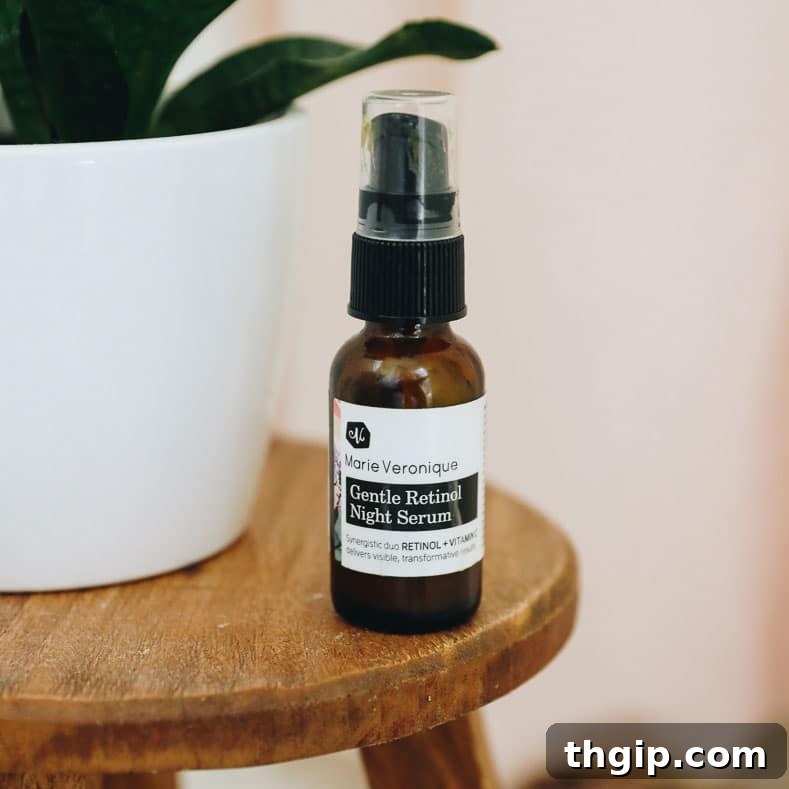
Many of you know my long-standing admiration for the Marie Veronique Intensive Repair Serum. It was while exploring their product line further that I discovered their gentle retinol serum. My curiosity was immediately piqued. I purchased it in early March and thus began my second, more successful, retinol journey. This experience prompted me to delve deeper into the science behind retinol and retinoids, specifically questioning if they truly align with the “clean beauty” ethos. I also reached out to the knowledgeable team at Marie Veronique to address some of my burning questions. Below, I’ve compiled everything I’ve learned, explaining why this time around, my experience with retinol has been remarkably different and overwhelmingly positive. Let’s explore.
What is Retinol? A Comprehensive Guide
To truly understand retinol, it’s essential to first grasp the broader category it belongs to: retinoids. The term “retinoids” encompasses vitamin A and its various derivatives. This powerful family includes retinoic acid (commonly known as Tretinoin, often prescription-strength), Retinol, Retinaldehyde, Retinyl Palmitate, Retinyl Propionate, Adapalene, Tazarotene, and Isotretinoin. Each of these compounds possesses varying potencies and conversion pathways within the skin.
The distinction between them lies in the number of conversion steps required to become retinoic acid, the active form that directly interacts with skin cells. As the expert team at Marie Veronique clarifies, “Retinyl palmitate, retinol, retinaldehyde, and retinoic acid are all retinoids. Retinol is one example of a retinoid, and one useful in skin care because it converts to retinoic acid that leads to improvement of skin quality.“ This conversion process is crucial because while retinoic acid is the most potent, it can also be the most irritating, especially for sensitive skin types, as I experienced firsthand.
Retinol, being a milder form, undergoes a two-step conversion process: Retinol converts to Retinaldehyde, which then converts to Retinoic Acid. This gradual conversion makes it significantly less irritating than direct retinoic acid, allowing for greater tolerability while still delivering impressive results. This balanced approach is why retinol has become a go-to ingredient for addressing a myriad of skin concerns.
Beyond its ability to reduce the visible signs of aging, retinol is scientifically proven to enhance skin health in multiple ways. It significantly increases skin cell turnover, prompting faster regeneration of healthy skin cells. Furthermore, it stimulates collagen production, a vital protein responsible for skin’s firmness and elasticity. Retinol also effectively fades hyperpigmentation, including sun spots and post-inflammatory marks, and plays a crucial role in treating acne by regulating sebum production and preventing clogged pores. (Source)
The beauty of retinol lies in this “happy medium.” It’s potent enough to deliver noticeable benefits without the extreme harshness often associated with prescription-strength retinoids, making it an excellent option for those seeking significant improvements without excessive irritation.
Is Retinol-Based Skincare Safe and Does it Qualify as Clean Beauty?
Based on extensive research and widespread dermatological consensus, the answer regarding the safety of retinol is a resounding yes. Retinol has been a cornerstone of skincare since the 1940s, boasting decades of rigorous research and clinical studies that underscore its efficacy and safety profile. It remains one of the most thoroughly investigated and recommended skincare ingredients globally. As the team at Marie Veronique aptly states, “Retinol-based skin care is very safe, which is why you can get retinol based skin care products over the counter.” Its availability without a prescription speaks volumes about its generally well-tolerated nature when used correctly.
However, the question of whether retinol qualifies as “clean beauty” is more nuanced and largely hinges on individual interpretations of the term. The “clean beauty” movement, while lacking a universal definition, typically emphasizes products free from certain synthetic chemicals, parabens, sulfates, phthalates, and often prioritizes natural or naturally-derived ingredients. Retinol, fundamentally, is a synthetic derivative of Vitamin A. While Vitamin A itself is naturally occurring, the retinol used in skincare products is manufactured in a lab to ensure stability, potency, and consistent quality.
For individuals who define “clean beauty” as exclusively meaning entirely plant-based or 100% naturally derived ingredients, then retinol, being a synthetic compound, would not strictly qualify. However, for many, myself included, “clean beauty” encompasses safety, transparency, and efficacy, allowing for the inclusion of safe synthetics that have proven benefits and pose no known health risks. I personally integrate safe, well-researched synthetic ingredients into my skincare routine when their benefits are significant and well-documented. Retinol falls squarely into this category. It’s safe, incredibly effective, and when sourced from reputable brands, formulated without other questionable additives.
Ultimately, the decision rests on your personal definition of “clean.” If you prioritize proven scientific efficacy and safety over an exclusively natural origin, then retinol can certainly be a valuable and “clean” addition to your regimen. For those who maintain a stricter definition, plant-based alternatives exist, which we will explore later in this article.
The Remarkable Benefits: What Does Retinol Do for Your Skin?
Retinol is often hailed as a “skin superhero” due to its multi-faceted approach to improving skin health and appearance. Its profound effects stem from its ability to interact with skin cells at a molecular level, prompting them to behave in a more youthful and healthy manner. According to our trusted skincare specialists at Marie Veronique, retinol delivers a wide array of benefits, making it an indispensable ingredient for those seeking comprehensive skin transformation:
- Improves Water Barrier Properties: Retinol strengthens the skin’s natural barrier function. A robust skin barrier is crucial for locking in moisture, preventing transepidermal water loss, and protecting against environmental aggressors. This leads to better hydration, reduced sensitivity, and overall healthier, more resilient skin.
- Increases Collagen Synthesis: This is one of retinol’s most celebrated benefits for anti-aging. Collagen is the primary structural protein in the skin, responsible for its firmness, elasticity, and youthful bounce. As we age, collagen production naturally declines, leading to fine lines and wrinkles. Retinol signals skin cells (fibroblasts) to produce more collagen, effectively reversing and preventing these visible signs of aging.
- Reverses Signs of Photo-aging: Sun exposure is the leading cause of premature skin aging, resulting in sunspots, uneven tone, texture changes, and wrinkles. Retinol actively works to repair photo-damaged skin by stimulating cell turnover and promoting the growth of new, healthy skin cells, thereby reducing the appearance of sun damage.
- Clears Up Acne by Regulating Sebum Production: Beyond anti-aging, retinol is a highly effective acne treatment. It helps normalize the way skin cells grow and shed, preventing them from clogging pores. Furthermore, it regulates oil (sebum) production, reducing the likelihood of breakouts and creating a clearer complexion.
- Improves Scarring, Irritation, and Dark Spots by Normalizing Skin Cell Development: By accelerating cell turnover, retinol helps to shed damaged, pigmented cells more quickly, revealing fresh, unblemished skin underneath. This process significantly reduces the appearance of post-acne scars, hyperpigmentation, and overall skin irritation, leading to a more even and radiant skin tone.
It’s clear why retinol is so frequently sought after as the answer to various anti-aging concerns. Its ability to diminish fine lines and wrinkles is just one piece of its comprehensive puzzle. From improving texture and tone to combating stubborn acne and repairing sun damage, retinol offers a holistic approach to achieving healthier, more youthful-looking skin.
Navigating Retinol Use: Precautions and Potential Side Effects
While retinol offers remarkable benefits, it’s a potent ingredient that requires careful introduction and consistent adherence to best practices to minimize potential side effects. The key to a positive experience often lies in starting with an appropriate strength and gradually increasing usage. Jumping into a high concentration too quickly can lead to undesirable reactions such as:
- Redness: A common initial reaction, particularly for sensitive skin, as the skin adjusts to the accelerated cell turnover.
- Dry, Irritated Skin: This can manifest as burning, itching, or an uncomfortable tight sensation.
- Flaking/Peeling: As dead skin cells shed more rapidly, visible flaking or peeling can occur, which is often mistaken for a negative reaction but can be part of the purging process.
- Photosensitivity: Retinol makes your skin more sensitive to ultraviolet (UV) radiation. This is a critical point that cannot be overstated.
To mitigate these side effects, it is absolutely imperative to start low and go slow. Begin with a low concentration (e.g., 0.1% to 0.25%) and apply it just 2-3 nights a week. As your skin builds tolerance over several weeks, you can gradually increase the frequency and, eventually, the concentration. Listen to your skin; if irritation persists, reduce usage or take a break. Consulting a dermatologist before starting retinol, especially if you have sensitive skin or existing skin conditions, is always recommended.
Due to retinol’s photosensitizing effects, you must wear broad-spectrum SPF 30 or higher every single day, regardless of weather or indoor activity, when incorporating retinol into your routine. Apply it generously as the last step of your morning skincare. Failure to do so can not only negate retinol’s benefits but also increase your risk of sun damage and sunburn.
Important Note: Retinol is strictly not recommended for use if you are pregnant, planning to become pregnant, or breastfeeding. While the risk from topical application is considered low and typically requires heavy, sustained use of high concentrations of topical vitamin A, the potential for retinoid embryopathy (birth defects caused by vitamin A) is a serious concern. (source). Always consult your healthcare provider if you have any doubts or concerns regarding skincare ingredients during these periods.
Patience is Key: How Long Does It Take to See Retinol Results?
One of the most common questions regarding retinol is, “How quickly will I see results?” The answer, like with many effective skincare ingredients, is that patience and consistency are paramount. While it’s tempting to expect immediate changes, retinol works at a cellular level, and true transformation takes time.
According to the skin experts at Marie Veronique, “It usually takes 1 to 2 cell turnover rates, or about a month to two months, to see initial results.” The skin’s natural cell turnover cycle typically ranges from 28 to 40 days, meaning it takes at least one full cycle for new, healthier skin cells to reach the surface. During this initial period, you might notice subtle improvements in texture or a reduction in minor blemishes.
However, for more noticeable and significant results, especially concerning deeper wrinkles, stubborn hyperpigmentation, or persistent acne scarring, consistent use of retinol for a longer duration is crucial. Experts generally advise using retinol regularly for 3 to 6 months to observe comprehensive improvements. “If the damage is long-standing, it can take even longer,” they note. This emphasizes that accumulated sun damage or deep-seated acne scars require sustained effort to diminish.
In my personal experience, the journey started with a phenomenon known as “skin purging” during the first month. This is when retinol accelerates cell turnover, bringing existing microcomedones (clogged pores) to the surface more quickly, which can temporarily increase breakouts. While it can be disheartening, everything I read urged me to persevere, and I’m incredibly glad I did. After enduring the purging phase, which was manageable, I started seeing noticeable improvements around the one-month mark, primarily a decrease in acne scarring and fewer new blemishes. My overall skin texture began to feel smoother and more refined.
To accurately track your progress, consider taking “before” photos in consistent lighting before you start using retinol. Then, take “after” photos at monthly or bi-monthly intervals. Often, the gradual improvements are hard to notice day-to-day, but side-by-side comparisons can reveal just how transformative retinol can be. Trust the process, maintain consistency, and your skin will thank you.
Optimizing Your Routine: When and How to Apply Retinol
Integrating retinol into your existing skincare routine requires a specific approach to maximize its efficacy and minimize potential irritation. Its potency dictates that it’s not simply another serum you can layer anywhere; timing and order matter significantly. The golden rule for retinol application is to use it only at night.
This is primarily due to two reasons: first, retinol can be degraded by sunlight, making it less effective when exposed to UV rays. Second, as previously discussed, retinol increases your skin’s photosensitivity, making it more vulnerable to sun damage. Applying it at night allows your skin to process the ingredient without immediate sun exposure and allows for morning cleansing to remove any residue before you apply your daytime SPF.
Here’s a general guideline for how to incorporate retinol into your evening skincare routine:
- Step 1: Cleanse. Begin with a gentle cleanser to remove makeup, dirt, and impurities from your skin. This creates a clean canvas for optimal product absorption.
- Step 2: Tone (Optional but Recommended). If you use a toner, apply it after cleansing to balance your skin’s pH and prepare it for subsequent steps. Opt for a hydrating or balancing toner rather than an exfoliating one, especially when starting with retinol.
- Step 3: Retinol Application. Dispense a pea-sized amount of retinol serum or cream onto your fingertips. Gently apply a thin, even layer over your entire face, avoiding the immediate eye area, corners of the nose, and mouth where skin can be more sensitive. (Note: Retinol replaces other serums in your routine on the nights you use it, or you can alternate).
- Step 4: Moisturize. After allowing the retinol to absorb for a few minutes (e.g., 5-10 minutes), follow up with a rich, hydrating moisturizer. This step is crucial for combating potential dryness and supporting the skin’s barrier function as it adjusts to retinol.
When starting, don’t feel pressured to use retinol every night immediately. Consistency is more important than daily application, especially in the beginning. Begin by incorporating it into your routine 2-3 times per week. As your skin builds tolerance (which can take several weeks), you can gradually increase the frequency to every other night, and then eventually, if your skin tolerates it well, every night. Pay close attention to your skin’s reaction and adjust accordingly. If you experience excessive redness, peeling, or irritation, scale back your usage. It’s also wise to avoid using other strong active ingredients like AHAs/BHAs (chemical exfoliants) on the same nights you apply retinol, especially when first starting out, to prevent over-exfoliation and irritation.
The Marie Veronique Difference: Gentle Retinol Serum Explained
Not all retinoid products are created equal. The market is saturated with options, and many conventional over-the-counter retinoid formulas can contain a variety of ingredients that may not align with a “clean” or natural skincare philosophy. Furthermore, some products might jump to higher retinoid strengths too quickly, which can shock and irritate sensitive skin, leading to a negative first impression—much like my initial experience with Tretinoin. This underscores the importance of seeking out well-formulated, gentle options when introducing such a powerful ingredient.
The Marie Veronique Gentle Retinol Serum stands out in a crowded market due to its thoughtful formulation, which addresses common challenges associated with retinol use. Here’s what makes it distinct and highly effective:
“A major difference is that it contains Vitamin C as ascorbic acid. Skin cells can’t make collagen without C, so the amount of collagen your skin makes actually depends on how much C is in the cells. Retinol sends the message to the cell to make collagen, but the rate at which collagen is made is dependent on the presence of vitamin C. That’s why our retinol serum also contains ascorbic acid–it contains retinol to send the message and the building material (Vitamin C) to make it.” This synergistic approach is brilliant. Vitamin C (ascorbic acid) is a powerful antioxidant and a critical co-factor in collagen synthesis. By pairing retinol’s collagen-boosting signal with the essential building block of Vitamin C, the serum optimizes the skin’s ability to produce collagen, leading to more robust anti-aging results.
Marie Veronique expertly navigates the formulation challenge of combining Vitamin C and retinol, as Vitamin C is typically stable at a low pH, while retinol prefers a somewhat higher pH. Their innovative solution: “We encapsulate our retinol so it is stable in the low pH medium of the serum.” Encapsulated retinol is a cutting-edge delivery system where the retinol molecule is encased in a protective barrier. This not only ensures stability and potency but also allows for a slower, more controlled release into the skin, significantly reducing the potential for irritation commonly associated with traditional retinol products. This makes the serum genuinely “gentle” while maintaining high efficacy.
Beyond the sophisticated combination of encapsulated retinol and Vitamin C, another key differentiating factor is Marie Veronique’s commitment to being microbiome friendly. They achieve this by using “microstatic rather than microcidal preservatives that do not affect microbial flora and fauna balance.” The skin microbiome – the community of microorganisms living on our skin – plays a vital role in skin health, barrier function, and immunity. Many conventional preservatives can disrupt this delicate balance. By choosing microstatic preservatives, Marie Veronique ensures their serum supports a healthy skin microbiome, promoting overall skin resilience and reducing potential irritation.
This holistic approach—combining powerful actives synergistically, employing advanced encapsulation technology, and respecting the skin’s natural ecosystem—is what truly sets Marie Veronique’s Gentle Retinol Serum apart, making it a stellar choice for those seeking effective yet gentle results within a clean beauty framework.
Curated Selection: The Best Clean Retinol Products on the Market
My personal results (which I’ll share below) speak volumes about the efficacy and gentleness of the Marie Veronique Gentle Retinol Serum, solidifying its place as my top recommendation. However, the clean beauty space is continually evolving, and several other brands are creating impressive retinol formulations that adhere to high standards of ingredient safety and transparency. While I haven’t personally tested all of these (yet!), they come highly reviewed and align with the principles of clean beauty.
Here are a few top contenders for those seeking effective and clean retinol options:
Marie Veronique Gentle Retinol – As extensively discussed, this serum is a standout for its synergistic Vitamin C combination, encapsulated retinol, and microbiome-friendly formulation, making it incredibly effective yet gentle.
Maya Chia The Straight A – This product is renowned for its blend of retinoid esters and supercritical chia seed oil, delivering powerful results while providing nourishing support to the skin. It often receives praise for its luxurious texture and ability to improve skin tone and texture.
Klur Stellar Restoration Retinol – Klur is celebrated for its commitment to botanical-based, sustainable, and effective skincare. Their retinol serum typically focuses on a balanced approach, combining retinol with soothing and hydrating ingredients to minimize irritation while maximizing benefits for clarity and anti-aging.
You’ll likely notice a recurring theme with these recommendations: the price point tends to be on the higher side. The reality is that high-quality, stable, and well-formulated retinoid products, whether from a conventional drugstore or a clean beauty brand, are an investment. This is largely due to the cost of the raw ingredients, the research and development required for stable formulations (like encapsulation), and the concentration of active ingredients. However, I’ve always maintained that if you’re going to splurge on any part of your skincare regimen, your serum should be it. Serums are concentrated treatments designed to deliver potent active ingredients deep into the skin, making them the most impactful step in addressing specific concerns.
For context on longevity, I’ve been using the Marie Veronique Gentle Retinol consistently for four months now, and I’m only about one-third of the way through the bottle. This demonstrates that while the initial investment might seem significant, these products are designed to last, offering excellent value over time for the transformative results they deliver. When selecting a clean retinol, always look for transparent ingredient lists, reputable third-party certifications (if applicable), and choose a formulation that matches your skin’s sensitivity and concerns.
Embracing Nature: Effective Natural Alternatives to Retinol
For those who strictly adhere to a 100% natural or plant-based skincare philosophy, the quest for a “natural retinol” can be a confusing one. When you ask about plant-based retinol at a beauty counter, you might be met with a puzzled look – and for good reason. True retinol, as a derivative of Vitamin A, is synthesized in a lab. There isn’t a direct “plant-based retinol” that mirrors its exact chemical structure and mechanism of action.
However, this doesn’t mean you’re without options! What *does* exist are powerful plant-derived ingredients that deliver similar (though often less potent or rapid) benefits, effectively acting as “retinol alternatives” by addressing concerns like fine lines, hyperpigmentation, and skin texture. While they may not be a perfect 1:1 match for retinol’s comprehensive power, they certainly offer valuable benefits. Let’s explore some of the most popular and effective natural alternatives:
Rosehip Oil – Often hailed as nature’s answer to anti-aging and skin regeneration, rosehip seed oil is a powerhouse of essential fatty acids (like omega-3 and omega-6), antioxidants, and trans-retinoic acid (a natural form of Vitamin A, albeit in much lower and milder concentrations than synthetic retinoids). For years, it has been revered for its remarkable ability to support wound healing, significantly reduce the appearance of scars (including acne scars), minimize fine lines, and improve overall skin tone and elasticity. It’s incredibly nourishing and generally well-tolerated, making it a fantastic choice for boosting skin health naturally. (Source)
Bakuchiol – This ingredient burst onto the clean beauty scene a few years ago, quickly gaining traction as the most promising plant-based alternative to retinol. Derived from the Babchi plant, Bakuchiol offers many of retinol’s benefits without the common side effects like irritation or photosensitivity. Clinical studies have shown it can significantly brighten dark spots and hyperpigmentation, improve the appearance of wrinkles, enhance skin color uniformity, and refine skin tone and texture. It works through different pathways than retinol but achieves similar outcomes, making it an excellent choice for sensitive skin types or those who are pregnant/breastfeeding (though always consult your doctor). (Source)
Squalane Oil – While not a direct “retinol alternative” in terms of cellular regeneration, squalane oil (derived from olives, sugarcane, or other plant sources) is an exceptional emollient and antioxidant. It’s packed with skin-loving antioxidants that combat free radical damage, a major contributor to premature aging. Squalane is also praised for its ability to boost collagen production and can be incredibly beneficial for a variety of skin conditions, including acne (it’s non-comedogenic and helps balance oil production) and eczema (by reinforcing the skin barrier). Its similarity to skin’s natural sebum makes it readily absorbed, providing intense hydration and a silky-smooth feel without greasiness. (Source)
It’s important to set realistic expectations: while these natural alternatives are fantastic for nourishing, protecting, and improving skin, none will likely deliver results quite as dramatically or as rapidly as well-formulated retinoid products. They each offer unique benefits and can certainly enhance a comprehensive skincare routine, even in conjunction with retinol. However, if your primary goal is to address significant concerns like deep wrinkles, severe acne, or stubborn hyperpigmentation with maximum efficiency, do not shy away from considering a safe, lab-synthesized ingredient like retinol. The “clean” aspect truly comes down to the overall formulation and brand commitment to safety, rather than strictly excluding all synthetics.
My Retinol Journey: Before and After Transformation
Initially, I didn’t plan to document my retinol journey with a formal before-and-after comparison. My primary motivation was personal experimentation—to find an effective solution for my lingering acne scars and the early signs of aging. However, as I began to witness the undeniable transformation in my skin, I knew I had to share the evidence. While my pictures might not be professional-grade, they vividly illustrate the significant improvements I experienced.
The “before” photo was serendipitously taken right after a series of significant breakouts in January. It captures the aftermath: prominent post-inflammatory hyperpigmentation, redness, and the textured scars left behind by cystic acne, particularly around my jawline. For the “after” photo, taken approximately three months later, I made a conscious effort to mimic the same conditions—similar lighting, shirt, and facial angle—to ensure the comparison was as accurate as possible, despite the casual nature of the original shot.
The visual difference is quite striking. You can clearly see that the severity of the scarring has dramatically reduced. The angry redness that characterized my skin after breakouts has subsided, and my overall complexion appears much calmer and more even-toned. Perhaps most importantly, the presence of active breakouts is almost non-existent. Beyond just the visible improvements, my skin texture feels significantly smoother and more refined to the touch. The once rough and uneven areas now feel softer and more uniform.
As I mentioned earlier, the first month of using Marie Veronique Gentle Retinol did involve a period of “skin purging.” I experienced some initial breakouts as my skin adjusted and accelerated its cell turnover. However, this phase was manageable and not nearly as extreme as my previous experience with Tretinoin. I patiently waited it out, trusting the process, and the payoff has been immense. These photos, taken roughly three months apart, powerfully demonstrate the gradual yet profound changes that consistent use of a well-formulated retinol can achieve. It’s a testament to the fact that with the right product and a little patience, significant skin concerns can be effectively addressed.
While these photos are probably not the most scientifically controlled, they serve as compelling personal proof. I can confidently say that my skin has unequivocally improved since I embarked on this journey with the Marie Veronique Gentle Retinol. It has been a game-changer for me, providing the results I sought without the harsh side effects of my previous encounters with retinoids.
Got questions about retinol or clean beauty? Hit me up! I’d love to chat and share more insights.
If you enjoyed this post, you might also find these articles helpful for your clean beauty journey:
- How to Simplify Your Skincare Routine for Maximum Impact
- Exploring Cleaner Alternatives to Beautycounter’s Countertime Line
- My Top Clean Beauty Daily Essentials for a Radiant Glow
- Mastering Your Skincare: How to Properly Apply Your Products
- Discover Natural Skincare Alternatives to Beautycounter Products