
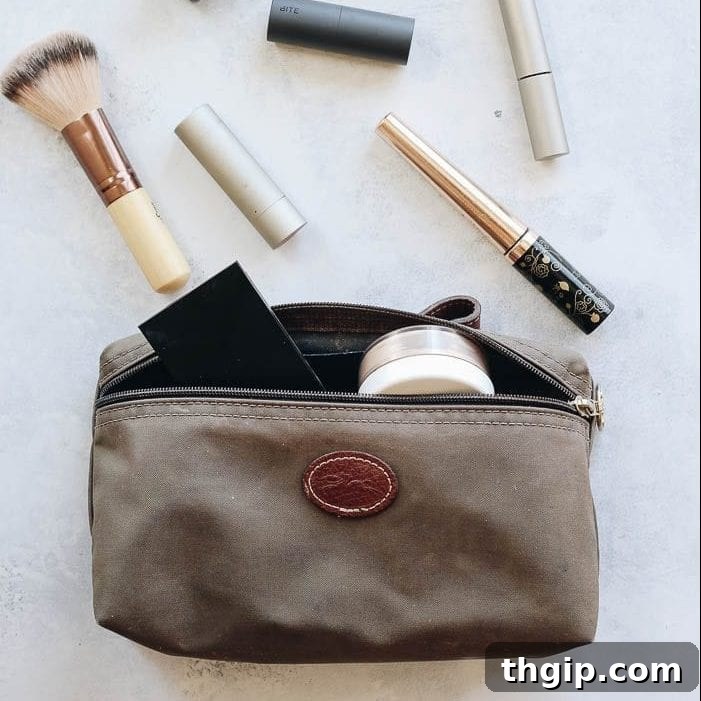
Welcome to the ultimate guide to transitioning your makeup bag to cleaner, greener alternatives! This topic has been by far the most requested over the past four and a half years, and honestly, I’m not surprised. While there’s an abundance of resources available for healthy eating and fitness, the world of green beauty often feels like a well-kept secret, or at least, a niche that’s still growing. When I first embarked on my journey to overhaul my makeup collection three years ago, I found myself digging tirelessly for reliable information. Eventually, I stumbled upon a few incredible green beauty YouTubers and blogs, but even then, I felt a significant void. This transition demanded a considerable investment of both my time and money in extensive personal research. However, I can proudly say that today, I officially possess a 100% green beauty makeup bag, and I’m thrilled to share everything I’ve learned with you.
In life, I’ve always championed the idea of pursuing what genuinely resonates with you. For me, it became increasingly discordant to nourish my body with high-quality, wholesome foods while simultaneously applying products filled with questionable ingredients to my skin. I have many friends and acquaintances who comfortably use conventional makeup, and that’s perfectly fine—everyone’s journey is unique. However, for me personally, that disconnect just didn’t feel right. It stirred a growing desire for alignment between my internal wellness practices and my external beauty regimen.
So, if you’ve been pondering this shift, experiencing those subtle yet persistent “icky” feelings about your current products, or simply curious to explore the vibrant and ethical world of green beauty, then this comprehensive post is specifically tailored for you! We’ll dive deep into the ‘why’ and ‘how’ of making this meaningful transition, empowering you with the knowledge to make informed choices for your health and well-being.
Why Make the Switch to Natural Makeup Products? Unlocking Healthier Beauty
Our skin, the body’s largest organ, acts as a remarkable barrier, yet it’s also incredibly permeable. Everything we apply topically—from moisturizers and serums to foundations and lipsticks—is eventually absorbed into our bloodstream. Once these substances enter the body, they must be processed and filtered, primarily by your liver. The more natural, less chemically laden products you use, the less strain you place on your liver, making its vital “detoxing” work significantly easier. It’s crucial to understand that this isn’t about trendy juice cleanses, but rather the medical and physiological process your liver performs daily to neutralize and eliminate harmful compounds. To delve deeper into the sophisticated mechanisms of your body’s natural detoxification system, I highly recommend listening to my insightful podcast episode with Amie Valpone, where we explore these topics from a scientifically informed perspective.
When your liver is constantly overwhelmed or strained by a heavy toxic load, its efficiency can diminish. This overwork can contribute to systemic inflammation, a root cause of numerous health issues. You might begin to notice problems manifesting in unexpected ways: persistent skin irritations, digestive discomfort, fatigue, or even joint pain. While these are often extreme cases and can be influenced by multiple factors, the underlying principle holds true: minimizing the burden on your liver is always beneficial for your overall health and vitality. Every small choice you make to reduce exposure to potential toxins can contribute to a more resilient and harmonious internal system.
Prioritizing nutrient-dense, high-quality, and organic foods is undoubtedly one of the most impactful ways to support your liver and entire body. However, the benefits don’t stop there. Extending this conscious approach to the products you apply externally—replacing conventional makeup and skincare with more natural, clean varieties—is another powerful step. By reducing daily chemical exposure through your beauty routine, you’re actively supporting your body’s natural processes, promoting long-term health, and embracing a holistic approach to wellness that truly nurtures you from the inside out.
How To Greenify Your Makeup Bag: A Step-by-Step Guide to Clean Beauty
Transitioning to a fully green beauty routine doesn’t have to be daunting. With a strategic approach, it can be an enjoyable and empowering journey. Here’s how to effectively greenify your makeup bag:
1. Start SLOW: Embrace Patience and Gradual Change
Resist the urge to replace every single item in your makeup bag overnight. This is a marathon, not a sprint. As I shared, it took me a full three years to completely transition my entire collection. My strategy was simple yet effective: I waited until a product ran out before replacing it with a cleaner alternative. This approach offers several benefits. Firstly, makeup, especially high-quality formulas, can be expensive, and green beauty products are no exception. Spreading out your purchases prevents a significant financial hit. Secondly, it allows you to truly appreciate and research each new product, ensuring it’s the right fit for you. This gradual process makes the journey far more enjoyable and sustainable, preventing overwhelm and financial stress. Remember, even small, consistent changes accumulate into significant progress over time.
2. Prioritize Products Covering the Largest Surface Area
When deciding where to begin your green beauty transition, a smart rule of thumb is to start with the products that cover the most significant portion of your skin. These items are in direct and prolonged contact with a large surface area of your body, thus maximizing potential absorption. Think about products like primer, foundation, tinted moisturizer, and concealer. These tend to be applied over much of the face, unlike a highlighter or eyeshadow, which cover smaller, more localized areas. By replacing these “big coverage” items first, you immediately reduce your overall exposure to potentially harmful ingredients, making the most impactful swap at the outset of your journey. This targeted approach ensures you’re making the most effective changes where they matter most for your skin’s health.
3. Conduct Thorough Research: Navigating the Green Beauty Landscape
The green beauty market is booming, but with its growth comes the unfortunate rise of “greenwashing.” Many brands exploit consumer desire for natural products by using misleading labels and marketing terms. Just because a product proudly declares itself “vegan,” “cruelty-free,” or “natural-looking” doesn’t automatically mean it’s free from questionable chemicals. While these claims are positive attributes, they don’t tell the whole story about ingredient safety. The crucial step is to meticulously read the ingredient list.
It’s true that some long, scientific-sounding names are actually natural compounds (think of the full chemical names for many essential oils). However, a reliable starting point is to ensure your products are free of the “big bads” – a group of common ingredients known for their potential health concerns. Here are some key offenders to watch out for and understand why they are problematic:
- Parabens (e.g., Methylparaben, Propylparaben, Butylparaben): These are commonly used preservatives designed to prevent the growth of bacteria and mold in cosmetic products. The concern with parabens is their ability to mimic estrogen in the body, which can disrupt the delicate balance of your endocrine system. This endocrine disruption has been linked to potential reproductive issues and concerns regarding certain types of cancer.
- Phthalates (e.g., Dibutyl phthalate (DBP), Diethyl phthalate (DEP)): Often used to make plastics more flexible, phthalates are also found in cosmetics, especially in fragrances, to help scents last longer, and in nail polishes to prevent chipping. Similar to parabens, phthalates are endocrine disruptors, potentially affecting reproductive development and fertility, particularly in males.
- Butylated Compounds (BHT and BHA): Butylated Hydroxytoluene (BHT) and Butylated Hydroxyanisole (BHA) are synthetic antioxidants frequently used as preservatives in cosmetics, moisturizers, and lipsticks. These compounds are suspected carcinogens and endocrine disruptors, and they can also be allergens.
- Talc: A mineral often used in powdered makeup products (like setting powders, blushes, and eyeshadows) for its absorbent properties and ability to create a smooth finish. The primary concern with talc arises from its natural proximity to asbestos in the earth. While cosmetic-grade talc is supposed to be asbestos-free, contamination has been a historical issue, and long-term inhalation of talc particles, even without asbestos, can be irritating to the respiratory system.
- Petroleum (or Petrolatum Derivatives): Derived from crude oil, petroleum jelly (petrolatum) is used as a moisturizing barrier. The concern lies in the potential for contamination with polycyclic aromatic hydrocarbons (PAHs), which are carcinogenic impurities, during the refining process, if not properly purified. Look for “pharmaceutical grade” or “USP grade” petrolatum to ensure purity.
- Synthetic Fragrance/Parfum: This broad term can hide hundreds of undisclosed chemicals, many of which are allergens, irritants, or endocrine disruptors (including phthalates). Opt for products scented with natural essential oils or those that are fragrance-free.
- Formaldehyde-Releasing Preservatives (e.g., DMDM Hydantoin, Imidazolidinyl Urea, Quaternium-15): These chemicals slowly release formaldehyde, a known human carcinogen, to prevent microbial growth. They can cause skin irritation and allergic reactions.
- PFAS (Per- and Polyfluoroalkyl Substances): Often found in long-wear, waterproof, and transfer-resistant makeup (like foundations, mascaras, and lipsticks) for their non-stick properties. PFAS are “forever chemicals” that persist in the environment and human body, linked to various health problems including immune system dysfunction, hormonal disruption, and certain cancers. Look for “PTFE,” “perfluoro,” or “polyfluoro” in ingredient lists.
This list is not exhaustive, but these are certainly some of the most significant compounds to avoid. Resources like the Environmental Working Group (EWG) Skin Deep database, Think Dirty app, and Credo Beauty’s “Dirty List” can be invaluable tools for researching specific ingredients and product safety ratings, helping you make truly informed choices for a healthier beauty routine.
4. Remember It’s an Investment: Value Over Immediate Cost
It’s true that green beauty products can sometimes come with a higher price tag than their conventional counterparts. My $60 foundation, for instance, might seem steep initially. However, it’s crucial to view these purchases as a long-term investment, not just in the product itself, but in your health and the environment. Many clean beauty formulations are highly concentrated, meaning a little goes a long way, and they tend to last longer. For someone like me, who doesn’t wear a full face of makeup every single day, that $60 foundation might easily last an entire year. When you break down the cost per use, the investment becomes far more reasonable. Beyond the financial aspect, you’re investing in products free from potentially harmful chemicals, which translates to a direct investment in your long-term well-being and a reduced burden on your body’s systems. This shift in perspective, focusing on value, longevity, and health benefits, always made my replacement decisions feel more justified and empowering.
5. Get Samples: The Key to Confident Purchases
One of the most valuable pieces of advice I can offer is to always get samples whenever possible. This strategy is critical because green beauty, while wonderful, requires finding products that truly work for your unique skin type, tone, and preferences. Many reputable green beauty brands are happy to send you samples if you reach out to them directly. Additionally, specialized retailers like The Detox Market or Credo Beauty are excellent resources, often offering sample kits or individual samples both online and in-store. I frequently visited physical stores, such as The Detox Market (and now Credo Beauty, which is accessible to me in SF), to swatch products, test textures, and then request a sample to take home. This allowed me to try the product in my daily routine for a few days, seeing how it performed with my other products, in different lighting, and under various conditions. If I loved it, I’d then confidently return to purchase it or order online. This “try before you buy” approach minimizes costly mistakes and ensures that every investment you make is in a product you genuinely adore and that truly serves your needs.
Where to Start? Building Your Green Beauty Starter Kit
Navigating the initial choices in green beauty can feel overwhelming, so I’ve created a video resource to guide you directly through my own makeup bag. In this video, I walk you through what I believe constitutes a fantastic green beauty starter kit, highlighting products that are truly worth the investment, identifying those you might consider skipping for now, and introducing you to some of my most cherished green beauty brands. Think about starting with foundational items like:
- Foundation or Tinted Moisturizer: Since these cover a large area, finding a clean, skin-friendly base is a top priority.
- Concealer: Essential for targeting specific areas without overloading your skin with chemicals.
- Mascara: Often applied close to the delicate eye area, making a clean formula crucial.
- Lip Balm or Lipstick: Since these products are often ingested, clean lip formulas are highly recommended.
I’m sharing my personal favorites and tips for choosing the right shades and textures in the video. Give it a watch, absorb the insights, and let me know your thoughts or any questions you might have!
Embracing a Healthier Glow: Your Green Beauty Journey Continues!
I genuinely hope you found this comprehensive post and accompanying video insightful and inspiring! My goal is to demystify the world of green beauty and empower you to make informed choices that align with your health and values. Given the scarcity of truly comprehensive resources out there, I am passionate about being a reliable source of information and guidance for everyone interested in making this beautiful transition. Please don’t hesitate to reach out and let me know if you’d like to continue hearing more about green beauty topics. Your questions and interests help shape future content, and I would absolutely love to continue being a valuable resource for your clean beauty journey. Let’s build a healthier, more radiant future, together!