

Discovering Tempeh: Your Next Plant-Based Protein Powerhouse
In the evolving landscape of plant-based eating, some ingredients truly stand out for their versatility, nutritional value, and delicious potential. Tempeh is undoubtedly one such culinary gem that has transformed my kitchen and many others. While I only began incorporating this incredible food into my diet relatively recently, it has quickly become an indispensable staple. The widespread availability, especially at accessible price points like Trader Joe’s $1.99, makes it even more appealing to health-conscious foodies and budget-savvy shoppers alike.
Tempeh, a cornerstone in vegetarian and vegan diets, is celebrated for being entirely free of animal products while offering an unparalleled source of high-quality protein. To put its nutritional might into perspective, a single serving of tempeh, typically around 100 grams, boasts an impressive 19 grams of protein. This makes it an excellent choice for anyone looking to increase their protein intake, whether for muscle building, satiety, or overall dietary balance, without relying on meat or dairy.
What Exactly is Tempeh? Unpacking this Fermented Marvel
For those new to the world of plant-based foods, the question often arises: “What exactly is tempeh?” At its core, tempeh is a traditional Indonesian food made from soybeans that undergo a fascinating transformation. The soybeans are first cooked, then partially fermented, and finally compacted into a firm, nutrient-dense patty or block. Unlike its more widely known cousin, tofu, tempeh offers a distinct textural experience, often described as firm and chewy with a delightful nutty flavor. Some varieties may even incorporate a mix of grains, such as rice or barley, and various spices to enhance its profile (a gentle reminder for those with gluten sensitivities to check labels carefully).
The fermentation process is key to tempeh’s unique benefits. This natural method not only helps to bind the soybeans together but also significantly increases its nutritional value and digestibility. Because it is less processed than many other soy products, tempeh retains a higher concentration of beneficial compounds, boasting an exceptional protein and fiber profile. Furthermore, the fermentation process partially breaks down the complex carbohydrates and enzymes naturally present in soybeans. This pre-digestion makes tempeh much easier on the digestive system, reducing the likelihood of discomfort often associated with other legumes, and allowing for better nutrient absorption and metabolism.
Tempeh’s Culinary Canvas: Absorb Flavor, Cook Quickly, Enjoy Healthily
One of the most remarkable qualities of tempeh, and certainly my favorite, is its incredible sponge-like texture. This characteristic allows tempeh to literally soak up any flavor you introduce it to, making it an incredibly versatile ingredient in the kitchen. Whether you’re aiming for a savory, spicy, sweet, or umami-rich dish, tempeh readily absorbs marinades, sauces, and seasonings, becoming a delicious vessel for your culinary creativity. Beyond its flavor-absorbing prowess, tempeh is also a dream to cook. It typically requires only about 5 minutes on the stovetop to achieve a beautiful golden brown and a satisfying texture, making it perfect for quick weeknight meals when time is of the essence.
Tempeh is truly a fantastic source of protein for anyone embracing “Meatless Mondays” or committing to a vegetarian or vegan lifestyle every day of the week. Its satiating qualities ensure you feel full and satisfied without the heavy feeling that some meat-based meals can induce. Moreover, thanks to its fermentation, tempeh is notably easier to digest than other legumes, which can sometimes lead to bloating or gas. This makes it a comfortable and enjoyable addition to your diet, allowing you to reap the benefits of plant-based protein without digestive discomfort. From stir-fries and sandwiches to salads and curries, tempeh’s adaptability knows no bounds, ready to transform into whatever delicious creation you envision.

Nutritional Yeast: The Cheesy Secret to Vegan Delights
Another revolutionary plant-based product that has garnered immense popularity in health-conscious kitchens is nutritional yeast, affectionately known as “nooch.” As its name suggests, nutritional yeast is a powerhouse of nutrients, making it an invaluable addition to any diet, especially for those following vegetarian or vegan eating patterns. It’s particularly renowned for being packed with B-vitamins, including B12 (a crucial vitamin often lacking in vegan diets and requiring supplementation), folic acid, selenium, and zinc. These vitamins and minerals play vital roles in energy production, metabolism, immune function, and nerve health, contributing significantly to overall well-being.
Beyond its impressive nutritional profile, which also includes being low in fat, naturally gluten-free, and free of added sugars or preservatives, nutritional yeast shines brightest for its incredible flavor. Best of all, it possesses a distinctly savory, umami-rich taste reminiscent of CHEESE! For individuals who are lactose-intolerant, dairy-allergic, or simply choosing a vegan lifestyle, nutritional yeast is truly the best thing since sliced (gluten-free) bread. Its cheesy flavor makes it an unparalleled substitute in a myriad of dishes. I absolutely adore this stuff: I generously sprinkle it on pasta, use it in place of cheese on homemade pizzas, and it tastes absolutely phenomenal on popcorn for a healthy, savory snack. Its versatility in lending a “cheesy” depth to sauces, scrambled tofu, roasted vegetables, and dips is simply unmatched.
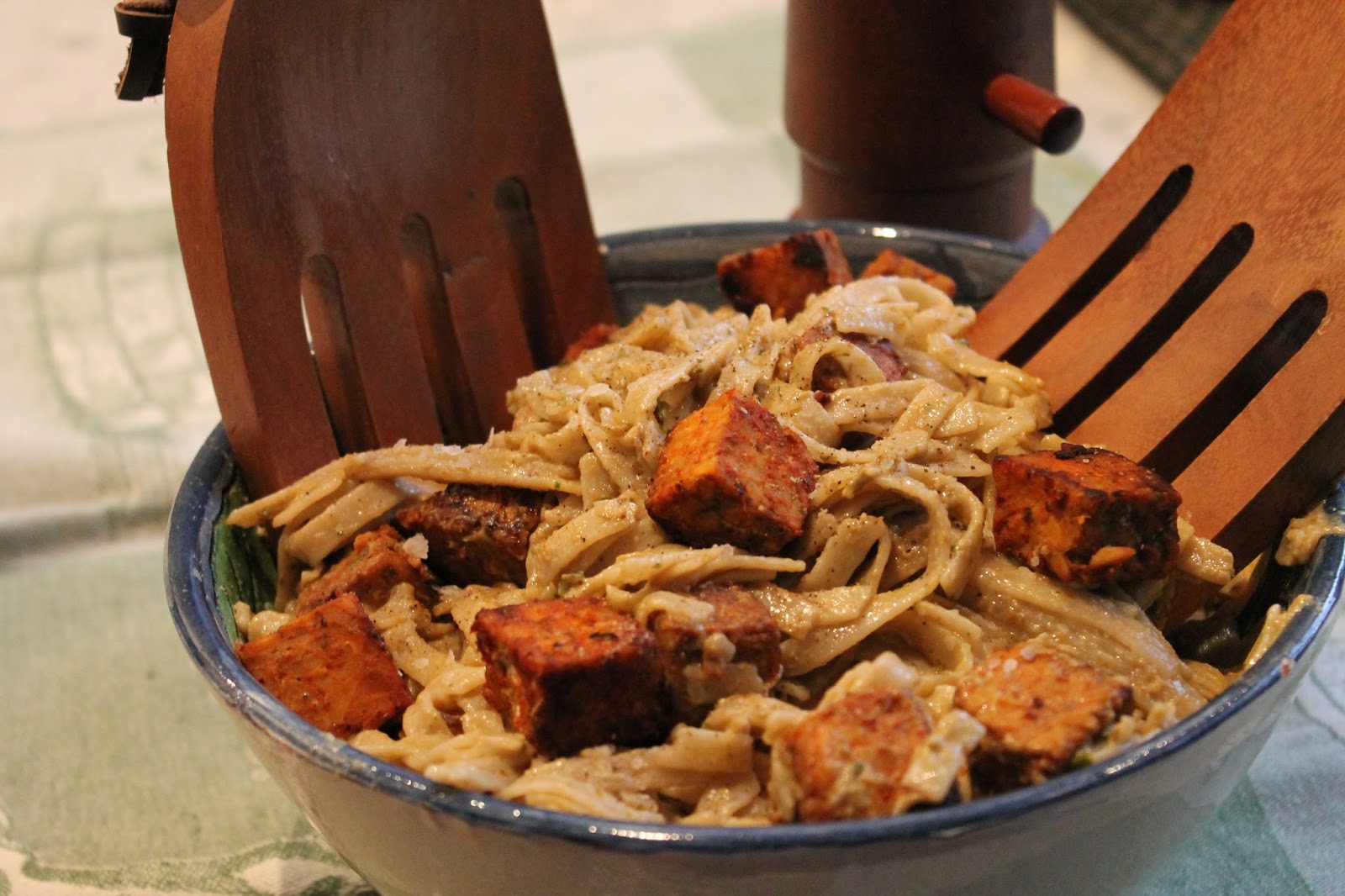
It was this revelation about nutritional yeast, coupled with the abundance of fresh basil thriving in my mini-herb garden, that sparked an idea: why not combine these two incredible ingredients to create a rich, flavorful, and entirely vegan pesto? The result, I can honestly say (and my partner, C, can attest), is a pesto so authentically delicious that you will not notice the absence of traditional Parmesan cheese. When this vibrant, dairy-free pesto is paired with some perfectly spiced tempeh, it transforms into a dairy-free and gluten-free pasta dish that not only satisfies the palate but also delivers a serious and robust protein punch, making it a complete and incredibly nourishing meal.
Vegan Pesto Pasta with Spicy Tempeh
by The Healthy Maven
Prep Time: 30 mins
Cook Time: 20 mins
Keywords: saute cook entree gluten-free vegan tempeh Italian
Ingredients (Yields: 4 servings)
- 1 package of gluten-free pasta (I used Tinkyada brown rice linguine)
For the Pesto:
- 1 cup of packed fresh basil leaves
- 1/3 cup nutritional yeast
- 1/4 cup extra virgin olive oil
- 1/2 cup walnuts
- 3 cloves fresh garlic, peeled
- 1/2 tsp sea salt
For the Tempeh:
- 1 package of tempeh (approx. 250 grams), cut into bite-sized chunks
- 1 tsp sriracha (adjust to your preferred spice level)
- 1 tsp Dijon mustard
- 1 clove fresh garlic, minced
- 1 tsp fresh lemon juice
- 1 tsp tamari (or soy sauce for non-gluten-free)
- 1 tsp smoked paprika
- 1/2 tsp cayenne pepper (or chili pepper for heat)
- 1/2 tsp Italian seasoning blend
- 1 tablespoon water
- Salt and freshly ground black pepper to taste
Instructions
For the Pesto:
1. Combine all pesto ingredients (basil, nutritional yeast, olive oil, walnuts, garlic cloves, salt) in a blender or food processor. Process until completely pureed and smooth. If the mixture is too thick or needs assistance moving, add a tiny bit of water, one teaspoon at a time, until the desired consistency is reached. Set aside.
For the Tempeh:
2. In a medium bowl, whisk together all tempeh marinade ingredients (sriracha, mustard, minced garlic, lemon juice, tamari, paprika, cayenne pepper, Italian seasoning, water, salt, and pepper).
3. Add the bite-sized tempeh chunks to the marinade, ensuring they are well coated. Let the tempeh marinate for at least 30 minutes to absorb the flavors, or for an even deeper taste, cover and refrigerate overnight.
4. When you are ready to prepare the pasta, heat a bit of coconut oil (or your preferred cooking oil) in a non-stick pan or skillet over medium heat. Add the marinated tempeh and cook for about 5 minutes, stirring occasionally, until it begins to brown and crisp up nicely on all sides.
For the Pasta:
5. Cook the gluten-free pasta according to the package instructions until al dente. Drain well, reserving about a quarter cup of the pasta water.
6. In a large serving bowl, combine the cooked and drained pasta with the prepared vegan pesto sauce. Toss thoroughly to ensure every strand of pasta is generously coated with the vibrant green pesto. If the sauce seems too thick, add a tablespoon or two of the reserved pasta water to reach your desired consistency.
7. Gently stir in the cooked spicy tempeh chunks, distributing them evenly throughout the pasta dish.
8. Taste and adjust seasoning as needed, topping with additional salt and freshly ground black pepper if desired. Serve immediately and enjoy this protein-packed, flavorful meal!
Powered by Recipage
Embrace the Plant-Based Revolution in Your Kitchen
Both tempeh and nutritional yeast are incredible ingredients that offer unique flavors, textures, and a wealth of nutritional benefits, making them essential components of any healthy, plant-forward diet. From its gut-friendly fermentation to its protein-rich profile and incredible ability to absorb flavor, tempeh is a truly versatile and satisfying whole food. Nutritional yeast, with its cheesy umami taste and vital B-vitamin content, particularly B12, provides a fantastic alternative for those avoiding dairy without sacrificing flavor.
This Vegan Pesto Pasta with Spicy Tempeh recipe is just one delicious example of how these two plant-based powerhouses can come together to create a meal that is not only incredibly tasty and satisfying but also packed with essential nutrients. It’s proof that eating healthily and sustainably doesn’t mean sacrificing flavor or culinary excitement. Whether you’re a long-time vegan, a curious flexitarian, or simply looking to incorporate more plant-based meals into your routine, tempeh and nutritional yeast offer endless possibilities.
So, I urge you to give them a try! Have you ever cooked with tempeh, and if so, what’s your favorite way to prepare it? How about nutritional yeast – what are your go-to dishes for adding that cheesy, savory kick? Share your experiences and inspire others to explore the wonderful world of plant-based eating!