
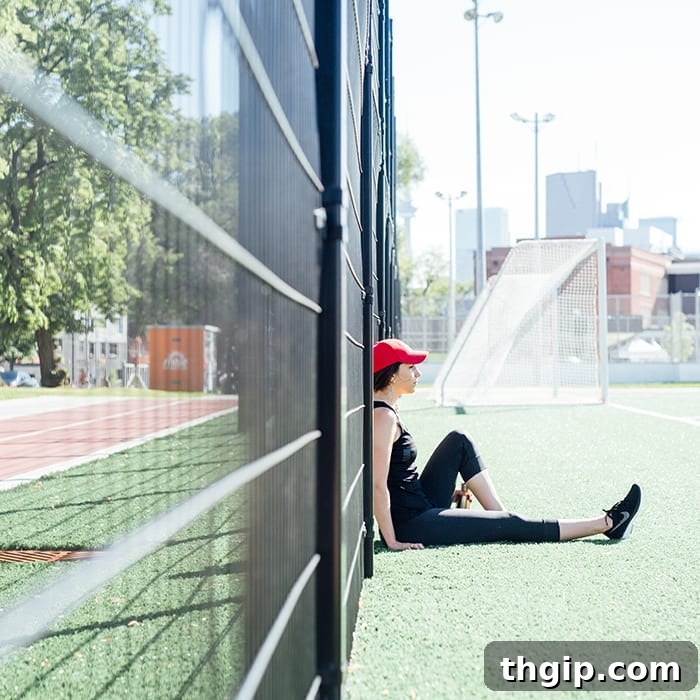
A year ago, I opened up on this blog about a pivotal moment in my journey: what truly transpired when I intentionally stepped away from exercise for a full month. While I hinted at deeper issues within that initial post, I deliberately held back from diving into the intricate details of my battle with overexercising and the pervasive, often debilitating, disordered thought patterns that had taken root. At that time, the wounds were still too fresh, too raw, and as is often my way, I needed more time to meticulously process every facet of my experience before I could candidly share it with the world.
Today, I can confidently say I’ve reached a place of profound peace and acceptance with my body. It’s a truly remarkable space. This isn’t to say I’m immune to the occasional pang of insecurity or the frustrating days when my favorite jeans feel a little too snug. These are human experiences, after all. However, what has fundamentally changed is that I no longer allow these fleeting thoughts to dictate the course of my life, my self-worth, or my daily choices. The true testament to recovery, I believe, lies not in the absence of such thoughts, but in how gracefully and constructively you react to them, understanding them as normal rather than definitive.
For far too many years, these very thoughts—and the subsequent actions they compelled—held an iron grip on my entire existence, shaping every decision, every interaction, and every moment of my life. But to truly understand this transformation, we must rewind.
The Mirror’s Cruel Reflection: A Past Self Remembered
I distinctly recall a moment at 23, standing before a mirror, tears streaming down my face, dressed in a form-fitting outfit. I had just told my partner, C, that I couldn’t go out that night, claiming I felt “too fat.” The irony was stark: I weighed a mere 114 lbs, the leanest I had ever been in my life. Objectively, I had a flat stomach, toned legs, and a physique many would envy and proudly define as “fit.” Yet, when I looked in the mirror, none of that registered. What stared back at me was a stranger, someone utterly inadequate. I saw a person devoid of willpower, convinced that everyone would notice I had dared to skip my workout that day.
I understand how irrational this sounds now. But in that moment, all I could perceive was the girl who had missed her gym session because, well, life had simply gotten in the way. The inability to exercise meant I couldn’t wear that dress, which then logically spiraled into an inability to attend the party, and consequently, a complete rejection of my social plans. This illustrates the alarming dysfunction of my thought patterns. And this doesn’t even begin to scratch the surface of the mental gymnastics involved in not being able to enjoy a simple drink because I “hadn’t earned it” through sufficient physical exertion.
Clearly, I was entangled in a profoundly unhealthy mental state, a reality invisible to me at the time. Despite the loving concern of friends and family, despite their gentle probing questions or direct observations, I saw nothing amiss with my behavior. From my perspective, I worked out diligently (albeit obsessively), ate “healthy,” and declining social drinking hardly seemed like the gravest transgression. On the conventional scale of physical health, I appeared to be thriving, often off-the-charts. Yet, on the far more crucial mental health scale, I was unequivocally at rock bottom – a resounding zero.
At that critical juncture in my life, no external voice, no matter how compassionate or insightful, could penetrate the dense fog of my denial. I was impervious to reason. This was a lesson I had to learn the hard way, for myself, from within.
The Tipping Point: From Denial to Desperation
That crucial, painful lesson arrived a few months later, courtesy of a treadmill. I sustained significant damage to my knee while running, an injury I stubbornly tried to ignore for an extended period. The pain was excruciating, but my commitment to my exercise regimen overshadowed any logical response. If I couldn’t run, I’d jump. If jumping was out, I’d lift. I pushed my body through whatever I could tolerate, desperate to maintain my routine, until a physiotherapist finally delivered the non-negotiable truth: if I ever hoped to live pain-free again, I had to take a break. A substantial, non-negotiable break.
What I can now clearly discern, which was utterly opaque to me then, was that her concern extended far beyond a mere knee injury. She recognized the deeper struggle. She saw the girl who wept in front of the mirror, whose entire existence revolved around exercise. Perhaps she, too, had walked that path. Perhaps you, reading this, are walking it now. If so, I sincerely hope these words resonate deeply with you, offering a glimmer of understanding and a path towards healing.
To The Woman Trapped by Exercise Obsession: A Message of Empathy and Hope
If you are caught in the relentless cycle of exercise addiction, please hear this: life is not, and never should be, solely defined by your daily workout plan. Your worth is not measured by the latest fitness challenge, the brand of your workout program like BBG or TIU, or the number of miles you’ve logged. You are not defined by your capacity to push your body to its absolute breaking point. Your intrinsic strength extends far beyond the number of bicep curls you can perform or the weight you can deadlift. Crucially, you are not, and never will be, merely your body.
It’s effortless for me to articulate these truths now, five years into a transformative journey of recovery – both physical and, more profoundly, mental – from the desolate place I once inhabited. But if you are currently navigating that dark space, please know: I see you. I feel the weight of your struggle. I was you. I understand the intense fear of what might happen if you dare to loosen your grip, if you let go of the reins that feel so integral to your identity. However, I can assure you, with absolute certainty, that those chains you cling to so desperately are inflicting far more harm than any perceived good.
The Hidden Costs: Beyond Physical Exhaustion
When exercise consumes your life, becoming the central pillar around which everything else rotates, other vital areas of your existence inevitably suffer. This obsessive pursuit of physical perfection often leads to the erosion of genuine friendships, the painful sacrifice of meaningful relationships, and a severe depletion of your body’s vital energy systems, such as adrenal fatigue. Furthermore, it can precipitate a cascade of long-term health consequences, many of which I am only now beginning to fully comprehend and address years later.
The insidious challenge of an exercise addiction bears striking resemblances to the complexities of an eating disorder. It’s not a habit one can simply quit cold turkey, like other substances. You cannot, and should not, eliminate food or movement from your life entirely. Instead, it’s a delicate, lifelong dance of learning to live with these essential components in a fundamentally different way: with far greater moderation, compassion, and intuitive wisdom. This recalibration – redefining your personal limits, truly learning to listen to and respect your body’s innate wisdom, and accepting that simple movement is often more than enough (and some days, even that isn’t possible) – constitutes the hardest, yet most rewarding, part of the recovery process.
The Path to Liberation: Embracing Recovery and Self-Compassion
So, how did I transition from that tear-soaked girl staring into a mirror of self-loathing to the woman confidently writing these words to you today? Frankly, it demanded an immense amount of dedicated effort, unwavering courage, and countless tears. But most importantly, it involved a profound commitment to vocalizing every single one of my deepest fears and anxieties.
Step 1: The Courage to Pause and Embrace Rest
The very first, foundational step was to take a break. In truth, I took not just one, but several significant breaks. For someone enmeshed in exercise addiction, the mere thought of “not working out” can be utterly terrifying. In my past, “not working out” often still meant doing a vigorous power flow yoga session or a “light” run. It emphatically did not mean true, restorative rest. But rest, genuine rest, is precisely what you need. Whether you are battling a physical injury, experiencing the profound mental and emotional effects of burnout, or simply feeling disconnected from your body, my most crucial advice is this: SLOOOOOOOW DOWN. Cultivate radical kindness towards yourself. Take a leisurely walk, indulge in a restorative nap, or simply savor a warm cup of tea. Actively seek out and engage in other activities in your life that genuinely bring you joy and a sense of peace.
Step 2: The Transformative Power of Your Voice
Secondly, talk about it. Open up. This might mean confiding in a trusted friend, seeking the invaluable guidance of a therapist (which I cannot recommend highly enough for professional support), or perhaps even sharing your story with the wider world, as I have done through this blog. One of the most profoundly healing aspects of my personal journey was connecting with you, my readers. Discussing life beyond the confines of the gym, openly addressing my evolving relationship with my body, and collectively discovering myriad sources of joy and fulfillment outside of exercise were monumental in guiding me to where I am today. I often quote my dear friend Natasha Adamo on this point: “You don’t need to be healed to help.” I am still very much on my healing path, but the act of sharing my experiences and offering support to any of you has, in turn, become an immense source of healing for me.
Step 3: Empowering Yourself Through Knowledge
Lastly, dedicate yourself to educating yourself on the far-reaching, long-term impacts of overexercising. Delve into what adrenal fatigue truly signifies, understand its symptoms, and recognize how it manifests. Get your hormone levels checked to ascertain if they are out of balance, and, most critically, begin to genuinely listen to the subtle yet profound signals your body is constantly sending you. My initial knee pain gradually escalated into chronic leg pain, which then morphed into debilitating back pain. This relentless physical strain, combined with severe adrenal fatigue and a vitamin B12 deficiency, eventually led me to the hospital after experiencing multiple fainting spells. All of these severe health crises were directly induced by my relentless pursuit of overexercise. Oh, what I wouldn’t give to sacrifice that “flat tummy” in exchange for avoiding those traumatic and painful experiences!
Rediscovering Movement: From Obligation to Joyful Intuition
With patience, self-compassion, and consistent effort, you will eventually reach a place where you can move your body intuitively. However, this profound shift can only occur once you internalize the crucial understanding that movement must originate from a place of love, respect, and self-care, rather than from a punitive space of hate, control, or self-punishment.
This journey demands a humble rediscovery of what genuinely feels good for your unique body. It’s about letting go of the relentless drive to push yourself to extreme limits and instead, tuning in closely to discern what your body truly needs on any given day. Often, your true strength is revealed not in how much you push through a workout, but in the courageous, self-aware choice to rest and abstain from exercise when your body signals its need for recovery.
This intuitive approach is precisely where I find myself these days. My life now flows through seasons, some where I naturally engage in more physical activity than others. I no longer adhere to a rigid workout plan; instead, I listen intently to my body’s wisdom. Most often, what it craves is a simple walk. I walk extensively, savoring the sensation. It feels inherently, unequivocally good, and I have never once returned from a walk feeling worse than when I started.
Occasionally, I still desire to truly sweat it out. There are times when I’m drawn to challenging Pilates equipment that makes walking feel like an athletic feat for the next three days. And sometimes, the vibrant energy of a SoulCycle class calls to me, prompting me to spin my heart out. But, crucially, if life intervenes, if I’m feeling overwhelmed or simply need to unwind on the couch instead of working out, that choice is now embraced with absolute peace and self-acceptance. It’s all cool.
Life Beyond the Treadmill: The Priceless Returns of Freedom
Undeniably, I sacrificed a great deal when I finally severed ties with my obsessive exercise habits. Yet, what I gained in return is, quite simply, priceless. I found expansive room in my life for authentic friendships, moments that replaced those solitary, endless runs. I embarked on a deep dive into understanding hormones (and, consequently, what behaviors to meticulously avoid), a journey that also opened my eyes to the world of green beauty and holistic wellness. I discovered the profound meaning of self-compassion, a far healthier alternative to merely numbing my emotional and physical pain with anti-inflammatories.
Most significantly, I liberated mental space—room in my head to contemplate topics beyond the incessant planning of my next workout. This newfound mental freedom meant I could, for the first time, truly start living my life, rather than meticulously planning it around an oppressive fitness regimen.
When I look back at photographs of that younger girl, I no longer see someone who was “fit” in the conventional sense. Instead, I see a profoundly sad individual. I see someone who tragically lost her identity within her body, rather than understanding her body as a powerful, capable tool to create the rich, fulfilling life she truly desired.
My story, thankfully, culminates in happiness and a profound sense of liberation. But I know, with absolute certainty, that countless young women out there are still grappling with these very same struggles. It is my deepest hope that I can reach that girl staring back at you in the mirror. I hope she hears me when I passionately declare that you are NOT your body. I hope she internalizes the truth that the gym, no matter how much time you dedicate to it, will never provide the love, validation, or self-acceptance you are inherently seeking. You possess so much more to offer the world than physical appearance or athletic prowess, and it is time for you to embark on the thrilling journey of uncovering what that truly means for you.
I also want her to understand that it is absolutely okay to take a break – to rest, to pause, to breathe. And that, with time, patience, and persistent self-kindness, you WILL discover a more moderate, joyful, and sustainable way to move your body. Movement that is deeply rooted in compassion, respect, and appreciation for your body, rather than manipulation, punishment, or control.
So, if you are that girl, please accept this virtual, heartfelt hug from me. I understand the depth of your feelings, the weight of your struggle. But I also know, with every fiber of my being, that with a little patience, a significant dose of self-love, and the courage to seek help, you will ultimately be okay. There is an expansive, vibrant world beyond reps, weights, and runs. I am genuinely so excited for you to embark on the incredible journey of uncovering all that it truly means.
P.S. If you’re interested in delving deeper into my current exercise philosophy and how I mindfully choose to move my body today, feel free to check out my latest YouTube video HERE.
*Pictures courtesy of Bettina Bogar or myself.
Share Your Thoughts: A Community of Support
No questions needed—just your genuine thoughts. Share your experiences, reflections, or anything this article stirred within you. Let’s connect and support each other on this journey.