
Unlock Restful Nights: Your Comprehensive Guide to Yoga for Deeper Sleep
In our fast-paced world, achieving consistent, high-quality sleep often feels like an elusive dream. While many of us experience the occasional restless night, persistent sleep struggles can significantly impact overall well-being. From minds that race long after the day ends to the subtle shifts in our body’s natural rhythms, a multitude of factors can disrupt our ability to drift into peaceful slumber. For years, I’ve found solace and consistent relief in a particular evening ritual: a gentle yet powerful yoga for sleep sequence. This isn’t just a quick fix; it’s a profound practice in sleep hygiene that retrains your body and mind for truly restorative rest.
Table of Contents: Your Path to Peaceful Sleep
- 1. Breath Work/Pranayama: The Foundation of Calm
- 2. Child’s Pose (Balasana): Embracing Serenity
- 3. Seated Forward Fold (Paschimottanasana): Gentle Release
- 4. Reclining Bound Angle Pose (Supta Baddha Konasana): Opening to Relaxation
- 5. Bridge Pose (Setu Bandhasana): A Supported Lift
- 6. Supine Spinal Twist (Supta Matsyendrasana): Twisting Away Tension
- 7. Legs Up the Wall (Viparita Karani): Reversing the Day’s Flow
- 8. Savasana (Corpse Pose): The Ultimate Surrender
The reasons behind sleep disturbances are as varied as individuals themselves. Perhaps your thoughts spiral uncontrollably as you try to settle down, or unresolved emotional stress weighs heavily on your mind. Hormonal fluctuations can throw your circadian rhythm off balance, or even simple jet lag can disrupt your internal clock. Regardless of the underlying cause, integrating a mindful yoga practice into your evening routine can be an incredibly effective tool for calming the nervous system, releasing physical tension, and preparing your entire being for a night of deep, rejuvenating sleep.
Before we delve into the specific yoga postures that will guide you towards a more restful night, it’s crucial to acknowledge the broader concept of sleep hygiene. Yoga is a powerful component, but it thrives within a supportive environment. Think of your pre-sleep routine as a carefully curated journey towards tranquility. Simple adjustments can make a profound difference:
- Minimize Screen Time: The blue light emitted from phones, tablets, and computers can suppress melatonin production, a crucial hormone for sleep. Aim to disconnect at least an hour before bedtime, allowing your brain to wind down naturally. Consider using blue-light-blocking glasses or dimming lights with a warmer hue in the evening.
- Establish a Consistent Bedtime Routine: Your body thrives on routine. Start your “bedtime” at least 60 to 90 minutes before you plan to be asleep. This dedicated time signals to your body and mind that it’s time to transition from the day’s demands to rest.
- Cultivate a Calming Ritual: What does your ideal wind-down look like? It could be sipping a soothing herbal tea, immersing yourself in a captivating book (not on a screen!), enjoying a warm bath with Epsom salts, engaging in gentle meditation, or perhaps, flowing through a gentle yoga sequence. The key is consistency and choosing activities that genuinely relax you. This routine creates a mental and physical bridge from wakefulness to sleep, training your body to anticipate rest.
- Optimize Your Sleep Environment: Ensure your bedroom is a true sanctuary for sleep. Keep it dark, quiet, and cool. Blackout curtains, earplugs, and a comfortable mattress and pillows can significantly enhance your sleep quality. Avoid working or watching TV in bed, reserving the space primarily for sleep and intimacy.
By incorporating these foundational sleep hygiene practices alongside the yoga sequence presented below, you create a holistic approach to conquering sleep challenges and embracing truly restorative slumber.
Now, let’s explore these 8 transformative yoga postures designed to soothe your nervous system, release tension, and invite a deeply restful sleep:
1. Breath Work (Pranayama): The Foundation of Calm
What it is: Every mindful yoga practice begins and ends with the breath. Pranayama, or yogic breathing, is the art of conscious breath control, serving as the immediate bridge between your mind and body. It’s an intentional practice of observing and guiding your breath, allowing you to assess your internal state and gently bring yourself into the present moment. This simple yet profound technique establishes the mental clarity and physical relaxation essential for sleep.
To begin, find a comfortable position, either sitting tall with a straight spine or lying gently on your back. Close your eyes softly, placing one hand on your lower belly and the other over your heart. Take a deep, cleansing breath in through your nose, feeling your belly expand, and then exhale slowly and completely through your mouth, releasing any accumulated tension. Repeat this three times. Next, transition to a calming 2-to-1 breath ratio: inhale for a count of 1, and then consciously extend your exhale for a count of 2. Continue this pattern for 10 breaths, or until you feel a profound sense of grounding. The emphasis on lengthening the exhale is crucial here. Feel free to experiment with a 4-second inhale and an 8-second exhale, or any ratio where your exhale is noticeably longer than your inhale.
How it helps with sleep: This specific breathing technique actively shifts your body’s physiological state. The extended exhale stimulates the parasympathetic nervous system, often referred to as the “rest and digest” system. This directly counteracts the sympathetic nervous system’s “fight or flight” response, which can keep you wired and awake. By prioritizing the exhale, you signal to your brain that it’s safe to relax, slowing your heart rate, lowering blood pressure, and calming an overactive mind. This intentional control over your breath is one of the quickest ways to induce a state of relaxation conducive to sleep.
Helpful tip: Enhance the calming effect by incorporating a simple mantra with your breath. As you inhale, silently repeat to yourself, “I invite peace,” and as you exhale, think, “I release tension.” This adds a meditative layer, further quieting mental chatter.
2. Child’s Pose (Balasana): Embracing Serenity
What it is: Balasana, or Child’s Pose, is a quintessential resting posture, offering comfort and introspection within any yoga practice. To enter this pose, begin on your hands and knees. Gently widen your knees, perhaps as wide as your mat, while keeping your big toes touching behind you. Slowly fold your torso forward, allowing your belly to rest between your thighs. Extend your arms forward, resting your forehead softly on the floor, or tuck them alongside your body with palms facing up, if that feels more comforting. Sink your hips back towards your heels. The key is to completely surrender your weight. Actively release any tension in your shoulders, allowing them to drop away from your ears. Breathe deeply and mindfully in this pose for at least 10 slow breaths, feeling the gentle compression in your abdomen and the stretch in your lower back.
How it helps with sleep: Child’s Pose is profoundly grounding and calming. By gently compressing the frontal body and resting the forehead on the earth, it creates a sense of security and containment, which can be incredibly soothing for an overactive mind. This posture encourages introspection and draws your awareness inward, helping to quiet external distractions and mental chatter that often precede sleep. Furthermore, it effectively releases accumulated tension from the neck, shoulders, and lower back – areas where stress commonly manifests – promoting physical ease and preparing your body for a deeply relaxed state.
Helpful tips: To enhance the restorative qualities of this pose, place a soft pillow or bolster underneath your belly or chest. This provides additional support, allowing for deeper relaxation and minimizing any potential strain. If your forehead doesn’t comfortably reach the floor, stack your hands or place a block under your forehead for support. The goal is comfort and release, not a deep stretch.
3. Seated Forward Fold (Paschimottanasana): Gentle Release
What it is: Paschimottanasana, or Seated Forward Fold, is a classic pose for lengthening the spine and calming the mind. Begin by sitting comfortably on your mat with your legs extended straight out in front of you. Ensure your legs are parallel and gently touching, or slightly separated for comfort. Engage your leg muscles slightly by drawing your kneecaps up. Inhale to lengthen your spine, imagining a string pulling you upwards from the crown of your head. As you exhale, begin to fold forward from your hips, leading with your chest towards your thighs, rather than rounding your back to reach for your toes. Allow your hands to rest wherever they naturally fall – on your shins, ankles, or feet. Maintain a gentle bend in your knees if your hamstrings feel tight. Hold this position for 10 deep, conscious breaths, allowing gravity to gently deepen the stretch with each exhale.
How it helps sleep: Forward folds are inherently calming and introspective postures. By bringing the head below the heart, this pose encourages a mild inversion, which can gently stimulate the parasympathetic nervous system, easing mental tension and promoting a sense of inner peace. The deep stretch through the hamstrings and along the entire back body helps release physical tension stored from prolonged sitting or standing. By turning your focus inward and away from external stimuli, this pose helps to quiet the “noise” of the day, allowing for a more profound sense of calm and mental clarity, which is essential for transitioning into sleep.
Helpful tips: The priority in a forward fold is a long spine, not touching your toes. If you feel excessive strain in your hamstrings or lower back, bend your knees generously. To make the posture even more restorative, place a pillow or folded blanket under your head to support your forehead as you fold forward. You can also place a rolled blanket under your knees for added comfort. Focus on reaching your chest towards your thighs, rather than straining to grab your feet, ensuring a safe and beneficial stretch.
4. Reclining Bound Angle Pose (Supta Baddha Konasana): Opening to Relaxation
What it is: Supta Baddha Konasana, or Reclining Bound Angle Pose, is a beautifully restorative hip opener that invites deep relaxation. Begin by lying on your back. Bring the soles of your feet together, allowing your knees to splay open comfortably to the sides. You can adjust how close your heels are to your groin, finding the sweet spot where you feel a gentle stretch without strain. Place your left hand gently over your heart and your right hand on your lower belly, connecting with your breath and heartbeat. Allow your arms to relax completely, perhaps resting on the floor with palms facing up, if that feels better. Close your eyes and breathe deeply, allowing your body to soften into the earth beneath you. Remain in this tranquil pose for at least 10 slow, deliberate breaths, or even longer if it feels comfortable.
How it helps sleep: This deeply calming hip-opening pose offers multiple benefits for sleep. The gentle opening of the hips, an area where many people unconsciously store emotional stress and physical tension, helps release deeply held tightness. This release can significantly lower blood pressure and actively slow the heart rate, shifting your body from a state of activity to one of profound rest. By reducing both mental and physical tension, Reclining Bound Angle Pose prepares your entire being for a peaceful transition into sleep. It promotes a sense of openness and surrender, allowing your body to let go of the day’s accumulated stresses.
Helpful tips: If the stretch in your inner thighs or groin feels too intense, or if your knees are floating high above the floor, place pillows or rolled blankets underneath each knee for support. This reduces strain and allows your muscles to relax more fully. The goal is comfort and ease, not a deep stretch. You can also place a rolled blanket or bolster lengthwise along your spine for additional upper back support, enhancing the chest opening and making the pose even more restorative.
5. Bridge Pose (Setu Bandhasana): A Supported Lift
What it is: Setu Bandhasana, or Bridge Pose, is a gentle backbend that invigorates without overstimulating, making it perfect for an evening routine. Lie on your back with your knees bent and your feet flat on the floor, hip-width apart. Position your feet as close to your glutes as possible, ideally so your fingertips can lightly brush the backs of your heels. Ensure your feet are parallel. Press down through your feet, engage your glutes, and slowly lift your hips off the floor towards the sky. You can keep your arms resting alongside your body with palms down, or interlace your fingers beneath your back, pressing your arms into the mat to lift your chest higher. Maintain a gentle squeeze of your glutes and inner thighs to keep your knees from splaying out. Hold this uplifting posture for 10 deep, steady breath cycles, feeling the opening across your chest and the gentle activation in your core.
How it helps with sleep: Bridge Pose is remarkably beneficial for preparing the body for sleep. It effectively releases tension and discomfort often stored in the lower back, which can be a common culprit for restless nights. By gently stimulating the thyroid gland in the throat (a mild inversion for the head), it can help balance hormones, contributing to a more regulated sleep-wake cycle. Additionally, this pose is believed to stimulate the Muladhara (root) chakra, located at the base of the spine. When this chakra is balanced, it fosters feelings of stability, security, and grounding, which are essential for deep, undisturbed sleep. It helps to release stagnant energy and encourages a gentle circulation of fresh energy throughout the body, promoting a sense of calm and readiness for rest.
Helpful tips: For a truly restorative experience, especially if you find it challenging to hold the pose or want a deeper sense of relaxation, place one or two firm pillows, a folded blanket, or a yoga block horizontally underneath your sacrum (the flat bone at the base of your spine). This creates a Supported Bridge Pose, allowing you to completely surrender your weight and relax your muscles while still receiving the benefits of the gentle inversion and chest opening. Ensure the support is comfortable and stable, allowing you to breathe deeply and release any effort.
6. Supine Spinal Twist (Supta Matsyendrasana): Twisting Away Tension
What it is: Supta Matsyendrasana, or Supine Spinal Twist, is a wonderfully relaxing pose that rejuvenates the spine and calms the entire body. Begin by lying flat on your back, bringing both knees into your chest and giving them a gentle hug. Extend your arms out to a “T” shape, palms facing up or down, whatever feels most natural. As you exhale, slowly allow both knees to fall to the right side of your body. You can keep your knees stacked one on top of the other, or for a deeper twist, cross your top leg over the bottom one. The crucial aspect here is to keep both shoulders firmly rooted on the ground. If your left shoulder lifts significantly, simply lower your knees further away from your armpit. Turn your head and neck gently towards the left, completing the spinal rotation. Breathe deeply into your belly for 10 full breaths, feeling the gentle release in your spine and abdomen. Inhale to bring your knees back to your chest, then repeat the twist on the other side, allowing your knees to fall to the left and turning your head to the right, holding for another 10 breaths.
How it helps sleep: Twisting postures are renowned for their detoxifying and calming properties. This gentle spinal twist helps to encourage an even blood flow throughout your torso and organs, potentially aiding in digestion and easing any abdominal discomfort that might interfere with sleep. More importantly, it provides a deep yet gentle release for tension stored along the entire length of the spine, from the neck to the sacrum. Spinal tension can contribute to restless sleep and discomfort, and by releasing it, you create a more comfortable foundation for rest. The act of twisting, combined with controlled breathing, helps to stimulate the vagus nerve, further activating the parasympathetic nervous system and ushering in a profound sense of calm.
Helpful tips: The primary goal of this twist is to rotate your spine from the hips while maintaining both shoulders flat on the mat. There’s a common tendency to lift the opposite shoulder off the ground in an attempt to get both knees closer to the floor. Resist this urge. If your knees don’t comfortably reach the floor, place a pillow or folded blanket under them for support. This allows your spine to relax into the twist without straining your shoulder, ensuring the pose remains restorative and beneficial.
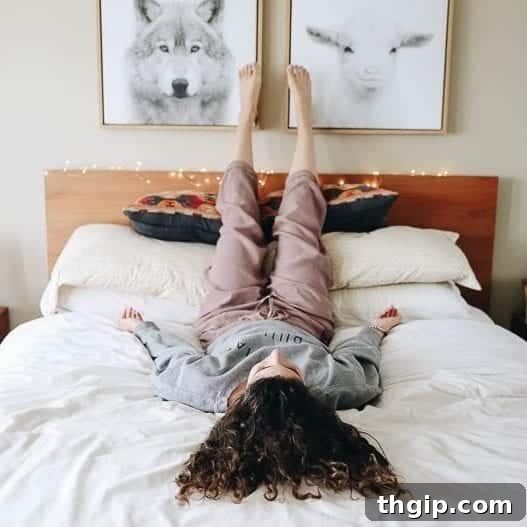
7. Legs Up the Wall (Viparita Karani): Reversing the Day’s Flow
What it is: Viparita Karani, or Legs Up the Wall, is a highly restorative and gentle inversion that requires minimal effort yet offers profound calming benefits. To enter this pose, sit sideways with one hip as close to a wall as possible. Then, with a fluid motion, swing your legs up onto the wall as you simultaneously lower your torso, shoulders, and head onto the floor or bed. Your buttocks don’t need to be pressed tightly against the wall; find a comfortable distance where your hamstrings feel relaxed, not strained. Your arms can rest comfortably by your sides, palms facing up, or you can place your hands on your belly. Close your eyes and simply allow gravity to do its work. Remain in this serene posture for at least 5 minutes, or even longer, allowing your breath to deepen and your body to completely unwind.
How it helps with sleep: This seemingly simple pose is incredibly powerful for calming the entire nervous system. By gently inverting the blood flow, allowing blood to drain from your feet and legs back towards your heart, it reduces swelling and fatigue in the lower extremities that can accumulate throughout the day. This reversal of gravitational pull helps to quiet the “noise” in your body and mind, signaling to your brain that it’s time to slow down. It actively helps to decrease high blood pressure often associated with daily stress and anxiety, promoting a profound sense of tranquility. Furthermore, it gently stimulates the parasympathetic nervous system, easing mental chatter and preparing your body for deep rest. It’s an excellent way to reset after a long day on your feet.
Helpful tips: Viparita Karani is intended to be a posture of complete ease and restoration. If you feel any stretching, tingling, or areas of tension in your hamstrings or lower back, gently ease your hips further away from the wall until you find a position where your legs can relax fully. You can also place a folded blanket or pillow under your lower back or head for additional comfort. If you don’t have a wall available, you can achieve a similar effect by lying on your back and resting your legs on the seat of a chair or sofa.
8. Savasana (Corpse Pose): The Ultimate Surrender
What it is: Savasana, or Corpse Pose, is the pinnacle of any yoga practice, and it is absolutely indispensable for a yoga for sleep sequence. After engaging in intentional movement and breathwork, Savasana provides the crucial space to integrate the benefits and truly let go. While it might appear simple, lying still, Savasana is an active practice in conscious relaxation. To deepen its benefits for sleep, I recommend combining it with a “body scan” meditation. Lie flat on your back, allowing your legs to splay gently outwards and your arms to rest by your sides, palms facing up, slightly away from your body. Close your eyes. Begin to bring your awareness to your feet, consciously focusing on relaxing every muscle, from your toes to your heels. Slowly move your attention up your body – calves, knees, thighs, hips, abdomen, chest, fingers, arms, shoulders, neck, face, and finally the crown of your head. With each body part, intentionally release any tension you find. Once you’ve scanned your entire body, allow yourself to simply melt into the mat or bed, fully surrendering to gravity and the profound stillness.
How it helps sleep: Savasana is, by its very nature, the posture most akin to actual sleep. By consciously performing it with a focused body scan and intentional relaxation, you train your mind and body to enter a state of deep rest. This practice cultivates heightened body awareness and progressive muscle relaxation, which are potent tools for disarming anxiety and mental overstimulation. It allows your nervous system to fully downregulate, integrating the calming effects of the preceding poses and breathwork. This intentional surrender creates the perfect physiological and psychological conditions for a smooth transition into a truly restful and restorative night’s sleep. It helps to quiet the mind’s incessant chatter, bringing you into a state of profound peace where sleep can effortlessly take over.
Helpful tips: To optimize your Savasana for sleep, prioritize comfort. Get as cozy as possible! Use a soft blanket to cover yourself, especially if your body temperature tends to drop when relaxing. Place a small, flat pillow or rolled blanket under your head for neck support. If your lower back feels strained, place a rolled blanket or bolster under your knees. The goal is complete comfort, minimizing any distractions that might prevent you from fully surrendering. There’s a wonderful chance you’ll drift off to sleep right there, and that’s perfectly okay!
Incorporating these gentle yoga postures and conscious breathwork into your evening routine can profoundly transform your relationship with sleep. Consistency is key; the more regularly you practice, the more your body and mind will associate these movements and sensations with rest and relaxation. Don’t underestimate the power of dedicating this sacred time to yourself. You are actively investing in your well-being, paving the way for energized mornings and more fulfilling days.
Make this guide your personal resource. Pin it to your Pinterest board, bookmark it, or download it to your phone. The next time you find yourself tossing and turning, or simply seeking to enhance your nightly rest, this comprehensive yoga for sleep sequence will be readily available to guide you back to tranquility. Sweet dreams await!
Ready to explore more transformative yoga practices? Check out some of our other popular posts:
- Yoga for Digestion: Alleviate Bloating and Promote Gut Health
- What To Know Before Your First Yoga Class: A Beginner’s Guide
- DIY Yoga Mat Spray: Natural Cleaning for Your Practice